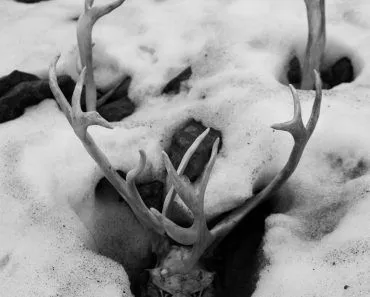
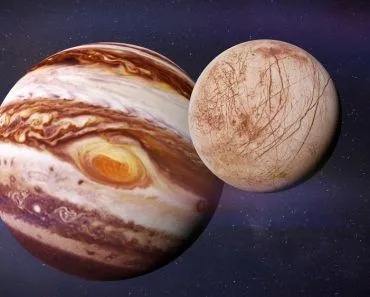
Extremophiles are organisms that thrive in conditions most life would find lethal, such as boiling hydrothermal vents, polar ice, acidic mine water and the super-salty Dead Sea. Most are microbes (bacteria and archaea). Tough animals like polar bears, penguins and camels are better described as extremotolerant, not true extremophiles.
The Earth is vast. From scorching hot deserts to freezing cold glaciers, along with a wide range of environments neatly pocketed throughout the globe, there is something that each place has in common: life.
However, humans can’t comfortably live in Antarctica or set up shop in the Sahara Desert. This doesn’t mean that absolutely no life can survive there. You might be surprised to find organisms living life to the fullest in the strangest, seemingly most inhospitable and hostile environments on Earth.
The organisms that genuinely thrive in these brutal conditions are called extremophiles. Strictly speaking, the label belongs to microbes (the bacteria and archaea that actually grow inside boiling vents or acid pools). The hardy animals we’ll meet first, like polar bears and camels, are better called extremotolerant: they cope with harsh weather but couldn’t survive in a hot spring or the Dead Sea. Either way, the survival tricks are fascinating, so let’s start with the animals you already know.
What Is Needed For Life To Form?
All life has a few basic requirements that it needs in order to “live”. These include water (or some solvent), an energy source, and basic biomolecules like carbohydrates, proteins, fats, and nucleic acid (DNA).
Without these basic requirements, organisms don’t have the resources to grow or generate energy to sustain themselves. Thus, in each of these harsh environments, organisms have adapted to secure these necessities from their environment.

But that’s not all! In order to thrive, they need to adapt further. It’s the equivalent of having to wear a sweater while living in a cold country. You may be getting water, food and shelter to survive, but you would certainly be more comfortable with a sweater than without one!
How Do Organisms Live In Extreme Cold?
Microorganisms and animals, no matter how smart, can’t knit themselves a sweater to stay warm. Instead, with the help of evolution, their biology adapts.
Take penguins, birds that live on the coldest continent in the world. Their bodies are naturally designed to conserve heat. Cold venous blood returning from their flippers and feet runs right alongside the warm arterial blood heading out. The two flows swap heat (a counter-current exchanger), so warmth is recycled back to the core instead of being dumped into the icy water.
On top of that, when they make deep dives in the cold sea while hunting, an emperor penguin’s heart rate slows by roughly 15%. This helps the body conserve oxygen and energy that can instead be used to generate more body heat. Even the feathers on their bodies overlap, protecting them from sharp cold winds and water.
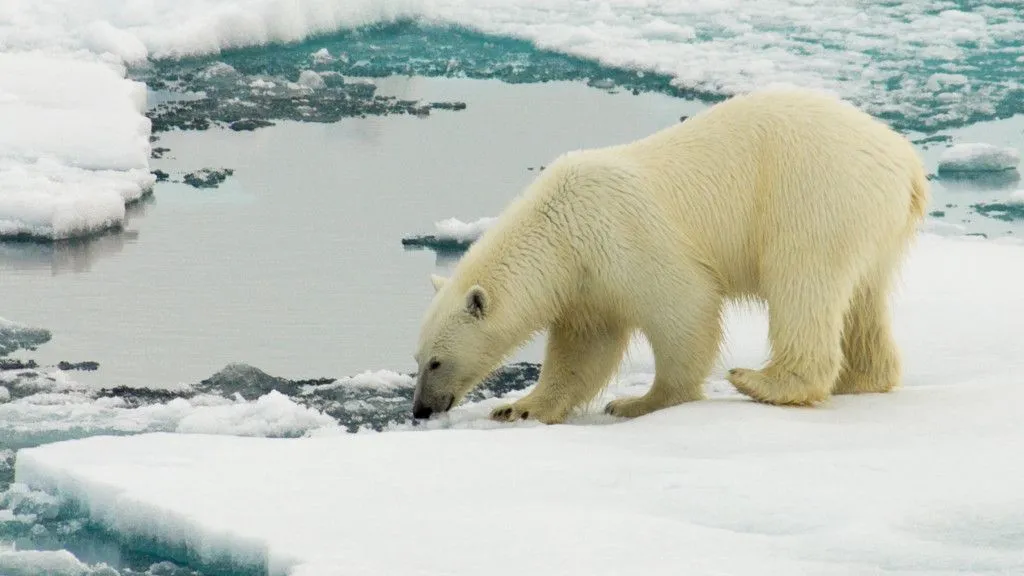
Other Arctic animals, such as polar bears, seals and Arctic foxes, have similar traits. They have a thicker coat of fur and their bodies generate more body heat.
Psychrophiles: Microorganisms Thriving In Extreme Cold
Many microorganisms have also adapted to survive in the extreme cold and are called psychrophiles (which basically means cold loving). Such bacteria produce sugary jelly-like substances called exopolysaccharides that act like a protective layer of clothing.
Some bacteria and fungi even make antifreeze proteins. These proteins reduce the freezing point of water so that the intracellular water inside them doesn’t freeze, which would cause internal ruptures.
How Do Organisms Live In Intense Heat?
Now what about the heat-loving ones, the thermophiles? There is plenty of life in deserts, near volcanoes and within hot springs. How do they manage surviving there without sweating or boiling their existence away?
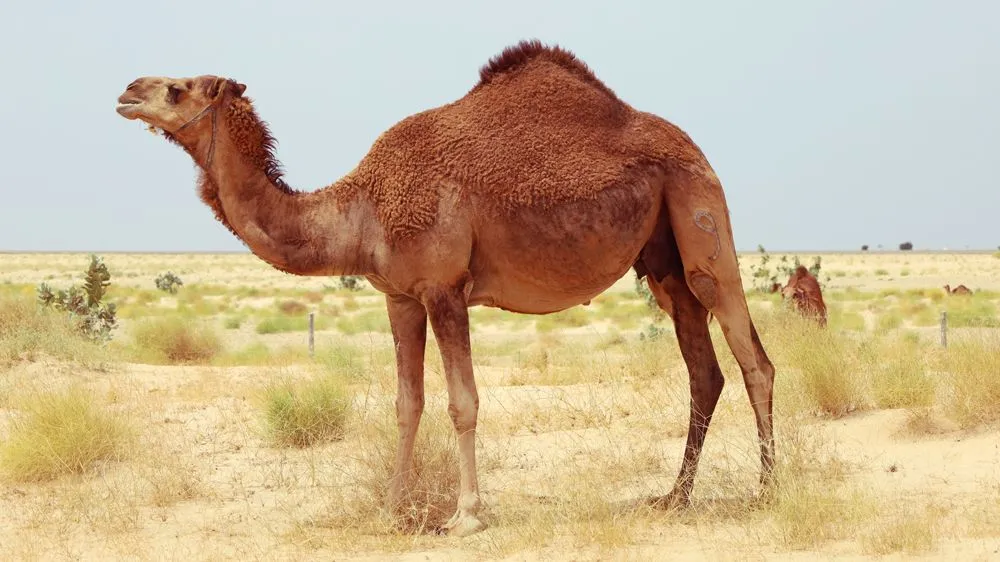
The most crucial ability that organisms living in extremely hot climates possess is their ability to retain water. Our best-known example, the camel, can go an astonishing length of time without drinking. In the cool of a Sahara winter, when moist plants are around to nibble, a camel can last up to seven months without taking a single sip of water. In peak summer heat that shrinks to a matter of days, but even then a camel out-lasts almost any other large animal.
A common misconception is that camels store water in their humps, but that’s not the case. The hump is actually composed of a lot of fatty tissue that it uses as an alternate food source in case it can’t find anything else to munch on.
Camels are blessed with the function of needing less water than the vast majority of organisms. Their blood cells can store a lot more water, while their fur prevents the camel from sweating and losing it.
Cacti have adapted to the desert by storing water in their stems and having thorny leaves to prevent water loss via transpiration. They have extremely thin roots that cover a large radius, allowing them to soak up all the tiny bits of water that they’re fortunate enough to find around them.
Hyperthermophiles: Microorganisms Dwelling In High Temperatures
Microorganisms survive in the desert by staying inactive throughout the year, except when it rains.
Apart from deserts, microbes can even survive near hydrothermal vents. These vents are fissures on the sea floor where superheated water, often hotter than 350°C (660°F), gushes out from underground. Microorganisms that thrive at scalding temperatures like these are called hyperthermophiles. The current record-holder, the archaeon Methanopyrus kandleri, can still grow and divide at 122°C (252°F), the hottest temperature at which any known life can reproduce.
Their cell membranes and proteins are built to stay stable at temperatures that would cook ordinary cells, so the structures inside them don’t fall apart in the heat. Most hyperthermophiles aren’t bacteria at all but archaea, a separate domain of single-celled life; another heat-loving example is Hyperthermus butylicus.
As you can imagine, it would be difficult to get energy-rich nutrients so deep down in the sea, or near volcanoes, for that matter. Instead, such microorganisms undergo chemical reactions to produce energy by using the elements around them. For example, certain microbes can use sulfur, iron, methane or hydrogen to create energy. They are broadly labeled as chemosynthetic microorganisms.
Where Else Can Life Survive?
Apart from just hot and cold regions, there are plenty of other locations on Earth that have conditions that are just as harsh, but are still teeming with life. These include environments with extreme pH levels or extremely high salt content, like the Dead Sea.
Occasionally, near mines, we find extremely acidic water bodies that are called mine drainage. Acidic elements in rocks, such as iron sulfide, react with oxygen and water, making the water acidic. This water can be so acidic that it can dissolve heavy metals. Such toxic environments can’t support large animal life, but microorganisms can somehow make do over there.
Such acid-loving bacteria (acidophiles), like Acetobacter aceti, keep their insides at a safe pH by pumping protons (H+ ions) back out and building cellular proteins that lean slightly basic, both of which buffer against the acid pressing in from outside.
It’s vice versa for alkaline-loving microorganisms. They pump H+ ions into their bodies to neutralize the alkaline nature of their environment, and their cellular proteins lean more towards the acidic side.
Even the deepest and darkest parts of the sea can harbor life. Microbes have been found several kilometers down inside the Earth’s crust, living without sunlight or fresh air. One bacterium, Desulforudis audaxviator, was pulled from water nearly 3 km (1.9 mi) below the surface in a South African gold mine, where it powers itself entirely on hydrogen and sulfur produced by radioactive rock, with no sunlight involved at all.
Conclusion
After reading this piece, you must be thinking, “Wow, life can really survive anywhere!” It’s this thought that has scientists puzzling about extraterrestrial life. Perhaps there could be some life forms living on the moon, Mars or in any other solar system. Surely, we can’t be the only life forms in the universe, right?
Granted, it is mostly microorganisms that can survive in such harsh conditions. It becomes way more difficult for complex life forms like animals to survive at extreme temperatures and pressures.
Technically, any other planet that has water (or its equivalent), along with energy sources, should be able to support life. Plenty of research has gone into studying extremophiles and their survival mechanisms. If scientists can crack their code, it could explain how other life forms might be surviving elsewhere in the universe.
I don’t know if the life out there will resemble the life on Earth, but I’m pretty sure they will be just as interesting!
References (click to expand)
- Rampelotto, P. H. (2010, June 4). Resistance of Microorganisms to Extreme Environmental Conditions and Its Contribution to Astrobiology. Sustainability. MDPI AG.
- How does mine drainage occur? | U.S. Geological Survey. The United States Geological Survey
- Muñoz, P. A., Márquez, S. L., González-Nilo, F. D., Márquez-Miranda, V., & Blamey, J. M. (2017, August 7). Structure and application of antifreeze proteins from Antarctic bacteria. Microbial Cell Factories. Springer Science and Business Media LLC.
- Siddiqui, K. S., Williams, T. J., Wilkins, D., Yau, S., Allen, M. A., Brown, M. V., … Cavicchioli, R. (2013, May 30). Psychrophiles. Annual Review of Earth and Planetary Sciences. Annual Reviews.
- Letter from Stephanie: Antarctic Adaptations | AMNH. The American Museum of Natural History
- Merino, N., Aronson, H. S., Bojanova, D. P., Feyhl-Buska, J., Wong, M. L., Zhang, S., & Giovannelli, D. (2019, April 15). Living at the Extremes: Extremophiles and the Limits of Life in a Planetary Context. Frontiers in Microbiology. Frontiers Media SA.