Table of Contents (click to expand)
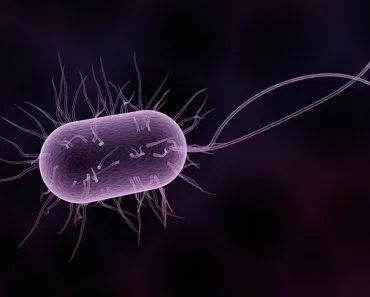
Archaea are the third domain of life (a “domain” being the highest level used to classify living things). These single-celled microbes resemble bacteria in size and shape, but several of their key traits, including eukaryote-like replication enzymes and ether-linked lipids in their cell membranes, set them firmly apart.
Humans have spent thousands of years trying to understand life on Earth (our own lives as well as other forms), but nature always has a few tricks left up her sleeves. Yet, despite centuries and millennia of inspecting birds and beetles and ferns and fossils, it wasn’t until the late 20th century that we recognized one of the oldest forms of life on Earth as something entirely new.
Obviously, animals and plants and fungi are quite easy to see with the naked eye, and bacteria and protists are more readily available for study, but only in 1977 did scientists realize that there was an entirely new group of organisms on the planet, a third domain of life!
What Is Archaea?
Archaea are the third domain of life (a “domain” being the highest level we use to classify living things). The two other domains are Eukarya and Bacteria, but they are also relatively “new” labels. For most of the 20th century, kingdom was the highest classification of life, and organisms were sorted into a handful of kingdoms such as animals, plants, fungi, protists and bacteria. The very idea of a domain sitting above kingdom only arrived once archaea forced biologists to redraw the map.
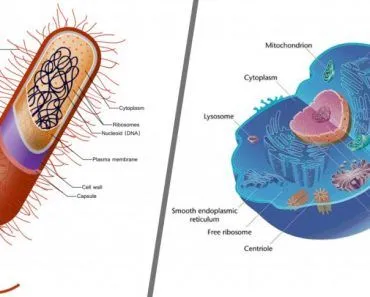
However, as technology and curiosity continued to progress, researchers made an interesting discovery. Life had previously been believed to follow two distinct paths, prokaryotes (cells with no nucleus, such as bacteria) and eukaryotes (organisms whose cells contain a nucleus, from amoebae and yeast to plants and animals), yet some prokaryotes turned out to be strikingly dissimilar to bacteria. It soon became clear that there were, in fact, three distinct paths of life on earth that followed our universal common ancestor.
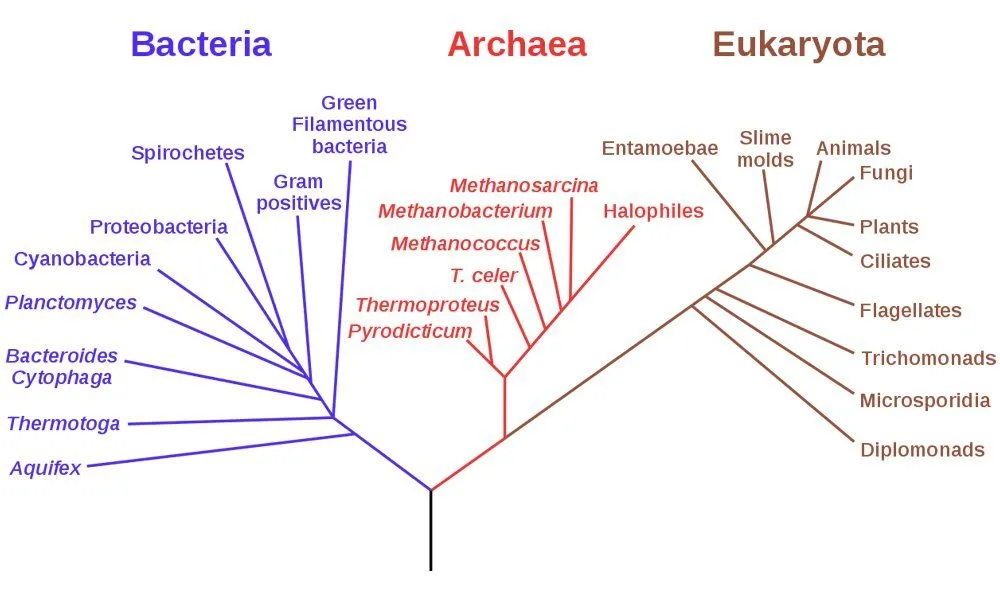
Eukaryotes and Bacteria only told part of the story; it wasn’t until the rise of genetic sequencing and comparison, in place of the simple analysis of morphology, that a clear third branch of life became obvious. The pioneer of this theory, Carl Woese, dedicated a good chunk of his life to the research and arguing of this idea, but his breakthrough was dismissed for years. He had uncovered a third form of life, home to some of the strangest and most extreme organisms we have ever found. Only a few hundred archaeal species have been formally described and cultured, but genome surveys of soil, ocean and gut samples now point to many thousands more, spread across roughly 20 proposed phyla.
Why Were Archaea Discovered So Late?
As has been the case throughout human history, shifting paradigms in the scientific world can be a difficult and frustrating task. Carl Woese and his research were ignored for more than a decade. Throughout history, bold scientific thinkers have often died long before their ideas were reexamined and eventually praised. Not only that, but the taxonomic system based on kingdoms had been in place for more than 200 years, since the groundbreaking work of Carl Linnaeus. Upending such a universally accepted system was no easy task, particularly because we lacked the technology to take a closer look.
 Once researchers were able to make use of DNA sequencing and could read the genetic code of an organism, our ability to identify patterns and nuances was greatly improved. Even though many of these species were right under our noses, and already identified, they had been incorrectly categorized as a form of bacteria, and that simply wasn’t the case.
What Makes Archaea Special?
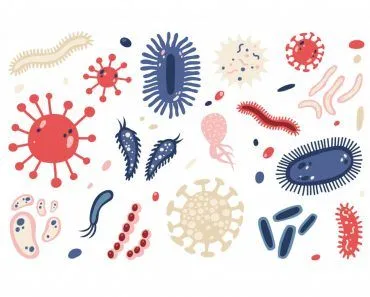
When it comes to microscopic life forms, many people struggle to see the differences, even if they are fundamental variations. In terms of Archaea, as mentioned, these are single-celled organisms that are similar in size and shape to bacteria, hence the initial confusion in their classification. However, once you look closer, the differences become much more apparent.
Archaea share several characteristics that line up more closely with eukaryotes than with bacteria, such as more complex enzymes for copying their DNA. Their cell membranes are unique in all of biology: where bacteria and eukaryotes build membranes from ester-linked fatty acids, archaea use ether-linked lipids that hold together far better under heat and chemical stress. They reproduce asexually, and can draw energy from sunlight, inorganic compounds or simple carbon sources. However, their range of potential sustenance is also far broader than other species, enabling them to survive and thrive in some of the harshest and most unlivable ecosystems on earth. They can feed on metal and ammonia, as well as natural gas and basic sugars; this metabolic flexibility is one of the most fascinating elements of these well-hidden organisms.
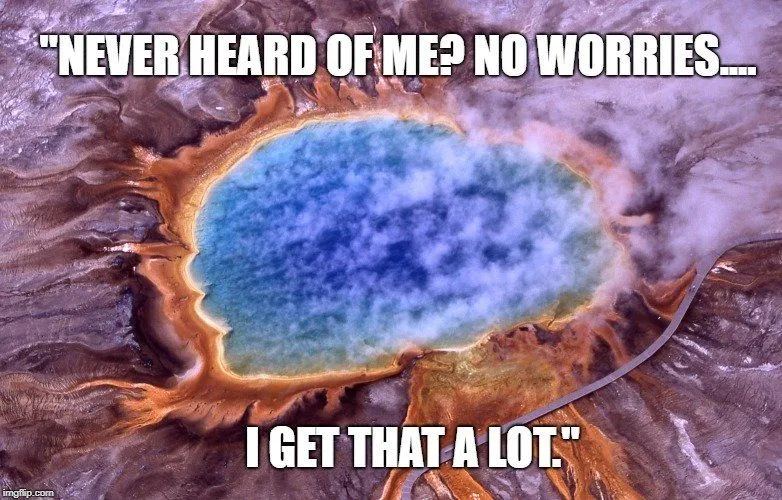
Surviving extreme temperatures, pressures and chemical exposure, these organisms are the epitome of survivors, and can be found thousands of meters (tens of thousands of feet) down, clustered around hydrothermal vents, as well as in glaciers and volcanic hot springs. These microbes have earned a rather cool name as a result of their intense lifestyles: extremophiles. Depending on the sort of extreme environment they thrive in, they go by different names, including thermophiles (heat lovers), halophiles (salt lovers) and radiation-resistant microbes, among others.
Aside from their undeniably unique morphology and abilities, Archaea are also important because of their place in the history of life. Most researchers believe that some of the species we still see today may have been around during the most tumultuous and destructive periods on Earth, when life had to survive in savage (or extreme) conditions of heat and atmospheric shifts. These early forms of microbial life provide a picture into the past, and fill out our understanding of where we came from.
Furthermore, these microbes aren’t simply relegated to volcanoes and the bottom of the ocean, although those varieties do get the most attention. You can also find these microbes in your own body! A group of archaea called methanogens lives in our digestive tract, where they mop up the hydrogen and carbon dioxide left over from bacterial fermentation and convert it into methane (which is why some of that gas is, quite literally, of archaeal origin).
A Final Word
Despite their presence in every human being, and in some of the most awe-inspiring places on Earth, we have only been studying archaea as their own domain since the 1970s. Even now, most species have never been grown in a lab, and discoveries like the Asgard archaea (a lineage that appears to be the closest living relative of the eukaryotes, and therefore of us) keep reshaping the family tree. Researchers are eager to scratch past the surface of this branch of life and reveal even more secrets about our origins, our present, and even our potential for survival among the stars!
References (click to expand)
- Woese, C. R., Magrum, L. J., & Fox, G. E. (1978, September). Archaebacteria. Journal of Molecular Evolution. Springer Science and Business Media LLC.
- Spang, A., Caceres, E. F., & Ettema, T. J. G. (2017, August 11). Genomic exploration of the diversity, ecology, and evolution of the archaeal domain of life. Science. American Association for the Advancement of Science (AAAS).Spang, A., et al. (2018). Asgard archaea are the closest prokaryotic relatives of eukaryotes. PLOS Genetics.