Table of Contents (click to expand)
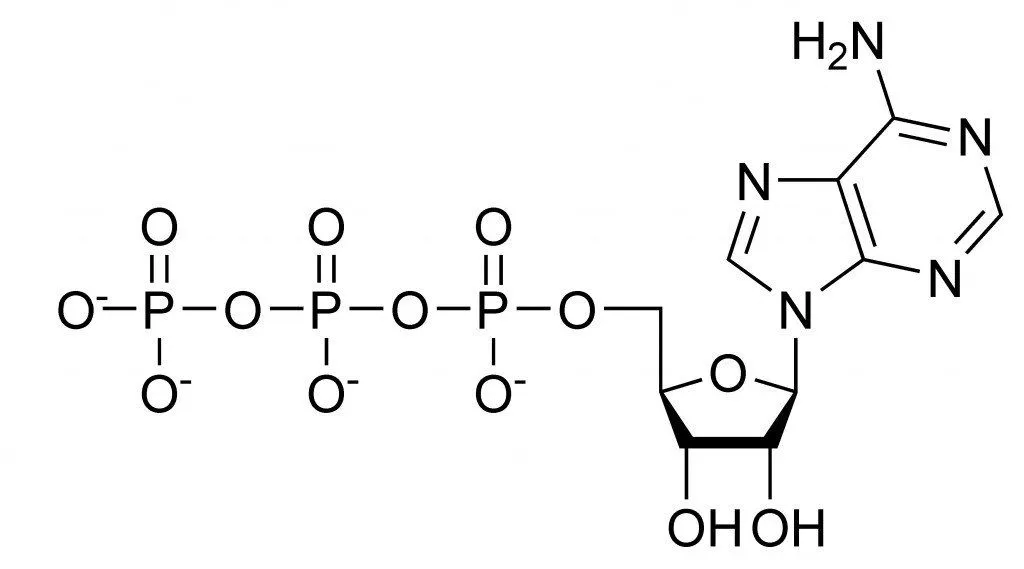
ATP (adenosine triphosphate) is the energy currency of every living cell. It is built from three parts: an adenine base, a ribose sugar, and three phosphate groups. Animals produce ATP through cellular respiration and plants through photosynthesis, and cells spend it to build molecules, move materials across membranes, and contract muscle.
When you prepare for a summer road trip, some of the most important things to remember include bringing delicious food for the journey, and making sure you don’t run out of gas! A car won’t run if it doesn’t have gas, because fuel is required to perform work. Similarly, human beings can’t “run” if they don’t have any fuel, which begins in the form of food.

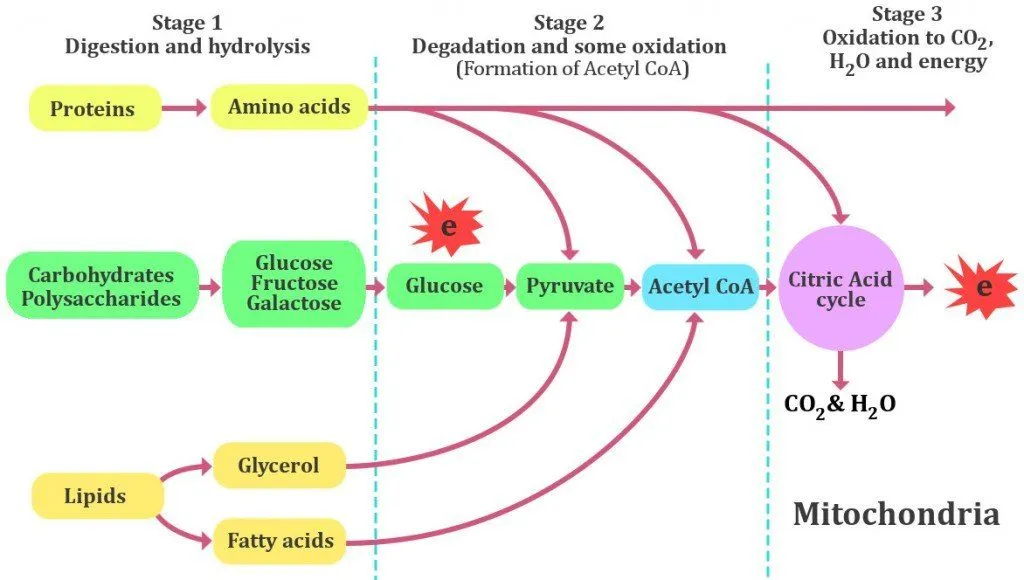
However, when that food is consumed and taken into the body, the energy of those food molecules isn’t immediately accessible. The food that we eat must travel through various pathways, including being broken down in the digestive tract, and must then be absorbed by the cells. At that point, cells convert food into a usable form of energy for the organism, more commonly known as ATP (adenosine triphosphate). This is not unique to animals; all life on our planet depends on ATP to fuel cellular and metabolic activity.
ATP Definition
Quite simply, adenosine triphosphate (ATP) is the energetic currency of a cell, and it is required for the cell to perform work of any kind, ranging from the synthesis of DNA to sending chemical signals and nerve impulses to the brain. Through metabolic pathways in the body, primarily cellular respiration, ATP is consumed and regenerated constantly, ensuring that an organism can function and survive.
This critical organic compound is composed of three main parts: adenine (a nitrogenous base), a triphosphate (three phosphate groups), and a sugar (ribose). Structurally speaking, the adenine and the sugar are bonded, and can then take on additional phosphate groups. With only one phosphate group attached, this compound is called adenosine monophosphate (AMP); when a second group is attached, it is called adenosine diphosphate (ADP), and when a third is added, adenosine triphosphate (ATP) is created.
When the body has enough ATP, it is able to communicate effectively between organ systems, synthesize DNA and RNA, transport chemicals into and out of cells, and produce essential proteins, along with many other critical processes needed for cellular and organism survival.
How Is Adenosine Triphosphate Produced?
The primary source of ATP in animals is cellular respiration, which occurs in the cytosol and mitochondria of the cell, beginning with glycolysis, followed by aerobic respiration (the Krebs cycle and the electron transport chain). Older textbooks quote a tidy 36–38 ATP per glucose, but modern biochemistry (Lehninger, Berg) puts the realistic yield closer to 30–32 ATP per glucose molecule, since each NADH delivers about 2.5 ATP and each FADH2 about 1.5 ATP through oxidative phosphorylation. Of that total, 2 ATP come directly from glycolysis, 2 from the Krebs cycle, and the remaining ~26–28 from the electron transport chain and ATP synthase.
Embedded in the inner mitochondrial membrane is a remarkable rotary enzyme called ATP synthase. The electron transport chain pumps protons (H+) out of the mitochondrial matrix, building a gradient across the inner membrane. As those protons flow back in through ATP synthase, the enzyme physically rotates, and that mechanical rotation drives the bonding of ADP and inorganic phosphate into ATP. This rotary “binding-change” mechanism, worked out by Paul Boyer and confirmed in the F1 crystal structure by John Walker, earned them a share of the 1997 Nobel Prize in Chemistry. When the cell later needs energy, ATP is broken back down to ADP through a process known as hydrolysis.
In plants, ATP is produced through photosynthesis. When a plant has ready access to carbon dioxide, water and energy from sunlight, it can undergo the light and dark reactions of photosynthesis. In the light reactions, the energy from the sun is converted into chemical energy (ATP) through the phosphorylation of ADP, which gains a phosphate group and becomes ATP. In the dark reactions of photosynthesis (the Calvin Cycle), that same ATP can be used to synthesize glucose, the food that plants need to survive.
How Is Adenosine Triphosphate Used?
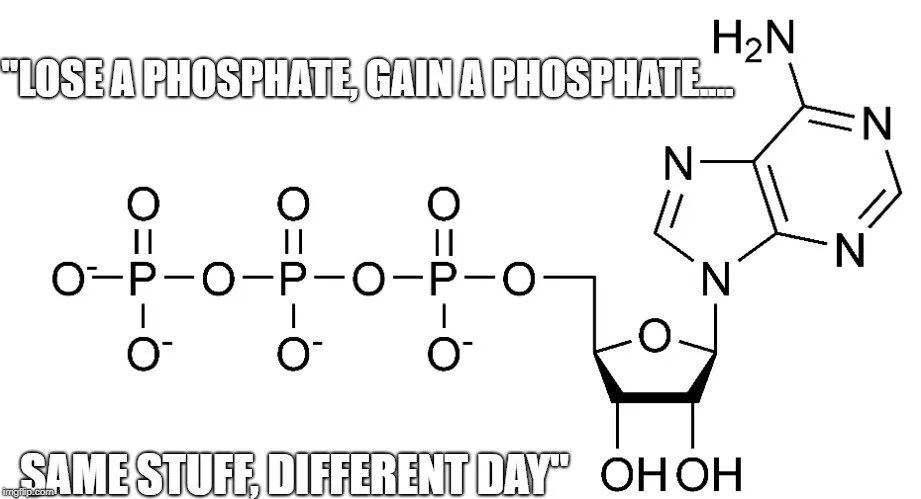
As the energetic currency of living organisms, ATP is used in many different ways, and for thousands of different purposes. Once an ATP molecule is created via ATP synthase, it will be moved to where it is needed through diffusion from an area of high concentration to low concentration. When adenosine triphosphate reaches the area where it is needed, energy can be released by breaking the bond between the second and third phosphate groups. When that final phosphate group is transferred to another molecule, often through a process called hydrolysis, the energy of that bond is released and can be used to power other essential processes in the cell. This leaves behind an adenosine diphosphate (ADP) molecule, which can then move back to an ATP synthase complex and start the cycle all over again.
As mentioned earlier, there are many different functions of ATP, because there are many different processes and pathways that demand energy in order for work to be performed. The three main types of work that involve ATP are chemical, mechanical and transport.
A common form of chemical work performed by ATP is the synthesis of macromolecules. Imagine that there is a substrate and an enzyme; the enzymatic reaction may only be catalyzed through an influx of energy, which can be acquired when an ATP molecule is converted into an ADP molecule. The reaction occurs, resulting in a product from the substrate, in addition to the ADP molecule.
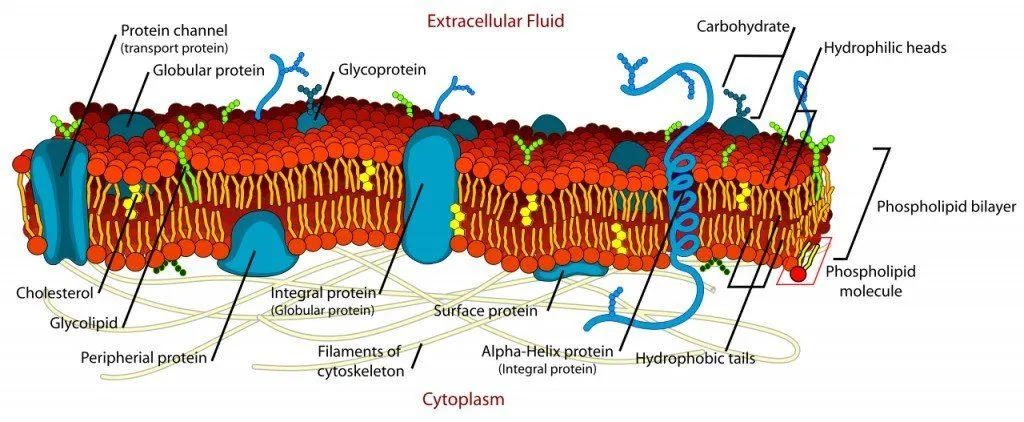
In terms of transport work, ATP is heavily relied on to help materials move through cellular membranes. For example, ATP fuels the sodium-potassium pump (Na+/K+-ATPase) that maintains the ion gradient across the plasma membrane, and the proton pumps in the stomach lining that push hydrogen ions (H+) into the gut to acidify it for digestion.
Finally, when it comes to mechanical work, things like muscle contraction and the movement of key proteins along a cytoskeleton are only possible in the presence of ATP, which can be broken down to release energy, leaving ADP and an inorganic phosphate molecule behind.
A Final Word
While these are the primary and most essential functions of ATP, this energetic currency is critical for all living organisms and millions of different chemical reactions. Every single second, hundreds of millions of conversions of ATP into ADP, and vice versa, occur within our body, fueling our survival at the most basic level of existence!
References (click to expand)
- Physiology, Adenosine Triphosphate. StatPearls. NCBI Bookshelf.
- Adenosine triphosphate (ATP). Encyclopaedia Britannica.
- The Nobel Prize in Chemistry 1997 (Boyer, Walker, Skou). NobelPrize.org.
- Adenosine Triphosphate. HyperPhysics, Georgia State University.
- 6.4: ATP: Adenosine Triphosphate. OpenStax/LibreTexts.