Table of Contents (click to expand)
Aerobic cellular respiration happens in three stages: glycolysis, the Krebs cycle, and the electron transport chain. Together they break down one glucose molecule in the presence of oxygen to yield roughly 30 to 32 molecules of ATP, along with water and carbon dioxide. Without oxygen, glucose instead ferments to lactic acid, releasing just 2 ATP.
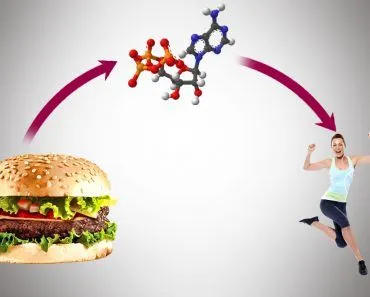
Everyone knows that food is our main source of energy on the macroscopic scale; you eat a certain balance of proteins, fats and carbohydrates and your body uses those key ingredients for the countless metabolic needs of the body. However, when you get down to the microscopic or cellular level, things get a bit more complicated. The breakdown of the nutrients that we consume and conversion into chemical energy occurs in a process called cellular respiration, one of the key metabolic pathways that we need to survive!
What Is Cellular Respiration?
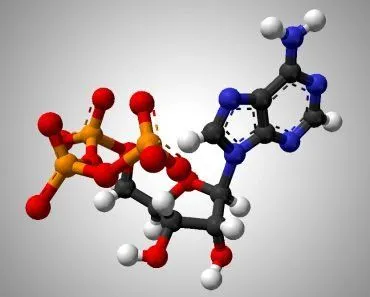
By definition, cellular respiration is the set of catabolic pathways that break down the nutrients we consume into usable forms of chemical energy (ATP). It can occur both with and without the presence of oxygen, and these two main forms are referred to as aerobic and anaerobic respiration, respectively. There are a number of key differences between the two, the biggest being that aerobic respiration is the more sophisticated process, with a far higher yield of ATP.

Aerobic Respiration
There are three main stages of aerobic respiration – glycolysis, the Krebs Cycle, and the electron transport chain – each of which deserves an entire article all to itself, but when looking at the overall process of cellular respiration, we will only look at these stages at a somewhat basic level, leaving out the specific details of every chemical reaction in each stage.
Glycolysis
This first step in the process of aerobic respiration occurs in the cytosol of the cell, and is an important starting point for the rest of the processes. In glycolysis, one molecule of glucose is converted into two molecules of pyruvate over the course of a ten-step reaction involving different enzymes at each step. Along the way, glycolysis uses two molecules of nicotinamide adenine dinucleotide (NAD+), two molecules of inorganic phosphate, and a small upfront investment of ATP to get the reaction moving. By the end, the cell comes out ahead: the net products are two molecules of ATP, two molecules of NADH (reduced nicotinamide adenine dinucleotide), the two pyruvate molecules, plus water and free hydrogen ions (H+).
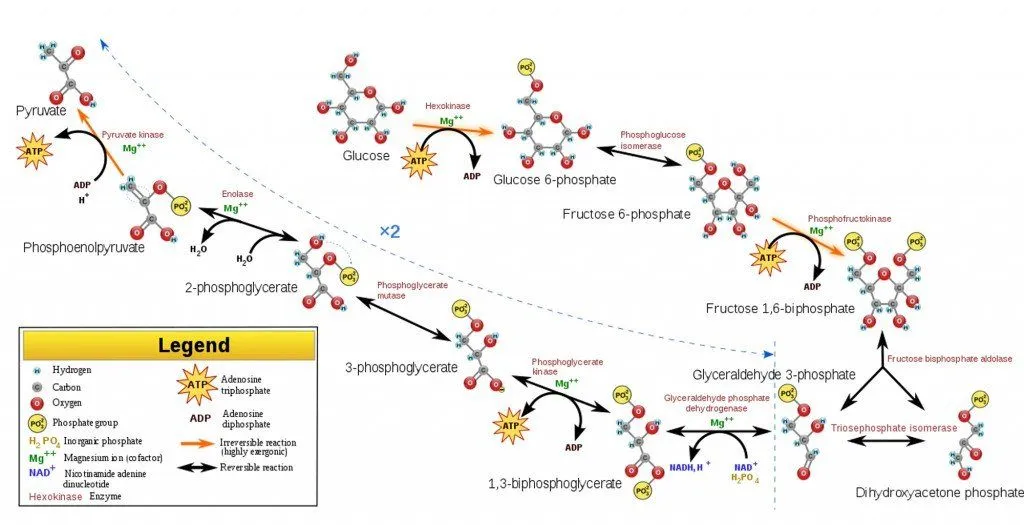
The water is a simple byproduct, the ATP is an immediately usable form of cellular energy, the NADH will be useful later in the aerobic respiration process, and the pyruvate acts as the primary substrate in the next step of the process.
Krebs Cycle (Citric Acid Cycle)
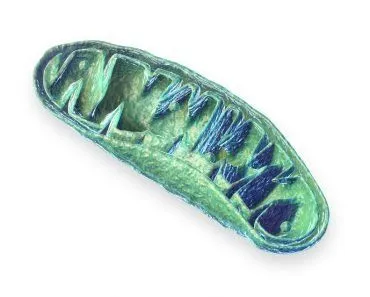
Similar to the process of glycolysis, there are many individual steps of the Krebs’ Cycle, the details of which are beyond the scope of this article. Basically, the Krebs Cycle is a stage of cellular respiration that takes place in the mitochondria in the presence of oxygen, unlike glycolysis, which occurred in the cytosol and can occur without oxygen being present.
The final product of glycolysis, two molecules of pyruvate, will enter the mitochondrial matrix. Counting the step that prepares the pyruvate and the two turns of the cycle itself (one turn per pyruvate), these mitochondrial reactions ultimately yield two molecules of ATP, 8 NADH, and 2 FADH2 molecules. Those latter two are high-energy electron carriers, and will go on to produce a significant amount of chemical energy in the electron transport chain.
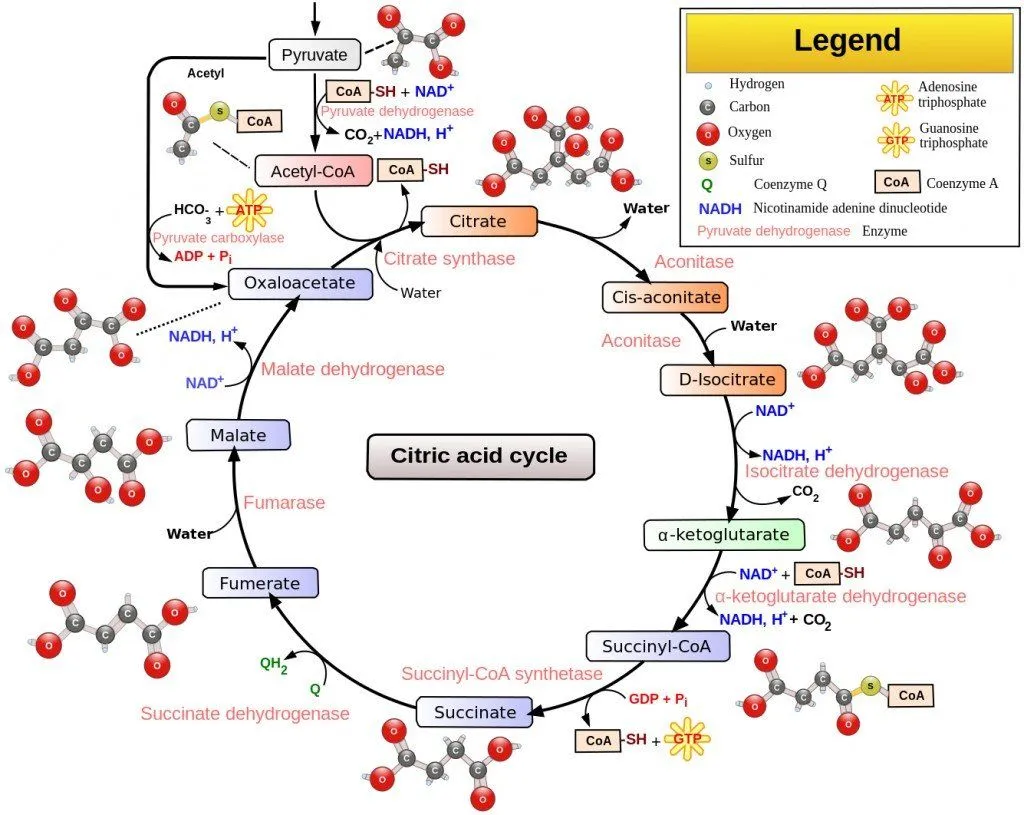
In the actual functioning of the Krebs’ Cycle, however, the pyruvate from glycolysis goes on an interesting journey, albeit a bit confusing. Before the pyruvate enters the cycle, it will be converted with an enzyme into acetyl-CoA, a two-carbon molecule attached to a coenzyme. This first reaction results in the removal of an electron and a carbon group, and the production of one NADH molecule. That acetyl-CoA bonds with oxaloacetate, creating a six-carbon molecule (citric acid), and releasing the coenzyme.
As the cycle continues, additional carbon dioxide molecules are removed from the citric acid, creating an additional molecule of NADH each time. Around the halfway point of the cycle, 2 more molecules of ATP are created, and then the regenerative stage of the cycle begins. In these final reactions, the four-carbon molecule, oxaloacetate, must be re-formed to restart the cycle, and that regenerative stretch creates the two molecules of FADH2.
The NADH and FADH2 molecules will move on to the final stage of cellular respiration, while the ATP will become available for use by the cell.
Electron Transport Chain
This is arguably the coolest and most unique stage of cellular respiration, and takes place near the membrane of the mitochondria, in a large protein complex that functions as an ATP factory. One of the primary functions of the membrane of the mitochondria is to prevent the flow of protons into the organelle, which establishes a strong gradient of positive charge on either side of this membrane. As some of you may know, when there is a charge gradient, there is the potential for work to be done.
In the case of the electron transport chain, there are four major protein complexes embedded in the inner membrane of the mitochondria, simply numbered 1, 2, 3 and 4. Several of these complexes directly or indirectly pump protons out of the mitochondrial matrix and into the intermembrane space (the narrow gap between the inner and outer mitochondrial membranes). The energy required to run those critical pumps comes from the energy released during the transfer of electrons through a waterfall series of chemical reactions.

The NADH that was produced in glycolysis and the Krebs’ cycle will be the primary source of these electrons. NADH molecules drop off their electrons at protein complex 1, which are then moved to protein complex 3 via coenzyme Q. The FADH2 molecules from the Krebs’ Cycle deposit their electrons at protein complex 2. The same coenzyme Q takes those electrons to protein complex 3. Cytochrome C carries 1 electron from each coenzyme Q to protein complex 4, while the other electron can be recycled. When the electrons leave protein complex 4, oxygen functions as the final electron acceptor, and produces water.
The proton gradient built up across the inner membrane is a form of stored energy, like water held behind a dam. The protons can only flow back into the matrix through one gateway: ATP synthase, the final factory of respiration. As protons stream through this protein complex and down their gradient, the flow drives the machinery that stitches together additional ATP from ADP and inorganic phosphate, a process known as oxidative phosphorylation.
The electron transport chain is where the lion’s share of the energy is captured, generating the bulk of the cell’s ATP along with water as oxygen mops up the spent electrons.
Combining this with the products of the earlier stages, a single molecule of glucose entering the cell, in the presence of oxygen, ultimately yields around 30 to 32 ATP, plus 6 water molecules and 6 carbon dioxide molecules. You will still see the tidy number 38 ATP (or 36) quoted in many textbooks, but that figure assumes a perfectly efficient cell. In practice, some energy leaks away while shuttling molecules across the mitochondrial membranes, so the modern, measured estimate lands closer to 30 to 32 ATP per glucose.
Anaerobic Respiration
In the absence of oxygen, your cells fall back on a different route to keep some energy flowing. If there is not enough oxygen to meet the energetic demands (such as when you are running a marathon or undergoing intense exertion), your muscles switch to a process called lactic acid fermentation, which produces a small amount of energy without using oxygen.
Without oxygen, fermentation effectively converts glucose into lactic acid while releasing a small amount of energy, just 2 ATP. Think back to the glycolysis step of aerobic respiration; glycolysis runs exactly the same way here, but instead of moving on to the mitochondria, the pyruvate it produces is simply reduced to lactate so the cell can keep glycolysis going. The catch is that a buildup of lactic acid lowers the pH around the muscle and can hamper muscle function if too much accumulates.
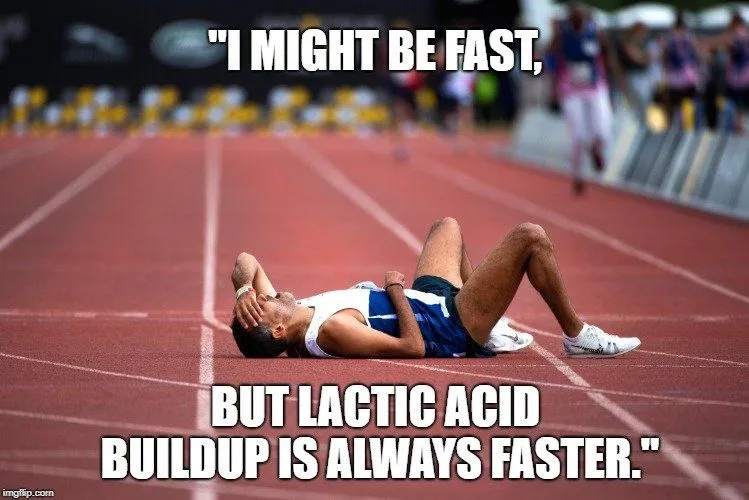
Lactic acid buildup is what causes cramps during intense exercise, and that discomfort can only be alleviated by re-oxygenating your body, which will allow for aerobic respiration to begin and stimulate the breakdown of lactic acid into carbon dioxide and water. This is also why your body has a limit to how far it can sprint!
Aerobic respiration is far more efficient and generates much more energy from the same molecule of glucose; fermentation nets just 2 ATP, against roughly 30 to 32 ATP for aerobic respiration, so the difference is stark.
A Final Word
While the inner workings of cellular respiration may seem a bit confusing, understanding things on a microcosmic and macrocosmic scale is extremely important! This article still simplified the complexity of these respiration stages; there are more in-depth articles on glycolysis, the Krebs’ Cycle and the electron transport chain elsewhere on this site!