Fascia is a continuous, collagen-rich connective tissue that wraps and links every muscle, bone, nerve, blood vessel and organ in the body, from head to toe. Anatomists usually divide it into three layers: superficial (just under the skin), deep (around muscles and bones) and visceral (around the internal organs).
You’ve surely heard of muscles, bones, organs, limbs, and other body parts that make up the interconnected network of different cells in the body that work together to carry out countless functions.
But have you ever heard the term fascia?
It’s a not-so-common body part that we now know to be quite crucial. It helps to link all our tissues, muscles and nerves together, keeping our body physically in one shape.
What Type Of Body Part Is Fascia?
I grew up thinking that our bones were the solid foundation upon which our muscles and organs built themselves, but I never considered that there was something helping all the body’s internal components stay together. That is what fascia was discovered to be. It also helps the skin connect to the inner tissue layers. It’s the body’s very own glue, making it a single connective unit.
Fascia sounds important, so why isn’t it commonly known? Well, it was largely overlooked by western medicine for a very long time. Body parts like bones, organs or muscles are countable and have a distinct shape. They can be studied and well classified. Bones could be seen through X-rays, and muscles could be studied through electromyography.
However, decades back, we didn’t have the proper tools to study fascia. It was pretty tough to classify fascia, as it is one large connective tissue surrounding the entire body. When doctors would study the human body, usually all the fascia would be removed so that the organs and tissues could be clearly seen in the sample bodies. No one truly understood its importance.
With technological and medical advancements, we now have better tissue-imaging techniques. With these developments, we were finally able to study and understand fascia. Fittingly, it was nicknamed the “Cinderella tissue” (a label popularized by fascia researcher Tom Myers) because it was overlooked for decades despite its huge significance. Researchers still haven’t agreed on a single, neat definition for it.
What Is Fascia Made Of?
Fascia is essentially a collagen matrix, and collagen is the most abundant protein in mammals (textbooks often quote figures of 25 to 30 percent of total body protein, though more recent measurements in mice put the share closer to 12 to 17 percent). Either way, there is a lot of it.
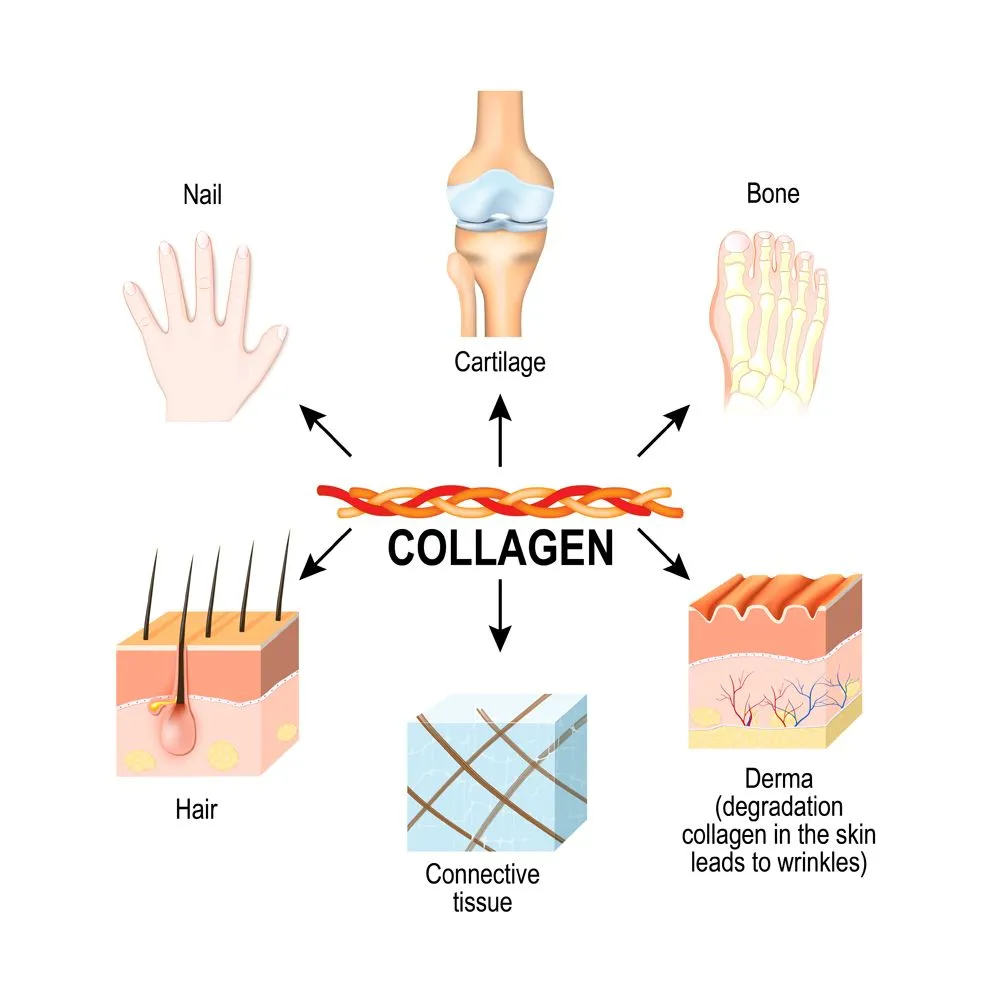
Fascia is made of dense collagen fibers that form a mesh. The fibers entangle together, forming a solid supportive network. There are different kinds of collagen, depending on the protein composition, and they make up different fascia types. Different fascia types have other properties that give them various functions.
What Are The Different Fascial Categories?
Anatomists traditionally divide fascia into three main types: superficial fascia, deep fascia and visceral fascia.
Superficial fascia sits just beneath the skin. It is a loose, collagen-containing layer that also stores most of the body’s subcutaneous fat.
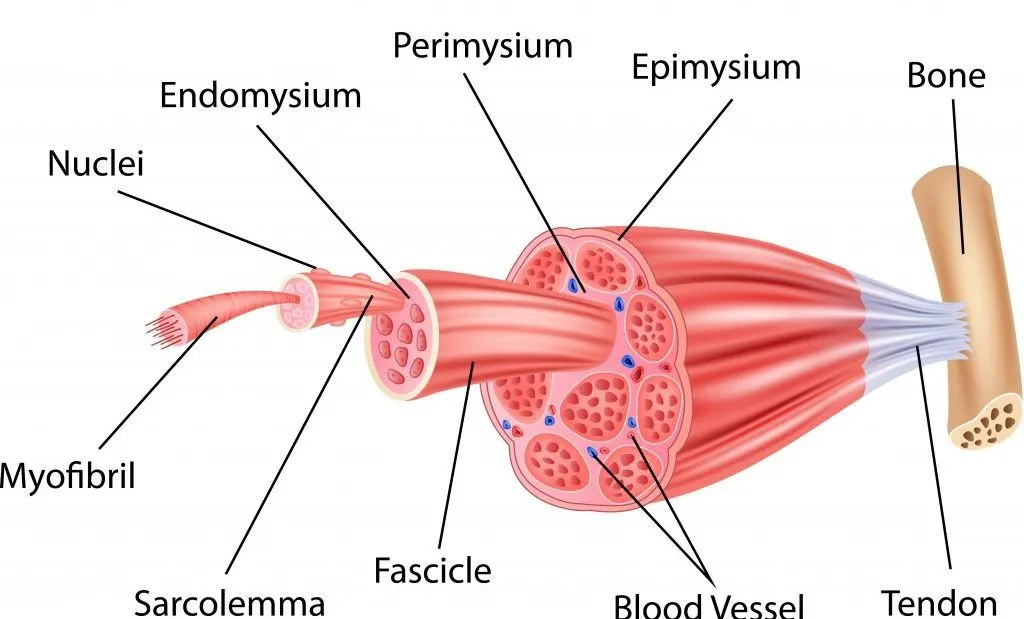
Deep fascia is the tougher, fat-free layer that wraps muscles, bones, nerves and blood vessels. The portion that hugs each individual skeletal muscle (the epimysium) is part of this deep fascia network.
Visceral fascia surrounds and suspends the internal organs (heart, lungs, gut and so on), keeping each one in its proper place within the chest and abdomen.
What Is Fascia’s Role In The Body?
Fascia does more than just provide support to our body parts and keep them in shape. As fascia provides inseparable connections between muscles, it is responsible for our smooth movements. When we walk or bend down to touch our toes, our muscles gently contract and relax in harmony with the help of fascia.
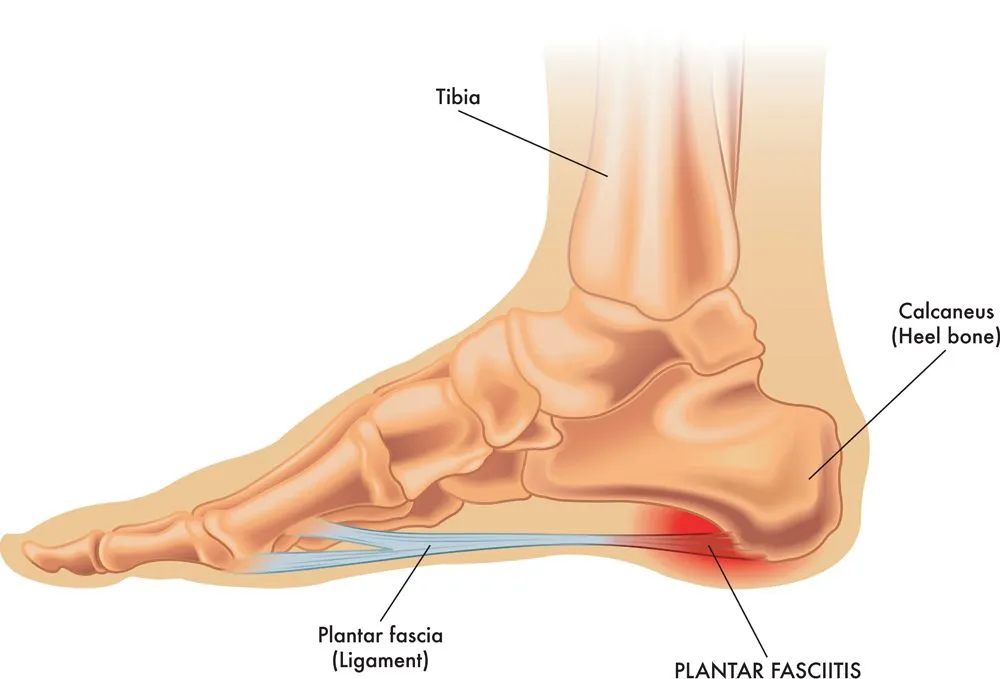
When we bend our arms or knees and move our joints, the neighboring blood vessels and nerves slide freely thanks to the tissue support fascia provides. Fascia also helps spread workload across the muscles. The plantar fascia in the foot is a great example: as the toes lift during the push-off phase of a step, it tightens like a cable and pulls the arch upward (a trick anatomists call the windlass mechanism), turning the foot into a stiff lever and storing elastic energy that springs us forward into the next step.
With new advancements in tissue imaging, such as electron microscopy, researchers found that fascial tissues are packed with sensory nerve endings. This suggests that fascia plays a real role in how we sense our own body. Pressure, stretch, temperature, vibration and pain are all picked up partly by receptors sitting in the fascia, and some researchers now describe it as one of our richest sensory organs.
That same wiring helps explain the soreness that arrives a day or two after a hard gym session. The pain receptors (nociceptors) doing the complaining sit mostly in the fascia and other connective tissue around the muscle, not in the muscle fibers themselves, which is why post-exercise soreness behaves the way it does.
This video on YouTube summarizes the importance of fascia very well.
Conclusion
As better tools to study fascia arrived, doors to many new research areas were opened. We can better understand how muscles sense vibrations and sensations and transmit this information to nerves. By understanding fascia, physiotherapy practices can be improved, which will help professional athletes improve their performance. Fascia can change how we understand health and disease, too, as now we know that our entire body is linked together by a never-ending collagen network.
There is even emerging research connecting fascia to our emotional state: because fascia is loaded with sensory nerves and is in constant chatter with the autonomic nervous system, prolonged tension in the fascial system seems to feed back into mood, stress and pain perception. It is a plausible reason why hours of sitting hunched at a desk can leave us feeling not just stiff, but also irritable and on edge.
Science has only scratched the surface of this full-body mystery, as there is still a lot to uncover about fascia and its essential functions.
References (click to expand)
- Anatomy, Fascia - StatPearls.
- Schleip, R., Jäger, H., & Klingler, W. (2012, October). What is ‘fascia’? A review of different nomenclatures. Journal of Bodywork and Movement Therapies. Elsevier BV.
- Fascia: a morphological description and classification ....
- Findley, T., Chaudhry, H., Stecco, A., & Roman, M. (2012, January). Fascia research – A narrative review. Journal of Bodywork and Movement Therapies. Elsevier BV.
- Real Cinderella Story.
- Wilke, J., & Behringer, M. (2021). Is “Delayed Onset Muscle Soreness” a False Friend? The Potential Implication of the Fascial Connective Tissue in Post-Exercise Discomfort. International Journal of Molecular Sciences.
- Fascia’s role in the mind-body continuum: a novel target for integrative treatments in psychiatry. Frontiers in Psychiatry.
- Fascia | Description, Anatomy, Function, & Disease. Encyclopaedia Britannica.