Table of Contents (click to expand)
- Why Is The Liver The Only Organ To Regenerate?
- Which Organs And Tissues Cannot Regenerate At All?
- How Do Salamanders And Axolotls Regrow Whole Limbs?
- Why Do Humans Scar Instead Of Regrowing (And Why Can Deer Regrow Antlers)?
- Can Humans Regenerate Anything Besides The Liver?
- Is The Regeneration Of Organs Possible?
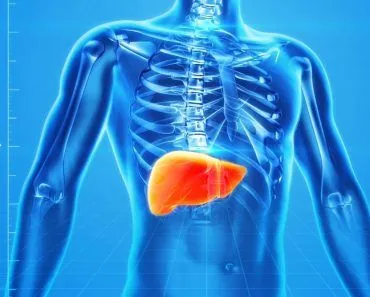
The liver is the only solid internal organ in humans that can regrow lost mass, recovering up to about 90% of its size within a few months after a partial loss. Other organs, like the heart, brain and kidneys, heal by forming scar tissue instead of regenerating, because mammalian wound repair seals injuries quickly rather than rebuilding complex structures.
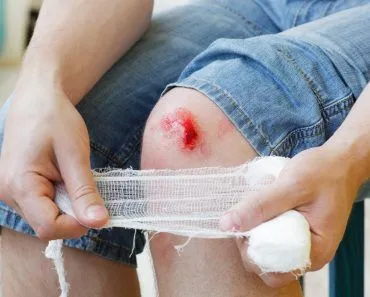
When you fall and scrape your knee, or injure yourself in some other way, you haven’t lost the skin in that area forever. Instead, our body regenerates the lost skin cells to restore our perfectly glowing and healthy skin again. However, there are times when this doesn’t happen, for instance, in the case of third-degree burns, amputations etc. In such cases, the body part in question doesn’t regenerate completely. What we are actually left with is scar tissue.
Another surprising fact is that our liver is the only solid internal organ that can regrow lost mass. Most people are aware that liver transplants don’t always involve transplanting the whole organ. Rather, a portion of the donor’s liver is cut off and put into the receiver’s body, where it grows back to near-full size within about 8 to 12 weeks and becomes fully functional within a few months. However, the heart, brain, kidneys and other essential solid organs don’t possess this phenomenal property.
Why Is The Liver The Only Organ To Regenerate?
We’ve established that the liver is the only internal organ to regenerate, yet it’s not at the top of the totem pole of important organs. The heart and brain partially tie for first position (the jury is still out on that one). Since the whole concept of regeneration continues to elude us, scientists don’t have a definitive answer for why this is the case with the liver. However, they have the next best thing – theories!
One of the theories states that the more complex the structure of the organ, the harder it is to regenerate. Organs like the kidneys and heart are very complicated, with multiple divisions within the organ. Different sections work in tandem to carry out the overall functioning of the heart. The liver, however, is simpler in terms of its functioning. The cells practically work as independent units carrying out the same function.
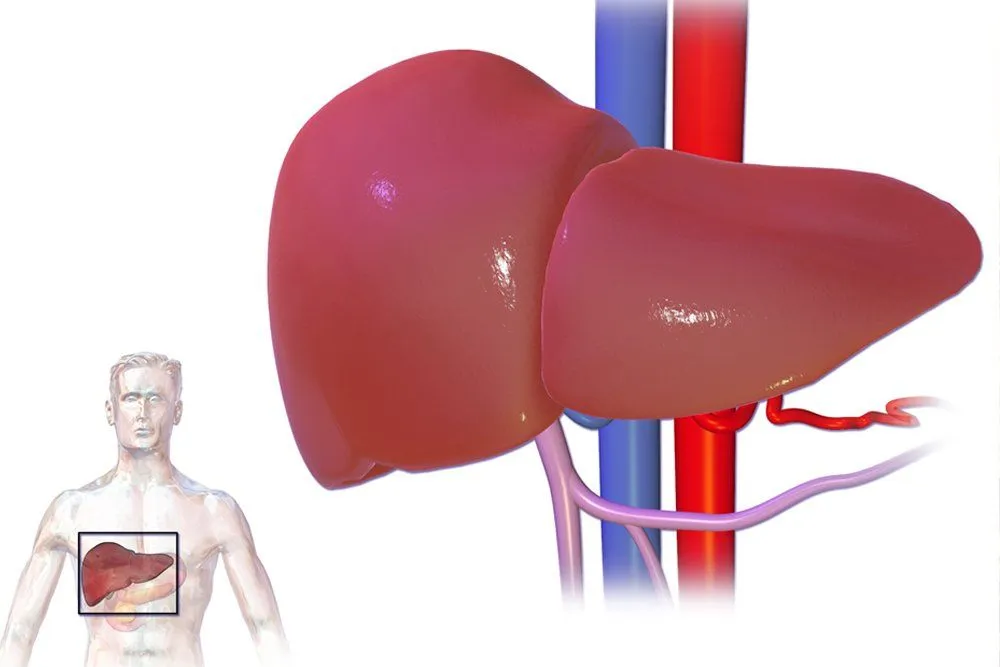
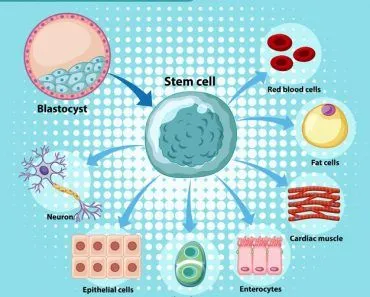
However, it is important to note here that the liver does not undergo proper regeneration. What scientists actually call it is compensatory hyperplasia: the existing liver cells, known as hepatocytes, simply divide to form new liver cells. While this does return the mass of the organ back to normal, the shape doesn’t come back to normal. Here’s why. The liver’s original lobes were sculpted during embryonic development by pluripotent stem cells, the ancestors of every single cell in our body. They have the ability to divide and differentiate to form any type of cell, be it a skin cell, heart cell, brain cell……you get the idea. By the time you’re an adult, though, those pluripotent cells are long gone. The job of regrowth falls to mature hepatocytes, which replicate locally to fill the gap. They restore the volume but skip the developmental blueprint that originally shaped it, so the regrown liver ends up the right size but the wrong shape.
Another theory that complements the previous one is that liver cells don’t have many modifications. They are very similar to a typical animal cell, so regeneration is easier, since less complex structures need to be multiplied.
It is argued that the above-mentioned points are an evolutionary advantage. It then begs the question, why didn’t we evolve to regenerate more important organs as well, like the heart or the brain? Sadly, scientists don’t have an answer for that yet. It could be because, since the heart and brain have different types of modified cells, more energy would be required to regenerate those. We would also spend energy in maintaining our pluripotent cells in their pluripotent stage, since a change in the shape of the brain or heart isn’t the safest idea.
Which Organs And Tissues Cannot Regenerate At All?
If the liver sits at the generous end of the spectrum, some of our tissues sit at the opposite, stubborn end. Biologists sort our cells into three groups based on how readily they replace themselves: labile, stable and permanent. Knowing which bucket a cell falls into tells you almost everything about whether the body can rebuild it or has to patch it.
Labile tissues, like the skin and the blood-forming cells in our bone marrow, are stocked with stem cells and are constantly being renewed. They are easy to damage but also easy to repair, because lost cells are simply replaced. Stable tissues, which include the liver and the kidneys, normally divide very little, but they can step up and multiply when the need arises. The catch is that if the damage is extensive, even stable tissues give up on rebuilding and lay down scar tissue (fibrosis) instead.
Then come the permanent cells, and this is where regeneration hits a wall. Neurons in the brain and spinal cord, along with the muscle cells of the heart (cardiomyocytes), are described as post-mitotic: they have permanently exited the cell cycle and lost the ability to divide, even when injured. Because these tissues cannot replace their lost cells, they can only repair themselves through fibrosis. That is exactly why a heart attack leaves behind a patch of scar that cannot contract, and why damage to the brain or spinal cord is so hard to reverse. Tooth enamel is another famous holdout, which is why a cavity never simply heals over the way a scraped knee does. We cover that quirk separately in why teeth don't heal like skin.
How Do Salamanders And Axolotls Regrow Whole Limbs?
Here is the part that makes biologists a little envious. A salamander can lose an entire leg and grow it back, complete with bone, muscle and nerves, in a matter of weeks. The undisputed champion of this trick is the axolotl, a Mexican salamander that can regrow not just limbs and its tail, but parts of its heart, jaws and even portions of its spinal cord and brain.

So how do they pull it off? Within hours of an amputation, a layer of skin cells (the wound epidermis) seals the stump and turns into a signaling hub. Below it, mature cells near the wound do something our cells refuse to do: they dedifferentiate, reverting from specialized cells (mainly connective-tissue fibroblasts) back into flexible, embryo-like progenitor cells. This pool of cells builds up into a structure called a blastema, which then divides and rebuilds the missing limb from scratch. A juvenile salamander can complete the whole process in roughly 40 to 50 days.
The most striking detail is that these blastema cells carry positional memory. They remember where they sit along the limb, so a blastema formed at the wrist knows to grow only a hand, while one formed at the shoulder grows the entire arm. Remarkably, researchers have found that humans still carry many of the same basic ingredients, including a version of this positional information. We just cannot seem to switch the full program on the way an axolotl does.
Why Do Humans Scar Instead Of Regrowing (And Why Can Deer Regrow Antlers)?
So why do we wall off a wound with scar tissue while a salamander rebuilds it? The difference comes down to what our cells do at the injury site. When a salamander is wounded, its connective-tissue fibroblasts dedifferentiate into a regenerating blastema. When a mammal is wounded, those same fibroblasts instead turn into myofibroblasts, which rapidly contract the wound and pump out collagen. The result is a fast, tough seal (a scar) rather than a slow, faithful rebuild. From an evolutionary standpoint, sealing a wound quickly to stop bleeding and keep out infection may simply have been the safer bet for a large, warm-blooded animal. We dig into this trade-off further in why we scar but lizards don't.

But mammals are not entirely locked out. Deer offer a stunning exception: their antlers are the only mammalian appendage known to regenerate fully and repeatedly, growing and shedding a complete set every single year. This renewal runs on dedicated antler stem cells, and the growth is explosive, with antlers elongating by up to 2 cm (about 0.8 inches) a day, making them the fastest-growing bone in any mammal. Deer prove that complex mammalian regeneration is not biologically impossible, which is exactly why scientists study antlers so closely while trying to understand why the rest of us lost the knack.
Can Humans Regenerate Anything Besides The Liver?
Believe it or not, you may already have a small piece of true regeneration hiding at the tips of your fingers. If a fingertip is amputated beyond the last knuckle (the distal phalanx), it can sometimes regrow on its own, complete with skin, nail bed and even the original fingerprint pattern, with little or no scarring. This is best documented in young children, but the underlying capacity is not limited to them.
What makes the fingertip special seems to be the nail organ. The cells tucked beneath the nail help drive the regrowth, which is why the magic only works at the very tip, distal to the nail bed, and not further down the finger. The standard medical advice for a clean fingertip amputation often leans on this: rather than rushing to graft skin over the wound, doctors may simply keep it clean and moist and let the body do the rebuilding. In one published study, researchers treated 22 fingertip amputations (in patients aged 2 to 72) using a semi-occlusive silicone cap, and in every case the subcutaneous tissue, nail bed and skin regenerated. So while we cannot regrow a heart or a kidney, the fingertip is a genuine, if modest, example of human regeneration in action. It also helps explain why different parts of the body heal at different rates.
Is The Regeneration Of Organs Possible?
Obviously, humans are unable to regenerate organs. We simply grow scar tissue and learn to live without the organ when we can, or we simply die. We do, however, regenerate cells, such as blood cells, liver cells, skin cells etc. This tells us that we do have the ability to regenerate. In fact, certain studies have shown that we actually have the same genes as some of the other animals on Earth have that enable them to regenerate their body parts. We simply need to figure out how to activate them.
Studies have also shown that pluripotent cells can be used to kickstart the healing and regeneration process of organs. However, to what extent that is possible is still unclear.
Regeneration may not necessarily be a dream. There are a number of possible methods out there… we just need to figure out how to harness them properly!
References (click to expand)
- MITK12Videos (2015). Why Can We Regrow A Liver (But Not A Limb)?. Youtube
- Michalopoulos GK, Bhushan B. Liver regeneration: biological and pathological mechanisms and implications. PMC / NIH
- Update on the Mechanisms of Liver Regeneration. PMC / NIH
- Tissue Homeostasis, Inflammation, and Repair (labile, stable and permanent cells). NCBI Bookshelf / NIH
- Transcriptomic landscape of the blastema niche in regenerating adult axolotl limbs. Nature Communications / PMC
- Principles of limb regeneration in salamanders show link to mammals. IMP
- Antler stem cells and their potential in wound healing and bone regeneration. PMC / NIH
- Human fingertip regeneration follows clinical phases with distinct proteomic signatures. npj Regenerative Medicine / PMC