A poverty trap is a self-reinforcing cycle in which being poor is itself the cause of staying poor: low income leaves nothing to save or invest in education, health, or assets, which keeps income low. Around 808 million people, roughly 1 in 10 worldwide, still live in extreme poverty (under $3 a day).
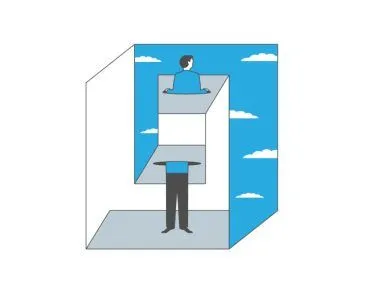
A poverty trap is a situation in which poverty forces people to remain poor. It is a vicious cycle that causes individuals, communities, regions or entire economies to get stuck in extreme poverty, where they are unable to break out of it for significantly long periods of time. The worst case of a poverty trap is where all of the above, from individuals up to national governments, become trapped in this cycle of poverty.
It is a self-reinforcing cycle in which people and economies that start poor will also end poor. For them, poverty itself becomes the cause of poverty.
Poverty traps are different from temporary poverty, which may stem from bad market outcomes, such as recessions or other financial crises, which are usually transitory. Economies experiencing such crises can recover from these adverse shocks relatively easily, but those trapped in persistent poverty traps remain poor for a very long time.
To better understand how poverty inhibits growth, we’ll explain the details, alone with the help of some ants and a grasshopper!
Savings, Investments And Growth
You are likely familiar with Aesop’s fable about ants and the grasshopper. The ants, who worked hard during the summer, were able to relax and stay safe during the harsh winter months. On the other hand, the grasshopper, who played fiddle all day and feasted on the bountiful provisions of summer, struggled to survive through the winter. This story has the moral of working hard and saving for the future.

Let’s slightly change the story. In this version of the story, both the ants and the grasshopper work hard to save for the winter, but just before winter, there was a calamity in the grasshopper’s neighborhood, causing all of his savings to be destroyed. Come winter, the leaves fell and the weather changed. The ants were relaxed, since they had enough savings, but the grasshopper was starving. He even had to sell his fiddle to the ants in exchange for food!
The ants had high earnings and low consumption during the summer, and saved for later consumption during the winter. On the other hand, the grasshopper, who had neither savings nor assets, would spiral into poverty without external support.
Savings provide a cushion in the face of adverse situations that may arise in the future. But why else do we need to save? We need to save so that we can invest and grow!
Imagine that the ants, instead of simply storing the seeds for the winter, cultivated them in a greenhouse they constructed in their anthill. Since the seeds will have grown into an even larger bounty, in winter, they will have both income and savings. Thus, the saved seeds are turned into capital that can yield future income. This means that the saved seeds have been invested.
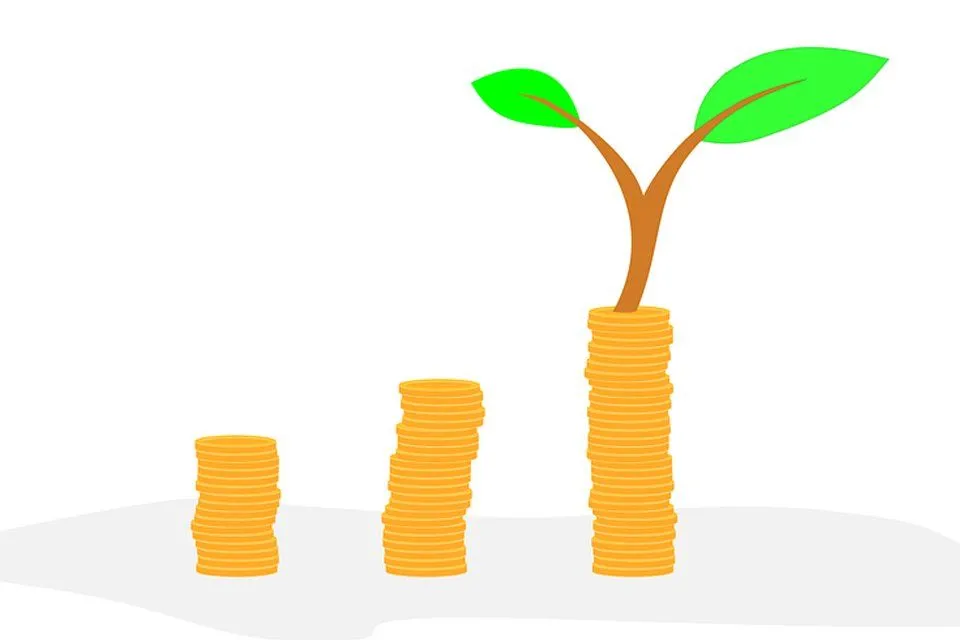
Because of savings and investment, the ants have enough not only to survive, but also to grow. On the other hand, since the grasshopper does not have any savings, he will struggle to survive. The small amount of food, if any, which he would earn during winter, would all be consumed. To grow, he needs to earn enough to not only consume, but also to save and invest. The situation of the grasshopper will not improve without an opportunity to earn more. Unless there is a higher level of income, there will be no savings, no investment and thus no growth.
People in poor countries face a similar situation. Without enough income, they find themselves unable to build capital that they can invest and grow. They cannot increase their income because they are facing a perpetual “winter”, namely, an inability to improve their situation.
Let’s look at some of these destructive, cyclical factors.
Why Do People Get Trapped In Poverty?
Why can’t people who have low income earn enough to save? Many factors affect the ability of a person to earn, particularly in the face of poverty. Poverty puts people at a higher risk for health problems due to a lack of nourishment and sanitation. This leads them to take days off work, which further reduces their income. On the other hand, constant health problems increase their medical expenses, which makes it very difficult for them to earn capital.

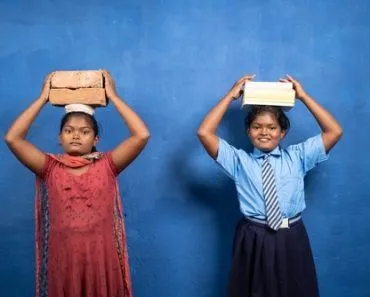
People who are below the poverty line struggle to make ends meet. In such situations, education becomes a luxury. A lack of adequate education leaves them incapable of getting better jobs, further cementing their situation and extending poverty across generations.
They lack the funds to purchase any assets that would serve as an initial productivity factor. The rich ants, who cultivated, for example, a hundred seeds in a day, would be in a position to cultivate a thousand seeds a day with the help of a machine. However, the grasshopper, who didn’t have any funds to buy a machine, would be unable to increase his income.
This is the self-reinforcing aspect of this circle. Low levels of income stop people from getting a good education and protecting their health, which leads back to the problem of low income. It is difficult for them to invest in things that could help them increase their income, since they have no surplus income to begin with.
They would require external support to escape from this situation. However, since the poor lack collateral, banks won’t lend them any money. Without being able to borrow funds, they have no economic opportunities, leading them back to low income and the inability to provide collateral. Thus, they get trapped in the poverty circle.
Now, let’s look at the bigger picture.
Why Do Entire Economies Become Trapped In Poverty?
The main income for governments is the tax that they collect from their population. They collect tax from people and utilize these funds to provide various facilities in the form of infrastructure, security, health care and so on. A good national infrastructure contributes to raising the quality of life of the people by creating amenities and providing transport and communication services. It reduces the cost of production for industries and provides access to modern technology.
In poor economies, the government has a limited tax-collecting capacity due to its poor population. Hence, it finds itself unable to afford expensive investments in infrastructure. This leads to the limited availability of specialized inputs and forces downstream industries to rely on less advanced (or labor-intensive) technologies, thereby leading to low productivity. Their profits hardly cover the owner’s consumption, thus leaving very little or no surplus at all to be invested.
Without funds, the government cannot provide employment opportunities to its people, which in turn contributes to higher levels of unemployment and poverty. In addition to unemployment, poor countries usually have a large population, which makes things worse. The resources available per person gradually become less and less.
Due to poor health and sanitation, diseases and epidemics are frequent and become unmanageable in the face of poverty and a lack of adequate facilities. This further erodes the standard of living of the economy. Adverse natural and stochastic shocks perturb the capital and drop the economy below a certain threshold point. Some countries also have geographical disadvantages due to their topography and climate. Harsh agricultural conditions with temperatures that are too hot or too cold result in low outputs.
Clearly, there are many factors that cause poverty traps to both emerge and remain in place. These factors have different aspects that make the issue multidimensional and complex. This makes it very difficult to suggest policy proposals, since there are hundreds of traps that an economy may fall into. Any policy intervention attempting to pull it out of one trap may end up pushing it into another, even bigger, crisis. As a result, economies and entire countries can stagnate in their impoverished state.
What Are Some Real-World Examples Of Poverty Traps?
The ants and the grasshopper make the idea easy to picture, but poverty traps are very real, and economists have given names to several of them. Here are a few of the most common.
The nutritional trap: A person who cannot afford enough food is too weak and too prone to illness to do demanding work, and the low-paid work they can manage doesn’t earn enough to buy more food. Poor nutrition in childhood can lower a person’s earnings for an entire lifetime, which is why this trap passes so easily from parents to children.
The credit (or collateral) trap: Banks lend to people who already own something, so the very people who most need a loan to get started, those with no assets, are the ones turned away. Without credit, they cannot buy the tools, seeds, or equipment that would raise their income, so they never acquire the collateral that would have made them creditworthy in the first place.
The education trap: Families that are barely getting by often need their children to earn money rather than sit in a classroom. Those children grow up with fewer skills, land low-paying jobs, and then face the same impossible choice with their own kids, locking poverty in across generations.
The geographic trap: Whole regions can be caught too. A remote village with poor roads, unreliable water, and little electricity offers few ways to earn a living, so anyone with ambition tends to leave and little new investment ever arrives. This is part of why the large majority of the world’s extreme poor now live in sub-Saharan Africa, where remoteness, weak infrastructure, and harsh climates often overlap.
How Can The Poverty Trap Be Broken?
If poverty feeds on itself, the way out is usually a push from outside that is big enough to break the cycle. Economists and governments have tried several approaches, and a few have built up a solid track record.
Microfinance: Tiny loans for people the regular banks ignore. The most famous example is the Grameen Bank, founded by economist Muhammad Yunus in Bangladesh, which won the 2006 Nobel Peace Prize for showing that the poor repay loans reliably when given the chance. Microcredit is not a cure-all, but for would-be entrepreneurs held back only by a lack of starting capital, it can be exactly the lever they need.
The “big push”: The idea that a one-time bundle of help, an asset such as a cow or some goats, a little cash to live on, training, and a savings account, can lift a household over the threshold where growth becomes self-sustaining. Long-running “Targeting the Ultra Poor” programs across several countries have produced lasting gains in income, health, and assets years after the support ended.
Conditional cash transfers: Governments pay poor families a regular allowance on the condition that they keep their children in school and take them for health checkups, attacking the education and health traps at the same time. Brazil’s Bolsa Família, launched in 2003, grew into one of the world’s largest such programs and reaches roughly a quarter of the country’s population.
Much of the modern evidence on what actually works comes from Abhijit Banerjee, Esther Duflo, and Michael Kremer, who shared the 2019 Nobel Prize in Economics for testing anti-poverty programs with carefully designed field experiments. Not every economist agrees that poverty traps are as widespread as once believed, but on the central lesson there is little argument: escaping deep poverty almost always takes a deliberate push, because the cycle rarely breaks on its own.
References (click to expand)
- 1 Poverty Trap. Northwestern University
- Hassan B. Izhar - Why Poverty Traps Emerge? - CiteSeerX
- (2017) Growth and Poverty Traps: Examples from Literature - CORE. The University of Connecticut
- Dr Carolyn O’Fallon - Linkages Between Infrastructure And Economic Growth - CiteSeerX
- Kraay & McKenzie - Do Poverty Traps Exist? Assessing the Evidence. Journal of Economic Perspectives (AEA)
- June 2025 Update to Global Poverty Lines. The World Bank
- Banerjee, Breza, Duflo & Kinnan - Can Microfinance Unlock a Poverty Trap for Some Entrepreneurs? J-PAL (MIT)
- The Nobel Peace Prize 2006: Muhammad Yunus and Grameen Bank. NobelPrize.org