Table of Contents (click to expand)
Redesigning education in developing nations is difficult because simply adding inputs like textbooks rarely improves learning on its own. Randomized trials by 2019 Nobel laureates Banerjee, Duflo and Kremer show that lasting gains require changes to how teachers teach, plus tackling poverty, language barriers and the pull of child labor.
Dabbling with creative interventions to improve educational outcomes has long been the focus of governments worldwide. Countless policies address issues in education, ranging from increasing enrollment rates to improving skill-based education. Education is the easiest way to improve living standards in the long run. For a country, its human resources are the most prized. What it chooses to do with these human resources determines how other resources will be used.
Improving education has always been a critical focus area, yet why do we still see struggling primary and secondary education statistics across developing countries? The scale of the gap is sobering: as of 2024, roughly 273 million children and youth worldwide were out of school, a figure that has risen for seven straight years (UNESCO, 2026 Global Education Monitoring Report). Even for those who do attend, learning is far from guaranteed. The World Bank estimated in 2022 that about 70% of 10-year-olds in low- and middle-income countries could not read and understand a simple text, up from 57% before the pandemic.
The 2019 Nobel Memorial Prize in Economic Sciences was awarded to Abhijit Banerjee, Esther Duflo and Michael Kremer for their experimental approach to alleviating global poverty, and much of their work tackled exactly this question.
Reorienting education is a daunting task in developing countries because, in many regions across Sub-Saharan Africa and South Asia, schools aim to deliver instruction in a second or third language (often English) under the banner of a modernized or elite curriculum.
However, parents who do not speak that language have no way to verify whether a teacher is even using it correctly in the classroom, a point raised in the book Poor Economics by Abhijit Banerjee and Esther Duflo.
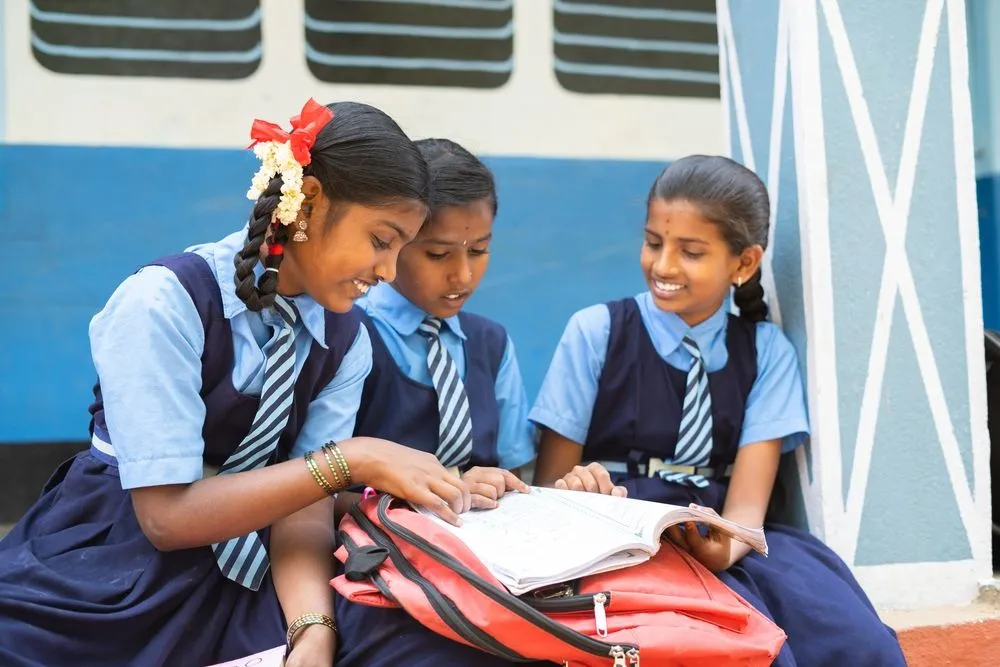
Likewise, governments often lack a mechanism to detect this gap. On paper, the curriculum may be delivered in the official language of instruction, but the quality is frequently sub-par. When textbooks are written in a language students barely read, they struggle to relate the material to the world around them, which in turn hampers their grasp of other subjects.
Kremer and his colleagues ran a field experiment that illustrates the point. In a study by Paul Glewwe, Michael Kremer and Sylvie Moulin, official English-language textbooks were provided to a randomly selected set of roughly 100 rural primary schools in western Kenya. For the average student, test scores barely budged. The textbooks did help the strongest pupils, but most children could not read the English texts well enough to benefit.
This experiment highlights a hard lesson: providing inputs alone, such as textbooks, is not enough. Tangible inputs must be paired with changes in classroom pedagogy. In some settings, a change in pedagogical practices alone can make a significant difference, without requiring any extra resources.
The other major challenge facing education in developing nations is a highly demotivated system. Although enrollment rates for primary schools have risen over the years, improved learning outcomes do not necessarily follow.
Parents who send their children to primary school may not let them continue in secondary school, as that child can start earning and contributing to the household income by performing odd jobs. The returns from this sub-par education are not significant.
Additionally, it takes time for education to reap returns, and education is seen as a form of investment; the delayed wait time is not something that every low-income household can afford.
How Did The Nobel Trio Arrive At Context-specific Answers For Developing Nations?
Randomized controlled trials (RCT) is a method that scientists commonly use in a range of fields. Just like the term signifies, two groups are picked randomly. The treatment group is administered a treatment, such as textbooks, while the control group is not given any treatment (textbooks). Over time, the results of both groups are compared to arrive at a causal factor, in this case, whether administering textbooks improves learning outcomes.
This experiment allows researchers to compare the two groups by looking at the impact of the factor that is administered. This control level helps narrow down to one causal factor, rather than being lost in multiple potential variables that affect an issue.
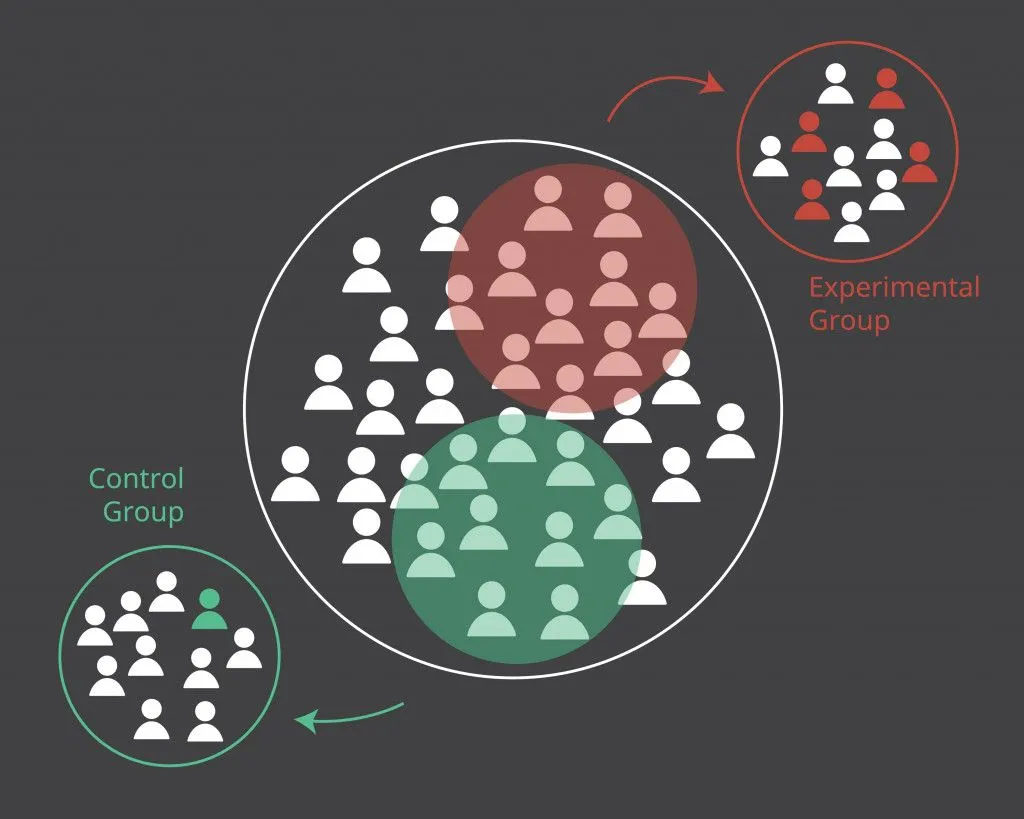
This experimental approach to tackling developmental issues, such as eradicating poverty, improving education, and many others has become the preferred method to arrive at causal factors for a problem.
In the past, economists dealt with long-term solutions, but RCTs identify short-term solutions. The practitioners believe that there is no grand theory or a grand solution to any problem, but by identifying one causal factor, they can design better policy interventions.
Potential Problems With RCT
There is agreement across the board on the need for context-based solutions. However, with RCTs, there are just too many solutions. Even while equalizing two samples, critiques have found that many constraints specific to an individual will be ignored.
For instance, researchers found that educational outcomes can be improved through cash transfers, an idea tested in Mexico and later in New York City. Mexico's Progresa program (later renamed Oportunidades, then Prospera) paid families a grant on the condition that their children stayed enrolled and attended school. Because education is treated as a long-term investment, policymakers reasoned that such transfers could help break the cycle of poverty.
The payment was, in effect, compensation for the wages a child gave up while sitting in a classroom. The aim was to nudge families toward supporting schooling, regardless of how they felt about its payoff. New York City borrowed the concept for its Opportunity NYC: Family Rewards demonstration, with its own conditions tied to attendance and achievement. Notably, the NYC program did not improve results for younger students; gains showed up mainly among better-prepared high-schoolers, a reminder that the same lever works differently in different contexts.
Although increasing enrollment is the first step, is this solution sustainable? What about pedagogical practices? Incentivizing education in this way may create further problems in terms of finding adequate ways to fund this expense and can erode faith in the system. Should handing out money be the answer?
Will these students eventually be more employable with the skills they learn in this manner? Or do we have to conduct another RCT to figure that out?
It seems rather endless, as has been pointed out by other economists.
The narrowing down to one factor does seem rather unsettling. While it is tempting to locate one causal factor, it is equally possible that various other factors also influence that situation.
Can RCT control for all those factors? In the above example, enrollment has increased through a conditional cash transfer, but what if there aren’t sufficient schools in the locality for students to access? What if a child can earn much more than the cash transfer handed to him at school through odd jobs? Does that mean he must leave school? And most importantly, are we educated merely to earn or learn?
In conclusion, what RCTs reveal is that reengineering education in developing nations is hard for overlapping reasons. In many places, instruction happens in a second or third language that students and even teachers have not fully mastered. On top of that, poverty, hunger, and gender bias mean that families often expect schooling to pay off quickly, even though its real returns arrive only years later.
Because those returns are delayed, children are pulled into odd jobs to supplement the family income, and it becomes difficult to cleanly measure whether any given reform is working. There is no single grand fix; progress depends on pairing the right inputs with better teaching, tailored to each context.
References (click to expand)
- Banerjee A. V. (2013). Poor Economics: Rethinking Poverty and the Ways to End it. Random House India
- Glewwe, P., Kremer, M., & Moulin, S. (2009, January 1). Many Children Left Behind? Textbooks and Test Scores in Kenya. American Economic Journal: Applied Economics. American Economic Association.
- Randomized control trials for development? Three problems. The Brookings Institution
- More children out of school for the 7th year in a row, up to 273 million. UNESCO.
- 70% of 10-Year-Olds now in Learning Poverty, Unable to Read and Understand a Simple Text. The World Bank.