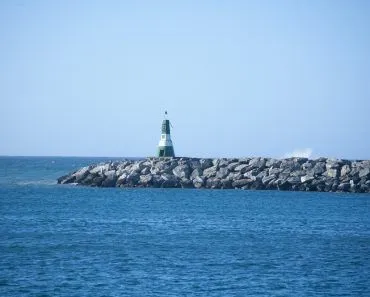
Sailors in the 19th century dumped oil in the sea to calm the waves around their ship, and it genuinely worked. A spoonful of oil spreads into an ultra-thin film that damps the tiny wind-driven ripples the wind uses to grip the water. With nothing to grab, the wind can no longer build the surface into steep, breaking waves, so the sea near the ship turns slick and smooth.
This might come as a shock, especially if you’re an environment enthusiast, but in the late 19th century, sailors used to dump oil in the sea on purpose! Sailors used to stockpile different kinds of oil (vegetable oil, mineral oil and even sperm whale oil) just so that they could dump it in water.
It may seem like an incredibly pointless exercise, but they did have a ‘good’ reason to spill those valuable oils in water. In fact, they knew that oil could help calm violent waves in the ocean.
Their trick worked, and in fact, it still does! There is an entire book on it, The Use of Oil to Lessen the Dangerous Effect of Heavy Seas, published in 1886 by George L. Dyer of the U.S. Hydrographic Office. It catalogs, captain by captain, which kinds of oil were poured where to tame which kind of storm.
Technology, back in the day, was not nearly as advanced as it is now, so ships back then were not as sturdy as the ones used these days to maneuver through choppy waters. This seemingly strange ‘oil-spill’ technique helped them to calm waves and somewhat “master” storms.
How Does Oil Help To Calm Ocean Waves? – Immiscible Liquids
The reason is one you’ve surely heard of before: the mutual hatred between water and oil. They are immiscible liquids; in other words, they don’t mix into each other under ordinary conditions. If you put these liquids in a container and shake them violently, they may seem to mix at first, but will separate all by themselves after some time.
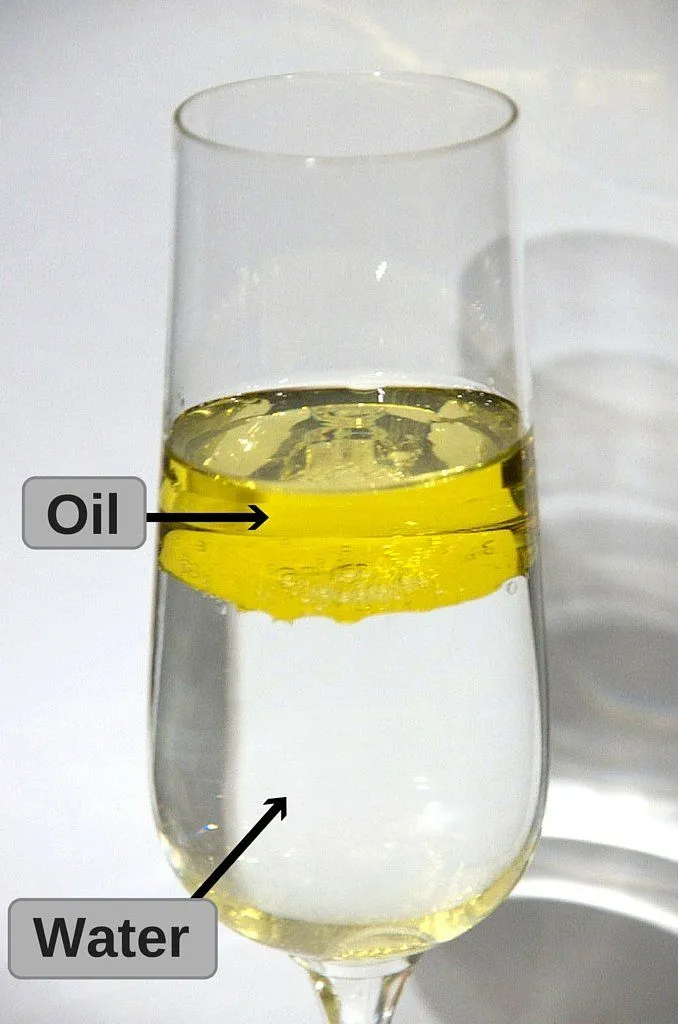
This mutual hatred between oil and water results in this fantastic application for calming violent waves.
Under normal conditions, i.e., in the absence of spilled oil, wind first roughens a calm sea into a fine pattern of tiny ripples. Those little ripples give the wind something to push against, and once it has that grip, it keeps feeding energy into the surface, building the ripples up into the steep, breaking waves that make a storm so dangerous.
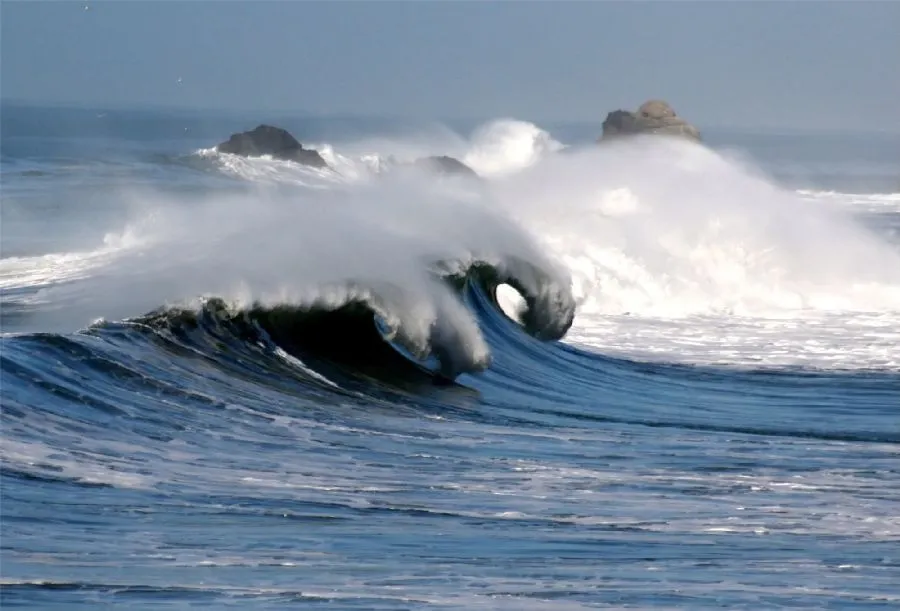
However, when oil is spilled on water, it spreads out into an astonishingly thin film, often just one molecule thick. That film stiffens the surface and smooths out exactly those tiny wind-driven ripples the wind relies on to get a grip. With the ripples damped, the wind slides over the water instead of grabbing it, so it can no longer pump energy in to build up large, breaking waves. In effect, the oil acts as a shield that keeps the wind from working on the sea. A small quantity of oil dropped overboard by sailors would calm the waves around their ship to a remarkable degree.
So why does such a vanishingly thin layer do so much? You see, as a ripple passes, it stretches and squeezes the oil film along the surface. The film resists being stretched, and that tug-of-war drags on the water just beneath it and quietly bleeds energy out of the ripple. Scientists call this Marangoni damping, and it is why a film you could barely measure can flatten the small waves that feed a storm.
The oil film helps in a second way too. In a gale, the sea throws up spray and breaking spume that roughen the surface even further and give the wind extra purchase. By holding the surface together and stopping waves from breaking, the film cuts down on that flying spray, taking away yet another way for the storm to whip up the sea.
Believe it or not, spilling even a small amount of oil, often less than a gallon (about 4 liters) per hour, could calm the broken water around the ship to a great extent. Not just any oil would do, though. Fish and vegetable oils worked far better than mineral oils, because their molecules spread out into an even film instead of clumping together. There was one important limit: the trick tamed the steep, breaking waves whipped up by the local wind, but it could not iron out the large swells rolling in from a distant storm. Sailors used it to keep their own patch of sea slick enough to ride out the worst of it.
How Did Sailors Actually Get Oil Onto A Raging Sea?
So how do you calm a storm without emptying half the ship’s stores over the side? The trick is that sailors almost never dumped the oil in one dramatic splash. They let it out slowly, a drip at a time. Their favorite tool was the oil bag, a simple canvas pouch either loosely stitched or pricked with a sail needle so the oil could seep out drop by drop. A crew would hang one over the bow, or tie it to the sea anchor that held the ship’s head to the waves, and let the wind and current smear a thin slick across the water upwind of the hull.

A little went a remarkably long way. One captain reported keeping the sea around him calm for eight hours on just two quarts (about 2 liters) of colza oil. That fit the rule these sailors worked by: a slow trickle, often less than a gallon (about 4 liters) an hour, was plenty. Vegetable, fish, and animal oils such as colza, linseed, and seal oil spread into a clean, even film and worked far better than heavy mineral or petroleum oils, which tended to clump together.
This was not just sailors’ folklore, either. It was written into law. Britain’s Merchant Shipping Act of 1894 required ships to carry “oil for use in stormy weather,” the very rule that governed the lifeboats aboard the Titanic. The U.S. Coast Guard’s manual for lifeboatmen was even more exact: one gallon of vegetable, fish, or animal oil, carried in a metal container built to release it in a controlled way and rigged to clip onto the sea anchor. That requirement stayed on the books until 1983, when fully enclosed lifeboats replaced the open boats and finally made the old trick unnecessary.
Where Does The Phrase “Pour Oil On Troubled Waters” Come From?
Those 19th century captains were not the first to notice the effect. They were rediscovering something people had known for close to two thousand years. The Roman writer Pliny the Elder set it down in his Natural History around AD 77, observing that the sea turns smooth wherever oil is spread on it, and that divers would release a little oil from their mouths to calm the surface overhead and let more light reach them below.

The most charming early account comes from the English monk known as the Venerable Bede. In his Ecclesiastical History of the English People, finished around AD 731, Bede tells how the bishop Aidan handed a priest named Utta a flask of holy oil before a sea crossing around AD 642. Pour it on the water if a storm blows up, Aidan told him, and the wind will drop. A storm duly rose, Utta remembered the advice and tipped the oil overboard, and by Bede’s telling the sea “ceased from its uproar.” What Bede recorded as a miracle was, we now know, a film barely a molecule thick quietly ironing out the ripples.
That long remembered trick is where we get the saying to pour oil on troubled waters, meaning to settle a quarrel with a few calming words. The plural “troubled waters” caught on in the late 1700s, and the image has stuck ever since, even though the physics behind it took another century to pin down.
Benjamin Franklin And The Pond Of Glass
If this all sounds like a sailor’s tall tale, consider that one of history’s sharpest minds put it to the test. Benjamin Franklin first grew curious about it in 1757, when, on a voyage to England, he watched the wakes of two ships stay oddly smooth and was told it was the greasy water the cooks had tipped overboard.
He could not let the idea go. Years later, in 1769, he tried it himself on a wind-ruffled pond at Clapham Common in London. He dribbled barely a teaspoon of oil onto the water, and, as he later wrote, it spread until perhaps half an acre of the pond was “as smooth as a looking-glass.” Franklin described the whole affair in a letter to his friend William Brownrigg on 7 November 1773, and the account was read to the Royal Society and printed in its Philosophical Transactions in 1774 under the wonderfully blunt title Of the Stilling of Waves by Means of Oil.
Franklin never worked out just how thin his film was, but the experiment quietly handed science a tool. More than a century later, Lord Rayleigh and Agnes Pockels used the very same teaspoon-on-water trick to measure the size of a single molecule, pegging the film at roughly a nanometer thick. A sailor’s storm remedy had become one of the first windows onto the molecular world.
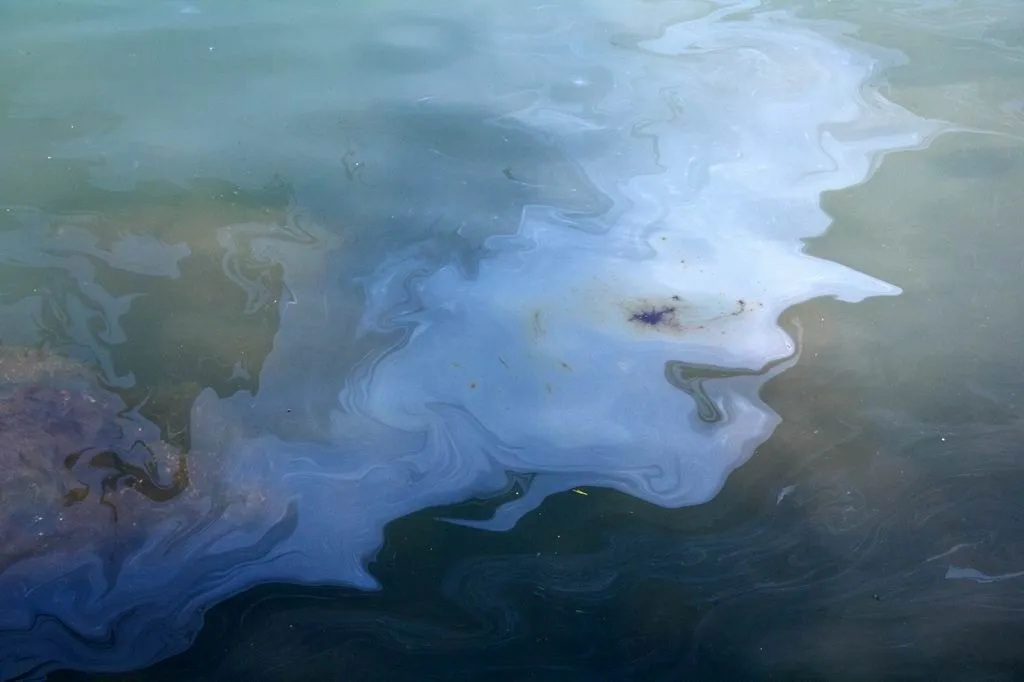
This technique can still work for boats and cruise ships that go on long voyages on the sea. However, due to the obvious detrimental effects, such as the destruction that an oil spill can have on aquatic life, this technique is no longer used.
With rapid improvements in technology, there are ample measures and systems now in place that safeguard a ship during a storm. However, you have to give some praise to those ancient mariners for their scientific acumen, because they did come up with a basic, yet highly effective way to master the waves!
References (click to expand)
- Franklin, B., Brownrigg, W., & Farish. (1774). Of the Stilling of Waves by means of Oil. Philosophical Transactions of the Royal Society of London.
- Benjamin Franklin, Philadelphia’s Favorite Son, was a Membrane Biophysicist. Biophysical Journal. PMC, NCBI.
- Analysis of the effect of fish oil on wind waves and implications for air–water interaction studies. Ocean Science, Copernicus Publications.
- Franklin’s teaspoon of oil. Royal Society of Chemistry (RSC Education).
- Dyer, G. L. (1886). The Use of Oil to Lessen the Dangerous Effect of Heavy Seas. U.S. Hydrographic Office.
- National Research Council. (2003). Oil in the Sea III: Inputs, Fates, and Effects. National Academies Press.
- In Some Situations, Ships Dump Oil on Purpose. NOAA Office of Response and Restoration.
- Oil on Troubled Waters. The Lifeboat, Royal National Lifeboat Institution archive.
- Bede. Ecclesiastical History of the English People, Book III, Ch. XV. Christian Classics Ethereal Library.
- Pliny the Elder. The Natural History, Book II. Perseus Digital Library, Tufts University.
- Pour oil on troubled waters, meaning and origin. The Phrase Finder.