Table of Contents (click to expand)
Bridges have arches because the curved shape directs the weight of the load along the arch as compression (pushing each stone tightly against its neighbours and out toward the abutments at either end) rather than as bending or tension. Stone, brick and concrete are very strong in compression but weak in tension, so an arch lets ancient builders span large gaps with cheap, locally-quarried stone and minimal supports. The abutments anchored in the ground absorb the outward thrust, which is why some Roman arch bridges are still standing two thousand years later.
If you look up images of ancient bridges, regardless of the country where they’re located or the people responsible for their construction, you will find a rather interesting structural similarity among all of them – the arch shape.
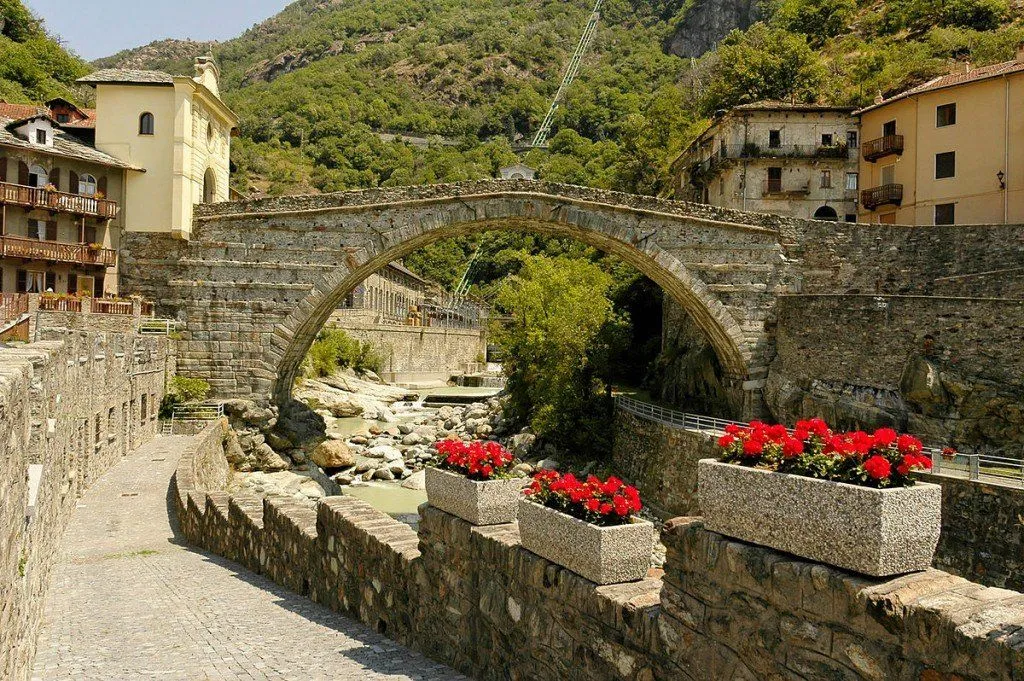
Why do so many ancient – as well as modern bridges – have the same arched shape? As it turns out, this peculiar similarity is much more than a coincidence…
Arch Bridges
If you were to look at an arch bridge, it might strike you as a semicircular structure, namely because the two abutments on either side of the bridge are connected by a curved arch. Unlike linear bridges, which need multiple abutments to support the load, in arched bridges, the curve effectively dissipates the force of the load outward, i.e. away from the bridge itself.
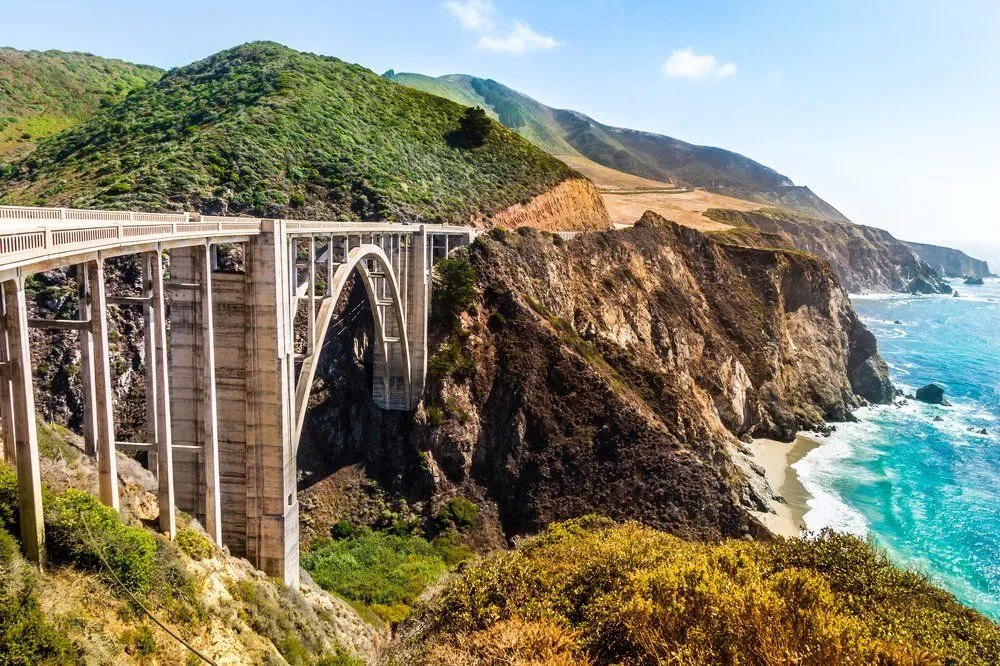
This style of bridge design is quite old and can be seen in bridges located in many different parts of the world. Ancient arch bridges were made of brick or stone, but in modern times, steel and pre-stressed concrete is used to ensure the sturdiness of bridges under huge amounts of pressure.
Why The ‘Arch’ Shape?
Suppose there’s a person (let’s call him Archie) standing somewhere in the middle of an arch bridge. Archie will exert a certain amount of force on the bridge deck due to his weight. This force is the ‘load’, i.e. the downward force that the bridge has to support.
The stones that make up the bridge should be pressed tightly against each other (depending on the quality of construction). Therefore, when Archie applies force (weight) from above, it causes the stone under him (called the keystone) to push outwards against the stone next to it, which pushes itself against the next stone, and the process continues for all the subsequent stones. In this way, the force is transmitted outwards along the curve of the bridge on either side before it reaches the abutments.
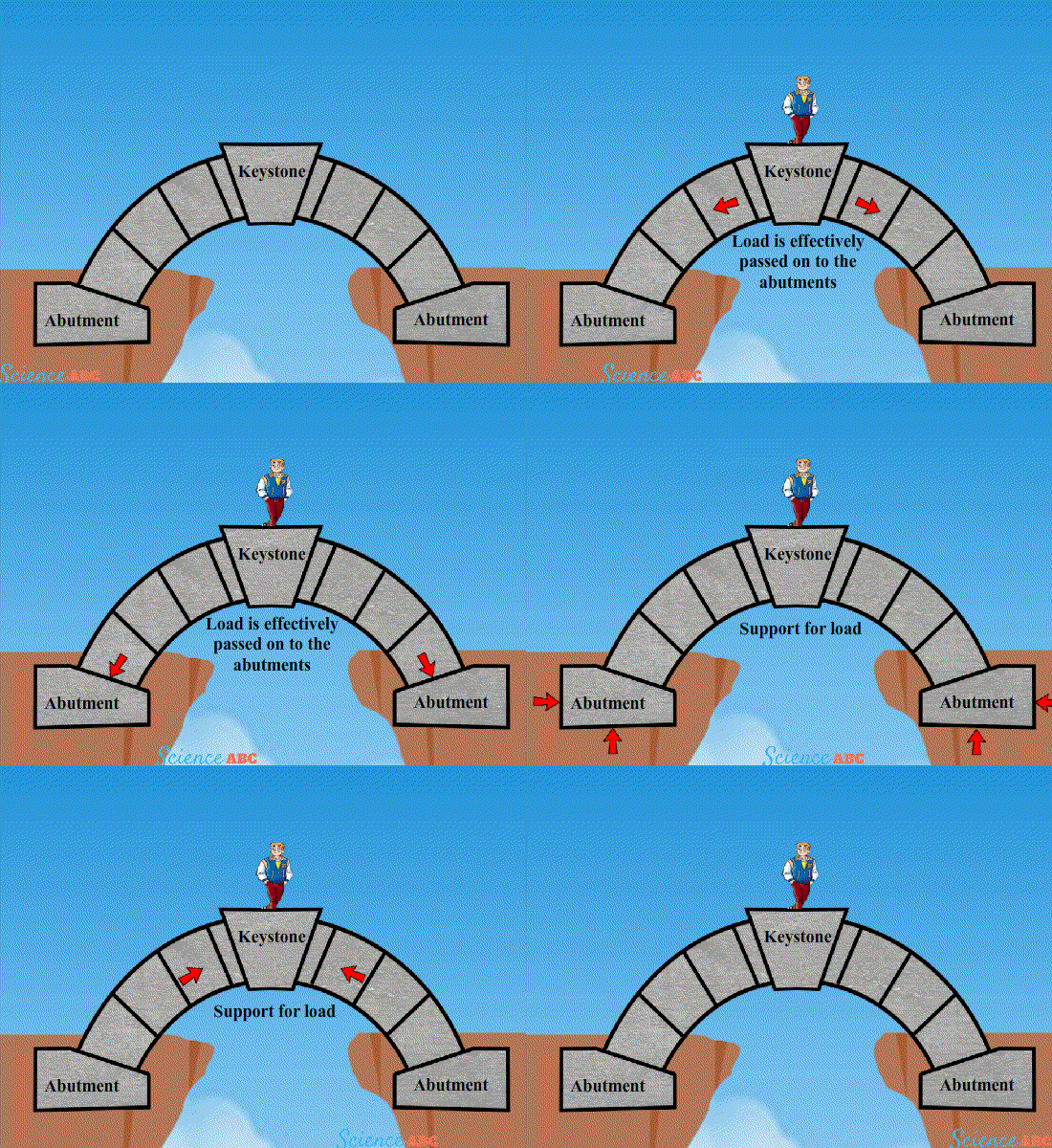
The abutments bear this force and keep the bridge from spreading out. Since these abutments are embedded in the ground (which is basically a rigid, solid area), they are capable of handling very heavy loads without giving way. However, since every action has an equal and opposite reaction (according to Newton’s third law), the ground around the abutments becomes squeezed when it experiences a force, and pushes back against the abutments. This force creates a ‘resistance’, which is passed on from one to stone to another – this time away from the abutments and towards the center – until it finally pushes against the very stone that is carrying the load – the keystone.
Advantages Of Arch Bridges
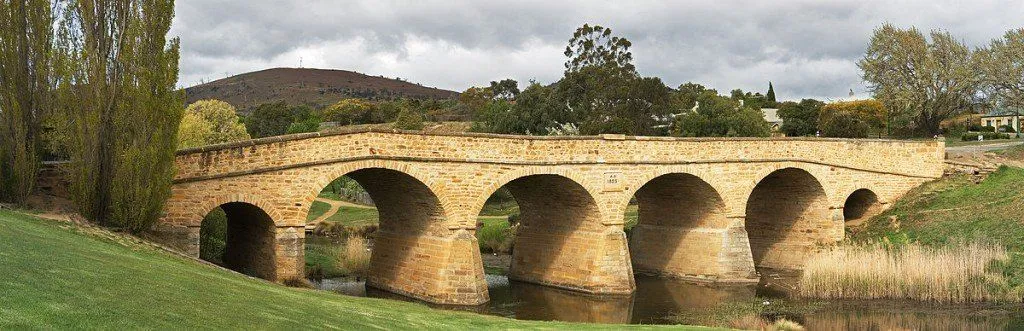
Thanks to their constituent raw materials, such as brick or stone, arch bridges are excellent at handling compression. They also stand up reasonably well against shearing. However, tension in arch bridges is almost negligible. The curve of the bridge and its ability to dissipate the force of the load outward along the curve significantly reduces the effects of tensional force on the underside of the bridge. In other words, the geometry of the arch matters: a very flat arch puts huge horizontal thrust on the abutments, while a very tall, narrow arch becomes unstable. The classic Roman semicircular arch hits a sweet spot, keeping the line of thrust well inside the stones so that almost every part of the bridge stays in pure compression.
Since it is their inherent shape that dissipates force along the curve, arch bridges don’t need additional supports, structures or cables. Furthermore, they’re relatively inexpensive to erect, as they don’t require a wide variety of raw materials, simply bricks and stones. They are also incredibly durable; certain arch bridges built by the Roman Empire still stand tall today! A number of modern bridges are also arch-shaped, but they are made of much stronger and more reliable materials, and are infinitely more sophisticated than ancient examples.
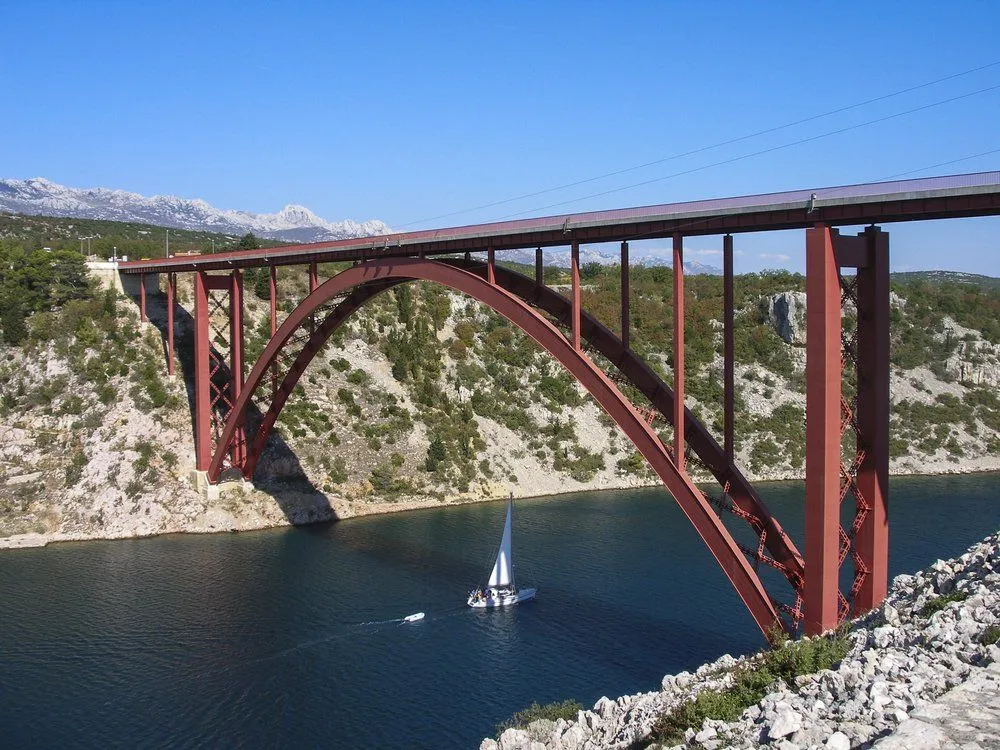
As it turns out, arch bridges not only look spectacularly picturesque, but their arched shape also offers some serious physical and structural advantages!
Why Do Some Bridges Have The Arch On Top?
Look at a Roman stone bridge and the arch sits below you, with the roadway running across its back. Now picture Portland's Fremont Bridge or the Sydney Harbour Bridge: here the steel arch soars above the deck, and the road hangs from it. So why do some bridges flip the arch overhead? It usually comes down to the ground (or water) beneath the crossing.

An arch-below-the-deck design works only if you can plant the arch's feet on something rock-solid, because a traditional arch shoves a large horizontal thrust outward into its supports. Over a deep gorge with bedrock on each bank, that is fine. But over a shallow river or soft, unstable soil, there is nowhere to spring an arch from below, and the heavy foundations needed to absorb that sideways push become very expensive. The fix is to raise the arch above the roadway. A bridge where the arch's base sits below the deck but its crown rises above it, with the deck slung from the arch by vertical hangers in tension, is called a through-arch bridge.
The really clever version is the tied-arch bridge (also called a bowstring bridge). When a load presses on the deck, the hangers carry it up into the arch, creating thrust that tries to spread the arch's feet apart, exactly like the keystone effect from earlier. Instead of letting the abutments fight that outward push, a horizontal tie (often the deck itself) links the two ends of the arch and takes the thrust as tension, like the string of a drawn bow holding the bow in shape. Because the sideways forces now cancel out inside the structure, the supports only have to carry the bridge's vertical weight. That lets engineers stand a tied-arch on slender piers or on poor ground where a thrust arch could never go. It is the same compression-versus-tension balancing act that defines every arch, just rearranged so the curve points at the sky.
References (click to expand)
- Arch bridge - Wikipedia. Wikipedia
- Arch Bridges - Design-Technology.org. design-technology.org
- The Arch Bridge | HowStuffWorks. HowStuffWorks
- Tied-arch bridge - Wikipedia. Wikipedia
- Through arch bridge - Wikipedia. Wikipedia
- Tied-arch bridges - SteelConstruction.info. The Steel Construction Institute / BCSA