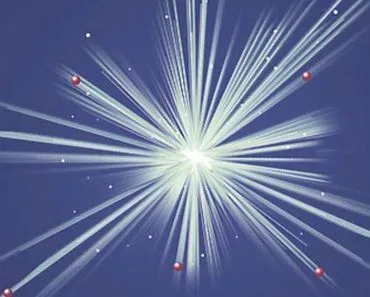
Yes, lead can be turned into gold, just not by any chemical reaction. Lead and gold are different elements (atomic numbers 82 and 79), so converting one to the other requires changing the number of protons in the nucleus, which means nuclear transmutation. Modern accelerators have done it (CERN's LHC observed about 86 billion gold nuclei from lead-lead collisions during 2015-2018), but the yields are picograms and the cost is astronomical.
Have you ever dreamed of becoming rich overnight? Well, what if you could make gold out of other metals like lead?
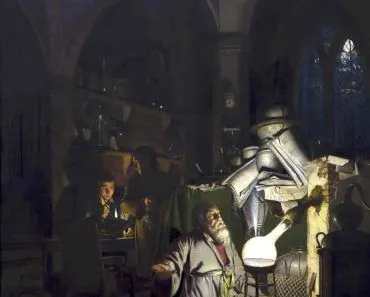
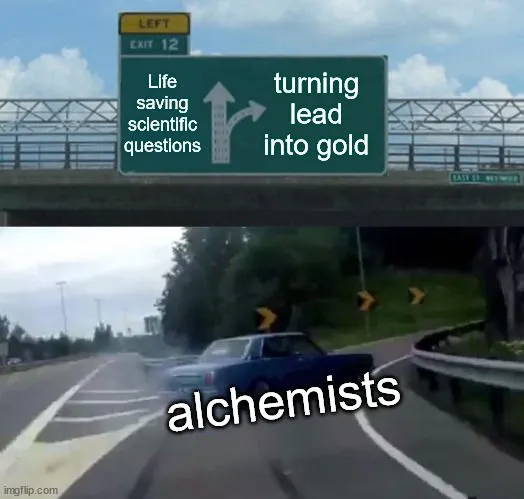
That’s what alchemists of the Middle ages were trying to achieve. Their target was a substance that went by many names, “Philosopher’s Stone”, “Elixir”, or “Tincture”, that could confer immortality, youth, and mercy from all illnesses, as well as untold riches to those that possessed it. The Elixir’s could convert any base metal, such as lead, into a precious piece of glittering gold. Converting one element into another is called transmutation.
The Elixir was the stuff of legends and no alchemists could convert lead into gold truly since no ordinary chemical reaction can transmute one element into another.
However, could scientists of the modern world, with our increased chemical knowledge and superior tools, be able achieve this chemical feat?
What Is An Element?
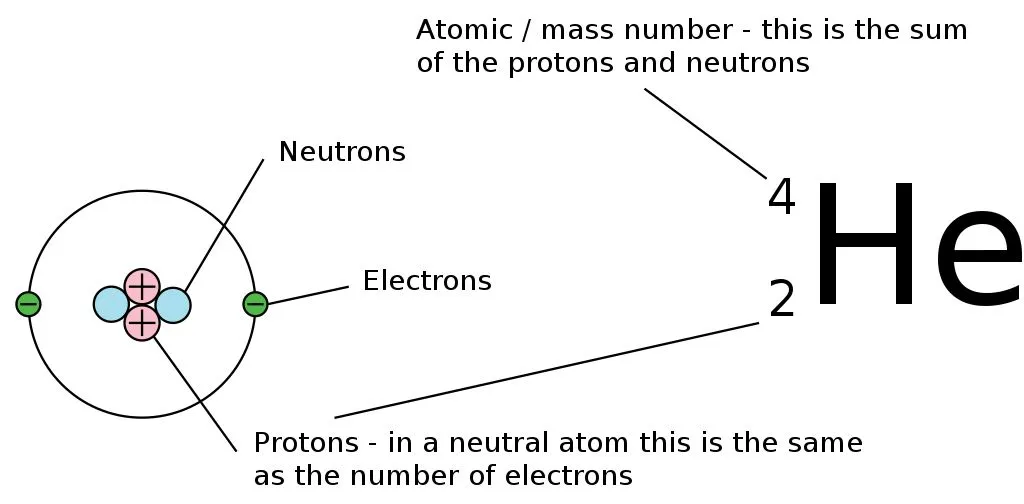
Transmuting lead into gold means converting one element into another. Each element is defined by the number of protons (called the atomic number) and neutrons (protons + neutrons = mass number) that make up its nucleus; the number of electrons aren’t as crucial to an element’s identity.
Lead has an atomic number of 82 (82 protons in its nucleus), while gold has an atomic number of 79.
To change one element into another, one must change the number of protons in the nucleus.
Changing the number of neutrons (while keeping the number of protons constant) in the nucleus results in different flavors of the same element, called isotopes. Lead has four naturally occurring isotopes and a plethora of others that have been created in the lab.
Lead vs Gold: How Do The Two Metals Compare?
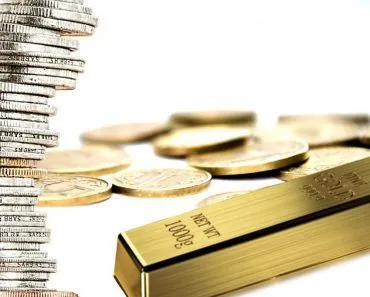
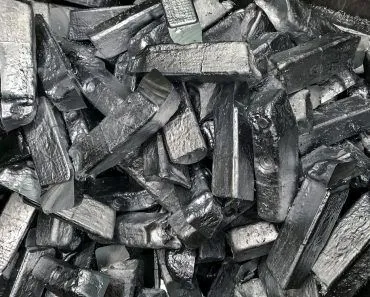
Lead and gold sit only three protons apart on the periodic table (atomic numbers 82 and 79), yet the two metals could hardly behave more differently. Lead is a dull, bluish-gray metal that is soft enough to scratch with a fingernail and so low-melting that it turns liquid at just 327 °C (621 °F). Gold is a lustrous yellow metal, much denser and far more resistant to heat, staying solid until 1,064 °C (1,948 °F).

Curiously, gold is the heavier of the two even though it has fewer protons. A block of gold is roughly 1.7 times as dense as the same-sized block of lead, which is exactly why a lead-cored fake gold bar gives itself away: it simply weighs too little. Here is how the two elements stack up:
| Property | Lead (Pb) | Gold (Au) |
|---|---|---|
| Atomic number | 82 | 79 |
| Density | 11.3 g/cm³ | 19.3 g/cm³ |
| Melting point | 327 °C (621 °F) | 1,064 °C (1,948 °F) |
| Appearance | Dull bluish-gray | Shiny yellow |
| Reactivity | Tarnishes in air | Highly unreactive, resists tarnish |
Gold's stubborn refusal to corrode is a big part of why humans have prized it for thousands of years, while lead's softness and low melting point made it a workhorse metal for pipes, solder and radiation shielding.
Why Can't A Chemical Reaction Turn Lead Into Gold?
This is the wall that every alchemist eventually ran into, even if they never understood why. A chemical reaction, whether it is rusting, burning, dissolving a metal in acid or simply mixing two substances together, only rearranges the electrons on the outside of atoms. It makes and breaks the bonds between atoms, but it never touches the nucleus at the center, where the protons live.

Since an element's identity is set entirely by its number of protons, and chemistry leaves that proton count alone, no chemical reaction can turn one element into another. Lead has 82 protons; gold has 79. To get from one to the other, you have to physically strip three protons out of the nucleus, and that is a nuclear change, not a chemical one.
So if you have ever wondered which element you could react lead with to get gold as a byproduct, the honest answer is: none. There is no partner element, no clever catalyst and no secret recipe that yields gold from lead in a beaker. For the same reason, blending lead with another metal into an alloy cannot create gold either; an alloy is just a physical mixture, so every lead atom in it stubbornly stays lead. Making gold means going nuclear.
Converting One Element Into Another
These subatomic particles are bound by strong nuclear forces that keep the nucleus stable. Trying to overcome these forces requires tremendous amounts of energy.
Removing a subatomic particle from the nucleus would be like trying to lift Thor’s hammer, Mjölnir, if you aren’t pure of soul. Adding a subatomic particle would be like trying to force magnets of the same pole to touch.
Both these actions release an inordinate amount of energy in the process.
But what if you did succeed in changing the composition of the nucleus? Unfortunately, this gives the element an identity crisis by disturbing the equilibrium of forces within the nucleus. The element starts sneezing out subatomic particles to achieve a more stable state, like what happens in radioactive decay.
Transmutation Through Radioactivity
Atoms with very large nuclei can’t handle their size, which makes them unstable. They shed the extra weight by expelling protons and neutrons (alpha), electrons (beta), and electromagnetic radiation (gamma rays).
Every element after lead (atomic number 82) is radioactive. Bismuth (83) is technically radioactive too, but its primary isotope, bismuth-209, has a half-life of about 2 x 10¹⁹ years, which is more than a billion times the age of the universe, so for any practical purpose it might as well be stable.
Radioactive decay isn’t a great way to produce gold. First, radioactive elements take months, if not years or millennia, to decay into more common elements. Radium-226 takes 1600 years to decay half of itself. Second, radioactive emissions can cause illnesses like cancer and thyroid problems.
Third, uranium, thorium, and radium all finally turn into lead after they’ve finished decaying. Lead is stable and doesn’t decay any further, which is sad considering that gold has only 3 protons less than lead.
Nuclear Transmutation In A Nuclear Reactor
With radioactivity ruled out, what other method could be used to convert lead into gold? Well, there are a few options.
Using lead to make gold isn’t a great strategy, as lead has 3 protons more than gold. A better bet would be to use either mercury (1 more proton than gold) or platinum (1 less proton than gold).
The earliest experiments in transmuting a base metal into gold come from 1924. Independently, researchers Nagoaka in Japan, and Miethe and Stammreich in Germany converted mercury into gold by subjecting mercury to high electrical currents. Later researchers who performed such experiments achieved negative results, throwing these findings into controversy. Thus, electrocuting mercury might not be the answer.
The other option is bombarding mercury or platinum with subatomic particles like protons and neutrons. In 1941, researchers bombarded mercury with fast neutrons and transmuted the metal into gold and platinum. In 1936, researchers bombarded platinum with deuterons (a nucleus with a proton and a neutron; a deuterium nucleus) that resulted in radioactive platinum isotopes that decayed into gold.
If you have a large stock of lead that you need to use, a 1996 experiment found gold after subjecting lead to 600 MeV of protons.
How Much Gold Can You Make?
If you’ve started daydreaming about getting rich by making gold, allow me to crush your dreams.
First, most of the gold was radioactive, which means that it will probably decay. Unfortunately, there is no chemical way to convert radioactive gold into normal gold.
Second, all these experiments obtained gold in quantities of less than 1 mg. The gold was often detected only in trace amounts. One account writes that the gold obtained by Miethe and Stammreich’s was only worth 1 dollar, but cost them 60,000 dollars to make! You’d be extremely deep in debt by the time you got any usable gold out of such experiments.
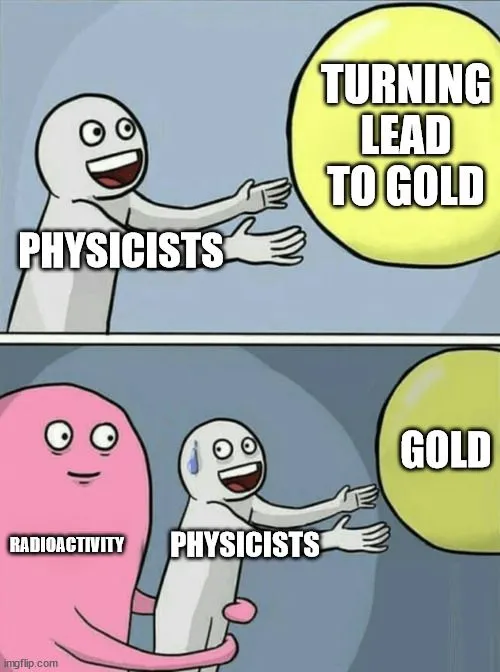
The researchers that performed these experiments were more interested in the behavior of atoms and their subatomic particles, as opposed to actually making a fortune in gold. Even if some of these researchers were money-minded, they’d be more likely to make it rich by discovering something of some actual use (like an infinite and sustainable source of energy).
A Final Word
Scientists have used their transmuting technologies to create new elements. Elements like Promethium, Technetium and many elements in the lanthanide and actinide series are manmade. Between 2003 and 2012, RIKEN researchers in Japan created nihonium (element 113) by smashing zinc atoms into bismuth atoms; one researcher reported that it took more than 4 billion collisions to produce just three atoms. The element was officially named in 2016.
The story didn't end with those tabletop experiments either. In May 2025, the ALICE collaboration at CERN's Large Hadron Collider reported that during near-miss collisions between lead nuclei (so close that the lead ions' strong electromagnetic fields knocked three protons out of each other), about 86 billion gold nuclei were produced during the 2015-2018 run. The total mass: roughly 29 picograms, less than a trillionth of a gram, and most of it was unstable and immediately decayed. So even with the most powerful particle accelerator ever built, modern alchemy yields a vanishingly small bead of gold for the price of a multi-billion-dollar collider, definitely the least cost-effective gold rush in history.
Basically, who cares if we can't economically make gold out of lead? Scientists are working on even cooler projects, and hopefully some will benefit all of us!
References (click to expand)
- PH Chomaz. How to transmute lead in gold|INIS. The International Atomic Energy Agency
- Cork, J. M., & Lawrence, E. O. (1936, June 1). The Transmutation of Platinum by Deuterons. Physical Review. American Physical Society (APS).
- Sherr, R., Bainbridge, K. T., & Anderson, H. H. (1941, October 1). Transmutation of Mercury by Fast Neutrons. Physical Review. American Physical Society (APS).
- (1924, August). The Reported Transmutation of Mercury into Gold. Nature. Springer Science and Business Media LLC.
- ALICE detects the conversion of lead into gold at the LHC. CERN
- Fact or Fiction?: Lead Can Be Turned into Gold. Scientific American
- Transmutation. Encyclopaedia Britannica
- Gold - Element information, properties and uses. Royal Society of Chemistry
- Lead - Element information, properties and uses. Royal Society of Chemistry