Table of Contents (click to expand)
Mummies rarely carry living ancient pathogens. Over centuries, the DNA and RNA of bacteria and viruses degrade into harmless fragments, so the risk is very low. The bigger hazards are frozen permafrost mummies (which can preserve spores like anthrax) and the Aspergillus tomb fungus behind the "curse of the pharaohs."
Most of us grew up on scary stories about monsters, including werewolves, vampires and mummies. They remain popular source material for pop culture, from the sparkly achievements of the Twilight franchise to Tom Cruise’s clumsy reboot of The Mummy. However, of these big-screen monsters, mummified bodies do exist in the real world, although they don’t haunt the hallways of their tombs. Even without a curse, some people still believe they may pose a sinister threat based on ancient viruses, pathogens or diseases that may have been entombed with them!
Recent stories of permafrost melting around the world and the increased resurgence of older diseases has brought this issue back into the spotlight. Can mummified animals and humans carry diseases from our ancient past?
What Is A Mummy?
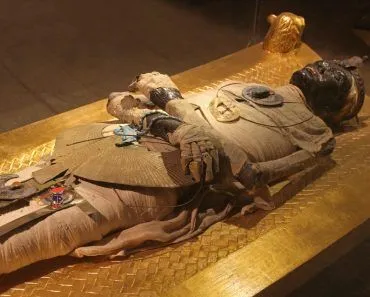
Before we can understand whether mummies are threatening the world with the next superbug, we should specify what we mean by mummies. You’re probably familiar with the mummies of Egypt, many of which were embalmed and treated in various ways to preserve the skin and organs, preventing them from decay. Bodies can be mummified through the use of chemicals, a lack of air, a lack of humidity, or extremely low temperatures. In the case of Egyptian mummies, they were often embalmed, treated with chemicals and sealed in air-tight sarcophagi, then buried in tombs! For that reason, when mummies are discovered today, they are often in excellent condition, having retained some of their original features and ancient tissues.
However, Egyptian mummies aren’t the only variety, and when it comes to the potential for spreading the next pandemic, mummies that are frozen may pose a larger threat than those buried beneath the pyramids. Ice mummies have been found all around the world, from Greenland and the Andes Mountains to the Siberian permafrost and the Italian Alps. Sadly, more mummies are formed by mountaineers in the Himalayan Mountains every year. Ice mummies have been found in glaciers and ice patches, but the conditions for them to form are complex. The body must be on non-moving ice, be exposed long enough to be freeze-dried and not eaten by scavengers or buried, and then completely covered in ice.
Many ice mummies appear to have been accidental, unlike the preparation and careful placement of traditional mummies in sarcophagi, but some ancient cultures in Eastern Europe also buried their dead in freezing conditions, in large wooden chambers covered by stone, which allowed for permafrost to develop and preserve the bodies. Generally, however, ice mummies and those recovered from the permafrost are more exposed to the surrounding environment and the elements, which may be why people worry that these ancient mummies could release ancient germs!
Human History And Epidemics
Modern humans have been around for roughly 300,000 years (fossils from Jebel Irhoud in Morocco, dated to about 315,000 years, pushed our origins back further than the long-quoted 200,000-year figure), but much of that history was spent in small groups, families and tribes. These early humans were hunter-gatherers, rarely staying in one place for more than a few seasons, never settling down to build homes, villages and infrastructure. It wasn’t until 10,000-12,000 years ago, when agriculture began popping up in different parts of the globe, and crops like einkorn wheat, lentils, peas, chickpeas, flax, emmer and bitter vetch made it possible for people to remain in one place. The birth of agriculture opened the floodgates for society to progress, from villages to towns to cities, all in the course of a few thousand years.
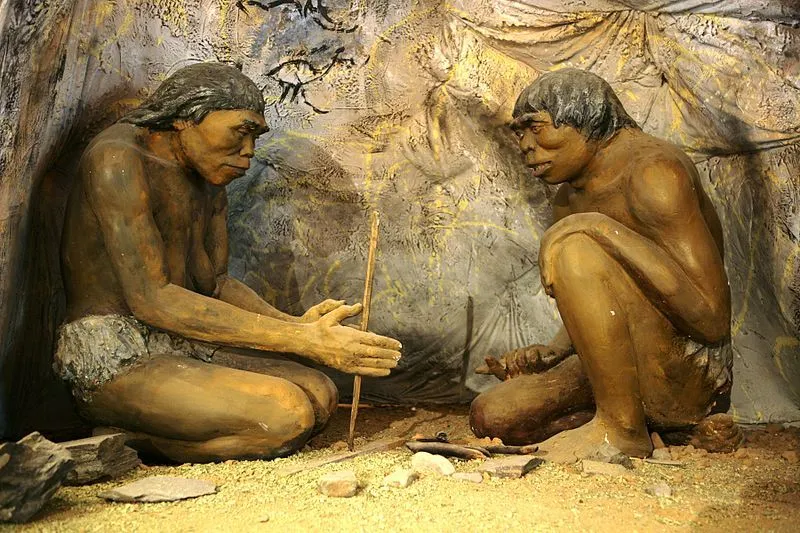
Prior to this, although there were certainly germs and disease that affected these people, population density was extremely low, and early humans had little contact with other groups. Diseases capable of resulting in an epidemic, such as smallpox or Ebola, require a plethora of human hosts to spread and survive, particularly when the disease can rapidly cause the initial host to perish. Before humans began gathering by the thousands into population capitals and large cities, there was little chance for a population-decimating disease to even exist.
With this in mind, any human remains that were mummified prior to 10,000 BC would likely pose no threat, as deadly epidemic-style diseases had not developed in human populations by that point. Human beings have created some incredible things through the progress of civilization, expansion and collaboration, but increasing population density has also led to some truly horrific diseases.
Can Mummies Carry Diseases?
Now, when it comes to viruses or bacteria surviving in a dormant state for hundreds or thousands of years, it is possible, but extremely unlikely. The conditions for the virus would have to be perfect, such as being preserved inside of a scab (in the case of smallpox) or in some other type of tissue that wasn’t exposed to any decaying influence.
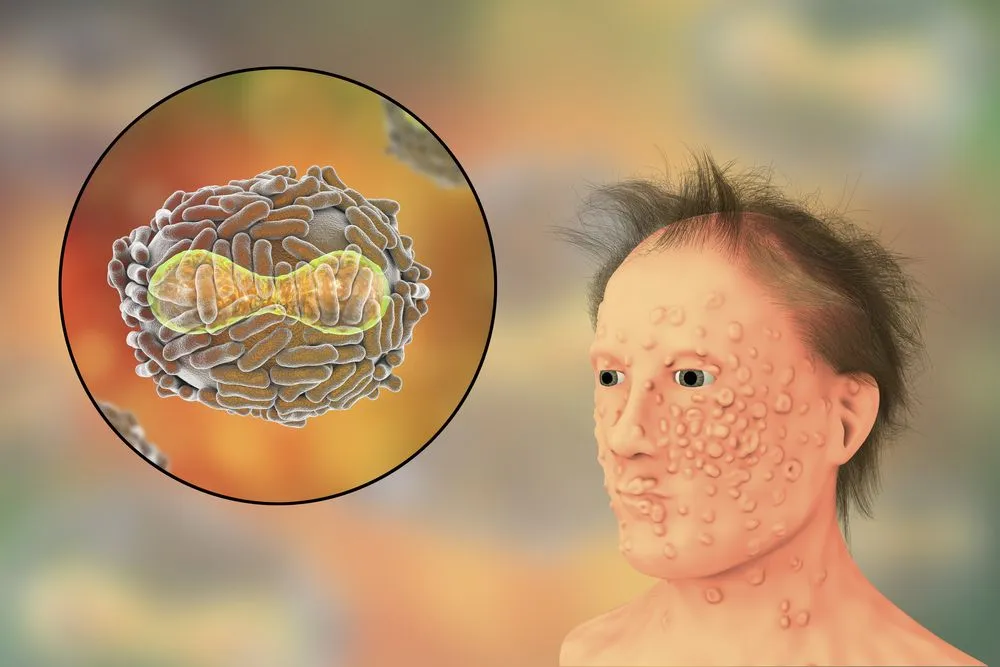
DNA has been taken from plenty of ancient skeletons, and in some cases, they can be sequenced to reveal diseases that may have infected and killed the individual. Remains of bodies from a few hundred years ago have led to sequencing of bubonic plague and cholera, but these strains of the disease are significantly degraded and could not be further cultured from the samples taken. Evidence from even older mummies shows further breakdown. Egyptian mummies are also less likely to avoid decay than those frozen in ice, so the chances of an ancient disease surviving beneath a sandy tomb are incredibly small.
While disease pathogens taken from mummies can be identified, the DNA is often degraded to only a few thousand base pairs, rather than the millions that would normally be present in a healthy bacterial or viral agent. Many of the worst diseases in the world are also RNA viruses; while these are impressively adaptive and capable of mutating to avoid elimination, RNA also decays faster than DNA, so viruses like measles, yellow fever and ebola would not survive in a mummy for thousands of years.
There have been some incidents where diseases have resurfaced in unusual areas, such as the 2016 anthrax outbreak in a reindeer population following a permafrost thaw in Siberia, an area that hadn’t seen the disease in more than 70 years. This disease did end up affecting the human population, but anthrax is far from an extinct disease, and one that we know how to combat.
There is a great deal of excitement and study on this topic, and some fear of what continued melting of permafrost and glaciers might reveal. Scientists have, in fact, revived genuinely ancient viruses from the Siberian permafrost: in 2014, a French-led team brought back Pithovirus sibericum, a giant virus roughly 30,000 years old, and a later round of work in 2023 reanimated “zombie viruses” up to about 48,500 years old. The crucial catch is that every one of these revived viruses infects only amoebae, not humans or animals. So while the “revival” part is real, there is still no firm evidence that a human pathogen can be reawakened after millennia and then thrive in a modern environment full of modern microbes.
What About The “Curse Of The Pharaohs”?
No discussion of mummies and disease is complete without the most famous tomb story of all. When Howard Carter cracked open Tutankhamun’s tomb in November 1922, his patron, Lord Carnarvon, was dead within five months, reportedly of pneumonia that set in after he nicked an infected mosquito bite while shaving. A handful of other deaths among people connected to the dig followed, and the press happily christened it the “curse of the pharaohs.”
The hard numbers deflate the legend, though. Of the 58 people present when the tomb and the sarcophagus were opened, only eight died within the following dozen years. Carter himself, who had handled the mummy more than anyone, lived until 1939 and died of lymphoma at the age of 64. If an ancient pharaoh really were striking people down, he was doing a remarkably poor job of it.
So is there any science buried under the superstition? Possibly. The leading candidate is not a virus or a long-dead bacterium, but a mold called Aspergillus flavus, the so-called “tomb fungus.” Its spores thrive on the grain, bread and other organic offerings sealed inside ancient tombs, and breathing in a heavy dose can trigger aspergillosis, a lung infection that is especially dangerous for anyone with a weakened immune system. The idea that Aspergillus contributed to Carnarvon’s death is a plausible hypothesis rather than a proven fact, but the fungus itself is real, and it has a grislier case file. When scientists opened the tomb of the Polish king Casimir IV Jagiellon in Kraków in 1973, several members of the roughly twelve-person team fell ill and died within a few years, and investigators later found A. flavus growing on the king’s remains.
In a twist worthy of the movies, this fearsome fungus may turn out to be a lifesaver. In 2025, researchers at the University of Pennsylvania reported in Nature Chemical Biology that they had isolated a new class of molecules from Aspergillus flavus, named asperigimycins, and that, once chemically tweaked, one variant killed human leukemia cells about as effectively as two FDA-approved drugs. The tomb fungus, it seems, may be better at curing people than cursing them.
A Final Word
The idea of a “zombie virus” from mummies is quick to capture the imagination, but when you look at the hard science, the likelihood of a pandemic arising from ancient ice mummies is small. Provided that specific care is taken while handling and working with mummified remains from animals or humans, contamination or infection is nearly impossible.
That being said, the melting of the permafrost and glaciers is indicative of a much more realistic danger. The present climate crisis on Earth will be the greatest threat to our survival as a species, just as the Spanish flu and the Black Death once threatened our survival in the past.
References (click to expand)
- Our Species Arose at Least 300,000 Years Ago. Smithsonian Institution, Human Origins Program
- NOVA Online | Ice Mummies of the Inca - PBS. The Public Broadcasting Service
- Child Mummy Found With Oldest Known Smallpox Virus. National Geographic
- The Oldest Mummies in The World Are Turning Into Black Slime. ScienceAlert
- Stone, R. (1999, October). Permafrost Comes Alive for Siberian Researchers. Science. American Association for the Advancement of Science (AAAS).
- Charlier, P., Claverie, J.-M., Sansonetti, P., Coppens, Y., Augias, A., Jacqueline, S., … Deo, S. (2017, October). Re-emerging infectious diseases from the past: Hysteria or real risk?. European Journal of Internal Medicine. Elsevier BV.
- Hublin, J.-J., et al. (2017). New fossils from Jebel Irhoud, Morocco and the pan-African origin of Homo sapiens. Nature.
- Zombie Virus Revitalized From Permafrost: Facts and Fiction. PMC, National Library of Medicine (NIH).
- Tomb of Casimir IV Jagiellon. Wikipedia.
- Penn Engineers Turn Toxic Fungus Into Anti-Cancer Compound. University of Pennsylvania.
- A Class of Benzofuranoindoline-Bearing Heptacyclic Fungal RiPPs With Anticancer Activities. Nature Chemical Biology (2025).