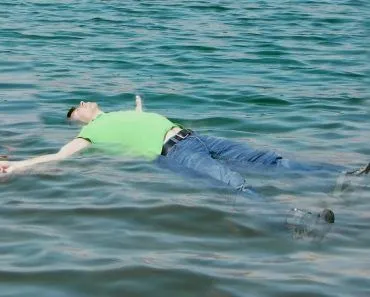
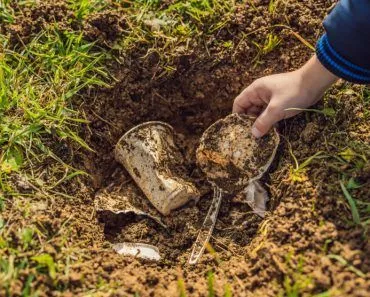
Above ground in temperate weather, a human body usually skeletonizes within about six months; in a sealed coffin it can resist that fate for decades. Bare bones themselves may crumble in 10 to 15 years under tropical sun, dissolve in acidic peat, persist for centuries in dry caves, and survive for hundreds of thousands of years in cold, alkaline, anoxic burial. The single answer is: it depends on the environment, by a factor of roughly a million.
When someone passes away, one of the most common phrases heard at the memorial or funeral is “Ashes to ashes, dust to dust”. In that context, the phrase suggests that our bodies come from the earth and eventually return to it. It’s a sentiment that explains the circle of life and helps people cope with the pain of loss and death.
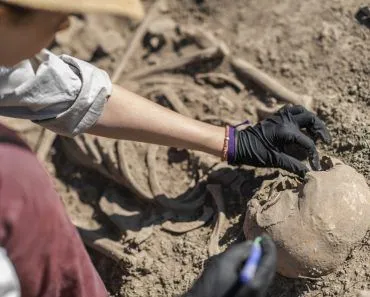
However, that phrase isn’t entirely true…”Dust to dust” suggests that our bodies completely disappear, but this is not always the case. Sometimes bones are found in the earth that have been buried there for thousands of years!
So, although flesh and tissue tend to break down rather quickly, bones have a much more impressive ability to stick around. As it turns out, this subject is a little more complicated than it appears at first glance and is actually quite fascinating once you “dig” a little deeper.
As with most mysteries in science, there is no single answer to this particular question. As it turns out, bones decay at varying rates, and some do not decay at all! A little background knowledge about the decomposition process can be very helpful to properly understand the variability of bones in human and animal bodies.
So, How Long Does It Take For Bones To Decompose?
Let's get the actual answer out of the way first, then explain it. For an unembalmed adult human, the bones themselves typically take anywhere from roughly a decade to several thousand years to fully break down, depending almost entirely on the environment they end up in. Tropical sun and acidic forest soil chew through them fastest; cold, dry, alkaline conditions can hold them intact long enough to outlast civilizations.
That huge range is not a cop-out, it is the actual science. Bone is a composite of mineral (hydroxyapatite) and protein (collagen), and the two break down by completely different chemistries, each accelerated or suppressed by temperature, water, oxygen, soil pH, and the local microbe community. Change any of those and the timeline shifts by orders of magnitude.
To give you a usable cheat sheet, here is roughly what the forensic and archaeological literature reports for bare bone (not the surrounding flesh) under different conditions:
- Exposed on the ground, tropical or temperate sun: Bones reach a "fragile, falling apart" stage in roughly 10 to 15 years, based on landmark surface-bone weathering studies in Amboseli, Kenya.
- Shallow burial in neutral soil: Bones can persist for centuries, slowly losing mass through bioerosion and gradual mineral leaching. European archaeological sites routinely yield intact skeletons that are 1,000 to 2,000 years old.
- Acidic soil (peat bogs, conifer forest floor, pH below 4.5): The mineral phase dissolves rapidly. At the Mesolithic site of Star Carr in the UK, groundwater of pH 2 to 4 almost completely dissolved the hydroxyapatite from the bones, leaving behind only the rubbery collagen.
- Dry, arid conditions (deserts, dry caves): The iconic image of a skeleton in a desert is not just for the movies. With no moisture available for microbes, bones can survive in good shape for thousands of years.
- Sealed coffin or crypt: Lack of oxygen and insect access dramatically slows decay. Instead of cleanly skeletonizing, body fat often converts to adipocere, a waxy "grave wax" that can preserve recognizable remains for decades to centuries.
- Cold, alkaline, waterlogged anoxic burial: The decay clock practically stops. Modelled estimates suggest collagen could survive on the order of 200,000 to 700,000 years at a steady 10 °C (50 °F) in optimal burial chemistry.
So the popular "about 50 to 100 years" figure you sometimes see online has no real backing in the forensic literature. The honest answer is that it depends on the environment, and the spread between best and worst case is about a millionfold.
How Long Does A Body Take To Become A Skeleton?
Bone duration is one question. The journey from a complete body to just bones is a different one, and it happens far faster. Once the heart stops, a body moves through a fairly standard sequence: pallor, cooling, stiffening (rigor mortis), bloating from internal gases, then "active decay" as enzymes and microbes liquefy the soft tissue.
How quickly that ends in a bare skeleton depends almost entirely on three things: temperature, insect access, and whether the body is exposed, buried, or sealed.
- Hot, exposed, insect-rich (summer outdoors): At the University of Tennessee's forensic anthropology research facility (the original "Body Farm"), summer conditions can reduce an unprotected body to a clean skeleton in as little as 1 to 2 weeks.
- Typical temperate exposure: Forensic medicine references put full skeletonization at around 6 months as a working baseline, though the range can run from a few weeks to a few years depending on the weather.
- Arid environment (desert): A landmark 1989 study of unembalmed human remains in Arizona found that large portions of the skeleton typically became exposed only 4 to 6 months after death, and bodies often mummified rather than skeletonizing cleanly.
- Shallow burial without a coffin: Cool soil, fewer insects, and slower chemistry mean skeletonization can take several years to a few decades.
- Sealed coffin in a typical grave: Soft tissue can persist much longer. In many cases the body partially converts to adipocere instead of fully skeletonizing, and recognizable remains have been recovered from old burials a century or more after interment.
The takeaway: in summer sun, a body can become a skeleton in days; in a sealed casket six feet down, it might never reach a clean skeletal state at all.
How Does Decomposition Happen?
Decomposition happens to all organic matter, and while every organism decays differently, the basic concept is the same: to recycle organic matter, chemical processes break down organisms into simpler forms that can be absorbed and reused within the biome, including everything that is considered “living”, from trees and badgers to kings and paupers.
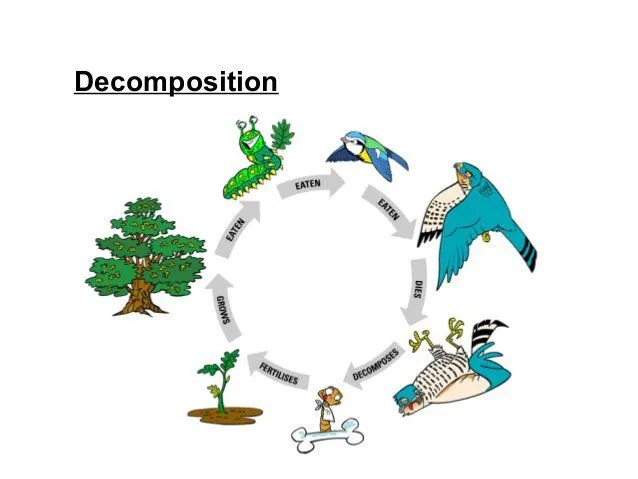
Bodies can be decomposed in two ways: chemical/physical processes or other living organisms breaking down the living tissue. The decomposition rate depends on many factors, including temperature, humidity, insect presence, exposure to air, the acidity of the soil, and dozens of other variables.
A human body could lose all its flesh and tissue in as little as a week, or it could remain in place for thousands of years! It all depends on the conditions the body is in, and the same thing is true for bones.
Collagen And Calcium In Bones Delay Decomposition
Although many people believe that bones never break, if you think about it logically, that would be impossible. After hundreds of millions of years of life on this planet (in which humans have only been around for a minute fraction), if bones never decayed, we would find them everywhere!
Fortunately, bones are not so different from our flesh and blood. We think of bones as solid and firm parts of our skeleton and elements that can snap like a piece of chalk when we are seriously injured. The truth is that bones are living tissue, just like our other organ systems, containing blood vessels and nerves.
Bones consist of collagen and the mineral hydroxyapatite (a form of calcium phosphate). The collagen creates a strong porous matrix rather than a solid structure, while the hydroxyapatite crystals reinforce this framework. Therefore, the same chemical, physical and microorganic processes that break down tissues will also cause bones to decompose!
Compared to other tissues, bones can escape decomposition for two reasons – collagen and its association with calcium minerals. Collagen is a very durable and stable protein due to its structure and chemical composition. Only certain enzymes can break down collagen.
Another protein, keratin, makes hair difficult to break down as well. Both keratin and collagen belong to the linear structural protein camp and are particularly strong due to their linear and tightly coiled helical structure.
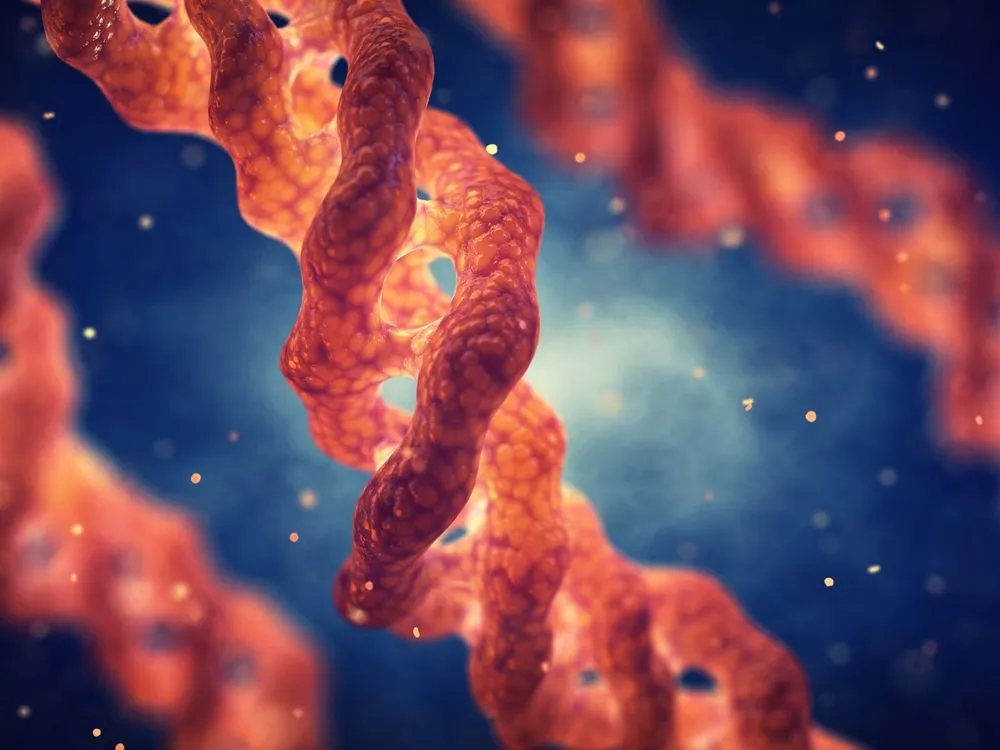
Furthermore, collagen associates with calcium and other minerals within the bone, giving the bone its strength throughout its life and making it possible to resist decay in death. The minerals “coat” the collagen, making it difficult for microbes to access the organic matter and digest it.
Bones last longer in dry and arid conditions since microbes need moisture to thrive and break down organic matter. This is why the iconic image of a skeleton in a desert is morbidly accurate.
If a body is exposed to water, insects, open-air, or highly acidic soil, then bacteria and fungi will be able to invade that porous network, and seek out the proteins of the collagen within the bones, causing these bones to disintegrate and eventually crumble to dust!
Do Bones Eventually Turn To Dust?
Short answer: yes, given enough time and the right conditions, bones really do end up as something close to dust. The longer answer is more interesting because there are actually two different paths to get there, and they involve attacking the two different components of bone.
Remember that bone is roughly 70 percent mineral (calcium hydroxyapatite, Ca10(PO4)6(OH)2) embedded in a 30 percent organic matrix made mostly of Type I collagen. The mineral gives bone its hardness; the collagen gives it tensile strength. Destroy either component, and the remaining scaffold becomes so weak that it crumbles to powder under finger pressure.
Path one: the mineral leaves first. In acidic groundwater (below about pH 6.5, and aggressively so below pH 4.5), hydrogen ions slowly pull calcium and phosphate ions out of the hydroxyapatite crystals. The mineral coat thins, then the rigid scaffold dissolves. What remains is a rubbery, flexible "ghost" of the bone, made of nearly pure collagen. The famous Mesolithic site at Star Carr in northern England preserves bones in exactly this state, with dissolved mineral and surviving protein, because the surrounding peat sits at pH 2 to 4.
Path two: the protein leaves first. In warm, wet, near-neutral conditions, bacterial collagenase enzymes and slow chemical hydrolysis break the collagen down into amino acids that microbes happily consume. What is left is the mineral skeleton with no organic glue holding it together. The bone becomes chalky and brittle, and it takes very little mechanical pressure (a careless boot, freeze-thaw cycles, a tree root pushing through the soil) to fragment it into smaller and smaller pieces, eventually reaching powder.
Most real-world bone loss is a combination of the two, accelerated by microbial bioerosion that drills microscopic tunnels through the cortex and steadily increases its porosity. Once porosity climbs past a certain threshold, both paths run faster, which is why bone decay tends to follow a slow-then-sudden trajectory: stable for centuries, then noticeably weaker each decade, then gone.
Bones Can Become Fossils.
Some bones do manage to achieve true immortality, and you’ve probably seen dozens of them in the course of your life – most likely in museums!
Fossils are bones that were covered in sediment quickly, greatly slowing decomposition by cutting off oxygen and microbial access. This often occurs after volcanic eruptions and other catastrophic events that displace large amounts of sediment in the earth.
Only a tiny fraction of living organisms manage to become fossilized, and even then, we still call them “bones,” but that is not really the case. Fossils were bones whose mineral structure was preserved, but over time the organic components decomposed and minerals from the surrounding groundwater seeped into the bone cavities, gradually replacing the original material with rock! So when we talk about dinosaur bones being excavated after millions of years, we are actually just digging up ancient rocks that are shaped exactly as the original bones once were.
This process of fossilization begins when water carries minerals such as calcium and iron into the cavities of the decayed bone, where the minerals settle, fortifying the pre-existing minerals in the bone. Over time, only the stone that has taken the form of bone remains. The oldest fossils of the genus Homo that have been discovered are roughly 2.8 million years old (source) and were found in Ethiopia.
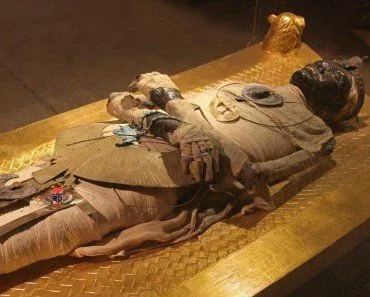
The most famous examples of intact ancient bones originate from Egypt, where the mysterious practice of mummification prevented bone decay in certain cases.
When strong drying salts, like natron, were used to rid the body of fluids, they prevented bacteria and fungi from triggering the decomposition process. Furthermore, once the mummy was sealed in linen and a sarcophagus, the lack of oxygen and moisture almost entirely prevented the breakdown of tissue and bone.
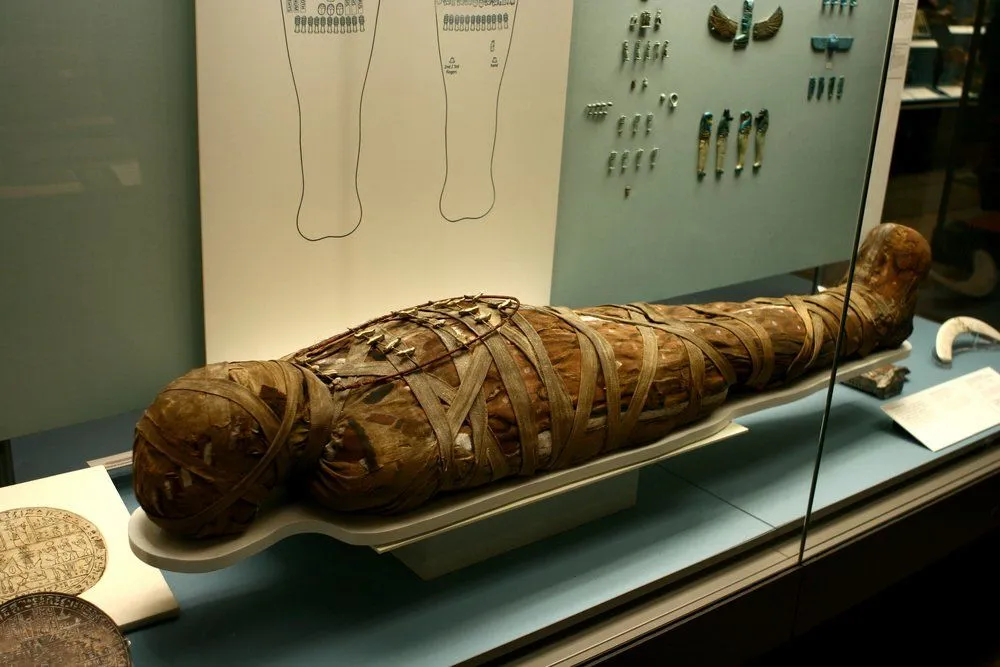
Bones do decay, just at a slower rate than other types of organic material and tissue. Based on a wide range of extrinsic and intrinsic factors, bone can last for a few months to a few geologic eras, but the truth is that nothing lasts forever.
Even fossils and mummies will eventually be pulverized or broken down over the course of millions (or billions) of years. As they say, elbows to ashes, bones to dust!
References (click to expand)
- Structure and composition of bone. DoITPoMS, University of Cambridge.
- Galloway A, Birkby WH, Jones AM, Henry TE, Parks BO. (1989) Decay rates of human remains in an arid environment. Journal of Forensic Sciences. PubMed.
- Methods of Estimation of Time Since Death. StatPearls. NCBI Bookshelf.
- Kontopoulos I, et al. Bone Diagenesis in Short Timescales. PubMed Central.
- High K et al. (2016) Apparent extreme acidity and bone preservation at the Mesolithic site of Star Carr. Journal of Archaeological Science.
- Preserving Archaeological Remains: Preservation Assessment Techniques. Historic England.
- Piepenbrink, H. (1986). Two examples of biogenous dead bone decomposition and their consequences for taphonomic interpretation. Journal of Archaeological Science.