Table of Contents (click to expand)
Buttermilk is a tangy, slightly acidic dairy drink. Traditional buttermilk is the liquid left after churning butter from cream, while the cultured buttermilk sold in stores is milk fermented with added lactic-acid bacteria. Those bacteria turn the milk's lactose into lactic acid, which lowers the pH to about 4.4–4.8 and gives buttermilk its sour taste.
For anyone who has ever baked a pan of muffins or a tall stack of pancakes, buttermilk may be something you already understand. However, for those of us who spend less time in the kitchen, buttermilk may remain a mystery. We see it on menus and attached to certain items at the grocery store, but few actually know what it is. With a unique tang and a number of properties that make it essential for cooking, buttermilk has a lot to offer!
What Is Buttermilk?
Buttermilk has been around for countless centuries in various forms, but when we speak about buttermilk today, it typically refers to a more processed and artificially cultured variety.
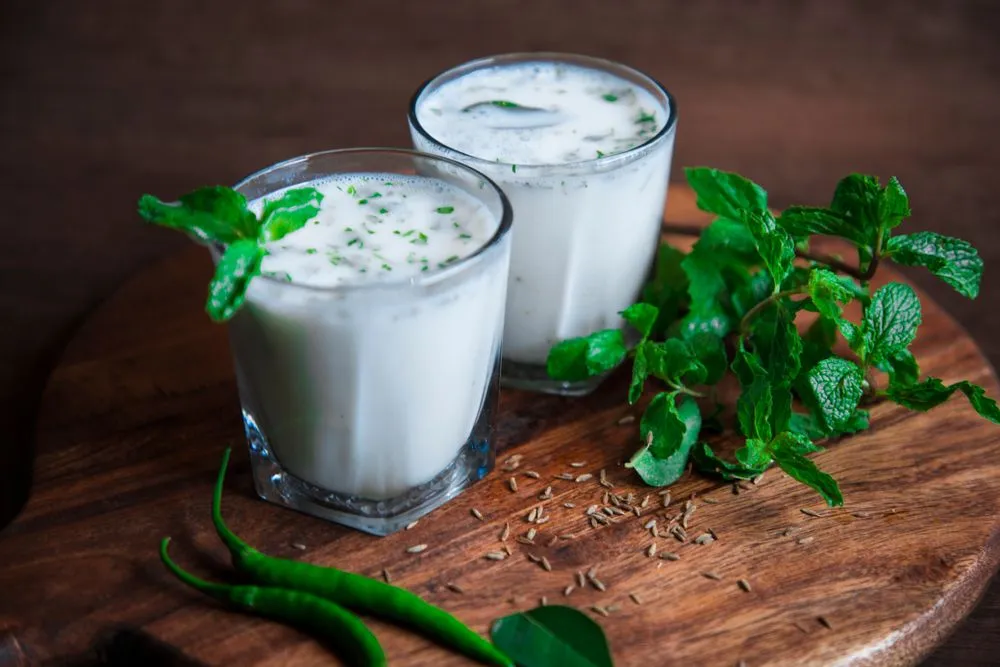
By definition and tradition, buttermilk is the liquid that remains after butter is churned out of cultured or fermented cream. Once the butter forms and hardens, whatever is left behind is the buttermilk, a thin, fermented dairy beverage. Before the modern development of pasteurization and homogenization, raw milk was often allowed to sit out for a few days, which let the cream rise and separate from the milk, and also let certain lactic-acid-producing bacteria develop in it.
The bacteria would feed on the natural sugars present in the milk and produce lactic acid as a byproduct, which began to ferment the milk. Today, when we think about drinking milk that has gone off, that “tang” you smell is normally considered a bad sign.
However, in the past, that acidity helped prevent the growth of other microorganisms, and it also encouraged the production of butter, since fat molecules group together more readily in an acidic environment. Once the butter was done, the remaining buttermilk could be enjoyed as a tangy, nutritious beverage, one that resisted going “bad”, which was a key reason for its popularity in warmer climates before the days of refrigeration.
Traditional churned buttermilk is still made and enjoyed in parts of South Asia and the Middle East, but almost all of the buttermilk you find in a Western grocery store is “cultured buttermilk”. Produced with the same tangy result in mind, cultured buttermilk is usually made from pasteurized low-fat or skim milk that is then deliberately fermented, rather than collected as a by-product of butter-making.
Whereas traditional buttermilk relies on whatever bacteria happen to be present in raw cream to generate acidity, cultured buttermilk has specific lactic-acid bacteria (cultures such as Lactococcus lactis and Leuconostoc species) deliberately added to do the fermenting. As these bacteria feed on lactose, the milk sugar, they produce lactic acid. That acid gives the liquid its tangy, sour taste, drops the pH to roughly 4.4 to 4.8 (compared with about 6.7 for fresh milk), and makes the milk proteins precipitate, which is what thickens it. The same fermentation also converts some of the lactose, so cultured buttermilk is a little lower in lactose than regular milk, though it is not lactose-free.
Is Buttermilk Good For You?
Buttermilk, either cultured or traditional, tends to be quite thick, which gives many people the impression that it must be rich in fats and high in calories. However, most commercial buttermilk is made from low-fat or skim milk, so it actually has fewer calories and noticeably less fat than whole milk. A single cup (about 245 g) of whole milk has roughly 150 calories and around 8 grams of fat, whereas the same amount of cultured buttermilk has about 100 calories and just 2 to 3 grams of fat. Aside from that calorie and fat advantage, buttermilk also delivers useful amounts of protein, calcium, phosphorus, potassium, riboflavin and vitamin B12.
Despite these advantages over whole milk, the popularity of buttermilk as a drink has steadily declined over the past century in Western countries. Whether it is the sourness, the consistency, or simply the rise of other beverages, people no longer drink as much buttermilk as they once did. That being said, buttermilk is still a prized ingredient in the kitchen, particularly for baking. When you want pancakes or muffins to turn out properly fluffy, it is the lactic acid in buttermilk that reacts with baking soda (sodium bicarbonate), releasing bubbles of carbon dioxide that get trapped in the batter and make it rise. The same acidity also tenderizes gluten for a softer crumb. Without buttermilk, or some other cultured form of milk, those baked goods would be a lot less enjoyable!
Can You Make Your Own Buttermilk?
For those people who rarely bake, there’s a good chance you won’t always have buttermilk on hand, but the occasional recipe will ask for it, and you may find yourself stuck. Fortunately, there are some ways to make your own buttermilk at home. While the taste and thickness won’t necessarily be the same as cultured or traditional buttermilk, it will be a functional replacement in recipes and will keep your desserts fluffy and delicious.
Making true cultured buttermilk from scratch takes about 24 hours and requires a little cultured buttermilk as a starter, which rather defeats the purpose of making your own. However, there are two simple ways to whip up a buttermilk substitute at home in less than 10 minutes.
The first method is very easy and only needs a single tablespoon (15 ml) of vinegar or lemon juice. Stir it into one cup (about 240 ml) of milk and let it stand at room temperature for 10 minutes, until it thickens slightly and curdles. As mentioned, this isn’t the same as cultured buttermilk, but it is acidified buttermilk, and it behaves the same way in the oven by reacting with baking soda to leaven your baked goods.
The second approach is to stir together about 3/4 cup (180 ml) of plain yogurt with 1/4 cup (60 ml) of regular milk. Let the mixture sit for roughly 10 minutes, then whisk or blend it to an even, slightly thinner consistency than the original yogurt. As with the method above, this doesn’t create true buttermilk, but this easy alternative will certainly do in a pinch.
A Final Word
The next time you see buttermilk pancakes on the menu at your favorite breakfast spot, remember that you have lactic acid-producing bacteria to thank for their fluffy texture. Perhaps more importantly, if you’re looking for a slightly healthier alternative to whole milk, why not give buttermilk a try? It’s been a prized beverage in some parts of the world for thousands of years, and has plenty of nutrients from which you can benefit!
References (click to expand)
- Impact of Buttermilk on Cholesterol Concentration and ....
- Sodini, I., Morin, P., Olabi, A., & Jiménez-Flores, R. (2006, February). Compositional and Functional Properties of Buttermilk: A Comparison Between Sweet, Sour, and Whey Buttermilk. Journal of Dairy Science. American Dairy Science Association.
- What Really Happens When You Churn Butter?.
- Buttermilk | Definition, Production, & Uses. Encyclopaedia Britannica.
- FoodData Central. U.S. Department of Agriculture, Agricultural Research Service.