Table of Contents (click to expand)
Lactose intolerance is when your small intestine makes too little lactase, the enzyme that breaks down lactose (the natural sugar in milk) into glucose and galactose. The undigested lactose then triggers bloating, gas, cramps and diarrhea, usually 30 minutes to 2 hours after eating dairy. It most often develops gradually in late childhood or adulthood as lactase production falls.
Lactose intolerance is a condition in which a person cannot easily break down or digest lactose. Lactose is a naturally occurring sugar in milk and milk products. The human body needs lactase, an enzyme made in the small intestine, to break down this lactose into smaller sugars that can be absorbed by the body.
Lactose intolerance is one of the many conditions that are discussed with unprecedented fervor these days. You may have a friend or relative suffering from this condition, or you might even have this affliction yourself. This comes as no surprise, since a great number of people (more than you think) suffer from lactose intolerance.
In fact, many people don’t realize that they have this problem, until one day, when they eat a whole lot of ice cream and then all hell breaks loose.

Lactose intolerance is extremely common. Researchers estimate that around 65–70% of the world’s adults gradually lose most of their ability to digest lactose after early childhood, although rates vary widely by ancestry (much lower in people of Northern European descent, much higher in East Asian, African and South American populations). It’s clear that lactose intolerant people are better off limiting dairy products (if they want to avoid nasty symptoms like bloating, diarrhea, gas etc.), but what if they actually consume something that contains milk?
What happens when a lactose intolerant person eats/drinks something that contains milk or some other dairy product? What goes on inside their body during such a scenario?
We’ll get to that later, but right now, we need to look at the ‘what’ aspect.
What Is Lactose Intolerance?
Lactose intolerance is a condition in which a person cannot easily break down or digest lactose. Lactose is a naturally occurring sugar in milk and milk products. The human body needs lactase, an enzyme made in the lining of the small intestine, to break down this lactose into smaller sugars that can be absorbed by the body.

So, if a lactose intolerant person consumes milk (or any such dairy product), the lactose present in the milk is not broken down into simpler sugars, which then causes some nasty symptoms.
Causes Of Lactose Intolerance
Lactose intolerance can affect both children and adults. The underlying reason is always the same: the small intestine doesn’t make enough of the enzyme lactase. What differs is why the lactase runs short.
For most people it’s simply genetics plus age. This is called primary lactose intolerance, and it’s the most common type by far. You’re born making plenty of lactase, but production starts to taper off in late childhood and can keep falling into the teens and adult years. So yes, you really can “become” lactose intolerant as an adult even if milk never bothered you as a kid, which is why so many people notice it for the first time later in life. Less commonly, lactose intolerance is secondary, meaning it’s triggered by something that injures the gut lining, such as a stomach bug, celiac disease, or another digestive illness. This type can be temporary and may improve once the gut heals. And a rare few are born unable to make lactase at all (congenital lactase deficiency).
Also, premature babies run a reliably higher risk of being lactose intolerant. However, this sort of lactose intolerance is often a short-term problem, and eventually disappears as the child ages (Source).
Lactose Intolerance Symptoms
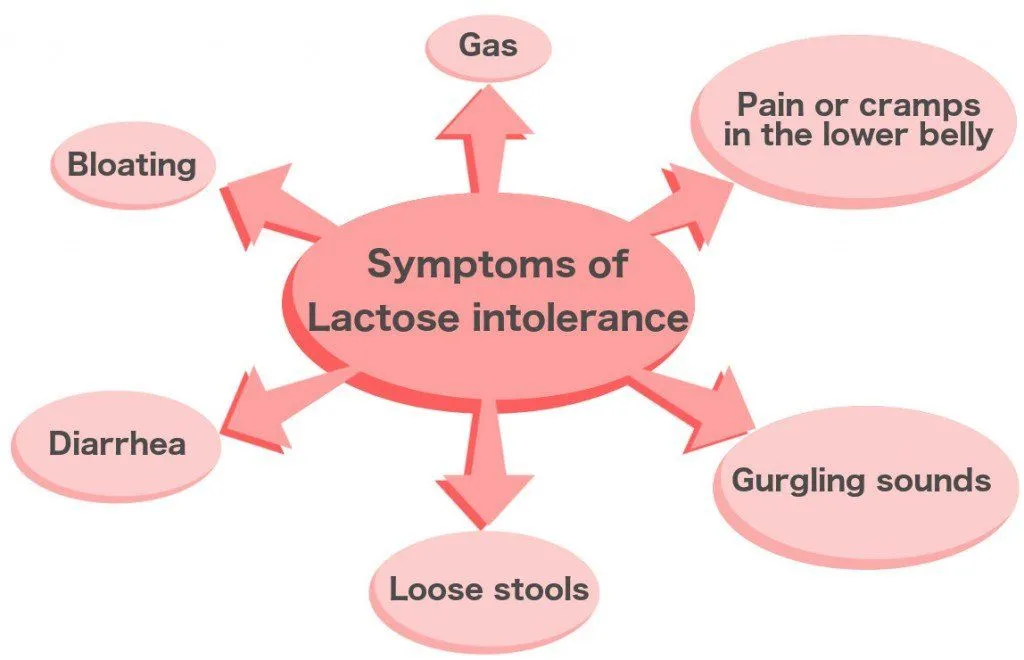
The most definitive symptoms of lactose intolerance include bloating, gas, watery and odd-smelling stools (diarrhea), and even abdominal pain in some cases.
How bad your symptoms are depends on how much dairy you have consumed and how much of a tolerance you have for lactose. If you get an upset stomach, nausea, flatulence or diarrhea about 30 minutes to 2 hours after you’ve consumed a dairy product, there’s a good chance it’s lactose intolerance (though other gut conditions can cause the same symptoms), and it’s time to go see a doctor about it.
Once it’s confirmed that you are lactose intolerant, does this mean that you can never touch dairy products again? What exactly happens in the digestive system of an afflicted person when they consume milk or other dairy products?
What Happens When A Lactose Intolerant Person Consumes A Dairy Product?
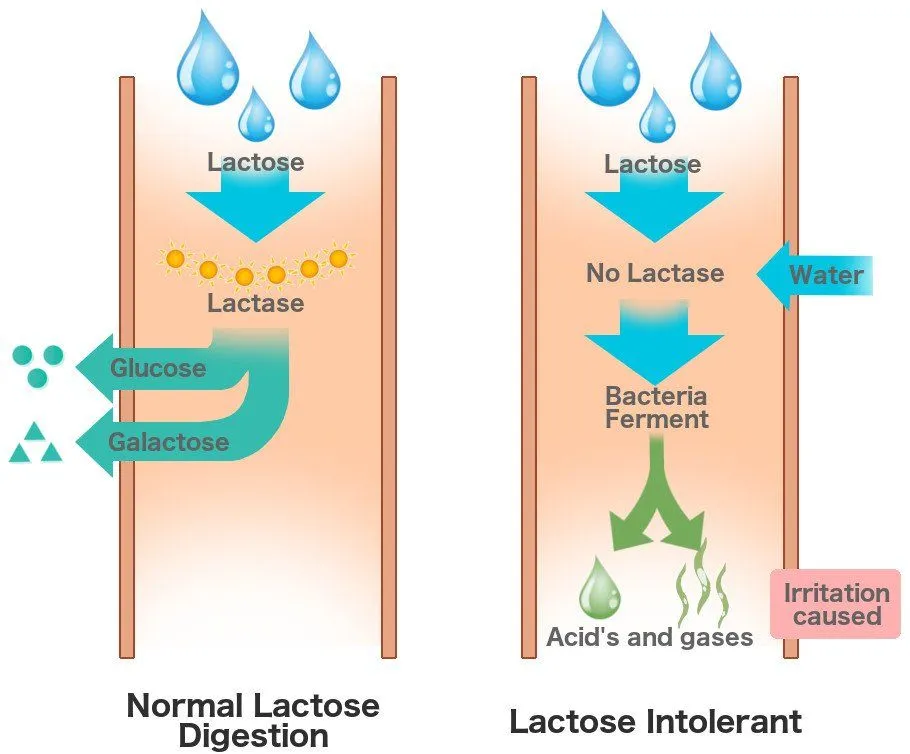
In a large proportion of the population, the small intestine winds down its production of lactase (the brush-border enzyme that breaks lactose down into glucose and galactose) after the weaning years of early childhood. If such a person consumes a dairy product, the undigested lactose moves into the lumen (i.e., the inside space) of the bowel, where it osmotically draws in water, which leads to diarrhea.
Also, when the lactase enzyme is not present in the system, the undigested lactose (from the dairy product) is attacked by certain gut bacteria, which ferment it and produce a bunch of gases, mainly hydrogen, carbon dioxide and methane. These are responsible for the bloating and flatulence that a lactose intolerant person experiences after consuming a dairy product.
The whole mess of the material becomes too much to handle for the digestive system, and is therefore shoved along the digestive tract, which makes one want to poop just minutes after they’ve drunk a glass of milk!

Interestingly, however, lactose intolerance is so common and usually harmless that many people don’t consider it an affliction at all, but rather an unfortunate condition that you can avoid by simply eliminating dairy from your regular diet.
References (click to expand)
- Lactose Intolerance | MUSC Health | Charleston SC. muschealth.org
- Lactose Intolerance in Children - Health Encyclopedia - URMC. The University of Rochester Medical Center
- Lactose Intolerance - Penn State Extension. The Pennsylvania State University
- Lactose Intolerance | NIDDK. The National Institute of Diabetes and Digestive and Kidney Diseases
- What I need to know about Lactose Intolerance. efnep.ucanr.edu
- Lactose Intolerance. StatPearls. NCBI Bookshelf