Humans domesticated cattle between 10,000 and 5,000 years ago. Between this period, humans in agricultural settings began consuming milk of some of these domesticated animals.
Since civilization began and animal husbandry became a critical strategy for survival, drinking milk from other species, especially cows and buffalo, has become commonplace amongst many of our communities. But, are we alone using the milk that other species produce for their progeny to indulge our taste buds or empower our immunity? Let’s find out!
History Of Procuring Milk From Other Species
Let’s go back in time by about 12,000 years ago. Humans were beginning their agricultural conquest, transitioning out of their nomadic lifestyles. With agriculture came domestication, and between 10,000 and 5,000 years ago, humans had domesticated cows, sheep, chickens, and horses, to name just a few.
How and why humans domesticated cattle in the first place is debated, but it can be said with certainty that the domestication of cattle had many advantages. Domesticated cattle could do the intensive work on the farm, their fur could be woven into cloth, their skin processed into leather, and their bones could be used as weapons for hunting or jewelry! And not to forget, the cattle were a source of milk.
Early farmers were among the first milk drinkers. Milk of these species may have been an alternative source of nutrition in times when food was scarce. So when exactly did people start drinking it? The hard evidence is surprisingly old. Fatty milk residues trapped in broken pottery from the Near East and southeastern Europe push regular dairying back to around the seventh millennium BC, roughly 8,000 to 9,000 years ago. (Source) Even more directly, a milk protein called beta-lactoglobulin has been recovered from the hardened dental plaque of Neolithic farmers who lived about 6,000 years ago, the earliest milk caught, in effect, on human teeth.
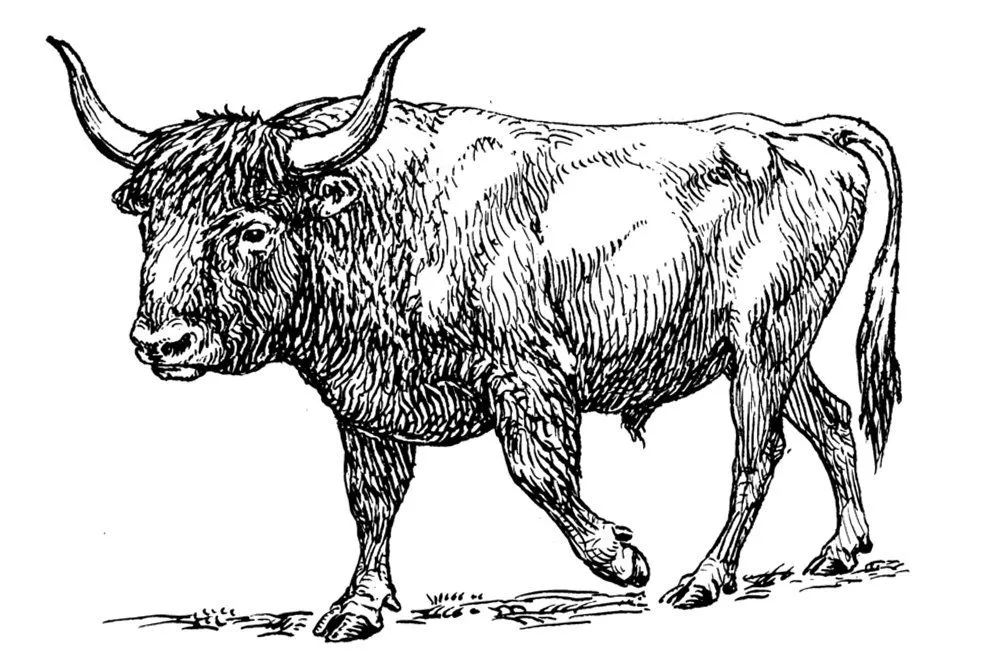
Interestingly, cows, as we know them, didn’t exist at that time; there were instead Aurochs. Archaeological and genomic evidence reveals that humans domesticated the taurine cow, a closely related species of wild aurochs, about 7,000 years ago in what is called the Fertile Cresent (in the Middle East) and the zebu cow in the Indus Valley civilization in Asia about 6,000 years ago. (Source) With time, these early cows evolved into the various breeds of cattle we know today.
Are We Alone?
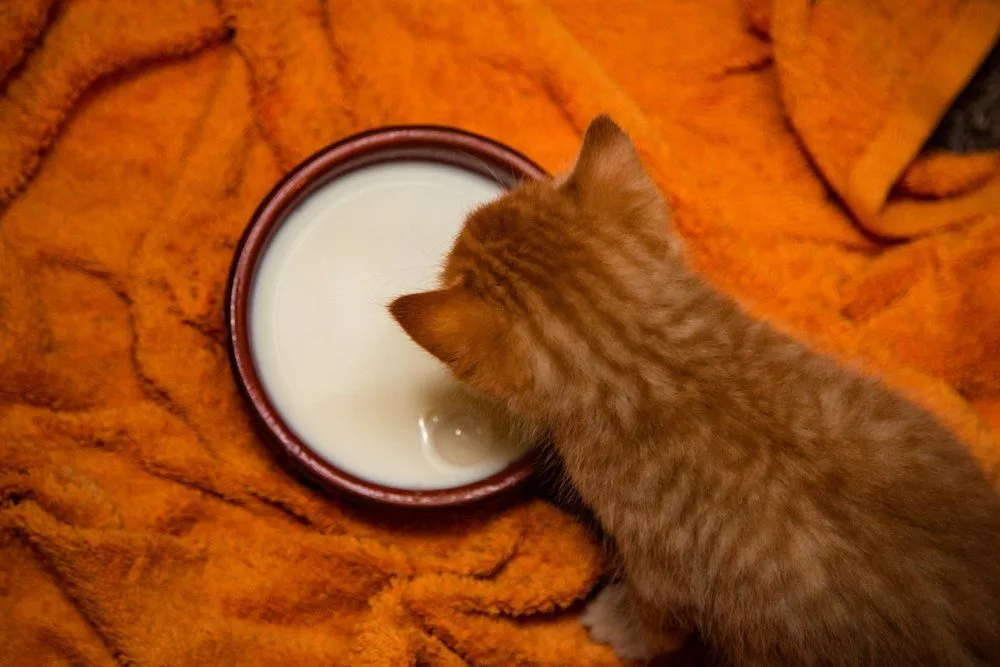
If you like cats and dogs, you have probably tried to feed them milk before. That milk would probably come from a cow or a buffalo. Your pet probably chugged the milk the way you would down your favorite drink! Nevertheless, it is an aberration rather than a norm for cats or dogs to sip milk. They only drink milk because they have access to it through us. In the natural environment, they do not chase cows or goats to get their milk!
Drinking Milk Past Infancy
So when it comes to mammals, we are the only species that drinks milk directly from other species, or we are the only one that does so in adulthood.
Most juvenile animals can drink and digest their mother’s milk because they carry the enzyme lactase, which digests lactose. Lactose is the main carbohydrate in animal milk. Lactase is an enzyme that breaks down lactose into its basic parts, that is, glucose and galactose, that the body can now use. As the young grow into adults, the gene that produces this enzyme is switched off, and the body can no longer digest lactose.
Lactase Persistence
Before the domestication of cattle, adult humans lacked the enzyme lactase. Sometime after we started domesticating cattle, some humans in Europe developed a mutation that kept their lactase enzyme active into adulthood, allowing them to drink milk without side effects. The trait turned out to be an advantage, and the gene variant spread across populations. People who can digest milk into adulthood are called lactase persistent.
There are lactose intolerant people who do not produce the enzyme lactase, and the gene variant didn’t spread evenly across populations. In fact, between 50 and 70% of adults worldwide are lactose intolerant.
Examples Of Animal Drinking Milk Of Other Species
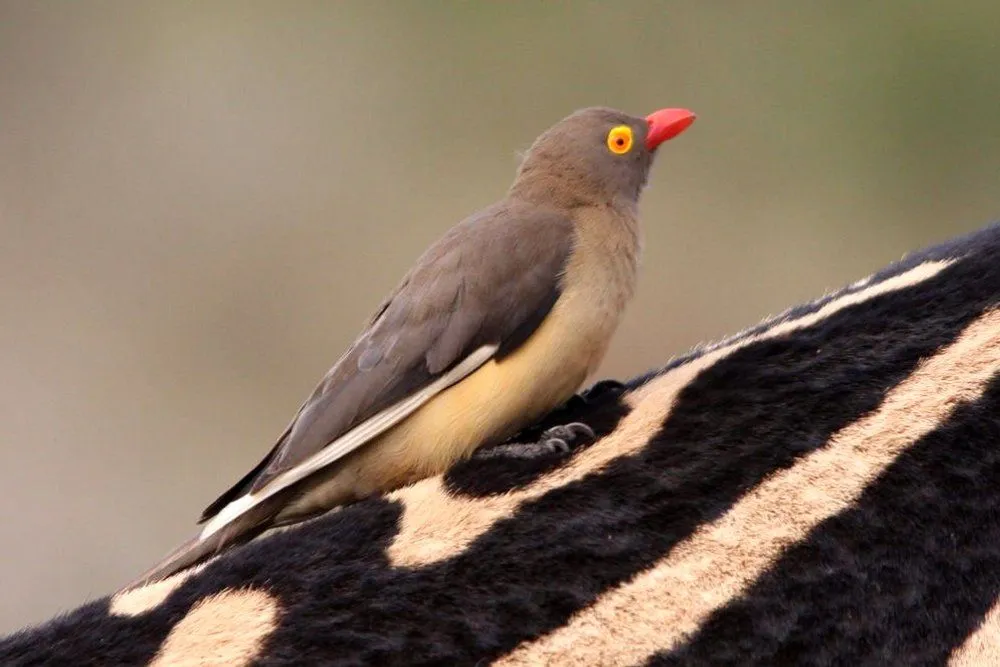
So far, I have explained how and why we started drinking milk from cattle and how we have even convinced our pets to drink it, but what about a real example from the wild where one animal drinks the milk of another species? Remember, I have already ruled out mammals, but one such example is the Red-Billed Oxpecker, a bird that can perch on the udders of an impala and suck its milk. Besides the Oxpecker, birds such as Seagulls and Sheathbills have been reported to pilfer milk from elephant seals’ teats directly. So, while it’s quite rare, milk stealing does happen between certain other species in the wild.
Why Do We Drink Cow And Goat Milk, And Not Other Animals’ Milk?
Here is something worth pausing on. More than 6,000 species of mammals make milk for their young, yet only a tiny handful ever end up in our fridges. So why did our ancestors settle on cows, goats, sheep, and a few others, rather than, say, pigs or horses?

The answer comes down to plumbing, yield, and temperament. The animals we milk are mostly ruminants, that is, cud-chewing animals such as cattle, goats, sheep, buffalo, and yaks. Their multi-chambered stomachs let them turn coarse, low-nutrient grass into large volumes of milk, far more than a single calf or kid could ever drink. A modern dairy cow can give tens of liters a day. They also store that milk in a roomy udder with a few large, easy-to-grip teats, so a person can sit and milk them by hand.
Now picture trying the same with a pig or a dog. They have a long row of small teats, each yielding only a trickle, which makes hand-milking hopeless. Lactating sows are also famously skittish and bad-tempered, nothing like a placid cow that will line up to be milked. Centuries of selective breeding then widened the gap, turning cattle and goats into ever calmer, higher-yielding dairy animals. So it was never really about which milk tastes best. We drink the milk of the species that were the easiest and most generous to milk, and that we could tame in the first place.
Can Humans Drink Dog, Cat Or Elephant Milk?
Once people realize humans drink the milk of another species, the next question is usually a cheeky one. Could you milk your dog? Or a cat? Or even an elephant? You could technically collect it, but nobody runs a household on it, and the reasons are the same plumbing and yield problems from the last section, plus a question of what is actually in the milk.

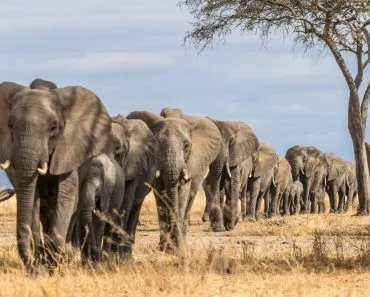
Milk is not one fixed recipe. Every mammal tailors its milk to its own newborn, so the balance of fat, protein, and sugar swings wildly from species to species. Elephant milk, for instance, is extremely rich: studies of African elephants put the fat at around 9% early on and climbing past 13% later in lactation, far fattier than the 3 to 4% in typical whole cow milk, because a baby elephant has to pack on weight fast. Dog milk is likewise far more concentrated in fat and protein than cow milk. None of this is poisonous, but it is a poor everyday match for the human gut and our palate, which is exactly why nobody bothers.
Around the world, humans have in fact tapped milk from quite a range of species: cows, goats, sheep, water buffalo, camels, yaks, horses (fermented into a drink called kumis in Central Asia), donkeys, and reindeer. Notice the pattern: every one of them is a herd animal we could tame, milk by hand in useful amounts, and whose milk our bodies tolerate reasonably well. The list is not a popularity contest, it is a shortlist of practicality. And the reverse holds too, which is why your cat or dog lapping up a saucer of cow milk is borrowing it from us, not hunting it down the way it would in the wild.
References (click to expand)
- Teletchea, F. (2019, July 17). Animal Domestication: A Brief Overview. Animal Domestication. IntechOpen.
- Upadhyay, M. R., European Cattle Genetic Diversity Consortium, Chen, W., Lenstra, J. A., Goderie, C. R. J., MacHugh, D. E., … RPMA Crooijmans. (2016, September 28). Genetic origin, admixture and population history of aurochs (Bos primigenius) and primitive European cattle. Heredity. Springer Science and Business Media LLC.
- Orlando, L. (2015, October 26). The first aurochs genome reveals the breeding history of British and European cattle. Genome Biology. Springer Science and Business Media LLC.
- Gerbault, P., Liebert, A., Itan, Y., Powell, A., Currat, M., Burger, J., … Thomas, M. G. (2011, March 27). Evolution of lactase persistence: an example of human niche construction. Philosophical Transactions of the Royal Society B: Biological Sciences. The Royal Society.
- Evershed, R. P., et al. (2008). Earliest date for milk use in the Near East and southeastern Europe linked to cattle herding. Nature. PubMed.
- Warinner, C., et al. (2014). Direct evidence of milk consumption from ancient human dental calculus. Scientific Reports. NCBI PMC.
- Stock, J. T., & Wells, J. C. K. (2023). Dairying and the evolution and consequences of lactase persistence in humans. Animal Frontiers. NCBI PMC.
- Macronutrient composition of milk from two captive African elephant (Loxodonta africana) cows. Zoo Biology, 2021. PubMed.