The main difference between crude oil and shale oil is where they sit underground and how they’re reached. Conventional crude oil pools in porous reservoir rock and flows up through a vertical well, while shale oil (or "tight oil") is liquid hydrocarbon trapped inside dense shale rock that has to be unlocked with horizontal drilling and hydraulic fracturing. Both end up as the same kind of liquid crude that gets sent to a refinery; the cost, location, and political economy of getting it out of the ground are what differ.
For the past 150 years, the oil industry has grown from a fledgling source of power to an approximately $1.3 trillion global industry that dominates international news, drives political policy and shapes the very boundaries of nations. There is no doubt that petroleum and oil represent an essential part of the modern world, but it doesn’t all come from the same place.
In fact, the balance of where the oil is sourced, where it is refined, and where it is used has a major impact of geopolitics, so it is important to understand the basic differences. For example, if the United States possesses so much oil in its own country, why is so much attention placed on the oil capacity of the Middle East? More specifically, is there any difference between the oil sourced in the Middle East versus what is available in other parts of the world, like the oil fields of Texas or North Dakota?

Short answer: Most of the oil from the Middle East is crude oil, whereas much of the present oil production in the United States is in the form of shale oil.
Crude Vs. Shale – A Modern Rivalry
Before we can discern the intricacies of global geopolitics concerning oil, it is important to understand the difference between the two major varieties of this valuable resource.
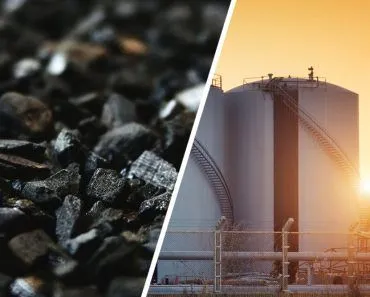
Crude oil – the traditional “black gold”, in liquid form, that can bubble straight up from the ground – is primarily the type of oil sourced from the Middle East. Crude oil is composed of a mixture of hydrocarbons that formed from the buried remains of ancient marine plankton and algae, cooked under heat and pressure for tens to hundreds of millions of years. This crude oil can be accessed by drilling down into the reservoir rock, where this crude oil is stored, and then “sucked up” through a traditional pipe and pump production method. Once this deposit of crude, unrefined oil is brought up to the surface, it is then sent to a refinery for further processing before it can be used.
From there, crude oil can be refined in a wide variety of ways to produce everything from jet fuel and butane to gasoline, asphalt and ethane. Again, it is important to remember that all oil is made from hydrocarbons; it simply depends on what form they are contained – namely liquid, gas, or trapped in porous rock.
Shale oil – the engine of the modern American energy boom – is light crude oil locked inside the tiny pores and natural fractures of shale rock. (Industry geologists usually call this "tight oil" to distinguish it from the kerogen-rich rock known as oil shale, which is a separate resource that has to be mined and heated to release oil.) Shale oil is chemically very similar to conventional crude (it is already a liquid hydrocarbon), but the rock around it is so impermeable that it won't flow into a normal well. To get it out, operators drill horizontally through the shale layer and then hydraulically fracture the rock to create pathways for the oil to escape.
Extracting shale oil still requires an oil well, the drill stem, casing, and the same kind of crew as a conventional well. The big difference is the geometry: rather than a simple vertical drill, a shale operator drills down to the productive layer and then turns the bit sideways, running horizontally through the deposit for a mile or more. Hydraulic fracturing (“fracking”) then pumps millions of gallons of water, sand proppants and chemical additives down the well at high pressure to crack the rock and let the trapped oil flow back to the surface. One notable benefit of shale extraction is that a single pad of horizontal wells can drain a much larger volume of rock than a vertical crude oil well, so producers get more energy per surface footprint.
In terms of costs, crude oil extraction is much less expensive and more efficient than shale oil extraction. A common way of measuring costs is on a per barrel basis. In some parts of the Middle East, crude oil extraction can cost as little as $10/barrel, although the global average lies somewhere between $30 and $40. This includes the cost of further refining for the crude oil to actually be usable. When it comes to shale oil extraction, however, despite the rapid advances in fracturing technology (led by the United States), the cost per barrel typically starts at $40/barrel. In fact, the price can go up much further from there, sometimes to $90/barrel, depending on the complexity of the extraction in certain areas.
That being said, there are other complicating variables, such as the cost of shipping Middle Eastern oil halfway across the world to the United States, as well as the initial costs of crude oil extraction – namely locating a viable deposit. It is far easier to confidently locate shale oil deposits, and since there are so few untapped crude oil deposits in the continental United States, shale oil production makes sense as a complementary source of fuel (both oil and natural gas).
Shale Oil, Oil Shale, Or Shale Gas: What's The Difference?
Three terms get thrown around almost interchangeably in news coverage, and they trip up even careful readers. They are not the same thing, so it is worth pinning each one down.

Shale oil (tight oil) is the one that powers the American boom. It is fully formed liquid crude that is simply trapped inside dense, low-permeability rock and has to be coaxed out with horizontal drilling and hydraulic fracturing. The U.S. Energy Information Administration (EIA) actually prefers the label tight oil, because the same trapped crude is also produced from tight sandstones and carbonates, not only from shale. When people say "shale oil vs crude oil," this liquid tight oil is almost always what they mean.
Oil shale is a completely different animal, even though the words are just reversed. It is rock packed with kerogen, a waxy, solid precursor to oil that nature never finished cooking. There is no liquid to pump. To get usable oil, the rock has to be mined and then heated to around 450–500 °C (about 840–930 °F) in a process called pyrolysis, which converts the kerogen into synthetic crude. It is expensive and energy-hungry, which is why the vast Green River oil shale deposits of Colorado, Utah and Wyoming have never been produced at scale.
Shale gas, finally, is not oil at all. It is natural gas (mostly methane) locked in the same kind of shale rock and released with the same horizontal-drilling-plus-fracking technique used for tight oil. A single shale formation can yield tight oil, shale gas, or both, depending on how deeply it was buried and how hot it got over geologic time. So the short version: shale oil and shale gas are liquid crude and natural gas freed by fracking, while oil shale is a solid, immature rock that must be cooked.
Light, Sweet, Heavy, Sour: How Texas And Saudi Crude Actually Differ
Calling everything from the Middle East "crude" and everything from Texas "shale" hides a more useful distinction. Not all crude oil is the same liquid, and refiners care enormously about two numbers: how dense it is (its API gravity) and how much sulfur it contains.

API gravity is an inverse density scale: the higher the number, the lighter and thinner the oil. Crude above roughly 30° API is called light, anything from about 20–30° is medium, and oil between 10–20° is heavy. Sulfur sets the second axis: oil with very little sulfur (under about 0.5%) is sweet, while higher-sulfur crude is sour. Light, sweet crude is the prize because it flows easily and refines cleanly into high-value gasoline, jet fuel and diesel with less processing. Heavy, sour crude needs more equipment and energy to clean up, so it sells at a discount.
This is exactly where Texas and Saudi Arabia diverge. The benchmark grade from the U.S. shale fields, West Texas Intermediate (WTI), runs around 39.6° API with only about 0.24% sulfur, making it very light and very sweet. Saudi Arabia's flagship export, Arab Light, sits near 33° API with roughly 1.8–2% sulfur, which actually classifies it as a medium, sour crude despite the reassuring name. So American shale crude and Middle Eastern crude are not just pumped differently; the barrels themselves are chemically different products, and that difference drives much of the global price spread between them.
If America Pumps The Most Oil, Why Does It Still Import Any?
Here is the genuine head-scratcher. The United States became the world's top crude oil producer in 2018, overtaking both Saudi Arabia and Russia, and it has held that title every year since. So why does it still import millions of barrels a day?
The answer is a mismatch between what the country pumps and what its refineries were built to digest. American shale gives up light, sweet crude, but many large U.S. refineries, especially along the Gulf Coast and through the Midwest, were engineered decades ago to process heavy, sour crude. Re-tooling that hardware is enormously expensive, so instead the refiners keep importing heavy crude to feed their existing equipment while the country exports much of its surplus light shale oil to refiners abroad that prefer it.
That is why Canada, not Saudi Arabia, has quietly become America's dominant oil supplier. According to the EIA, Canadian crude (largely heavy oil from the Alberta oil sands) made up about 60% of total U.S. crude oil imports in 2023, up from roughly a third a decade earlier. In other words, the United States can be the biggest oil producer on Earth and a heavy importer at the same time, not out of scarcity, but because the type of oil it produces and the type its refineries crave are two different things.
So…. American Vs. Middle East Oil?
In answer to the initial question of this article, there is a difference between the oil we get from the Middle East versus America, but that wasn’t always the case. Before the crude oil deposits in the continental US were essentially “dried up”, America was also relying almost exclusively on crude oil, albeit not in the same quantities as those available in the Middle East.
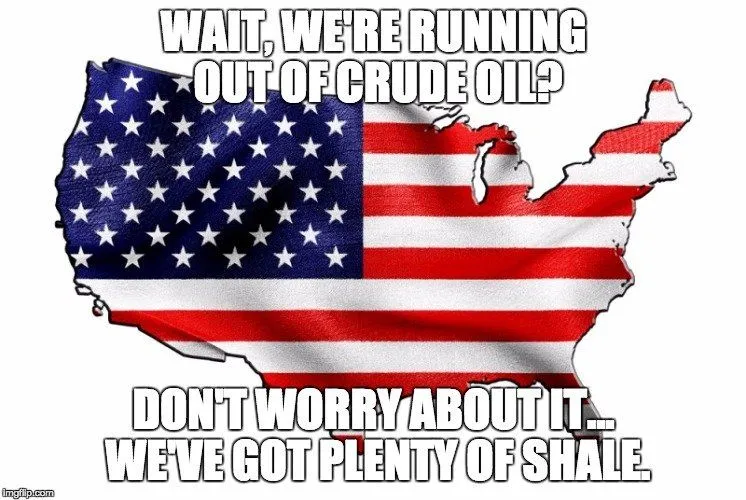
Now, after the general move away from traditional fossil fuels and the increasing American desire for energy independence, alternative methods of fuel production have come to the forefront. Offshore drilling and prospective crude oil deposits in other parts of the West still represent massive amounts of energy potential, but at present, the United States is shifting its attention to shale oil and building up its oil reserves, while the Middle East continues to produce crude oil. Per the U.S. Energy Information Administration’s assessment of 41 countries, the United States holds the world’s second-largest technically recoverable shale oil resources (behind Russia) and ranks among the top five for shale gas. Crucially, U.S. operators have built far more shale drilling infrastructure than any other country, which is why America, not the country with the largest reserves, has been the world’s top oil producer since 2018.
In summary, both shale oil and conventional crude end up as the same kind of liquid hydrocarbon and require similar refining; what differs is the geology and the cost of getting them out of the ground. Right now, conventional crude is still cheaper to lift, but as easy crude reservoirs deplete and fracking technology keeps improving, the economics continue to tilt toward shale oil and shale natural gas.
Only time will tell, but hopefully the oil-exporting and oil-consuming nations of the world will realize the dangerous nature of burning these fossil fuels and jointly pursue healthier and more sustainable strategies in the coming century… before it’s too late!
References (click to expand)
- Extraction and Refining of Crude Oil - www.oilprices.org
- Where our natural gas comes from - U.S. Energy ... - EIA. The U.S. Energy Information Administration
- An Assessment of Oil Shale Technologies (Part 7 of 18). Princeton University
- Glossary: Tight oil - U.S. Energy Information Administration (EIA)
- Shale oil extraction (retorting temperatures of oil shale) - Wikipedia
- Crude oils have different quality characteristics - U.S. Energy Information Administration (EIA)
- Oil and Gas Classification - Wyoming State Geological Survey
- Crude Oil Types (EIA FAQ): WTI and Brent API gravity and sulfur content
- Where our oil comes from - U.S. Energy Information Administration (EIA)
- Canada's crude oil has an increasingly significant role in U.S. refineries - U.S. Energy Information Administration (EIA)