Petrol (gasoline) and diesel have almost the same calorific value by weight (about 45.8 MJ/kg for petrol and 45.5 MJ/kg for diesel), but diesel is denser and so packs more energy per liter (around 36.9 MJ/L versus 33.7 MJ/L). Diesel engines are also more efficient and return better mileage, while petrol engines are lighter and rev higher for more power.
The world is experiencing an age of disruption. With increasing reliance on electric mobility, the phase out of the internal combustion engine has already begun.
However, to say that humanity’s dependence on fossil fuels has dwindled would be far from the truth. Despite constant price fluctuations and the availability of alternative fuels, humans’ fealty to gasoline (or petrol) and diesel remains unquestionable. Yet, both gasoline and diesel serve very different functions.
For reference, gasoline is sometimes shortened to gas, or referred to as petrol, in various parts of the world.
Which of the two is a better fuel? Let’s find out!
Gasoline (Petrol) Vs Diesel
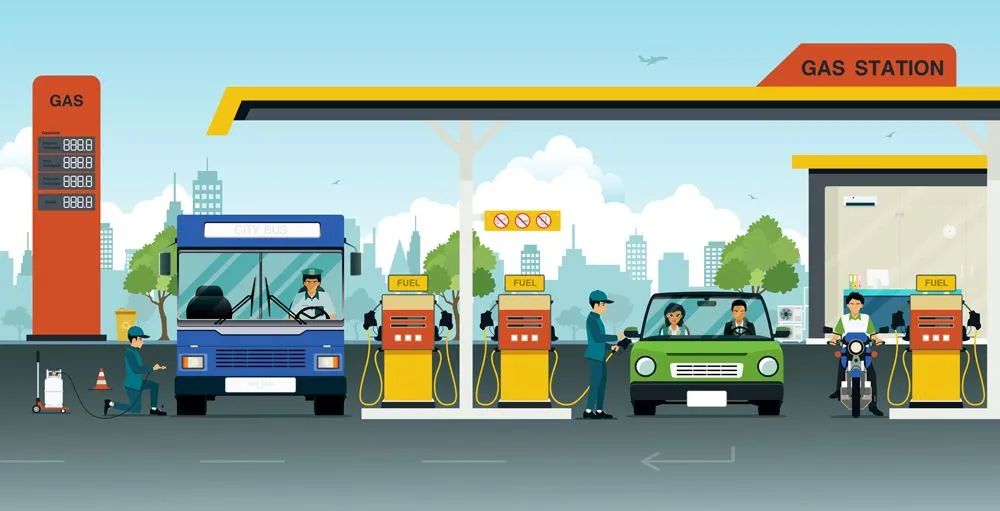
To begin with, both gasoline and diesel are extracted from the same raw material (crude oil) through various levels of refinement. Yet, they have different thermal characteristics, making them suitable for very different purposes.
In order to understand this better, let’s go through a comparison across 3 parameters, which are further characterized by their attributes.
1. Fuel Characteristics
A. Calorific Value
The calorific value refers to the energy within the fuel that gets released as heat upon its combustion. Interestingly, both gasoline and diesel have comparable calorific values by weight (about 45.5 MJ/kg for diesel and 45.8 MJ/kg for gasoline).
However, diesel has a higher density than gasoline, which makes it more energy-intensive (36.9 MJ/L compared to 33.7 MJ/L of gasoline).
Due to this, less diesel is required to produce the same energy output in comparison to gasoline.
B. Nature
Both gasoline and diesel are volatile fuels, gasoline being the more volatile of the two. While volatility is inherent to the fuels, the use of additives enhances it for better combustion characteristics.
However, higher volatility increases knocking or pre-ignition; for beginners, pre-ignition is the tendency of the fuel to combust before the optimum timing. This is detrimental to the power output and engine health in the long run.
Gasoline and diesel have a shelf life of up to 6 and 12 months, respectively, assuming that ideal storage conditions are provided.

C. Emissions
There is no cleaner fuel between gasoline and diesel. Due to differences in the nature of these fuels, the kind of residue they produce also varies. Common combustion products include hydrocarbons, oxides of nitrogen and sulphur, ammonia and particulate matter.
Gasoline engines emanate more greenhouse gases, such as hydrocarbons and carbon monoxide, thereby contributing to environmental pollution. Diesel engines, on the other hand, produce more NOx and fine particulate matter in the form of soot, which is characterized by heavy black deposits. The residue of diesel combustion poses greater health hazards.
Most modern cars are fitted with advanced catalytic converters that reduce the amount of harmful components, present in the exhaust, that are released to the outside atmosphere.
2. Engine Characteristics
A. Construction
The construction of engines is dependent on the combustion requirements of the respective fuels. Gasoline engines have spark plugs that ignite the air-fuel mixture. Diesel engines, on the other hand, have no spark plugs at all; they squeeze the air so hard that it becomes hot enough to ignite the fuel the moment it is injected. Most diesels also carry glow plugs, but these are only a cold-start aid that warms the combustion chamber when the engine is cold; once it is running, compression alone does the job.
Due to greater stresses required and generated in the combustion of diesel, it is essential for their engines to have thicker walls and higher quality componentry. However, gasoline is ignited by a spark and does not need high compression. This allows for relatively thinner walls and the use of componentry that doesn’t have to withstand high stresses.
B. Performance
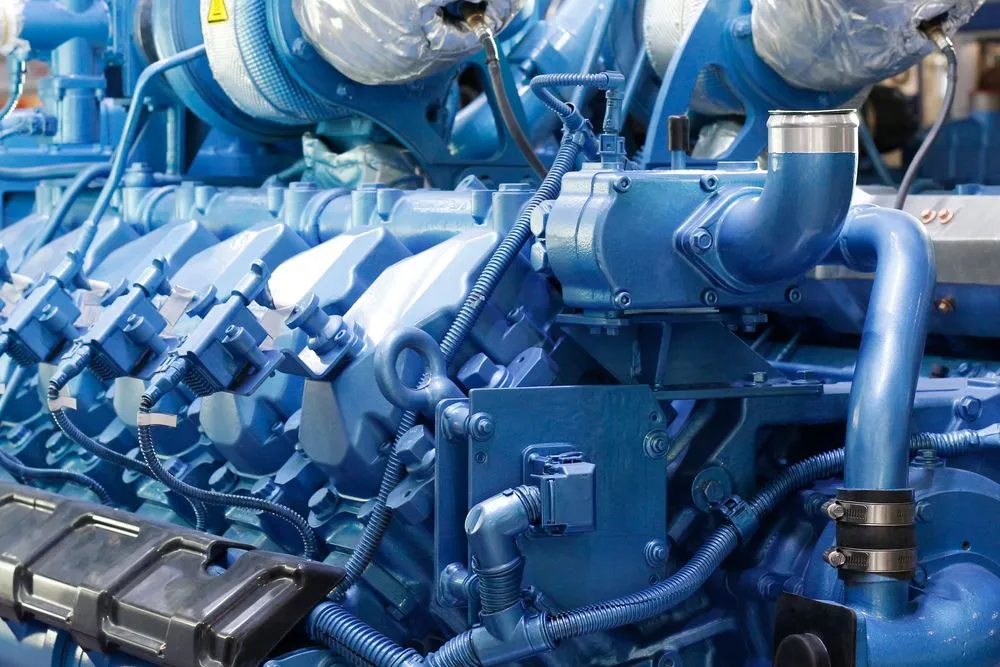
The overall lighter architecture of gasoline engines, and the shorter bore-and-stroke combination, allows for greater power output and a superior ability to reach higher revolutions per minute (RPMs).
On the flip side, diesel engines are bulky, consist of longer piston strokes, and cannot reach high RPMs without causing a lot of mechanical strain. This leads to a loss in the total power output, although diesels benefit from the tremendous torque that is generally missing in gasoline engines.
In the past, gasoline engines were known to be much quieter than diesel engines. However, increased levels of refinement in recent years enables diesel engines to be just as quiet as gasoline engines.
C. Application
Their higher horsepower makes gasoline engines more conducive for domestic and performance-oriented applications. These include both commuter cars, sports cars and motorcycles. Diesel engines generate better torque and find use in SUVs, heavy vehicles and marine engines. Diesel engine vehicles are generally more expensive upfront than their gasoline equivalents.
3. Performance And Cost
A. Fuel Efficiency
Diesel engines are more fuel-efficient than their gasoline counterparts. This is largely because diesels run much higher compression ratios (roughly 16:1 to 22:1, versus about 9:1 to 12:1 for gasoline), so a diesel combustion cycle converts more of the fuel’s energy into useful work (around 30–35%) than a typical gasoline cycle (around 25–30%). Better efficiency reduces fuel costs, which represent a major chunk of the running costs for a vehicle.
However, better fuel metering, injection and combustion technology has ensured that most modern-day engines are smaller in size, yet more fuel efficient and powerful than their predecessors.

B. Maintenance Costs
Due to their robust architecture, diesel engines do not require a lot of maintenance, as compared to gasoline engines. However, this also implies that the replacement parts and consumables used in a diesel engine are more expensive, which contributes to higher maintenance costs.
C. Fuel Costs
During fractional distillation, gasoline boils off higher up the column (it is the lighter, lower-boiling fraction), while diesel is a heavier fraction that condenses lower down. Pump prices, though, depend far more on taxes, demand and refining margins than on where a fuel sits in the column. In the United States, the United Kingdom and Canada, diesel typically costs the same as or more than gasoline (in 2026 the U.S. average is roughly $3.32 a gallon for diesel against about $3.00 for regular gasoline). So while diesel cars are usually more expensive to buy, their better fuel economy can offset the higher fuel price over the long term.
Is There Really A Better Fuel Between Diesel And Gasoline?
As with everything else, the better fuel is the one that serves one’s purposes best. As seen above, both gasoline and diesel have vastly different characteristics and serve very different purposes, despite both being IC engine fuels.
At the same time, both have their own pros and cons, making a distinct answer for this a function of what you need!
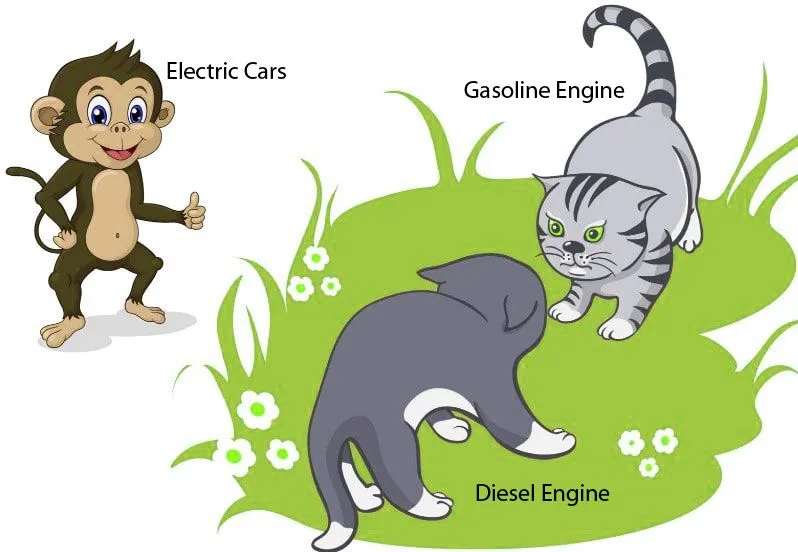
Before I close, however, I want to leave you with a thought to ponder:
References (click to expand)
- Gasoline and the environment. U.S. Energy Information Administration (EIA)
- Kook, S., & Pickett, L. M. (2009, November 2). Effect of Fuel Volatility and Ignition Quality on Combustion and Soot Formation at Fixed Premixing Conditions. SAE International Journal of Engines. SAE International.
- I Ramos —. A Comparison of Diesel and Gasoline in Consumer Automobiles. Stanford University
- crude oil and petroleum products - EIA. The U.S. Energy Information Administration
- Fuel Properties Comparison. Alternative Fuels Data Center, U.S. Department of Energy
- Nitrogen pollution from diesel-fuelled cars even higher than .... The Umweltbundesamt