Knowledge falls into two foundational categories first proposed by philosopher Michael Polanyi in his 1958 book Personal Knowledge: explicit knowledge (information that can be written down, like formulas or facts) and tacit knowledge (skills you absorb through practice, like riding a bike). Within those, scholars commonly distinguish at least six more types: implicit, procedural, contextual, embodied, expert (domain), and distributed knowledge.
When you read the word “knowledge”, what is the first thing you think of? Do you think of a math equation on a chalkboard? A secret that you’re keeping for a friend? The recipe to your favorite meal? The latest updates in the political world? Whatever idea you summon in your mind, you’re not wrong! Even what you’re doing right now—the act of thinking about knowledge—is its own category, called metaknowledge.
Dividing up the knowledge contained and transported through your roughly 86 billion neurons and on the order of 100 trillion synapses may seem like a daunting task, but wiser minds have already categorized the complexity of knowledge in a number of clear-cut ways. Some divisions overlap, and there isn’t one universally accepted structure for knowledge, but the following article should provide some clarity.
Types Of Knowledge
Generally speaking, there are two foundational types of knowledge that most modern treatments lean on: explicit knowledge and tacit knowledge. The distinction grew out of the work of Hungarian-British scientist and philosopher Michael Polanyi (Personal Knowledge, 1958; The Tacit Dimension, 1966) and was later sharpened into the clean binary used in business and knowledge management by Nonaka and Takeuchi in 1995.
(Older traditions sliced the cake a little differently. Aristotle separated episteme, scientific theoretical knowledge, from techne, the knowledge of craft, and phronesis, practical wisdom. The analytic philosophers Bertrand Russell and Gilbert Ryle later popularised the contrast between knowing-that and knowing-how, the difference between being able to recite the rules of chess and being able to actually play. In education, Anderson and Krathwohl's revised Bloom's taxonomy splits knowledge into factual, conceptual, procedural and metacognitive types.)
Explicit knowledge is something that can be completely shared through words and numbers and can therefore be easily transferred. This knowledge takes many forms that you recognize, such as mathematical formulae, laws, scientific papers and texts, operational manuals, and raw data.

Tacit knowledge, on the other hand, is entirely personal, informal, and notoriously difficult to share or express. This can be expressed in behaviors, actions, routines, habits, responses, instincts, senses, intuitions and bodily experiences. This type of knowledge is also affected by our beliefs and personal values, an ever-changing and more abstract pool of knowledge that affects how we perceive and move through the world.
However, within those two broad divisions of knowledge are various other types, many of which will be outlined in greater detail below.
Explicit Knowledge
At its core, explicit knowledge is a statement that can be easily verified as true or false. For example, there are 26 letters in the English alphabet is a true statement of explicit knowledge. Similarly, Force = mass*acceleration is a true statement that expresses our understanding of the universe, as this is a fundamental law of physics. Explicit knowledge can be transmitted accurately through words, numbers and symbols without being lost. However, as soon as it is read, listened to, or interpreted, there is the potential for misunderstanding, based on variations that may exist in the receiver’s prior knowledge!
Tacit Knowledge
Tacit knowledge, more specifically is knowledge that cannot be expressed through data and symbols alone; it is a knowledge gained directly through experience and practice. A common example of tacit knowledge is how to tie your shoelaces, ride a bike, play a musical instrument or chop wood. When you begin learning how to do these things, it may seem difficult, if not impossible, but there is often a tipping point when it becomes natural and embedded into your mind. Following this, you may not even need to think about the knowledge, as it is summoned unconsciously the moment the nail needs to be hit by the hammer, for example.
This sort of knowledge is difficult to write down or express in numbers and figures, which is the case for explicit knowledge. Instead, tacit knowledge is knowledge that we often forget that we know! Transferring this knowledge is somewhat possible through verbalization, but ultimately it depends on an individual practicing and embedding the knowledge for themselves.
This knowledge is often seen in generations who have always grown up around computers, and seem to intuitively know how gadgets and gizmos work.
Emotional intelligence is also a part of this category; the ability to communicate, empathize, listen and be respected as a communicator takes practice, but once those skills are acquired, displaying emotional intelligence can become second nature.
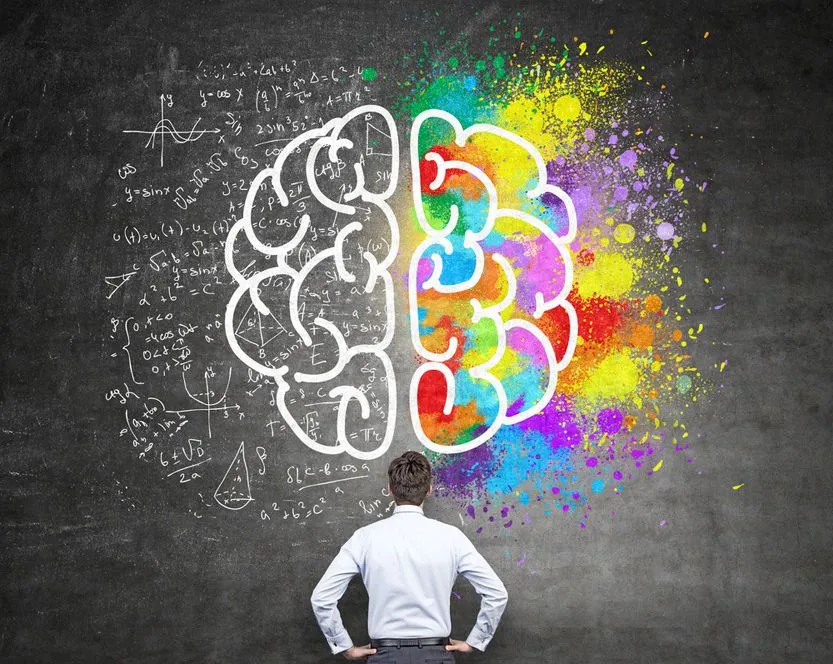
Many of the following sections fall under this broad and somewhat abstract category of tacit knowledge, as they are best acquired and solidified through practice and personal experience.
Implicit Knowledge
In cognitive psychology, implicit knowledge is what you can use correctly without quite knowing that you know it. It is picked up without conscious effort and shows up in things you do effortlessly but struggle to explain.
The classic example is your grasp of your own native grammar. Native English speakers reliably stack adjectives in a fixed sequence (opinion, size, age, shape, colour, origin, material, purpose), so we say "the lovely little old rectangular green French silver whittling knife" and never, ever any other order. Almost no one is formally taught this rule, but everyone follows it. That is implicit knowledge at work.
The balance corrections you make on a bicycle, the chess patterns a grandmaster recognises in a glance, the way a parent learns to read their newborn's cry, the way a regular reader's eyes skip over function words: all of these are implicit. The information is in there, doing real work, but it lives below the surface of articulation. Where tacit knowledge is hard to put into words because it is bound up with practice, implicit knowledge is hard to put into words because it was never consciously verbalised in the first place.
Procedural Knowledge
Procedural knowledge is understanding how to apply explicit knowledge. Explicit knowledge can be acquired from a textbook, lecture, website or DIY YouTube video, but applying that knowledge to solve an equation, apply a new statistical tool, or design a rain-catchment system in your backyard is much more difficult.
Procedural knowledge, therefore, is the knowledge we need to apply explicit knowledge. Knowing that there are 26 letters in the English alphabet is great, but being able to sing the ABC’s requires the procedural knowledge that you develop at a young age.
Similarly, once you understand the components and steps of a scientific experiment, you may need to practice multiple times before the “procedure” becomes smooth and properly executed. A brand-new medical resident may have the explicit knowledge of heart surgery, but the Head of Surgery will have years of procedural knowledge to implement in the operating room.
Contextual Knowledge
Some knowledge is exclusively or particularly relevant in a given context, or specific to a given setting. For example, in most places in the world, you can probably recognize the difference between a street and a sidewalk, and you also may be able to determine if it is a one-way, two-way, or two-lane street.
However, if you are in America, you will know that cars will be driving on the right-hand side of the street, and drivers will be sitting on the left-hand side of the car. If you were in London, however, you would know that the cars would be driving on the left-hand side of the street, and the drivers would be sitting on the right-hand side of the car.
This is an acquired type of knowledge that may change or be affected by your context. Your understanding and knowledge of a street and its uses, versus the knowledge of road design in different countries.
Embodied Knowledge
In its strict sense (drawn from phenomenology and embodied cognitive science), embodied knowledge is knowledge that lives in the body itself. It is the kind of knowing a touch typist's fingers do, that a surgeon's hands do, that a dancer's whole frame does. You cannot really hand it over by writing it down; it has to be drilled into muscle, posture and reflex.
There is also a looser, design-flavoured sense of "embodied" knowledge that turns up in engineering and architecture: knowledge baked into the objects and environments around us. When you pull out of your driveway and get on the road, you are able to navigate to your destination thanks to the embodied design knowledge of the engineers who shaped it: the placement of stop signs, lane dividers, turning lanes, curbs, exit signs and mile markers. The roadway carries the knowledge so you do not have to. The same is true of the efficient layout of grocery stores, shopping malls, parking lots and airport terminals.
(Cognitive scientists usually call that second sense distributed cognition: the knowledge is distributed across the artefacts in the environment, not held in any single head.)
Without some background knowledge of your own, people are often unable to take advantage of or even recognise such cues. A brand-new driver may be unable to notice all the nuances of a highway to navigate it safely, so it is better to practice in empty parking lots or quiet country roads, where there are fewer variables and less reliance on this kind of embodied knowledge.
Expert Knowledge
This is a division of knowledge that exists within a number of other categories mentioned above, but it’s an important one to understand. Expert knowledge, often referred to as domain knowledge, is the extremely specific and in-depth knowledge about a particular subject or field.
As a veteran biomolecular engineer, your domain knowledge in your field will likely be incredibly strong, and few others may match your level of proficiency and insight, but your general knowledge may be comparable to anyone else.
This is a niche type of knowledge that many of us possess on a certain level, although expressing it to others may be difficult, without possessing all the foundational knowledge and experience that goes along with it.
Distributed Knowledge
This is another subcategory, but an interesting type to be aware of. Distributed knowledge is knowledge that cannot be possessed by a single person, and must therefore be spread out between many actors or knowledge bases. For example, constructing an office building is an extremely complex task, requiring the knowledge and expertise of many different engineers, architects, regulators, and specialized laborers. Collectively, they all possess the knowledge to construct the office building, but no single individual could possess and be able to apply all that knowledge to accomplish the task.
A Final Word
This is by no means an exhaustive list, as there are many more domains of knowledge, many of which fit into these larger categories. For example, there is cultural knowledge, maternal knowledge, metaknowledge and conceptual knowledge, among so many others. Exploring and expanding the different realms of knowledge is every individual’s journey of a lifetime, but if you have a firm understanding of the major types in this article, then you’re well on your way!
References (click to expand)
- Gorman, M. E. (2002). []. The Journal of Technology Transfer. Springer Science and Business Media LLC.
- Dienes, Z., & Perner, J. (1999, October). A theory of implicit and explicit knowledge. Behavioral and Brain Sciences. Cambridge University Press (CUP).
- Howells, J. (1996, January). Tacit knowledge. Technology Analysis & Strategic Management. Informa UK Limited.
- Evans, J. A., & Foster, J. G. (2011, February 11). Metaknowledge. Science. American Association for the Advancement of Science (AAAS).
- Hewitt, J., & Scardamalia, M. (1998). []. Educational Psychology Review. Springer Science and Business Media LLC.
- Fernandes, A., & Mendes, P. M. (2003, June). Technology as culture and embodied knowledge. European Journal of Engineering Education. Informa UK Limited.
- Stevenson, A. (2014, August 26). We Came Here to Remember: Using Participatory Sensory Ethnography to Explore Memory as Emplaced, Embodied Practice. Qualitative Research in Psychology. Informa UK Limited.
- Willingham, D. B., Nissen, M. J., & Bullemer, P. (1989). On the development of procedural knowledge. Journal of Experimental Psychology: Learning, Memory, and Cognition. American Psychological Association (APA).
- Knowledge How. Stanford Encyclopedia of Philosophy
- Episteme and Techne. Stanford Encyclopedia of Philosophy
- Polanyi's paradox. Wikipedia