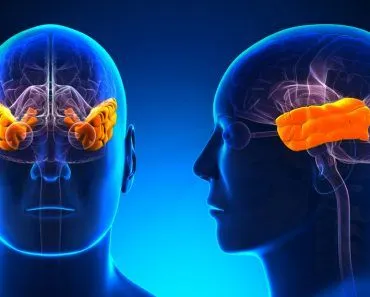
It depends on the timescale. Auditory (echoic) sensory memory holds sounds for roughly 4–10 seconds, while visual (iconic) sensory memory holds an image for only about a quarter to half a second—so for split-second recall, hearing wins. But once information moves into long-term memory, visual recall is consistently stronger: people remember what they saw better than what they heard, especially when the material is meaningful or paired with pictures.
I was recently at a restaurant that was designed to look like a cave. At a table next to mine, the family was speaking about their recent trip to some caves and how uncanny the resemblance was to the restaurant itself. One of the kids remarked that he was thankful the restaurant didn’t smell like the caves they’d visited.
However, the father mused about what it sounded like in the cave, and whether the similar white noise sounds were playing as the background music to the restaurant. They claimed to have heard the wind, or some birds, but mostly their own chatter, but they weren’t really sure. This got me wondering about how much we should trust our memories, or if they can be trusted at all?
What Are Memories?
Why is it that the family remembered what they saw vividly, rather than what they heard? To begin with, memories represent a person’s capacity to retain information that they have paid attention to. It is also the ability to retrieve this information when needed.
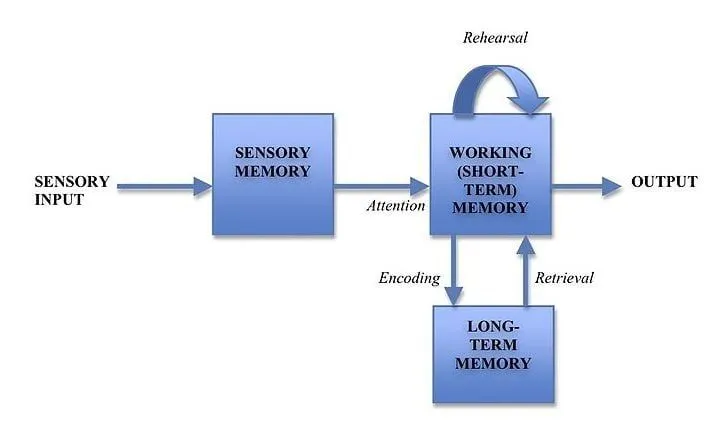
Processing information, or turning information into memories, resembles what happens in a computer. The data is received, encoded and then stored. The same thing is true in humans; the data from the environment is received through a sensory input, which is fairly short-term in nature. The data is then encoded using previous experiences or by forming associations. Lastly, the data is stored safely, at which point it’s called long-term memory. To understand which type of memory is better, we’ll look at how they are recalled both in the sensory stage and after they’re stored in our long-term memory.
Types Of Sensory Memories
The data that we receive from the environment around us is generally sensory information, that is, information that we receive through our senses. This information comes in three types:
- Iconic memory: Iconic memory is the very brief visual trace left by a stimulus you’ve just looked at. The classic Sperling (1960) experiments put it at roughly a quarter to half a second, though some studies stretch it close to one second. The longer you’re exposed to the visual stimulus, the longer its mark remains in the memory.
- Echoic memory: Echoic memory is the auditory equivalent of iconic memory and lasts noticeably longer—commonly cited at 3–4 seconds, with some EEG work (Lu, Williamson & Kaufman, 1992) suggesting the trace can persist up to about 10 seconds.
- Haptic memory: This is the information that we receive through touch—pain, pressure, texture, temperature. It’s the most recently characterized of the three sensory stores and is less studied than iconic and echoic memory; estimates of its duration vary from about 2 seconds to as much as 8 seconds, depending on the experimental setup.
Which Trumps The Other?
Sensory memories are rather fleeting in nature, they are usually measured by the the duration that they last for. So far, auditory sensory memory seems to be leading the race with its duration lasting for 7-10 seconds, while iconic memories last for about a second and haptic memories last for about two seconds.
As we can see, echoic/auditory memory lasts longer than iconic/visual memory. The main function of sensory memories are to hold on to information long enough to be recognised. Once done, it turns it over to the working memory. The remembrance in working memory is subjected to a number of factors.
To examine this, in 1964, Conrad and his colleagues set up an experiment wherein participants were presented with ten consonants. One group was shown these letters, while another group heard the consonants spoken letter by letter. They were immediately given a piece of paper and asked to pen down what they had seen or heard. It so happened that the group that heard the letters showed more accurate recall, as compared to the group that only saw the letters.
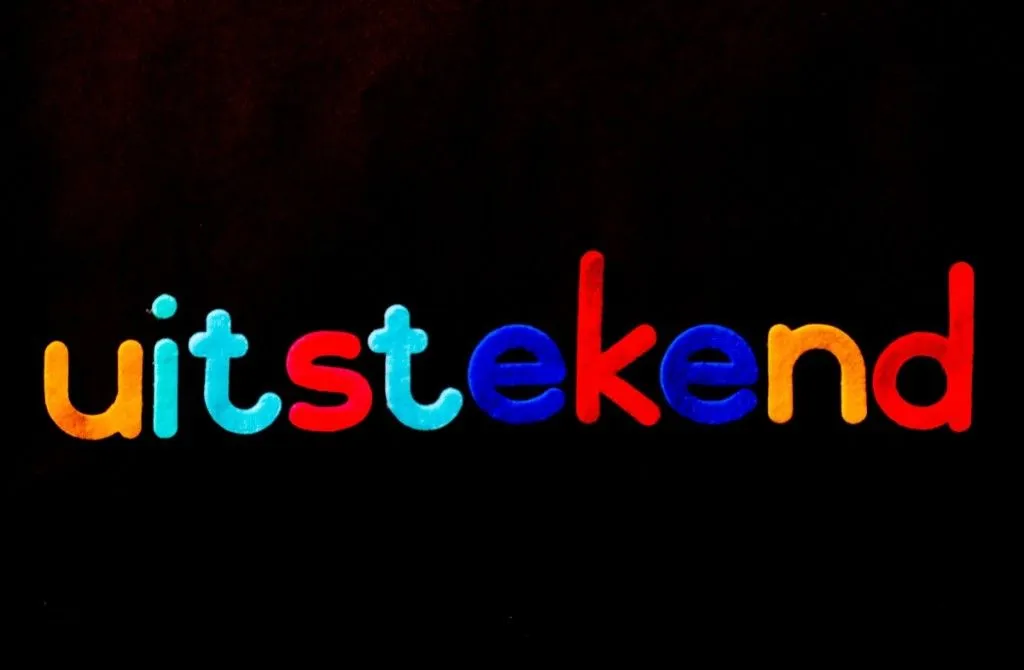
It must be noted that these were random letters, lacking meaning, as the participants’ encoding and recall could be affected if there had been meaning attached.
In 2010, researchers from the University of Cyprus conducted a similar study in children aged 7-13. In the study, they tested they tested the effects of stimulus modality on working memory performance. There were three ways of presenting the information- auditory, visual, and auditory and visual simultaneously.
The study concluded that the participants were able to learn and recall better when there was pictorial representation, than just auditory representation. But the study also highlighted that there were some indications that even working memory was influenced by previously knowledge.
Another study in 2009 by Lindner and her colleagues examined rates of learning and recall for text that was heard versus text that was read. They looked at immediate and delayed recall and concluded that the participants who read through the text given to them retained and learned more than those to whom the text was read out, in both immediate and delayed tests.
So, the studies above indicate two different aspect of the same working memory. For meaningless letters and words, auditory mode of information was remembered better. But for information that contained meaning just the mode of presentation would not suffice, but pictorial information and visual presentation of the text was recollected better.
What Are Long Term Memories?
Once a memory is made, it must be retained. Any information that we receive with any kind of meaning or usefulness to us is retained in our long-term memory. In 2009, Cohen and his colleagues concluded that auditory recognition memory (recognizing sounds) was significantly inferior when compared to visual memory (recognizing objects).
The most recent research that provides more clarity on this debate was done by James Bigelow and Amy Poremba. The two researchers divided participants into three groups: one was presented with pure tones, one group was presented with scenes and events, and the third group was presented with tactile objects inside opaque boxes. Care was taken that the participant was exposed to only one type of sensory modality.
Later, the participants were tested on their immediate recollection, same day and next day recognition of the stimuli that was presented. The study concluded that for all three modalities, visual and tactile recall was much greater than auditory recall and recognition. Furthermore, the memory retention for tactile and visual stimulus was almost the same.
A neurobiological study by Munroe-Lopez and her colleagues found that this discrepancy occurs because the pathways of encoding for auditory and visual memories are different. That is, while visual memory has a direct path for storage, auditory memory has to make various synaptic pit stops to reach its destination before the memory can be stored. Therefore, due to the anatomical pathway that auditory memory takes, its recall and recognition power might not be all that strong.
Lastly, research done on monkeys—the only other primate with some kind of proven capacity to make memories other than humans—suggests that monkeys require extensive training to remember certain auditory tasks. On the other hand, they performed fairly well on tasks requiring visual cues and recall.
Iconic Vs Echoic Memory: What Each One Captures
These two terms come up constantly, so here is a clean side-by-side. Both are kinds of sensory memory, the very first and shortest stage of remembering, and the psychologist Ulric Neisser coined both labels in 1967: iconic memory for the visual store and echoic memory for the auditory store.
Iconic memory is the fading snapshot of what you just saw. In a classic 1960 experiment, George Sperling flashed a grid of twelve letters for just 50 milliseconds. People felt they had taken in the whole grid, but could write down only about four or five letters before the trace faded, even though a clever "partial report" trick showed that nearly all of the letters were briefly available. This visual trace lasts only about a quarter to half a second.
Echoic memory is the brief "echo" of what you just heard. Darwin, Turvey and Crowder built an auditory version of Sperling's task in 1972 and found that the sound trace lingers longer, commonly cited at around three to four seconds. That is why you can still answer "what did you say?" a beat after someone has finished speaking.
So if you are hunting for the textbook answer: the sensory memory of visual information is iconic memory, and the sensory memory of auditory information is echoic memory. Echoic memory outlasts iconic memory at this first stage, yet, as the rest of this article shows, vision pulls ahead once information moves into long-term storage.
Is There A Photographic Memory For Sound?
If you have ever searched for "audiographic memory" or a "photographic memory for sound," you are really asking whether hearing has its own version of photographic memory. The visual version has a proper name in psychology: eidetic memory. An eidetic image is an unusually vivid mental picture that a person can keep "looking at" for a short while after the real scene is gone.

Here is the catch. Eidetic memory is mostly a childhood quirk, found in only a small fraction of young children and almost never in adults. As psychology professor Alan Searleman put it in Scientific American, "virtually no adults seem to possess the ability to form eidetic images." Even those vivid childhood images are not truly photographic, since they are reconstructed from memory and often contain small errors. A literal, perfect "photographic memory" has never been demonstrated under controlled testing.
So what about sound? The everyday auditory store that everyone has is echoic memory, but it fades within a few seconds, so it is nothing like a lasting recording. A reliable "auditory photographic memory" simply has not been documented in the research literature, and the rare eidetic ability that has been studied is overwhelmingly visual. This fits the bigger picture of this article: a 2024 study by Ahmad and colleagues found that people recognize pictures far better than everyday sounds, and that attaching verbal labels to those sounds only partly closes the gap. People with brilliant musical recall do exist, but that is trained, meaning-based skill rather than a snapshot of sound.
So Which Type Of Memory Is The Best?
The earliest reference to the concept of memories was made in the seventeenth century. John Locke, a well-known philosopher, proposed the concept of ‘Tabula Rasa’. These two words essentially mean that we’re all born with a blank mind, or rather a blank slate. Thanks to that blank slate, things and events have a platform on which to write themselves into our lives and stay there. However, Locke never told us which memories were stored more effectively.
Thankfully, modern-day science has given us various ways in which these different forms can be tested. As we can see from the research studies quoted above, although auditory information is retained the longest by sensory memories and is easier to measure as duration is the only factor taken into consideration.
Remembering things over shorter or longer periods of time involve a number of factors and not just their modality. Some researchers also suggest that emotions are an important factor to consider while looking at remembrance rates.
The type of information presented also holds the key to it being remembered as well as our ability to associate it to previously held beliefs or facts. Many theories under the pictorial-superiority hypothesis claim that information is better remembered with pictures. Going by these, factors, although visual information is more easily remembered, it can be said that auditory information can also be retained easily based on the situation at hand.
Not only are these research findings important, but they have also been employed widely in the special education system. Teaching for children with special needs is usually done using the auditory-visual-kinetic system, which makes sure that all the senses are included when the child learns to read and write, rather than just listening to auditory instructions, as is often the case in general classrooms. The efficacy of these methods is undeniable.
So, the next time you’re off making memories, test this ability for yourself, and let us know which aspect of your memory was most vivid!
Also, without scrolling up, can you remember the letters in the example image that you read earlier?
References (click to expand)
- Munoz-Lopez, M. M., Mohedano-Moriano, A., & Insausti, R. (2010). Anatomical Pathways for Auditory Memory in Primates. Frontiers in Neuroanatomy. Frontiers Media SA.
- Bigelow, J., & Poremba, A. (2014, February 26). Achilles’ Ear? Inferior Human Short-Term and Recognition Memory in the Auditory Modality. (C. Alain, Ed.), PLoS ONE. Public Library of Science (PLoS).
- Jensen, A. R. (1971, April). Individual differences in visual and auditory memory. Journal of Educational Psychology. American Psychological Association (APA).
- Sternberg R. J.,& Sternberg K. (2016). Cognitive Psychology. Cengage Learning
- Sperling, G. (1960). The information available in brief visual presentations. Psychological Monographs: General and Applied. American Psychological Association (APA).
- Darwin, C. J., Turvey, M. T., & Crowder, R. G. (1972). An auditory analogue of the Sperling partial report procedure. Cognitive Psychology. Elsevier.
- Searleman, A. Is there such a thing as a photographic memory? And if so, can it be learned? Scientific American.
- Ahmad, F. N., Tremblay, S., Karkuszewski, M. D., Alvi, M., & Hockley, W. E. (2024). A conceptual-perceptual distinctiveness processing account of the superior recognition memory of pictures over environmental sounds. Quarterly Journal of Experimental Psychology.