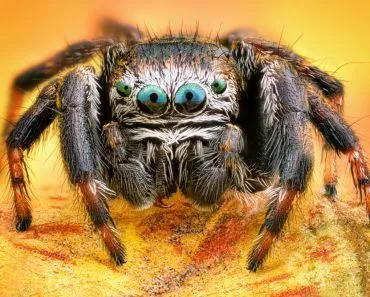
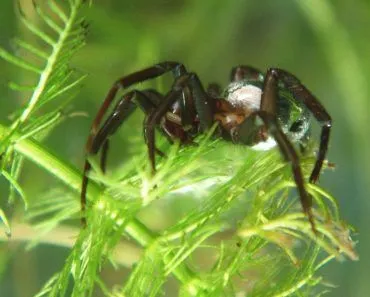
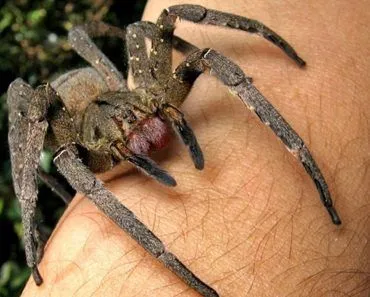
The huntsman spider is from the family Sparassidae. The Sparassidae family of spiders all have eight forward facing eyes which face forward in two rows of four. This particular spider species can grow to incredibly large sizes.
Spiders are among the most feared creatures. Regardless of your particular opinion, these long lanky and hairy legged animals send shivers down the spines of even the bravest among us. And there is a spider that lives up to the menacing stereotype, scary enough to give anyone arachnophobia.
The huntsman spider is indeed a marvel of nature. And surrounding it is an interesting legend of the clock spider.
What Is The Legend Of The Huntsman Spider?
Urban legends, from bloody mary to slender man, terrify us at camp sites and sleepovers. The huntsman spider too has its own urban legend born out of meme culture on the internet.
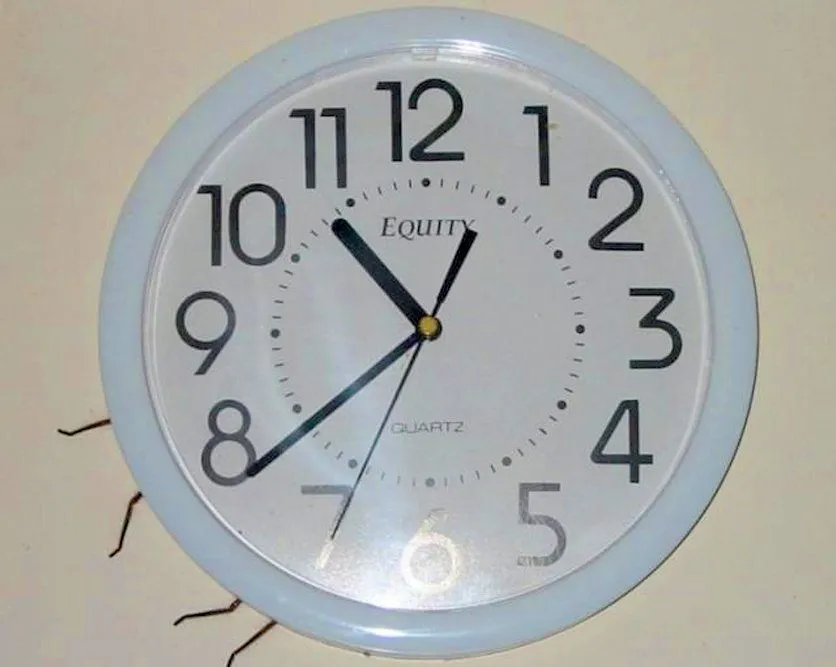
A man found a huge huntsman spider in their relative’s house, under a rather large wall clock. The spider seemed to be as large or larger as the clock, with its hairy legs peeking out from under. Thus, the spider got its infamous nickname “clock spider”. The person ended up photographing the spider, as shown above, and posted these photographs onto the internet.
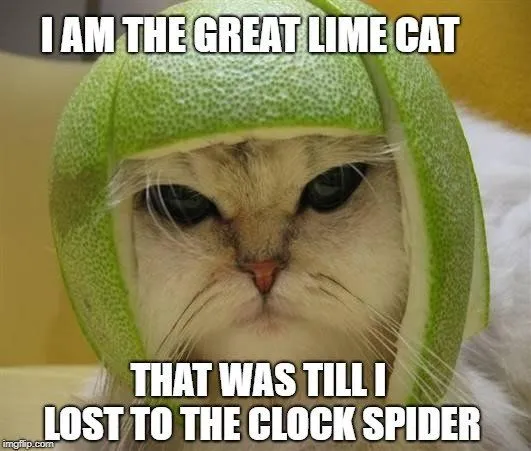
Now the legend (or perhaps more of a joke) is that the spider had a ninth leg. It lost its extra leg during a battle with a limecat (the ultimate god of cats, according to the internet). The “legend” goes on to describe how this spider became a god and about how to worship it (purely a joke, I hope).
Facts About The Huntsman Spider
This has cemented the huntsman spider into internet consciousness, but the huntsman is present in warm temperate and tropical regions, and for any Australian, they’re the biggest spiders in their backyards.
The huntsman spider is from the family Sparassidae. There are over 1300 known spider species in this family making it the 11th largest spider family in the world.
Physical Appearance
This spider species can grow to incredibly large sizes. A male giant huntsman spider (Heteropoda maxima) found in Laos in 2001 had a leg span of 25 to 30 cm! Because of their size and general appearance, they are often mistaken for tarantulas, but the distinguishing factor is that their legs are angular and extend forward like a crab, which has also given them the nickname giant crab spider.
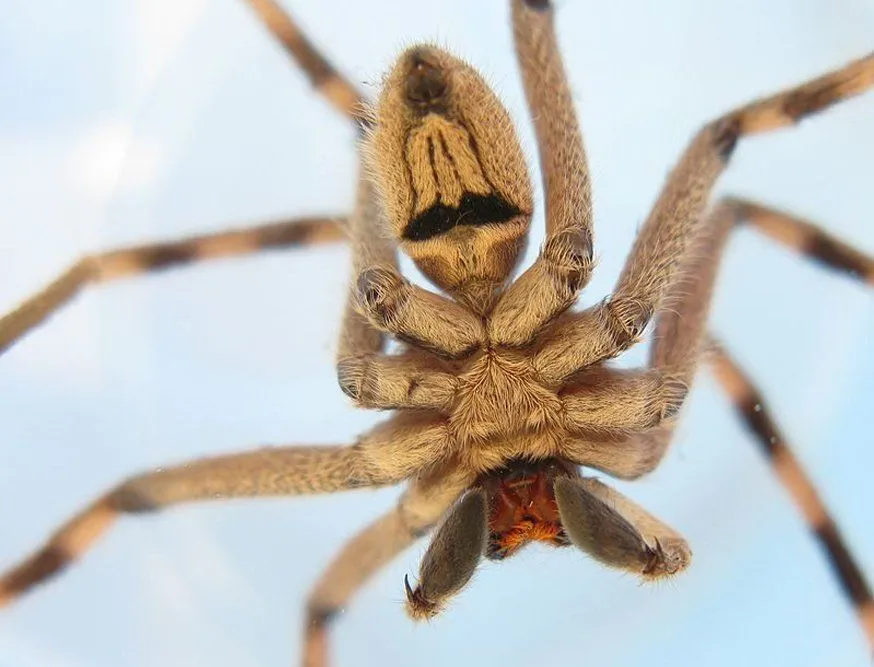
Spiders of Sparassidae family all have eight forward facing eyes in two rows of four.
The upper surface of the huntsman spider shows inconspicuous gray and brown tones, while the underside of the spider is aposematically colored black and white. The word aposematically means that the color display is a warning signal for potential predators.
We can only guess which species of the huntsman the clock spider is. According to AZ Animals, the clock spider is from the species Heteropoda venatoria.
Habitat
Huntsman spiders tend to reside under rocks, tree bark, and similar natural structures. They can be found in common sheds, garages and, less frequently, in undisturbed spaces. Their vision is very good, allowing them to see approaching humans and other large animals from a distance, giving them plenty of time to run away and hide. This may be why we do not often spot these spiders!
Except for a species discovered in 2012, Sinopoda scurion, dwelling in the darkness of caves in Laos, has no eyes.
Interestingly, before the huntsman spider family’s ascent to fame as the wall clock spider, one huntsman spider made its appearance in another sensational pop culture form, Spider-Man! Yes, the spider that bites Peter Parker and turns him into a superhero is a “super spider” that has the genes of the huntsman spider Delena cancerides.
The scene from the 2002 Sam Raimi spiderman that mentions the huntsman spider
Huntsman Spider Can Produce Venom
Like most spiders, the Sparassidae family of spiders use venom to immobilize their prey, which is mostly insects and sometimes lizards. Their venom is not only used for hunting but also comes in handy as a defensive bite tactic.
Huntsman spiders are some of the few spiders that can bite humans and be harmful to humans. Most spiders’ fangs cannot puncture human skin, and even if they manage to do so, their venom isn’t potent enough for anything larger than a small beetle or worm.
Mating Rituals
The huntsman spiders are fairly direct when it comes to their mating rituals. The male usually approaches the female and once in the same vicinity, they get down to business in about 30 minutes. The males of some species of huntsman spider to court their mate with sound. They drum their abdomen and legs to create a low hum.
In 1980, researcher Jerome Rovner described another way the male Heteropoda venatoria, our probable clock spider, courts their mate. H. venatoria detects the female’s pheromones and that cues it to begin mating. Once they detect the female pheromones, they lower themselves to the ground and anchor themselves firmly, after which they use their legs to transmit vibrations from their bodies to the surface with which they are in contact.
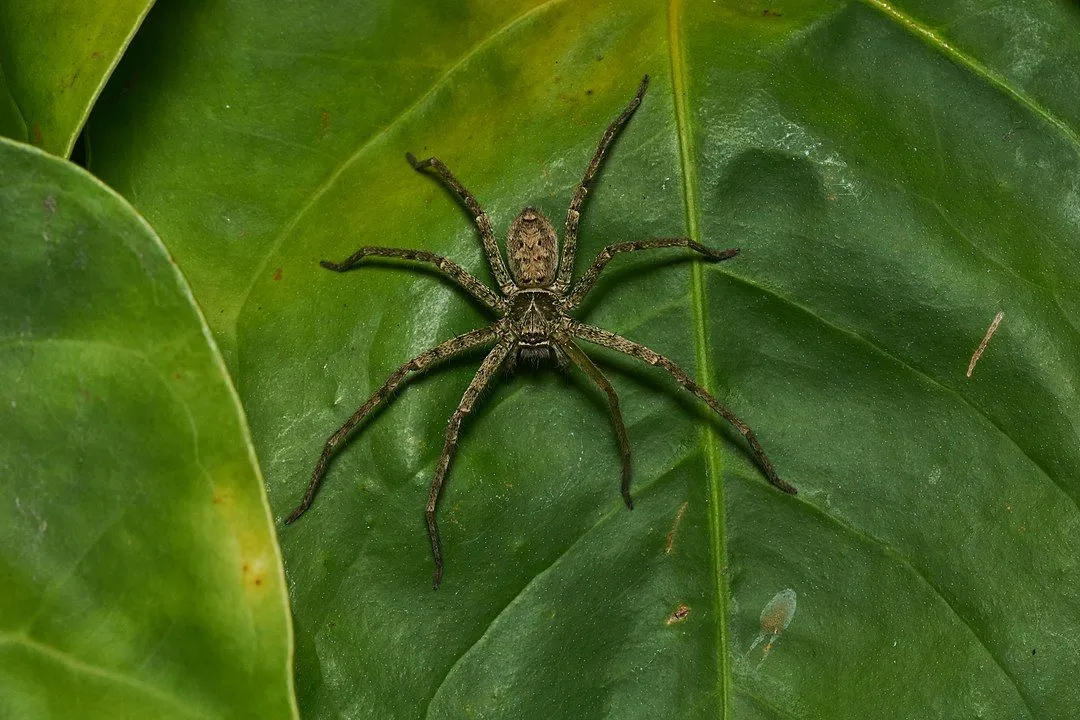
Most of the sound emitted is produced by strong vibrations from the abdomen. Each male has its own unique vibration frequency, which helps females distinguish between different males competing for their attention. The usual pattern of these vibrations consists of short bursts of intense vibrations.
If the female is interested in mating, she follows the vibration to the source where the male is waiting to copulate with her. To humans, these sounds are often heard as rhythmic ticking, like a quartz clock that fades in and out. However, such mating “calls” can only be heard in a relatively quiet environment.
Are Clock Spiders Real? The True Origin Story
Yes and no. The internet god, the nine-legged worshipped overlord, is pure joke. But the photographs that started it all are very real, and they show an ordinary (if startlingly big) huntsman spider. There was no haunting, no curse, just a large arachnid that happened to be sitting next to a wall clock when someone reached for a camera.
The documented origin is surprisingly well recorded for a meme. According to Know Your Meme, the original set of three photographs was posted to an online community forum (the Klipsch audio message boards) in 2003, in a thread excitedly mislabelling the animal as a wolf spider. The pictures had been taken in Darwin, in Australia’s Northern Territory, prime huntsman country. One shot showed the spider beside a window, one showed only its long legs poking out from behind the clock, and a third was a close-up. That single silhouette behind the clock face is what gave the creature its enduring nickname.
From there it followed the usual path of an internet legend. An Urban Dictionary entry appeared within months, joke "facts" multiplied, and the spider was retconned into a many-legged deity. The real spider, meanwhile, was almost certainly just looking for a dark, narrow place to wait out the daylight, which is exactly what huntsman spiders do.
How Big Is The Clock Spider?
This is the question the original photo is really asking, because the whole effect depends on scale. A huntsman looks enormous against a clock, but most of that span is leg, not body.
The species usually identified as the clock spider, Heteropoda venatoria (the pantropical huntsman or giant crab spider), is a good example. According to the University of Florida’s Featured Creatures profile, adults have a body length of just 2.2 to 2.8 cm (about 1 inch) but a leg span of 7 to 12 cm (3 to 5 inches). So a spider whose body is roughly the size of your thumbnail can still cover a saucer when its legs are spread, which is exactly why it can frame a wall clock so dramatically.

That is still far short of the family’s record holder. The giant huntsman of Laos, Heteropoda maxima, holds the title of largest huntsman by leg span at 25 to 30 cm (about 10 to 12 inches), but that is a separate species from the household clock spider, and it lives in caves, not behind your timepieces. The everyday huntsman you might meet at home is large by spider standards, yet nowhere near clock-eating size.
Why Do Huntsman Spiders Turn Up Behind Clocks (And In Cars)?
There is a simple, unromantic reason these spiders end up framed by a clock: they are built to slip into flat, sheltered gaps and stay hidden during the day. A huntsman’s legs splay sideways in a crab-like posture rather than tucking underneath it, which lets the whole animal press itself flat against a surface and wedge into narrow spaces.

In the wild they shelter under bark and rocks. Indoors, the University of Florida notes, they turn up "under furniture or cabinets, behind wall hangings, and in closets and garages." A wall clock is just another wall hanging with a perfect dark cavity behind it. The Australian Museum adds that huntsman spiders are also "notorious for entering cars," where people find them tucked behind the sun visor or sprinting across the dashboard, the same instinct to hide in a flat, dark recess.
Despite the scare factor, they are not out to get you. Huntsman spiders are fast and would much rather flee than fight, and although they can deliver a bite, the University of Florida describes H. venatoria as "not a dangerous spider," causing at most a locally painful bite with some swelling if it is carelessly handled or trapped. They are found across warm regions worldwide, including much of Australia and the subtropical United States, so the clock spider really could be living quietly in a shed near you, doing you a favour by eating cockroaches.
So next time you hear the legend of the clock spider, perhaps you can shed some light on the truth instead of perpetuating the myth!
References (click to expand)
- Spiders - The Australian Museum.
- Isbister, G. K., & Hirst, D. (2003, August). A prospective study of definite bites by spiders of the family Sparassidae (huntsmen spiders) with identification to species level. Toxicon. Elsevier BV.
- Whyte, R.,& Anderson, G. (2017). A Field Guide to Spiders of Australia. CSIRO PUBLISHING
- Huntsman Spiders - Australian Museum.
- Rovner, J. S. (1980). Vibration in Heteropoda venatoria (Sparassidae): A Third Method of Sound Production in Spiders. The Journal of Arachnology, 8(2), 193–200. http://www.jstor.org/stable/3705191
- Huber, B. (2005). Sexual selection research on spiders: Progress and biases. Biological Reviews, 80(3), 363-385. doi:10.1017/S1464793104006700
- Diaz J. H. (2004). The global epidemiology, syndromic classification, management, and prevention of spider bites. The American journal of tropical medicine and hygiene, 71(2), 239–250.
- Pantropical Huntsman Spider, Heteropoda venatoria. EENY-160. Featured Creatures, University of Florida IFAS Extension (EDIS).
- Clock Spider / Clockspider. Know Your Meme.