Table of Contents (click to expand)
Astronomy is the science of celestial bodies and phenomena (planets, stars, galaxies and the rest of the universe), studied through physics, mathematics and the scientific method. Astrology is a pseudoscience that claims the positions of those same bodies influence human personality and events on Earth. Both have shared ancient roots, but only astronomy is a science.
Astrology is a pseudoscience that uses the scientific movement of planets and stars to divine meaning and significance in people’s lives, while astronomy is a natural science that studies celestial bodies and phenomena related to outer space.
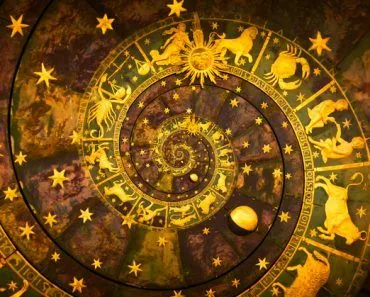
For millions of years, humans have looked up at the sky in awestruck wonder, and have tried to divine meaning from the movements and majesty of the cosmos. For the vast majority of human history, our species had no higher knowledge of our universe, and primarily deified the stars above us, worshipping them as gods, and believing that the shifting stars above our heads had some parallel meaning on Earth. This derivation of meaning from the stars is known loosely as astrology.
However, in the past half-millennium, scientific advances have transformed our ability to understand the solar system and the wider universe through precise instruments and the scientific method. The ongoing, evidence-based study of everything beyond Earth’s atmosphere is what we now call astronomy.

The two words are quite similar, and are often used interchangeably, but it is critical to understand the difference. And what is that difference, you ask?
History Of Astrology
Although the earliest formal record of astrology only dates back 4,000-5,000 years, there is no denying that even the earliest civilizations of man were affected and inspired by the celestial bodies above them. Before they even had words to describe constellations, galaxies, meteors, planets and astrophysics, there was a strong belief that those distant sparkling worlds had some control over their lives.
Everyone from the ancient Chinese and the Mayans to the Greeks and Arab empires attached special significance to the stars and their place in the sky. Western astrology in particular grew out of Babylonian celestial omen-watching, but the familiar horoscopic system (birth charts, the twelve zodiac signs, the houses) was largely worked out by Greek-speaking astrologers in Hellenistic Egypt around the 2nd and 1st centuries BCE, making the Western tradition roughly 2,000 years old.
Over time, astrology developed into a much stronger belief, one that carefully predicted the movements of celestial bodies and studies their relative positions in the sky; based on that, practitioners of astrology would be able to divine events that would occur on earth, both to themselves and to others. Astrology is most closely linked to horoscopes, or reading one’s daily/weekly destiny, as well as your fundamental personality, based on what star sign you were born under (e.g., Cancer, Leo, Virgo, etc.).
For thousands of years, astrology was considered a legitimate scientific field, and was spoken of with a similar respect to astronomy, geology and other natural sciences. Despite the lack of proof, this powerful tradition existed all over the world, and was simply accepted as a part of the human experience.
However, since the Scientific Revolution of the 16th and 17th centuries, as the scientific method gained traction and the desire for truth partially supplanted the comfort of the mystical, astrology has lost its status as a legitimate science. By the end of the 18th century it was firmly outside the scientific mainstream, and bodies like NASA and the American Astronomical Society explicitly classify it as belief, not science. While millions of people around the world still read their horoscopes every day, and thousands of career practitioners make their living reading star charts and tarot cards, controlled studies have repeatedly failed to find any predictive power. The only true power of this area of study is the comfort it offers people who are eager to make some order out of life’s occasional chaos.
History Of Astronomy
Similar to astrology, astronomy has roots that date back thousands of years, which is often why the two areas of study are mixed up or assumed to be the same. Astronomy is the study of celestial objects and phenomena through the application of physics, chemistry and mathematics. These disciplines help to shed light on the origins of these objects, their composition and their manner of interaction.
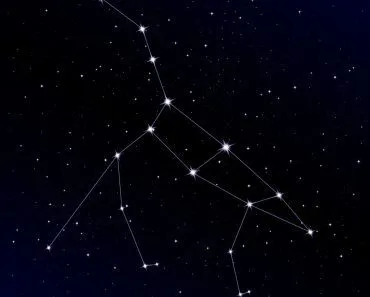
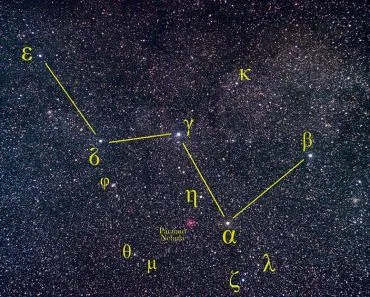
On a basic level, the term astronomy is a catch-all for the study of anything that lies outside the atmosphere of Earth, ranging from the moons of Jupiter and the comets of the Kuiper Belt to the furthest-flung galaxies, invisible black holes, the Big Bang and the Cosmic Microwave Background. Most modern astronomy is done through astrophysics (the application of physics to celestial objects), while cosmology zooms further out and tackles the universe as a whole: its origin, structure and ultimate fate. All three sit on the same scientific side of the line. Within astronomy itself there are theoretical and observational branches that work in conjunction, since the creation of computer models and intensive analysis of data is critical to supporting observations of distant galaxies, stars, comets, moons, supernovae and other phenomena.
Astronomy is one of the most widely respected and exciting scientific fields, as it has not only taught our species about the fascinating contents of our solar system, galaxy and universe, but also more about life on our planet, as well as its origin. Saying that we’re all made of stardust is poetic, but not inaccurate, so the more we know about what happens out there, the more we understand what’s going on inside ourselves, even at the quantum level!
Unlike astrological gurus and “experts”, astronomers rely on the strict and proven scientific method to develop their theories and test their predictions, making astronomy a legitimate and invaluable field.
The Slippery Slope Of Astrology
What complicates matters for many people is that astrology draws heavily on similar content as astronomy. A talented astrologer will need to understand the movement of celestial objects and some of the basic tenets of astronomy to “read” the stars and make their predictions. This leads to people assuming that astrology is real, or based in proof, whereas in fact, baseless and abstract opinions are being derived based on proven astronomical events and fluctuations.
Getting into an argument with someone who is a firm believer in astrology is often an exercise in futility; presenting doubts, even when those doubts are supported by facts, tends to only strengthen their resolve and belief in a mystical significance to the swirling stars above us.
Suffice to say, there is more than enough beauty in the night sky to go around for everyone, astronomers and astrologers alike, but if you are looking for deep, personalized meaning in the movement of the stars, you should start by looking inside yourself first!
References (click to expand)
- What's the difference between astronomy and astrology? - The American Astronomical Society
- Astrology: Is it scientific? - Understanding Science, University of California, Berkeley
- What is the difference between astronomy and astrology? - The Planetary Society
- Astronomy - Wikipedia
- Astrology and astronomy - Wikipedia
- Astronomy and astrology - Current Science (archived)