Table of Contents (click to expand)
A dead whale is dangerous because gases produced by its decomposing tissues (methane, hydrogen sulfide, carbon dioxide and nitrogen) cannot escape through its thick blubber, building up pressure inside the carcass until it eventually ruptures. The resulting blast can hurl flesh and bone tens of meters and has injured bystanders. In 2004 a sperm whale exploded in a Taiwanese city street; in 1970 the US authorities tried to dynamite one in Oregon, with similarly messy results.
“What is the largest animal on Earth?”
“Blue Whale!”
All of us probably answered this question in unison when we were asked in 3rd grade. Years later, more complicated questions arise, and I find myself thinking about those mystical creatures.
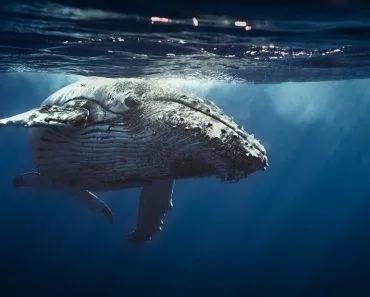
More magnificent than any other beast, boasting a bodyweight equivalent to fifteen school buses, whales stand tall.
But why are whales so huge?
Why Are There No Land Animals As Heavy As Whales?
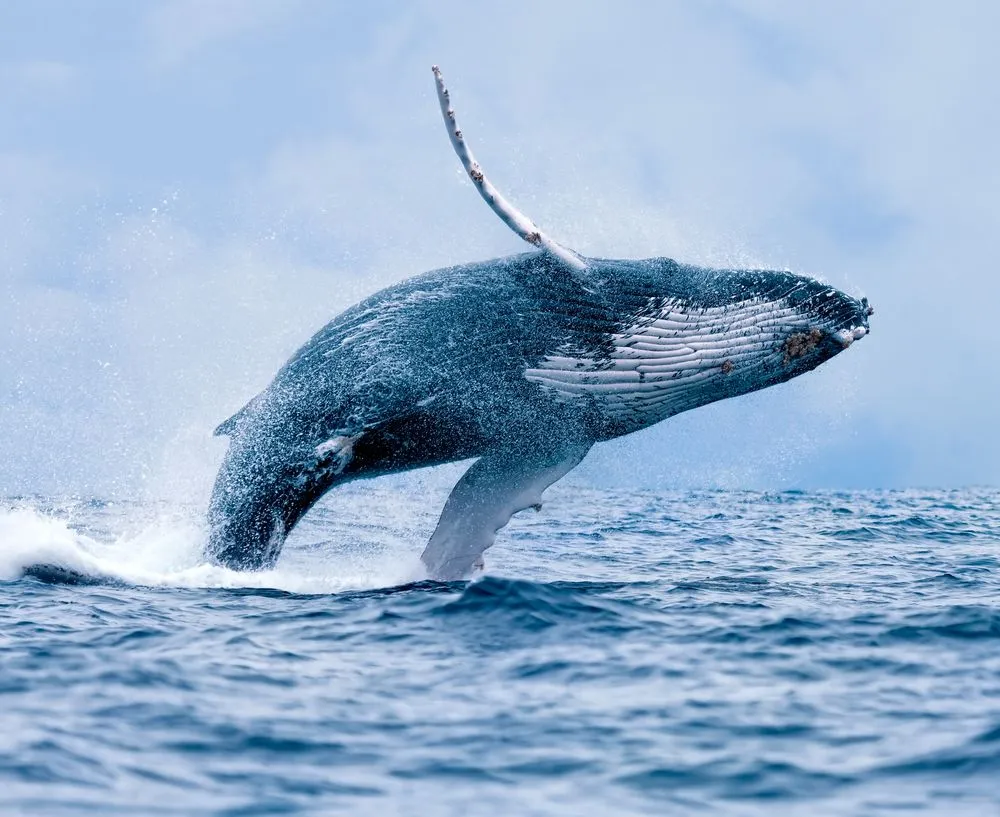
The heaviest animal on land is an elephant. To put this in perspective, one blue whale is equivalent to about 25 adult elephants. That is surprising to many people, and also makes us wonder why land animals can’t seem to get that heavy? In simple words, it’s because of gravity. Gravity curbs the height of most things, or else creatures would simply collapse in on themselves. In the case of animals and an excess of mass, their skeletal system will be unable to support their weight, and their movement would be greatly restricted if they were heavier. In that a case, why do whales get a pass? Because whales live in water. The buoyancy provided by water compensates for the pull of gravity and allows whales to behave normally and thrive.
Why Should We Stay Away From Dead Whales?
As we can see, whales are humongous, so just imagine their carcasses! When washed ashore, they certainly attract attention and inspection. Let’s imagine, for the sake of this article, that we’re best friends and have just arrived at the beach for vacation. Down at the shore, believe it or not, is a washed-up whale, the biggest creature on earth!
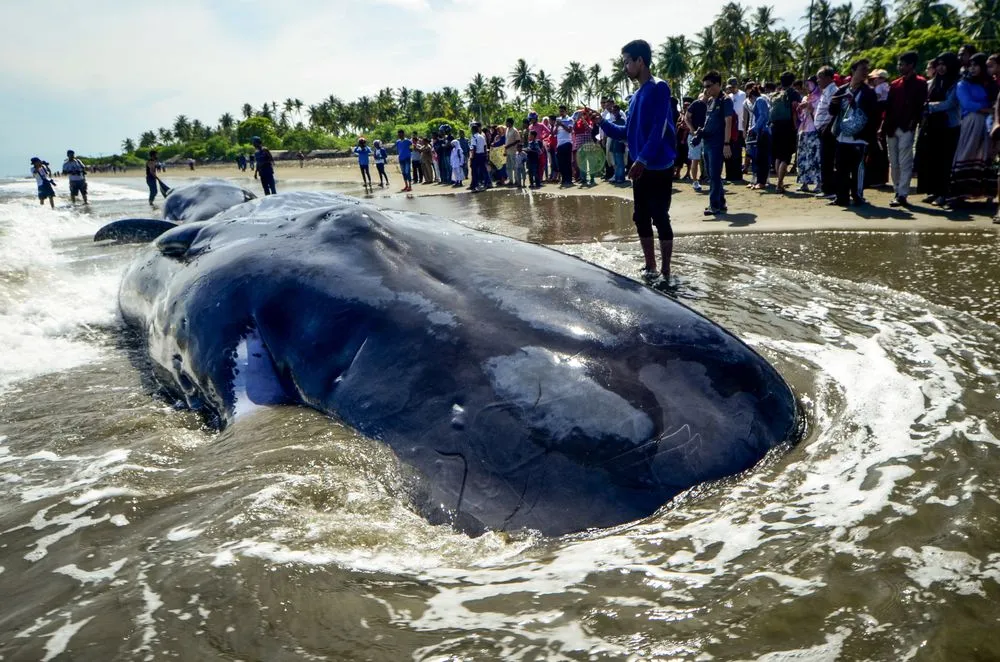
Both of us anxiously take out our iPhones to capture this phenomenal sight! However, as we get closer and closer for a good photograph, we would be wise to proceed with caution, as whale carcasses are… unpredictable. Basically, as the blood circulation and respiration stops in a dead whale, it leads to the decomposition of cells and tissues by the microbes already present in the body, which leads to the further proliferation of bacteria. This process produces pungent gases like methane, carbon dioxide and nitrogen, increasing the pressure inside the carcass, which in turn leads to the cadaver swelling up, like a massive dead balloon.
Now, under normal circumstances, these gases would make their way out through the orifices, such as the mouth or anus. However, it is believed that the whale’s own body weight seals all the orifices, leaving no way for the gases to escape.
Finally, let’s not forget about the whale’s blubber, which also plays a role. The thick fat under the whale’s skin makes matters even worse. Blubber isn’t porous and makes it nearly impossible for the gases to escape. The gases bloat the carcass more and more and eventually, once the threshold of pressure is passed… Whoooooooooosh!
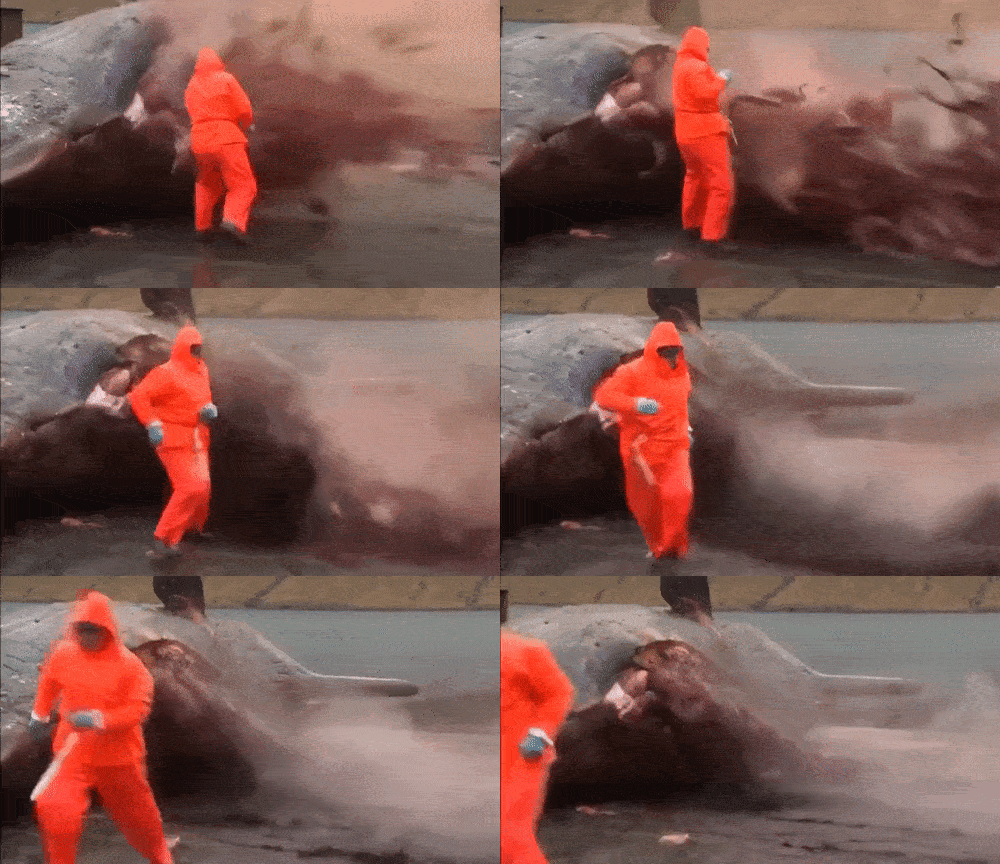
An explosive rupture blasting chunks of flesh into the atmosphere at a speed of 70 kilometers per hour over 50 meters takes place. In fact, it can even be deadly.
Incidents Concerning Dead Whales
The most infamous incident occurred in Taiwan in 2004, where a whale carcass was being taken from shore to a laboratory for study when it suddenly exploded in the midst of a busy street, with the whale’s guts drenching the onlookers and shops. It was horrific!
Another incident happened in 1970 in Oregon, USA, happened when several officials wanted to disintegrate a whale with the help of dynamite. They thought that the leftover chunks would be taken care of by seagulls, but their scheme didn’t go as planned. Even though a military veteran advised them that the amount of dynamite was too great, people went along with the idea of blowing up the whale. Although they cleared nearly half a mile around the carcasses, chunks as huge as coffee tables still flew through the air, and one slab landed on a car around a quarter of a mile (400 m) away, flattening it! Officials had to spend another week cleaning up all the mess, along with a huge part of the corpse that still remained unaffected.
Can A Whale Explosion Actually Kill You?
Given all the gore, it is natural to wonder whether a bursting whale has ever actually killed someone. The honest answer is that there is no documented case of a whale exploding on its own and killing a person. Even the most notorious example, the sperm whale that suddenly burst on a busy street in Tainan, Taiwan, in 2004, sprayed blood and entrails across shopfronts, cars and onlookers without causing a single reported injury.

That does not make a bloated carcass safe to approach. The gases trapped inside are under genuine pressure, and the risk spikes the moment the skin is punctured. Marine biologists who cut into a swollen whale to perform a necropsy can be sprayed with a sudden jet of gas, fluid and viscera, which is exactly why the sensible approach is to release that pressure carefully rather than lean in with a knife.
Tellingly, the genuinely dangerous incidents have involved people trying to get rid of a carcass, not the rotting itself. In the infamous 1970 episode at Florence, Oregon, highway officials packed a beached whale with about 450 kilograms (half a short ton) of dynamite; the blast flung blubber up to 240 meters (800 feet) away and damaged a parked car. The spectators had been moved back, yet chunks still landed among them, and it was largely luck that nobody was seriously hurt. The takeaway is simple: a decomposing whale is unlikely to blow up in your face unprompted, but it is never something to poke, climb on or pose beside.
Why Isn’t A Dead Gorilla As Dangerous As A Dead Whale?
This process of filling up with gas can happen to all creatures, but size has a role to play in this. The larger the creature, the more gas is released inside its body, so more pressure builds up, meaning there is a better chance of a whale exploding than a gorilla. Just for comparison, a whale weighs about 300-1000 times more than a gorilla.
If Whales Are So Heavy, Why Don’t They Sink?
Whales generally roam in deep waters due to their cold temperatures and high hydrostatic pressures, but sometimes, changes in tides, melting icebergs and dynamic food sources make whales relocate and wander off trajectory. When a whale dies and sinks, typically known as a whale fall, a complex localized ecosystem builds up around it. First, the sharks cut the whale into pieces to feed, and then the skeletal system serves as a food source for Osedax, a bone-eating genus of worms that secrete acids on the bones, thereby dissolving the fats and proteins. There are hundreds of different creatures (crabs, bacteria, shrimp, fish and worms) that benefit from the carcass of a dead whale at the bottom of the ocean. Believe it or not, this decomposition process can last for more than 3 decades!
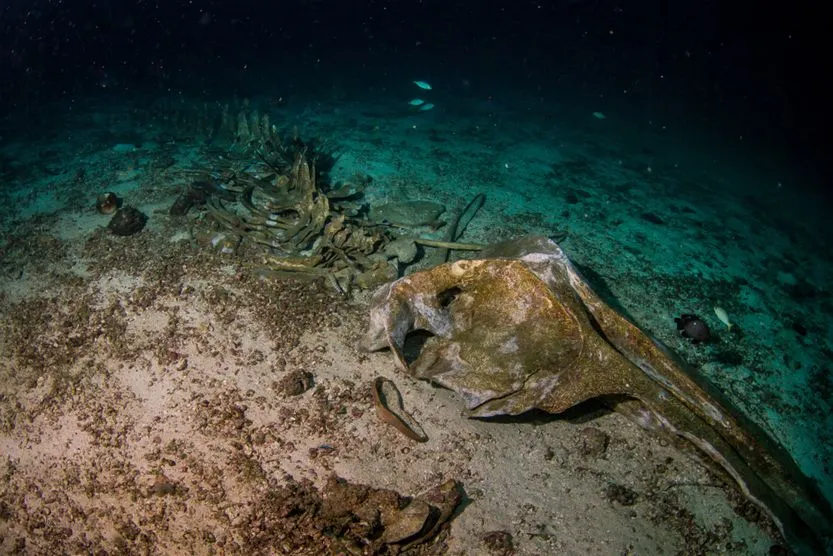
Given that many whales are found washed up on shore, their floating can be attributed to the compositional gases that form in the carcass and their gigantic lungs filled with air. These factors make the whale buoyant and keep them floating, even after death!
So, if you ever come across a dead whale on the beach, it is best to keep your distance, as you never know what kind of pressure the carcass might be under, or whether the massive beast is close to bursting!
Are Living Whales Dangerous To Humans?
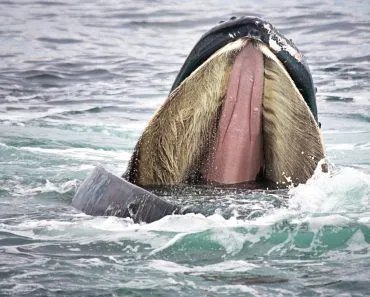
If a dead whale can genuinely hurt you, what about a living one? Reassuringly, whales are far less menacing than their bulk suggests. Powerful as they are, they are not the man-eaters that films make sharks out to be, and they simply do not hunt people. The baleen whales (blue, humpback and gray whales) strain krill and small fish through bristled plates in their mouths, and their throats are far too narrow to swallow anything as large as a human, so the old fear of being gulped down whole is off the table.

The toothed whales are more formidable, yet still rarely aggressive toward people. Sperm whales, the largest toothed predators on Earth, have historically taken out their fury on ships rather than swimmers: in 1820 an enormous sperm whale (estimated at about 26 meters, or 85 feet) repeatedly rammed and sank the Nantucket whaleship Essex, the real disaster that inspired Moby-Dick. Those charges were most likely a defensive reaction to being hunted, not an unprovoked attack.
Even orcas, or killer whales, which sit at the very top of the ocean food chain, have never been confirmed to kill a human in the wild. The famous fatalities, such as those involving SeaWorld's Tilikum, all happened in captivity, and biologists tie that behavior to the stress of confinement rather than anything whales normally do.
So the real hazard from a living whale is simply its size. A 30-tonne animal breaching or slapping its tail beside a small boat can capsize it or hurt people entirely by accident, which is why NOAA tells vessels to keep their distance: at least 90 meters (100 yards) from humpbacks in Hawaiian and Alaskan waters, and 180 meters (200 yards) from killer whales in Washington's inland waters. Give them that room, and a whale is far more spectacle than threat.
References (click to expand)
- Why Does a Decomposing Whale Explode?. National Geographic
- What is a whale fall? - NOAA's National Ocean Service. The National Ocean Service
- Exploding whale. Wikipedia
- Essex whaling ship. Encyclopaedia Britannica
- "Shamu" Kills Trainer: Killer Whale's Act Not Normal. National Geographic
- Marine Life Viewing Guidelines: Guidelines and Distances. NOAA Fisheries