Table of Contents (click to expand)
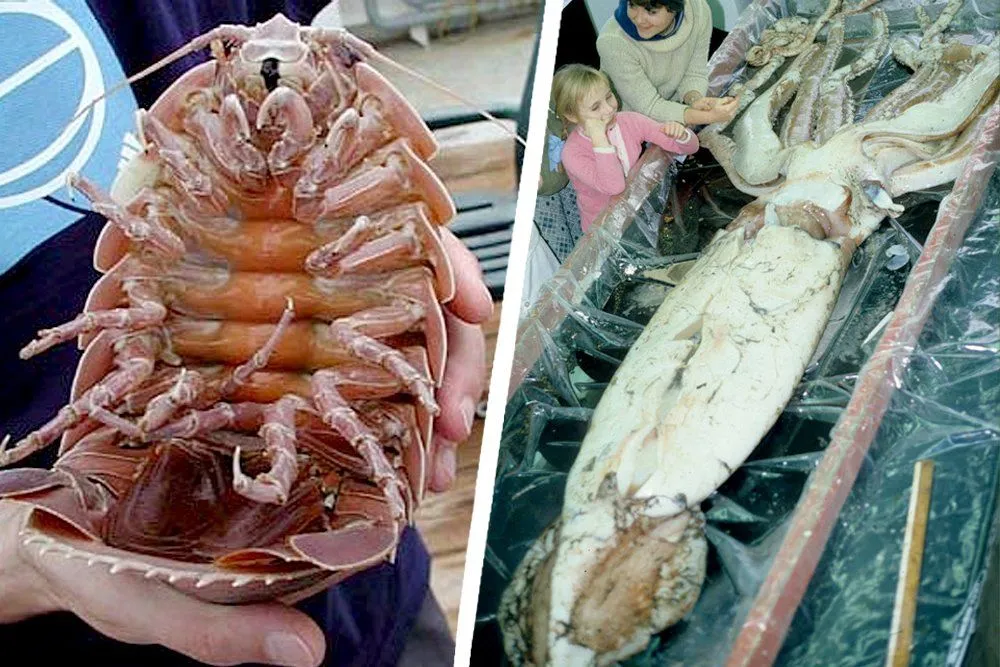
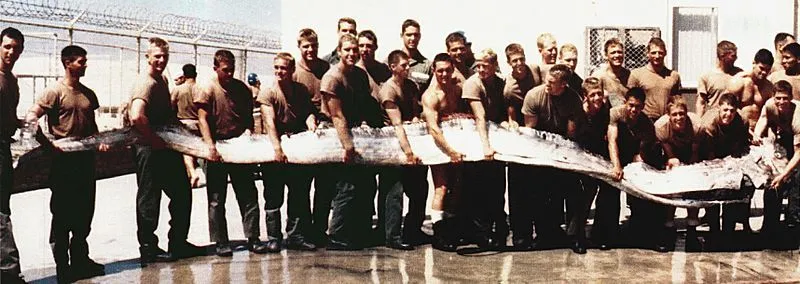
Deep-sea creatures such as the giant isopod, colossal squid and giant oarfish grow to enormous sizes through a phenomenon called deep-sea gigantism. The leading explanations are the cold, stable temperatures (which slow metabolism and extend lifespan), the high levels of dissolved oxygen at depth, scarce food that favors larger, more efficient bodies, and reduced predation.
Humans have populated most of the earth’s landmass, but have still been largely separated from significant portions of this world. Oceans contain around 96.5% of all Earth’s water. An estimated 50-80% of all life on Earth is found under the oceanic surface. Since all living organisms cannot live in harmony (a reference to “the survival of the fittest”), they have learned to live in their own suitable spaces. Wide varieties of organisms can be found under the world’s waters, inhabiting different levels of our oceans. Millennia of evolutionary processes have helped them adapt to their surrounding environment, which has led to variations in the physical structuring of many such creatures. The earliest of our ancestors, in fact, is believed to have evolved from marine animals. The possibilities of evolution are truly endless!
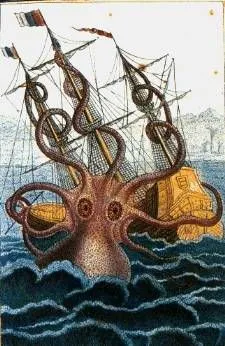
The folklore of giant sea monsters has baffled humans for centuries. The Hydra, Kraken, Nessie, Leviathan and so many more have been the result of these camp-side tales. Self-employed explorers and adventurers have spanned the globe, in search of such creatures, but to their dismay, no such majestic beasts have been discovered. What has been found are other incredible marvels of nature, even if they’re not sea monsters!
Are Massive Creatures Mistakes?
Well, the answer to this question depends on your perception. Humans tend to be amused by creatures that span to the extremes of sizes. The tiny bee hummingbird of Cuba is much more appreciated than a common homing pigeon, just as the sight of a majestic blue whale is much more appreciated than a much smaller tuna fish. This is why ancient mythologies tend to be amusing, but in the above cases, none of the creatures can be deemed as a “mistake” because all of them, in their own ways, have evolved to adapt and blend into their environment. The same is true in the case of our giant sea crab, giant Pacific octopus and deep sea isopods.
The question is…. Why are they bigger?
The answer is Deep Sea Gigantism.
Deep Sea Gigantism
The deeper down below the ocean waves you go, the weirder things get. A lack of sunlight reaching the lower depths of the ocean causes the temperatures to fall drastically, hovering near freezing in the deep sea. According to the temperature-size rule (linked to Bergmann’s rule), this cold leads to larger cell sizes and longer life spans for the organisms living in such conditions, which lets their body size keep creeping upward throughout their lives.
Oxygen, surprisingly, works in their favor too. Cold water under high pressure holds more dissolved oxygen, and a study of deep-sea amphipods found that the maximum size these creatures can reach tracks closely with how much oxygen is available, so the oxygen-rich deep sea can support bigger bodies. Food, on the other hand, is scarce down there, which actually rewards being large: bigger animals have a slower, more efficient metabolism per unit of body mass and can range farther to find the next meal. The giant isopod takes this to an extreme, gorging itself when food drifts down and then surviving for years between meals. Add in the lighter predation pressure at great depths, and growing big becomes a winning strategy.
So why can’t these creatures be hunted for food? Logically, they would provide more mass for the weighing scales in a seafood shop, rather than their shallow-water counterparts. The simple answer to this question is a resounding “No”. There is an incredible amount of funding required to carry out deep sea missions, let alone deep sea fishing!
Can Those Deep Sea Creatures Survive In Shallow Waters?
If they could have, they would already be there.
The separation of habitats has to do with hydrostatic pressure, which is experienced by all marine creatures. As the depth of the sea increases, so does the pressure. This is why animals built like us, with gas-filled chambers such as lungs, cannot simply venture into the deep, and why human explorers descend in pressure-resistant submersibles or rigid atmospheric diving suits that hold the surface pressure inside.
To adapt to such great pressures, deep sea creatures are largely water-based and have minimal or no air gaps in the body. Water, being incompressible, leaves their bodies unaffected by such great underwater pressure. However, this comes with a catch. The popular image of a deep-sea fish bursting apart as it rises is largely a myth: because their bodies hold almost no compressible gas, the drop in pressure alone does little harm. The real killers are elsewhere. The minority of species that do carry a gas-filled swim bladder suffer barotrauma, as the trapped gas expands and can force the stomach out through the mouth. For the rest, the bigger threat is the sudden warmth of surface waters, which their cold-adapted enzymes and tissues simply cannot tolerate. Scientists can sometimes bring deep-sea animals up alive, but only by keeping them cold and shielded from the temperature shock.
Conclusion
Deep sea giants are living proof of evolution by adaptation. The deep waters form a world of their own, with deep sea vents and volcanoes, underwater rivers and lakes, seamounts and underwater caves. Our Earth is teeming with life, in every corner and at every depth. Some of the most spectacular light shows on the planet can be seen in the deepest parts of the ocean. From glowing corals to lantern fish and comb jellies to barbeled dragonfishes, these creatures have taken the art of surviving in harsh conditions to the next level.
It’s truly amazing to think that there is such a plethora of life lurking out there, in the deep waters, completely unaware of each other’s existence. As we continue to dive deeper and deeper, probing the unknown parts of our planet, we expect to find countless more strange and fascinating creatures that have yet to be discovered and understood!
References (click to expand)
- How Much Water is There on Earth? | U.S. Geological Survey. The United States Geological Survey
- Did You Know...? Marine Life / Ocean Facts.... marinebio.org
- Revealing the Largest Octopus | Smithsonian Ocean. The Smithsonian Institution
- How does pressure impact animals in the ocean?. The Office of Ocean Exploration Research
- Chapelle, G., & Peck, L. S. (1999). Polar gigantism dictated by oxygen availability. Nature.
- Deep-sea gigantism. Wikipedia.