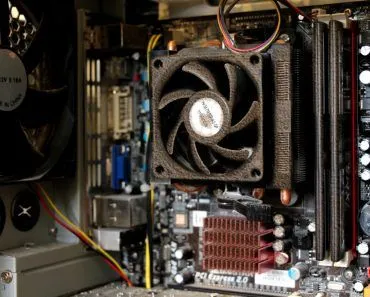
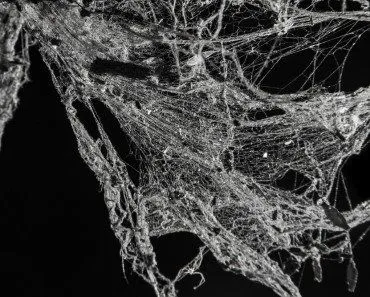
Ceiling fans collect dust because the blades are flat, upward-facing surfaces that nobody dusts. A thin no-slip boundary layer at the blade surface lets airborne particles settle and stick, plastic blades pick up a small triboelectric charge from impacts with airborne dust (worst when the air is dry), and the fan is actually switched off most of the time — which is when most of the dust quietly piles on.
Cleaning the house is rarely someone’s favorite activity, but it must be done. Fortunately, there are some bright spots; you may find some extra change in your couch cushions, reclaim the gleam on your kitchen counter, or even encounter a mystery of physics! When it comes to cleaning ceiling fans, millions of people have been mystified by the appearance of a thick layer of dust sitting on top of the blades.
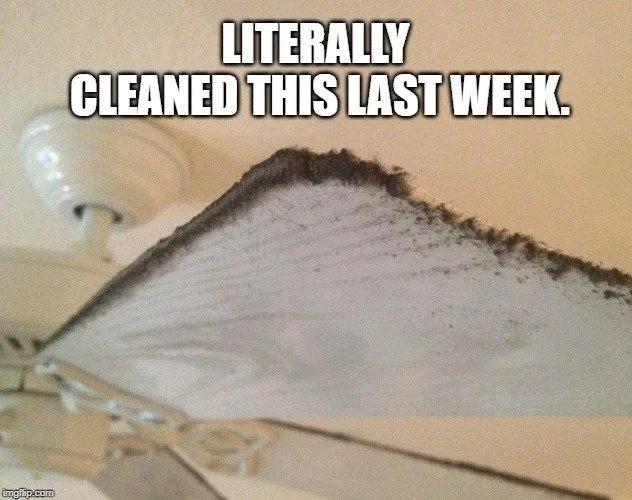
Knowing what we do about dust, and having likely blown the dust off a few bookshelves in our day, it seems impossible that a ceiling fan—which gets regular use—would be able to accumulate that much dust! The movement of the fan blades should surely send all of that dust spinning back into the atmosphere of the room, right?
To understand this bizarre phenomenon, we need to look at the composition of dust itself, as well as a few different fields of basic science, including electromagnetic forces and fluid dynamics.
What Is Dust?
You’ve probably heard that household dust is mostly your dead skin — brace yourself, because that’s actually a myth. The biggest single contributor is, weirdly, the outdoors: a 2009 study by Layton and Beamer in Environmental Science & Technology estimated that around 60% of indoor dust originates outside the house, tracked in on shoes or blown in through windows and vents. The rest is a grab-bag of textile fibres from carpets and clothing, pet dander, dust-mite droppings, dead insect bits, cooking soot — and yes, a modest amount of shed human skin and hair, but nowhere near the “majority” figure that gets repeated on the internet. If you have a pet, the dander fraction climbs noticeably.
Electrical Charge, Dust And Fans
When it comes to plastic ceiling fans, which is what many of these dusty examples are, electrical charge plays a real (but smaller-than-the-internet-claims) role. Many of the dust particles floating in your house carry a tiny static charge, and when those particles bump into a plastic blade in dry air, they can transfer a little of that charge to the blade itself — the same triboelectric effect that lets a balloon stick to a wall. Pure air, despite what you sometimes read, doesn’t really “rub” a charge onto plastic on its own; it’s the impacts with airborne fibres and grit that do most of the work. The dust bunnies under your bed, by the way, hold themselves together more by mechanical entanglement of hair and lint plus van der Waals adhesion than by static — static is a contributor, not the headline act.

As airborne particles smack into the leading edge of a charged plastic blade, the weak electrostatic attraction can be enough to make some of them cling. The leading edge sees the most particle impacts and tends to collect the most dust as a result. Combine that with the particles’ own tendency to clump together once a few have already stuck, and the eye-catching streak of grime on the leading edge of a plastic blade starts to make sense. This explanation is only really viable for plastic ceiling fans though — metal blades barely hold a charge — so it only answers part of the question. There is another field of science that explains the dust-loving nature of all fans, regardless of their material.
Fluid Dynamics And Dusty Fans
While the explanation above is applicable to plastic ceiling fans, static electricity does not build up on metal fans, but dust is still clearly present on the leading edge of those particular types of fans. To explain how this phenomenon is achieved without the aid of an electrical charge, one must look at fluid dynamics, the study of how liquids and gases move.
In the context of a ceiling fan, as the blades flow through the air, the speed of the air at the precise surface of the ceiling fan is actually zero. As you move further away from the surface of the fan blades, the speed and movement of the air increases, but at the exact point where dust can be deposited on the fan—the surface—there is very little air movement. Things as small as dust particles can be pressed against the surface and then kept there, particularly on the leading edge of the blade, and are then protected by a thin layer of inactive air directly above the surface.
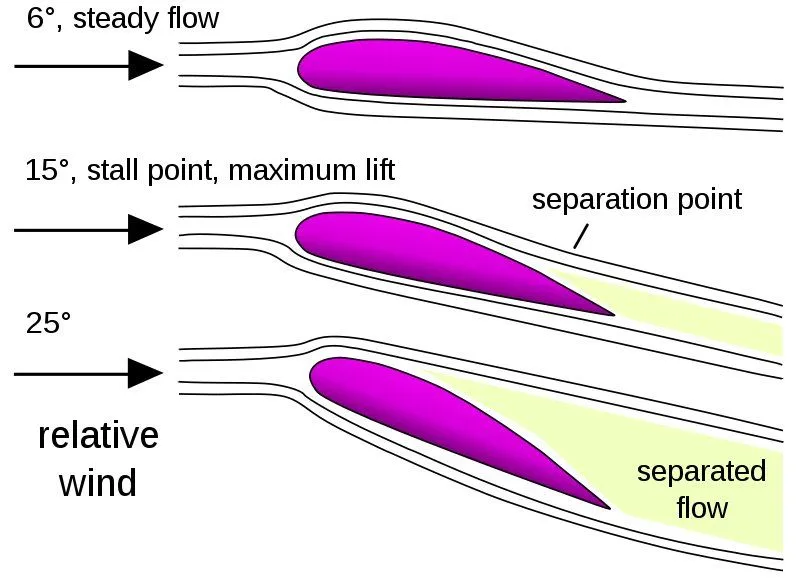
As mentioned, the higher above the blade you go, the greater the air movement and friction, which is why tall piles of dust on metal blades aren’t commonly seen. Over time, however, as more and more dust accumulates, it becomes the “new surface” — so a significant amount of dust can still pile up. Crucially, the fan is also turned off most of the time. While it’s spinning, the leading edge keeps colliding with airborne particles; while it’s sitting still, gravity quietly drops more dust onto the now-stationary upward-facing surfaces. Cranking the fan to a higher speed doesn’t straightforwardly mean more dust either: a faster blade thins the boundary layer and bounces some particles off, but it also intercepts more incoming particles per second, so the relationship is more complicated than “faster equals dustier.” Low indoor humidity tips the balance further toward dust accumulation by amping up the static-charging effect.
Why Is The Dust On My Fan Black?
If the grime on your blades looks less like grey fluff and more like a dark, greasy smear, you are not imagining it. That black tint usually means the dust is loaded with soot, the fine carbon particles thrown off by incomplete combustion indoors. Burning candles (scented ones are the worst offenders), gas stoves, fireplaces, tobacco smoke, and even traffic exhaust tracked in from outside all release ultrafine black carbon into the air. The US Environmental Protection Agency flagged candles and incense long ago as a genuine indoor source of these sooty particles, and modern indoor-air measurements confirm that lighting a candle or firing up a gas burner sends black-carbon levels climbing.
Where that soot lands is not random. Building scientists call the dark streaks that soot leaves on walls and ceilings "ghosting", or thermal tracking. Airborne particles drift toward cooler surfaces through a process called thermophoresis, the gentle nudge a temperature difference gives a floating particle, and they settle out with help from the same weak electrostatic attraction and boundary-layer trapping we described above. Your fan blade already gathers the most dust along its leading edge, so when the household air happens to be sooty, that leading-edge stripe simply darkens with the same carbon. In a damp, poorly ventilated room the dark marks can also be mildew rather than soot, so if the residue feels slightly slimy or spreads in blotches instead of an even film, mold is worth ruling out.
Does A Dusty Fan Actually Cause Problems?
It is tempting to assume a thick fur of dust throws the fan off balance or slows it down, but the physics is reassuring: a season's worth of dust weighs almost nothing next to the blades and motor, so it rarely unbalances a well-installed fan. When a ceiling fan genuinely wobbles, the usual culprits are loose screws, misaligned blade holders, or a blade set that is no longer weight-matched, not the dust itself. ENERGY STAR notes that quality blades are balanced at the factory and that a wobble is normally cured by tightening the connections or clipping on a small balancing weight, not by dusting.

The better reason to keep those blades clean is the air you breathe. Because the fan spends most of its life switched off, settled blades quietly stockpile the nastier fraction of household dust: dust-mite droppings, pet dander, pollen and mold spores. The moment you flick the switch, the spinning blades fling that reservoir straight back into the room. Dr. John McKeon of Allergy Standards points out that allergens build up on top of ceiling-fan blades and then get redistributed through the air once the fan is turned on, which is exactly why a dusty bedroom fan can leave an allergy sufferer sneezing at night. Wiping the blades with a slightly damp cloth rather than a dry duster is the trick, since a damp cloth traps the particles instead of flinging them into the very air you are trying to clean.
A Final Word
Depending on the type of ceiling fan you have in your bedroom, you may be able to blame different natural forces for the collection of dust it keeps. However, what unifies all of us is that ceiling fans will always be dustier than we think—thanks to fluid dynamics or static electricity—no matter how fast our favorite fan setting happens to be!
References (click to expand)
- Matthews, L. S., & Hyde, T. W. (2009, June 16). Effect of dipole–dipole charge interactions on dust coagulation. New Journal of Physics. IOP Publishing.
- Fan (machine) - Wikipedia. Wikipedia
- Candles and Incense as Potential Sources of Indoor Air Pollution. US Environmental Protection Agency.
- Thermal Tracking / Ghosting Stains on Walls and Ceilings. InspectAPedia.
- Ceiling Fan Installation and Usage Tips. ENERGY STAR.
- Your Ceiling Fan Is Making Your Allergies So Much Worse. Asthma & Allergy Friendly Certification Program.