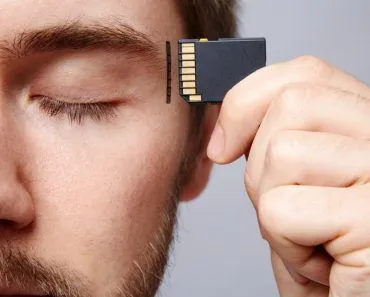
We recall the first few items on a list because of the primacy effect: early items get rehearsed more and slip into long-term memory. The last few items survive in short-term memory (the recency effect), so they’re easy to recall too. Items in the middle, getting neither benefit, are the ones we forget. Together, these biases are called the serial position effect.
Imagine you are at a grocery store. You search your bag only to realize that you left your grocery list at home! Not wanting to make another trip, you try to remember what it is that you need. Unfortunately, you only seem to remember the first few items. Why is this the case?
To answer this, we of course have to look in the brain, and at something called the primacy effect.
The primacy effect is a bias, a cognitive bias, for things that come first in a list. We also seem to remember the last few items on a list too, this being called the recency effect. The poor items in the middle were neglectfully forgotten. This effect is called the serial position effect.
Besides remembering the first few items, we also place more importance on them. But, the effect subsides when the list is long or told very quickly.
So, why does our brain do this? Why isn’t all information equal? To understand this we need to look at how our memory works.

How We Remember Things?
It might seem simple (and even easy at night) to recall that time you froze on stage in the middle of a speech, or the first time you read a book that you now adore. However, ask any neuroscientist and they’ll tell you that memory is complex and looks more like a jumbled bowl of noodles than any logical circuit.
We have multiple types of memory. You intuitively know that the memory of your first crush is very different from remembering the definition of the Second Law of Thermodynamics. Remembering a few items on a list, for example, falls more on the side of rote memorization, as compared to remembering the emotional experience of falling in love.
For this article, we’ll focus on how we remember lists.
Short-term Memory
It all starts with your senses. Information that you sense, in this case, words on a list either being read or heard, makes its way to the brain.
From that point, it enters our “short-term memory”.
Short-term memory isn’t a designated room in your brain. The active holding of a short list of items is handled mostly by the prefrontal cortex, working with regions like the parietal lobe, while a structure deep in the brain called the hippocampus does the heavy lifting of turning those fleeting items into lasting long-term memories.
Like the name suggests, short-term memory has limitations, mainly of duration, but also of capacity. Typically, most people can only remember 7 items at a time. With respect to duration, you’ll remember the items for 15 to 30 seconds. Beyond these parameters, you’ll struggle to remember much of the list. You’ll also forget items if you try to remember something new.
Again, instinctively, we will keep repeating the list so that we can remember; we rehearse the information.
Rehearsal is something that most students are familiar with. You repeat the information, such as a definition or your new friend’s phone number, again and again and again.

Rehearsal enables you to remember a given short-term memory beyond the 30-second limit.
Recall that information enough times, thus strengthening the brain connections, and that piece of information should end up in your long-term memory store.
Long-term Memory
Your long-term memory is unlimited and can last through your entire lifetime, at least theoretically and ideally. Realistically, however, we do forget. That, in part, is because we need to frequently recall memories stored in our long-term memory for them to last.
Information needs to be retrieved from long-term memory to be retained.
Retrieving some information, like our names and birthdays, is easy. Other times, retrieval may be more challenging, like recalling that Second Law of Thermodynamics. However, if you repeat and recall the information enough times (along with some other recall caveats), you should be able to summon a memory like the back of your hand.
Now, how does this relate to the primacy effect? In other words, how can this model be used to explain why we only remember the first few items of our grocery list?
Link Between Your Memory And The Primacy Effect
So, why do we remember the first few items on our grocery list better than the items in the middle? Because of how often we rehearse the items on a list.
Typically, we tend to rehearse the initial items of a list. Every time you reread the list, you start strong with the first few items, but as you keep reading, you’re exhausting that short-term memory.
This makes the retrieval of the initial items easier, as compared to those presented later on.
The Recency Effect
If you’ve ever been presented with a list and asked to remember as many items as you can, chances are that you will, in addition to observing a primacy effect, also observe a recency effect.
A recency effect refers to a type of cognitive bias in which an individual remembers the last few items of a list better than the initial ones. This effect can also be explained by the multi-store model. According to the model’s point of view, the last few items of a list enter the short-term store last. This is because these items are presented to us latest. So, when asked to recall them, these items still happen to be in our short-term memory. Since they’re still there, they get retrieved more easily.
The Real-life Consequences Of The Primacy Effect
The primacy, recency and serial position effects go beyond just remembering your grocery list. Marketers, advertisers and politicians cleverly use and benefit from these effects.
In a paper published in 2004, political scientists Jonathan G.S. Koppell and Jennifer A. Steen found that, in the 1998 New York City Democratic primaries, candidates listed first on the ballot received a noticeably larger share of the vote than when those same candidates appeared further down (the ballot order was rotated across precincts, so they could isolate the effect).
For advertisers, when an ad plays affects how well a consumer will remember the brand. A 2010 study looked at the sequence of commercials played during the 2006 Super Bowl broadcast and found that viewers had better recall for the brands whose ads ran first in a pod, and for the brands in the earlier pods of the game.
For marketing experts, the primacy and recency effect can help them decide where important links should be placed, what information should come first, and how they can affect buyer behavior.
All this is to say, our brains are not super-charged computers that work logically, nor even rationally. Even so, by recognizing that our brain navigates the world through biases, we can limit the influence of those biases when it comes to making important decisions, or simply creating safeguards for our memory the next time we go to the grocery store!
References (click to expand)
- PRIMACY AND RECENCY EFFECTS ON RECALL.
- Jawabri, K. H., & Cascella, M. (2023). Physiology, Explicit Memory. In StatPearls. StatPearls Publishing.
- Jahnke, J. C. (1963, October). Serial position effects in immediate serial recall. Journal of Verbal Learning and Verbal Behavior. Elsevier BV.
- M Cascella. (2022) Short-Term Memory Impairment - StatPearls.
- Murphy, J., Hofacker, C., & Mizerski, R. (2006, January). Primacy and Recency Effects on Clicking Behavior. Journal of Computer-Mediated Communication. Oxford University Press (OUP).
- Morrison, A. B., Conway, A. R. A., & Chein, J. M. (2014). Primacy and recency effects as indices of the focus of attention. Frontiers in Human Neuroscience. Frontiers Media SA.
- Cowan, N. (2008). Chapter 20 What are the differences between long-term, short-term, and working memory?. Progress in Brain Research. Elsevier.