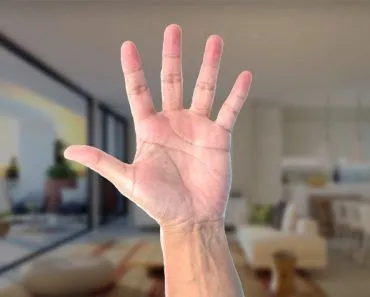
The back of your hand is called the dorsum, the side opposite your palm, where you see veins and knuckles. Research over the past 15 years has shown we systematically overestimate how wide our hands are (by 60-80%) and underestimate how long our fingers are (by 20-30%), with the little finger faring the worst.
The back of our hands, anatomically called the dorsum, is such familiar territory that English even has an idiom for it. We say, “I know this like the back of my hand,” when we want to state our familiarity with something. However, neuroscientists would refute this self-assured claim, pointing to research showing that we don’t really know the back of our hands as well as we think!
In a 2020 study published in PLOS ONE, researchers Sarah D’Amour and Laurence Harris at York University’s Centre for Vision Research showed participants life-size images of their own dorsum (back of hand) and palm, some accurate, some subtly stretched in width or length, and asked them to pick the one that best matched their hand. The participants got it wrong in revealing ways: the length of the back of the hand was overestimated, while palm length was judged accurately, suggesting the brain holds different mental maps for the two surfaces.
What Is The Back Of Your Hand Called?
Before we go any further, let’s clear up the simplest question of all, the one your hand has probably been silently asking: what is its back actually called? In anatomy, the back of the hand is the dorsum (the adjective is dorsal), the surface that faces away from you when your arm hangs at your side. The opposite surface, the gripping side with the creases and the fleshy mounts, is the palm, known to anatomists as the palmar or volar surface. So “back of the hand” and “dorsum” are the same thing, and “back of the palm” is just a roundabout way of naming that same dorsal side.

The dorsum is easy to recognize because it shows off the hardware. The skin there is thin and loosely attached, so the knuckles stand out as bony bumps. Those bumps are the metacarpophalangeal (MCP) joints, formed where the heads of the metacarpal bones (the long bones of the palm) meet the first bones of the fingers. Just under that thin skin you can often see the dorsal venous network, the arch of veins that look bluish through the skin and that nurses aim for when drawing blood. Anatomists also label the two edges of the hand: the thumb side is the radial border and the little-finger side is the ulnar border, after the two bones of the forearm.
The palm, by contrast, hides its machinery. Its skin is thick, hairless and firmly anchored, built for grip rather than display, which is exactly why the back of the hand, not the palm, became the part we casually claim to know so well.
The Somatosensory cortex – How the brain perceives the body?
Inside all of us lies a small creature, a homunculus. This creature has a tiny body with enormous feet and hands, a humongous head with lips that look like they can eat a whole human in one go, and is nothing but how our brains perceive our bodies based on our senses.
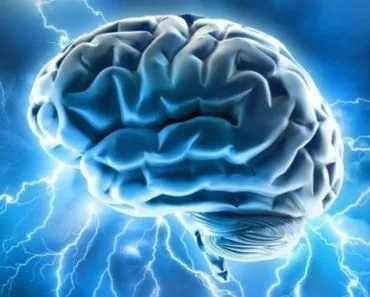
The somatosensory cortex is responsible for this body image of ourselves. It is located in the parietal lobe of the brain, just behind the central gyrus, a prominent groove in the brain that separates the frontal lobe from the parietal lobe. It is located in a strip just behind the central gyrus.
The primary somatosensory (the darkened region) and a representation of the homunculus (Photo Credit : Vasilisa Tsoy/Shutterstock)
The somatosensory cortex contains what neuroscientists call somatotopic maps. These maps are neural representations of our forelimbs, along with the trunk, face, legs and feet that are assimilated within the region.
These maps allow the brain to identify where a sensory input is coming from.
Those areas that are highly sensitive have a larger representation in this region of the brain. Our hands, especially the tips of our fingers, are extremely sensitive, with far more sensory neurons innervating the skin; therefore, the homunculus version of ourselves has large hands.
In neuroscience terms, this means that more neurons are dedicated to decoding input from the tips of our fingers than from our knuckles.
Besides pinpointing senses, it also allows the body to appropriately respond, using just the right amount of force in exactly the right orientation. Scientists study how our mental representation of our body and its proportions affect how we interact with the world around us.
Humans Can’t Accurately Recognize The Backs Of Their Hands
In 2010, Matthew Longo and Patrick Haggard at University College London first brought this “back hand ignorance” to light in a study published in PNAS. They asked participants to point to landmarks on their hand (the tip of each finger, the knuckles) while the hand was hidden from view. By plotting where people thought those landmarks were, the researchers reconstructed each participant’s implicit mental map of their own hand.
The results were striking. Participants underestimated finger length by roughly 20-30%, with the little finger faring the worst, a "radial-ulnar gradient" where error grew progressively from thumb to pinky. They overestimated hand width by a startling 60-80%. In other words, your brain pictures your hand as a much stubbier, stouter version of reality, a distortion since replicated across many labs.
In both studies, sensitive parts such as the palm and the thumb were identified more accurately, possibly because they take up more real estate in the somatosensory cortex.
What Does “Like The Back Of My Hand” Mean?
You have almost certainly said it: “I know this neighborhood like the back of my hand.” The phrase is an idiom, and according to the Oxford English Dictionary it simply means to be thoroughly familiar with something, to know it inside out. We reach for it precisely because the back of the hand feels like the most obvious, ever-present thing in the world. It is right there in front of us, all day, every day, so surely we must know it perfectly.
The wording is fixed in a way that trips people up. You know a thing, a place or a person like the back of your hand, but you don’t know how to do something that way. “She knows the trails like the back of her hand” works; “she knows how to ski like the back of her hand” does not. Curiously, the expression is younger than it feels. Word historians at Grammarphobia, drawing on the OED, find the familiar figurative sense only in the twentieth century, with one of the earliest printed examples in John Collis Snaith’s 1916 novel The Sailor: a much-traveled man who “knew men and cities like the back of his hand.”
And here is the small irony that this whole article hangs on. The studies above suggest the back of your hand is one of the things you actually know least accurately about your own body. The idiom is a confident boast that the science quietly contradicts.
Why Is It Important?
The question I'm sure you're asking is: why does it matter that I don't know what the back of my hand looks like?
For centuries, scientists have looked at how we perceived ourselves. We understand the somatosensory cortex and how it relates to our sensory body image fairly well. However, there is a gap in how we consciously perceive and remember our own bodies, the emotional connotations attached to those perceptions and how such constructs are assembled in the brain.
Our somatosensory map isn’t something we can control and alter. It is a fixed map of the sensory landscape of the body. However, our conscious body image of ourselves is arguably mutable and dependent on external factors, such as our mood, whether we were complimented on our appearance or perhaps a recent change, such as in weight. This is somato-perception, as researchers Mathew Longo and colleagues term it.
Detecting a phantom limb (the phenomenon where an amputated patient feels that their amputated limb is still present) shows us how complex these neural circuits can be. Mental disorders, such as eating disorders, can arise from a sense of distorted body image.
There are many different ways that this perception can affect our lives, behavior, confidence and health. Understanding that our brains don’t always allow us to accurately perceive reality is an important step towards taking control of your self-image!
References (click to expand)
- D’Amour, S., & Harris, L. R. (2020, March 23). The perceived size of the implicit representation of the dorsum and palm of the hand. (G. Buckingham, Ed.), Plos One. Public Library of Science (PLoS).
- Longo, M. R., & Haggard, P. (2010, June 14). An implicit body representation underlying human position sense. Proceedings of the National Academy of Sciences. Proceedings of the National Academy of Sciences.
- Longo, M. R., Azañón, E., & Haggard, P. (2010, February). More than skin deep: Body representation beyond primary somatosensory cortex. Neuropsychologia. Elsevier BV.
- Anatomy, Shoulder and Upper Limb, Hand Metacarpal Phalangeal Joint. StatPearls. NCBI Bookshelf (National Library of Medicine).
- O’Conner, P. T., & Kellerman, S. (2013, June 4). Like the back of one’s hand. The Grammarphobia Blog.