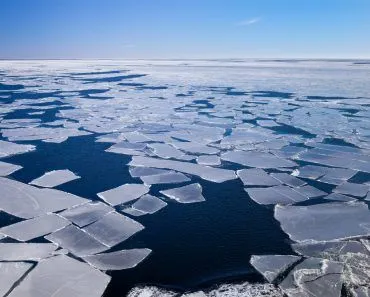
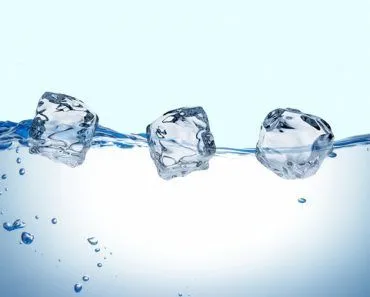
Thawed and refrozen ice cream looks icy and tastes grainy because melting collapses its whipped-in air bubbles, and slow refreezing grows much larger ice crystals than a commercial blast freezer can. The USDA says it is safe to refreeze if ice crystals remain, but throw it out if it sat above 40 °F (4 °C) for over two hours.
Once upon a time I was invited for dinner at a friend’s place. The food was delectable, but the one thing that really stood out was the ice cream that they served as dessert. I ate as much as I could fit in (after a full meal).
Seeing the way I was going to town on the ice cream, my friend suggested that I take some home. Although my ‘civil instincts’ told me not to, as it might seem too greedy of me, I really didn’t care. After all, he was my best friend, and the ice cream was just too delicious. He packed a box for me.
However, when I reached home and unpacked it, I saw that much of the ice cream had now become a thick, whitish gel-like substance. ‘So what! That’s no big deal. I’ll keep it in the freezer and return my prize to its former glory,’ I thought to myself, and kept it in the freezer. Yet when I took it out to have a spoonful, I observed, to my utter despair, that not only did the ice cream look different (it had become all frosty), but it even tasted somewhat different than how it had tasted back at my friend’s place. It then dawned on me that the majestic taste of the ice cream was gone forever.
That was the day I learnt my lesson: if you thaw ice cream, and then re-freeze it, it will neither look nor taste the same as it did before you thawed it.
But, why does this tragedy occur? Why should thawed and refrozen ice cream look or taste any different?
As it turns out, the answer lies in the way that ice cream is made.
Ice Cream Composition
Ice cream is essentially an emulsion (a mixture of two or more liquids that are normally immiscible or un-mixable), which is ultimately converted into foam by incorporating air cells that are frozen to form dispersed ice cells.
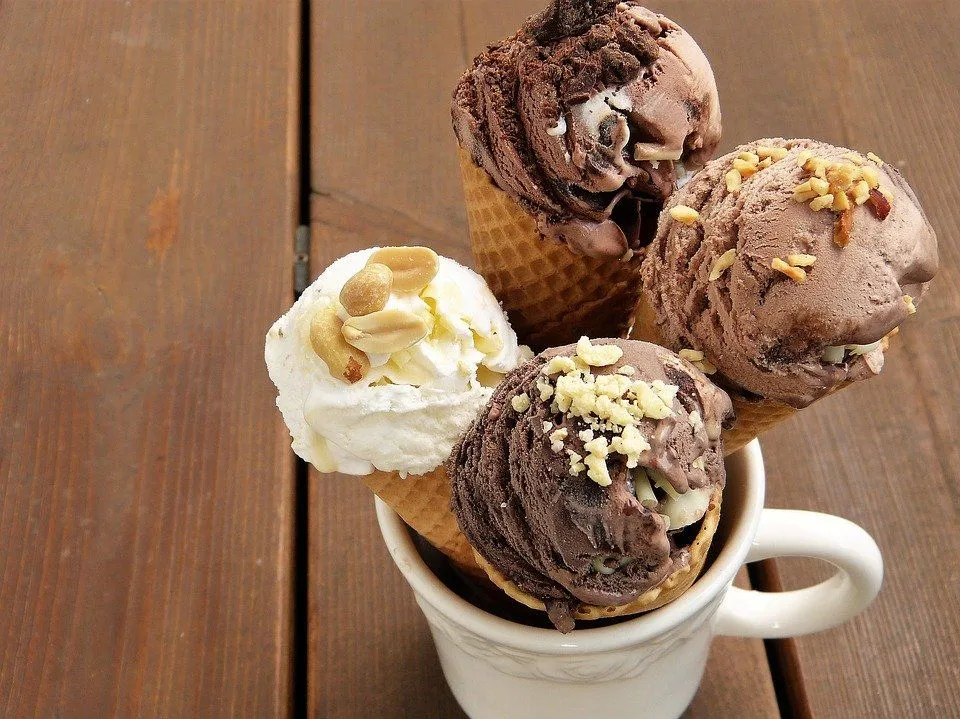
Regardless of where ice cream is being made (in a humongous factory or your own tiny kitchen), the basic ingredients and the underlying process remains pretty much the same. The standard ingredients of ice cream include water, ice, sugar, milk, milk fat, protein and air (yes, air is also an ice cream ingredient!). There are also some other additives and sweeteners, depending on the kind of ice cream you are going to make.
These ingredients not only decide how ice cream tastes, but also how it looks, smells and even feels inside your mouth.
How Is Ice Cream Made?
The process of manufacturing ice cream on an industrial scale consists of several steps, but that’s beyond the scope of this article. We’re going to look at precisely what causes ice cream to lose its original glory once it’s thawed and refrozen.
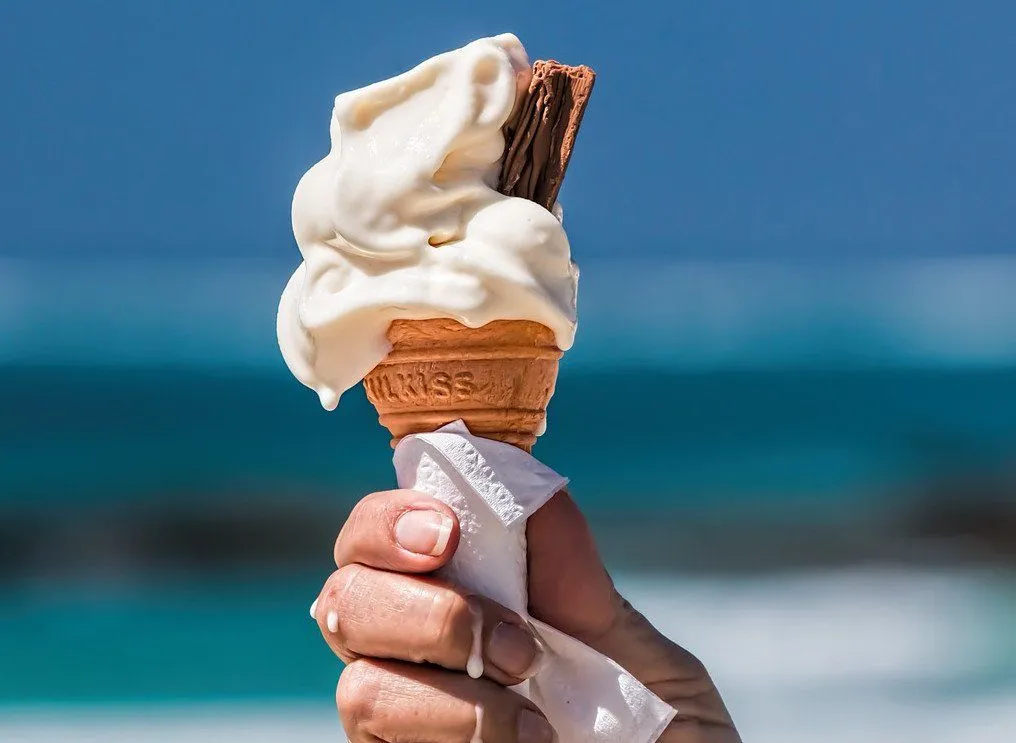
Once you have an ice cream mix with you, containing all the desired ingredients, you first pasteurize it to kill bacteria and then add flavors to it. Once you’re over that part, then comes the part that is relevant to our discussion.
The Amount Of Air In Ice Cream
You see, the ice cream mix is frozen in an ice cream machine. However, in addition to being frozen, it’s also whipped at the same time, such that both the freezing and whipping of the mix occurs simultaneously. This is very important, as this whipping/churning process is what gives ice cream its characteristic fluffiness and pleasant feeling in the mouth.
When the mix is whipped, small air bubbles are introduced in the mix. The air content in ice cream is called overrun. Technically, it’s defined as the percentage increase in the volume of ice cream over the amount of mix used to produce that ice cream. In simple words, it means that if you start off the process with 10 liters of mix, and after the whipping process, you have 15 liters of ice cream, then you have increased the volume by 50%, so the overrun is 50%.
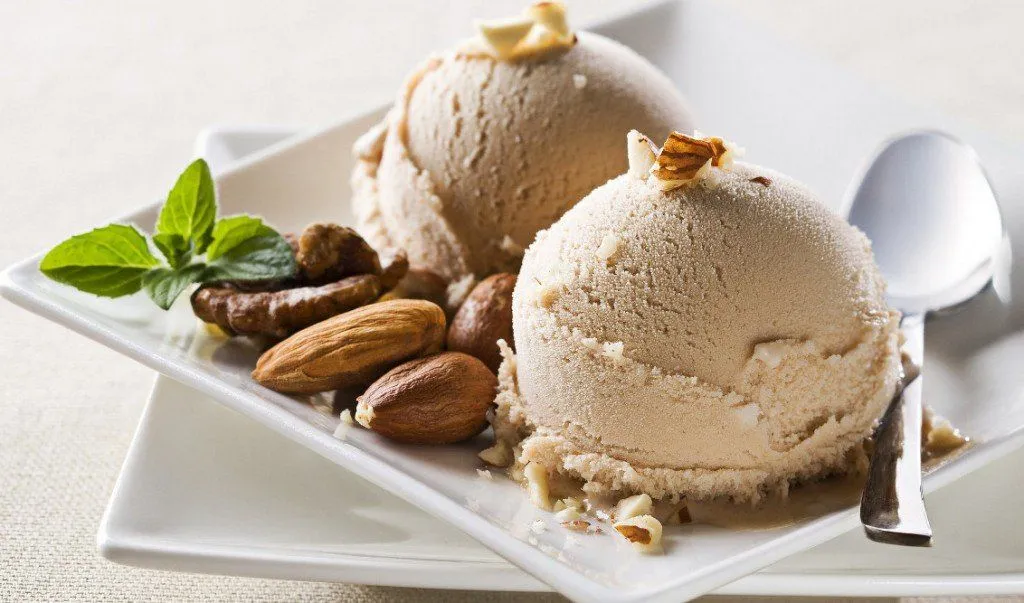
Premium ice creams (think Ben & Jerry’s or Häagen-Dazs) usually clock in under 50% overrun, and super-premium pints can be as dense as 15-25%. Cheaper supermarket tubs, on the other hand, run closer to 90-100% overrun, which means they have a great deal of air whipped into them. (US regulations cap legally-labeled “ice cream” at around 100% overrun, or roughly half air by volume, which is why budget tubs feel so airy and fluffy.)
Note that air is an important ingredient of ice cream, because without it, it would be similar to a frozen ice cube. When ice cream melts, it loses much of its air content. Thus, when you refreeze it, it doesn’t look how it looked before melting.
Size Of Ice Crystals
There is one more aspect to this: during the manufacturing process, the ice cream mix is chilled and simultaneously stirred in a commercial blast freezer that drops the temperature well below -30 °C (-22 °F) in minutes. As a result, it freezes so fast that water has no time to gather, and it forms countless tiny ice crystals (as opposed to large crystals) that the tongue can’t feel individually. However, when you freeze melted ice cream in your home freezer (which is typically set around -18 °C / 0 °F), the freezing occurs at a much slower pace, and the melted portion freezes back into a smaller number of much larger ice crystals. Food scientists call this regrowth recrystallization, and it’s the exact same process that turns even unopened ice cream gritty after a long stint at the back of the freezer.
This is also why commercial ice cream is loaded with stabilizers like guar gum, locust bean gum, and carrageenan. Those gums grip onto water molecules and slow them down, making it harder for the water to migrate and form big crystals when temperatures fluctuate. A home freezer (which cycles on and off through a defrost cycle every several hours) and a melted-then-refrozen tub have none of those advantages, which is why a refrozen scoop is noticeably icier than its original form.
Is Melting Ice Cream A Physical Or Chemical Change?
Here is a question that trips up a lot of people (and shows up in more than a few science homework assignments): when ice cream melts, is that a chemical change? The short answer is no. Melting is a physical change, specifically a change of state from solid to liquid. The milk, sugar, fat and protein molecules that make up the ice cream are exactly the same before and after it melts. Nothing new is created, no bonds are broken and rebuilt, and no fresh substance appears. Contrast that with frying an egg or baking a cake, where heat rewires the molecules into something genuinely new and there is no going back.
Because it is only a physical change, melting is in principle reversible: pop the puddle back in the freezer and the water turns back into ice. So if the chemistry is untouched, why does the refrozen scoop look and taste ruined? Because the damage is physical, not chemical. As we saw above, melting collapses the whipped-in air and lets the tiny ice crystals merge into big ones, and a home freezer cannot rebuild that delicate microstructure. The ingredients survive perfectly well. It is the architecture that falls apart.
Why Does Melted Ice Cream Taste Sweeter?
If you have ever noticed that a half-melted scoop tastes sweeter and richer than a rock-hard one straight from the freezer, your tongue is not playing tricks on you. Temperature genuinely changes how sweet the same sugar tastes, and there is a molecule to blame. A 2005 study published in Nature by Karel Talavera and colleagues traced it to an ion channel called TRPM5, which sits at the very last step of the sweet-taste signal inside your taste cells. TRPM5 is heat-sensitive: its activity climbs steeply as the temperature rises from about 15 °C to 35 °C (59 °F to 95 °F).

What that means in practice is that very cold ice cream under-reports its own sweetness. The sugar is all there, but the chilled taste cells fire weakly, so the flavor reads as muted. Let the same spoonful warm up toward mouth temperature and TRPM5 wakes up, the sweet signal strengthens, and the ice cream suddenly tastes far sweeter. It is part of the reason ice cream has to be made so sugary in the first place, since a good chunk of that sweetness is simply lost to the cold. Warmth also releases more of the aromatic molecules, which is why a melting scoop smells and tastes more intense. The very same channel explains why food tastes different when it is cold versus hot.
Can You Refreeze Melted Ice Cream?
So is refrozen ice cream safe to eat, or are you risking a stomach bug along with the bad texture? The USDA’s answer is refreshingly clear: it depends on how thawed it actually got. If the tub still contains ice crystals, or if it stayed at 40 °F (4 °C) or below the whole time (basically, fridge-cold), it’s safe to refreeze. You will lose quality, but not safety.
The real danger zone, both for ice cream and food safety in general, is between 40 °F and 140 °F (4 °C and 60 °C). In that range, bacteria like Salmonella and Listeria can double in number every 20 minutes or so. Dairy is a particularly good buffet for them, so the standard 2-hour rule applies: if your ice cream has been completely melted and sitting out at room temperature for more than two hours (or more than one hour if it’s above 90 °F / 32 °C), throw it out. Refreezing won’t help, because freezing only pauses bacteria, it doesn’t kill them or destroy the toxins some of them leave behind.
Quick rule of thumb: if it’s still a soft scoop with visible ice crystals, refreeze it and eat it soon. If it’s a warm puddle of sweet milk, take the loss.
How To Tell If Ice Cream Has Gone Bad
Even a tub that never fully melted can quietly go downhill in the freezer. Here is how to read the warning signs before you commit to a spoonful.
A crust of ice crystals or frost on the surface. This is freezer burn, and it happens when air reaches the surface and moisture repeatedly evaporates and refreezes during the freezer’s temperature swings. The good news, according to the USDA, is that freezer burn does not make food unsafe; it just leaves it dry, grainy and short on flavor. You can scrape off the affected layer and eat the rest.
A shrunken, gooey or dense icy scoop. A hard, solid layer, or a sticky ring of dried syrup around the lid, is a tell-tale sign the tub warmed up and refroze at some point, which is exactly the recrystallization we described earlier. It is safe to eat if it stayed cold, but the creamy texture is gone.
A sour, cheesy or off smell, or colors that look faded or wrong. This is the sign that actually matters for safety. Freezing only pauses microbes, it does not kill them, so an off odor can mean the fat has turned rancid or the dessert warmed up long enough for bacteria to multiply. When in doubt, and especially if the tub was ever a warm puddle for more than two hours, throw it out rather than risk it.
References (click to expand)
- Homemade Ice Cream – Make it Safe | FoodSafety.gov - www.foodsafety.gov
- Freezing and Food Safety | USDA Food Safety and Inspection Service - www.fsis.usda.gov
- Ice Cream - Babcock Dairy Plant - UW-Madison. The University of Wisconsin–Madison
- Quality Factors for Ice Cream | DRINC - drinc.ucdavis.edu
- Milk and Ice Cream Processing - nfscfaculty.tamu.edu:80
- Ice Cream Production - Chemical Engineering. West Virginia University
- Heat activation of TRPM5 underlies thermal sensitivity of sweet taste (Talavera et al., Nature 2005) - PubMed
- Making Ice Cream - It’s Physical Chemistry | RSC Education - edu.rsc.org
- What Is Freezer Burn? | USDA Food Safety and Inspection Service - ask.fsis.usda.gov