Table of Contents (click to expand)
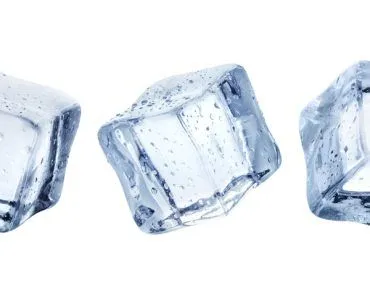
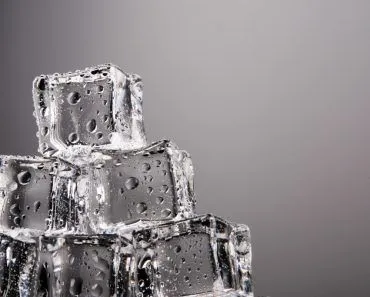
Ice cubes crack in water because of thermal shock. The outer surface of the cube warms up the moment liquid touches it and tries to expand, while the still-frozen core stays cold and the same size. That mismatch in expansion sets up a strong internal stress, and brittle ice gives way along its weakest planes. Engineers call the underlying mechanism differential thermal expansion.
On a hot summer day, there are few things as satisfying as a tall glass of lemonade, but a key ingredient of that refreshing beverage is the ice in the glass. If you’ve made yourself a cocktail or two, then you already know that ice can be a strange thing, even though it is a relatively simple and common substance we often overlook.

You have certainly heard it before: the clear cracking of the cubes as you pour water or any other liquid over them. If you tried to tear them apart in your hands, you would fail, yet pop them in a glass and fill it with water, and suddenly they can’t seem to break fast enough! The question is, what causes this surprising phenomenon, and is there any way to prevent ice from splitting in this way?
Ice And Water
Before we get into the science of ice cubes breaking apart, we should first understand the science of ice cubes sticking together; more specifically, let’s take a look at the structure of solid ice versus liquid water.
Water is arguably the most important substance on Earth, as it provided the pathway towards life as we know it, and is an essential component of survival for every living thing. Not only is it important, but it is also quite unique in comparison to other substances. It is a tasteless and odorless substance that can act as both an acid and a base, and it is a universal solvent, capable of dissolving many other natural substances. Found in solid, liquid and gaseous states on the planet, it is versatile and dynamic, and even has a few surprises up its sleeve.
In its liquid phase, the composition of the atoms (two hydrogen and one oxygen) in each water molecule create a dipole moment, wherein there is a partial positive charge on the hydrogen atoms and a partial negative charge on the oxygen atom. This charge differential causes the constant formation and breaking of hydrogen bonds in liquid water as the molecules perpetually shift and move around one another. These hydrogen bonds increase the boiling point of water.
Water hardens into ice (solid phase) when exposed to temperatures below 0 degrees Celsius. However, this is the point where some of water’s unique properties begin to appear. Most other substances take up less volume when they move into a solid phase, meaning that they become more dense as a solid. Due to the crystalline lattice structure of ice, there is actually more space between the molecules in the solid phase than in the liquid phase, which explains why ice floats in water!
This detail concerning the structure of ice under changing temperatures goes a long way towards answering the original question of this article.
Why Do Ice Cubes Crack In Liquid?
As we just explained, ice maintains a rigid crystalline structure when its temperature is kept below 0 degrees Celsius, but when you pour a liquid at a higher temperature over the ice, something unusual begins to happen. As is true in every system, the temperatures of the two substances will begin to equalize, i.e., the ice will begin to warm up and melt, while the liquid will drop in temperature.
The outer edges and surface of the ice cube are the first areas to experience the drastic temperature shift and begin to engage in heat exchange. The “cracking” sound you hear when you pour that liquid over the ice is caused by a phenomenon called “differential thermal expansion”. More specifically, the outer layer of the ice warms up rapidly and tries to expand, the way most solids do when heated. The colder inner core, however, is still at its original freezer temperature and barely changes size at all.
On the inside of the ice cube, the temperature stays well below 0 °C, and there is no immediate change to the structure or integrity of those bonds. The result is the textbook setup for thermal shock: the warm, now-larger outer shell is being held in place by a cold, unchanged inner core. The stress builds up faster than the brittle ice can accommodate it, and a crack races through the cube along its weakest planes. That sharp snap you hear is one of those internal fault lines giving way, often splitting the ice cube into pieces, or at least delivering that satisfying crackle in your glass.
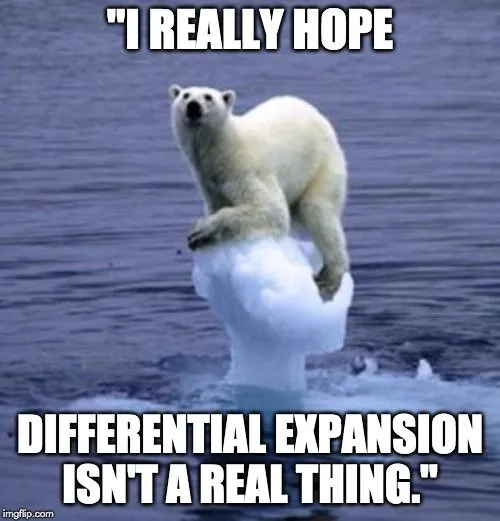
With two different parts of the cube trying to achieve different things in the process of differential expansion, a break is inevitable. After that first crack, you won’t hear as much noise from your ice cubes, but the smaller pieces may also undergo a similar scenario and continue fracturing.
Is There Any Way To Prevent This From Happening?
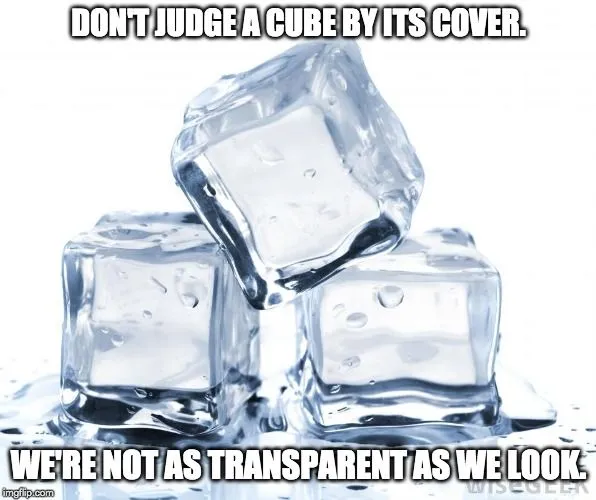
If you feel intensely triggered by the sound of cracking ice, you may be wondering if there is some way to avoid this entirely natural phenomenon. Well, as you know, it’s rather hard to defy the laws of science, but not all water is created exactly the same. Pure water that is lacking in impurities will result in completely clear ice cubes, whereas tap water and other forms of water that have some impurities will have a cloudy central area in the ice cube.
These impurities include various salts and other minerals, things that don’t perfectly fit into the crystalline lattice structure of the ice cube. If there are small pockets of these impurities, it could actually make the structure of the ice less brittle, and more likely to melt gradually, rather than fracturing. Pure mountain spring water, however, which forms a perfect lattice in its solid phase, will almost always crack and fracture when exposed to warmer liquid.
Can Ice Crack The Glass, Too?
If ice cubes can shatter themselves through differential expansion, you might wonder whether the same trick can turn on the glass holding them. It can. Drop a few cubes into a warm tumbler, or pour a warm drink over ice sitting in a chilled glass, and the wall of the glass touching the ice cools and tries to contract while the rest of the glass stays warm and expanded. That is the same uneven push-and-pull that splits the ice, only now it is happening inside the glassware. Materials scientists call it thermal shock.

Glass is stiff and brittle, so it cannot quietly absorb that mismatch. A large temperature difference acts like a mechanical load, building internal strain across the wall, and when that strain climbs past the glass’s tensile strength, a crack tears through it, sometimes with enough force to send shards flying. The risk goes up when the glass is thick, because heat conducts through it slowly and the temperature gap between the inner and outer surfaces grows. An already cold glass, or one with a scratched surface, is also more vulnerable, since a tiny existing flaw gives the crack an easy place to start.
This is why ordinary drinking glasses, made from everyday soda-lime glass, are the usual casualties. Cookware and laboratory glassware made from borosilicate glass, the material behind the classic Pyrex name, are built to shrug off these swings, because they expand far less for a given temperature change and are simply stronger. It is the mirror image of a familiar kitchen mishap: pouring boiling water into a cold glass and watching it crack. In both cases, it is the rapid change in temperature, not the heat or cold on its own, that does the damage.
A Final Word
Even the simplest mysteries in life can be explained by the rigidity of science and our understanding of the natural world. Something as basic as ice cracking when liquid is poured over them may not tickle your curiosity, but you’ve read this far in the article, so that’s a good sign! Next time you’re serving up drinks at a backyard barbecue, try dropping this new ice-related knowledge to your friends and fulfilling your destiny as the life of the party.
References (click to expand)
- Ice Crackling in a Beverage | Physics Van | UIUC. The University of Illinois Urbana-Champaign
- The Structure and Properties of Water | Introduction to Chemistry. courses.lumenlearning.com
- Cox, G. F. N. (1983). Thermal Expansion of Saline Ice. Journal of Glaciology. International Glaciological Society.
- Curious Kids: Why Does Ice Make A Cracking Sound When Water Is Poured On It? The Conversation.
- Thermal Shock. Wikipedia.