Table of Contents (click to expand)
Sea ice is mostly fresh (not pure freshwater, but close) because when seawater freezes, the rigid hexagonal ice lattice cannot accommodate dissolved sodium and chloride ions. The salt is squeezed into tiny pockets of concentrated brine, most of which drains back into the ocean below. Year-old sea ice typically has a salinity of around 2-10 parts per thousand, compared to about 35 ppt for the seawater it formed from. Multi-year ice is even less salty.
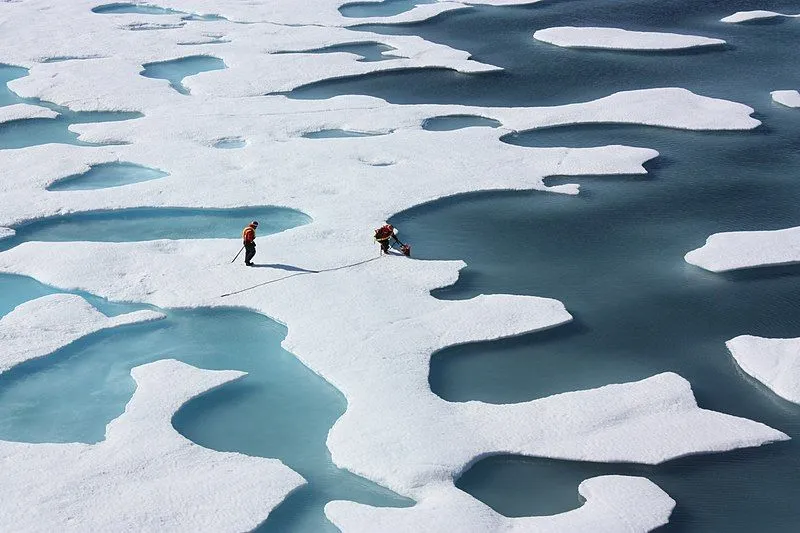
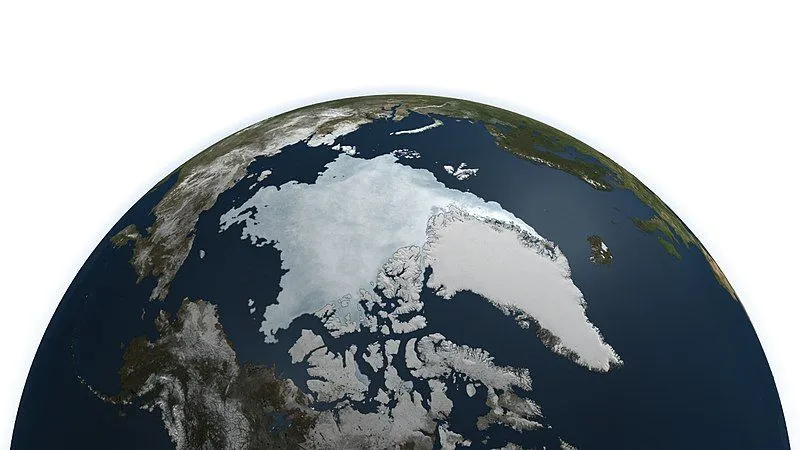
Sea ice is frozen ocean water that floats on the ocean's surface, blanketing huge expanses of the Arctic and Antarctic Oceans. At peak winter coverage it spreads over about 7% of the Earth's ocean surface, but because it is thin (typically 1-3 m thick) it accounts for only about 1 part in 1,000 of all the ice on Earth, the rest being locked up in the Antarctic and Greenland ice sheets and in mountain glaciers.
While snow and glacial ice arise from precipitation, sea ice originates from the crystallization of surface water, and does not fall as precipitation.
However, the most fascinating part about sea ice is that despite being made from salty seawater, it ends up nearly fresh, with most of the salt staying behind in the ocean.
Hence, the production of sea ice is among the fundamental processes on Earth that regulate the salinity of the ocean. When there is more sea ice, during periods of global coolness, the ocean becomes saltier.
When there is less ice during warm summers, freshwater gets added to the ocean, which decreases its salinity.
How Does Sea Ice Form?
Ocean water freezes at lower temperatures than fresh water. Due to the presence of salt within it, salt water freezes at around 28.4 degrees Fahrenheit, whereas freshwater freezes at roughly 32 degrees Fahrenheit.
However, since just the water element of saltwater freezes, the ice contains relatively little salt. It may be melted and used directly as drinking water.
But why is sea ice absent of almost all salt?
The answer is the geometry of ice crystals. When liquid water freezes, the molecules lock into a rigid hexagonal lattice. That lattice has no room for big sodium and chloride ions, so they get rejected, a process oceanographers call brine rejection. The salt that is excluded from the growing ice ends up in tiny pockets of super-salty brine inside and beneath the ice, most of which drains downward into the ocean over time.
Thus, the formation of pure ice would now require an additional job—moving the salt out of the way and then building the crystal ice structure. As a result, more “coldness” is required to drive the salt away from the system so that crystals can form.
What this means is that removing salt from water requires an extra step, which is inevitably going to consume more energy.
Newly formed first-year sea ice typically has a salinity of around 5 to 10 parts per thousand (ppt), and after a year or two of brine drainage that figure falls below 3 ppt for multi-year ice (multi-year ice is genuinely fresh enough to use as drinking water once melted, which sailors and Inuit hunters have done for centuries). For comparison, average ocean water is about 35 ppt salty.
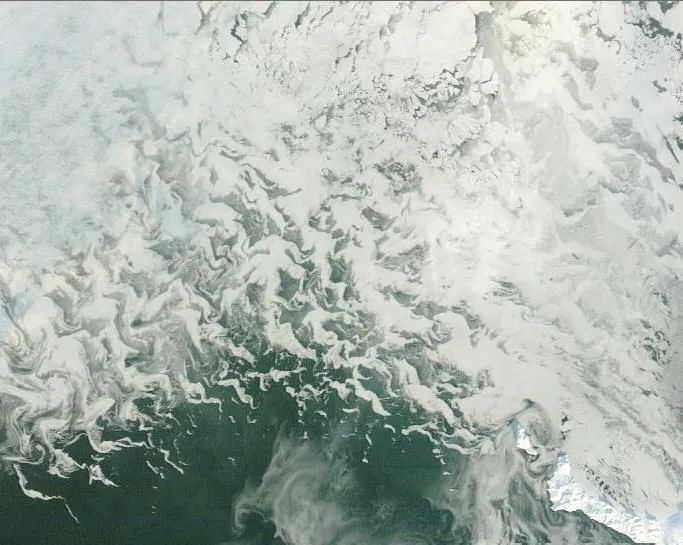
Once the ocean surface has reached the freezing point of saltwater, any further cooling leads to the formation of ice. The very first ice to develop is called ‘frazil ice’, composed of minute crystal particles and spikes up to three or four millimeters in diameter. When additional ice crystals develop, a soupy mixture forms at the ocean’s surface.
After a continuous sheet of ice forms, the cold environment is no longer directly connected to the saltwater, and sea-ice growth continues by accumulating at the sea-ice bottom. Throughout an annual cycle in the Arctic, around 45 centimeters of ice melts away from the ice surface, while an equivalent amount is replenished at the base. As a consequence, an ice crystal deposited in the sea ice at the base will travel up the ice column at an average velocity of roughly 45 cm/yr until it reaches the surface and melts.
Sea Ice And Ocean Circulation
The salinity of seawater also has an impact on ocean currents. As sea ice develops, much of the salt in the ocean is forced into the water beneath the ice. The water below sea ice contains more salt and turns denser than the neighboring ocean water, so it descends and drifts away from the surface. As a result, sea ice helps the global ocean conveyor belt’s circulation.
Sea Ice And Global Climate
While sea ice is mostly found in polar regions, it has a significant impact on global climate. The shiny surface of sea ice bounces a lot of sunlight back into space and out into the atmosphere. Since this solar energy “swings back,” rather than being absorbed by the water, the temperature near the poles stays much cooler in comparison to the equator.
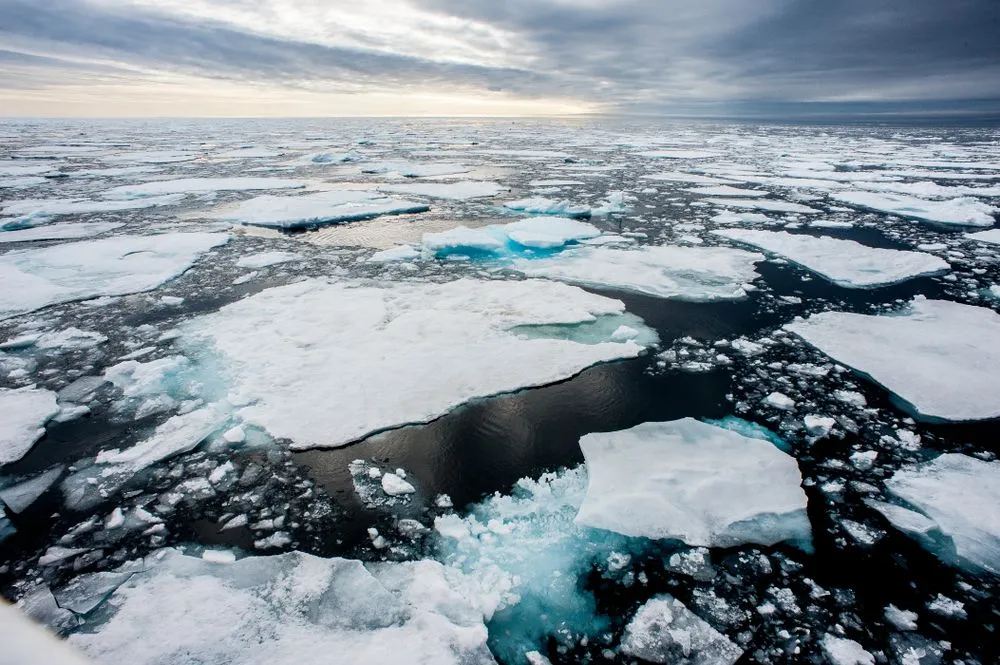
When sea ice melts, due to increasing temperatures, fewer white surfaces remain to reflect the sunlight. The surface absorbs more solar energy, and thus water temperatures rise. This starts a heating and melting cycle. Increasing water temperatures cause ice to build later in the winter and melt faster the following summer.
Even slight temperature rises can lead to considerable heating over time, making the polar region the most sensitive to climate change on the planet.
References (click to expand)
- Campbell, K. J., & Orange, A. S. (1974, January). A continuous profile of sea ice and freshwater ice thickness by impulse radar. Polar Record. Cambridge University Press (CUP).
- Rhoden, A. R., Rudolph, M. L., & Manga, M. (2023, March). The challenges of driving Charon's cryovolcanism from a freezing ocean. Icarus. Elsevier BV.
- Skinner B. J.,& Murck B. W. (2010). The Blue Planet: An Introduction to Earth System Science, 3rd Edition: An Introduction to Earth System Science. Wiley Global Education