Table of Contents (click to expand)
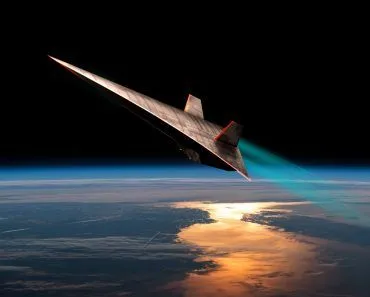
Hypersonic flight means traveling faster than Mach 5, or five times the speed of sound. It’s a big deal because it slashes military reaction time with weapons too fast and agile to intercept, enables more efficient access to space, drives advances in heat-resistant materials, and could one day return high-speed commercial air travel. The Mach 10 “Darkstar” in Top Gun: Maverick, however, is fictional.
Man’s pursuit of his ambition is not restricted to his ilk; it extends to forces many times greater than his own. Whether it is containing rivers, taming winds and sunlight, or splitting the infinitesimal atom, man’s merit and determination can hardly be discredited. Amongst one of many such feats is the pursuit of speed.
Movie and aviation buffs amongst us will remember the nail-biting sequence of Tom Cruise pushing Mach 10 speeds in a secret project aircraft in the movie Top Gun: Maverick. But today, for the average person, why is hypersonic flight such a big deal? Let’s find out!
Basics Of Sonic Speeds
The speed of sound is amongst the most important fast-paced milestones, second only to the speed of light. While physics is divided over a body with non-zero mass achieving the speed of light, the speed of sound presents no such barrier. When objects achieve high speeds comparable to the speed of sound, their speeds are measured as a ratio of sound’s speed in the same medium. This ratio, known as the Mach Number, is helpful for putting speed into perspective.
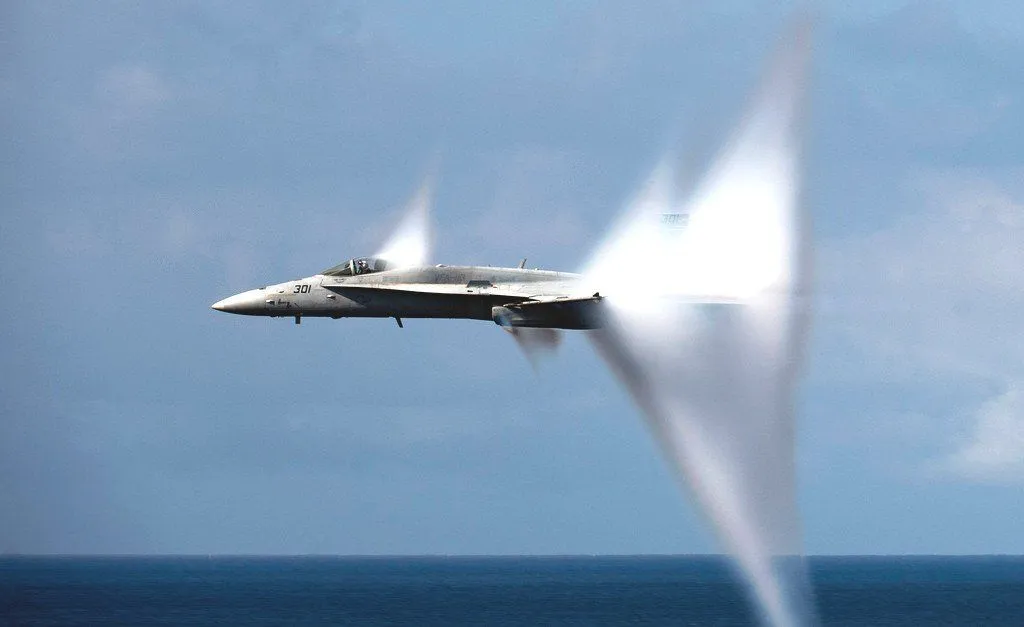
Since Mach numbers are generally defined for aircraft and other airborne bodies, the speed of sound is considered to be around 343 meters per second (1,235 km/h, or 767 mph) at mean sea level, at a temperature of 20 degrees Celsius (68 °F). Keep in mind that this figure isn’t fixed: sound travels slower in colder air, so at the standard sea-level temperature of 15 °C (59 °F), it drops to roughly 340 m/s (1,225 km/h, or 761 mph). Any flight undertaken at exactly the speed of sound results in a Mach number of 1, and is called sonic flight.
Mach regimes have been defined for various ranges in these ratios, and are summarized as follows:
| Mach number = Speed of object / Speed of sound in that medium | Mach Regime | Mach No. Range |
| High – hypersonic | 10.0-25 | |
| Hypersonic | 5.0-10.0 | |
| Supersonic | 1.3-5.0 | |
| Transonic | 0.8-1.3 | |
| Subsonic | <0.8 |
Why Is The Speed Of Sound Such An Important Benchmark For Us?
Hypersonic flight is not as recent as the movie Top Gun: Maverick might make you believe. The rocket-powered X-15, rolled out in 1958, became the first piloted aircraft to push deep into the hypersonic regime, eventually reaching Mach 6.7 in 1967. The real speed crown, though, belongs to uncrewed scramjet research vehicles: NASA’s X-43A hit Mach 9.6 (around 11,000 km/h, or 6,800 mph) at roughly 33,500 meters (110,000 feet) in 2004, and Boeing’s X-51A Waverider went on to clock the longest air-breathing hypersonic flight, cruising above Mach 5 for over three minutes in 2013. So while Maverick’s fictional Mach 10 “Darkstar” is pure Hollywood, the underlying physics has been flown for decades.
What bearing does a movie have on real life, you may ask? Before we dive into this further, here’s a review of Top Gun: Maverick from a scientific perspective.
Flights conducted at supersonic speeds and higher are indeed a big deal. They impact various realms of science, technology and commerce, making it worthwhile to study them.
1. Step Up For Military Forces
The ability to achieve high Mach flight significantly reduces flight time, and consequently, reaction time, for armed forces. However, faster response time is not the only advantage presented by hypersonic flights. Hypersonic vehicles, by design, have a low radar cross-section, making them very difficult to be detected by radar. This design also enables them to be very agile, reducing their chances of being intercepted by enemy craft, as well as missiles.

This is exactly why the world’s major militaries are pouring money into hypersonic weapons. Russia has fielded the Avangard glide vehicle and the air-launched Kinzhal missile (used in combat over Ukraine, with mixed real-world results), while China deploys the DF-17, a missile tipped with a hypersonic glide vehicle. The United States, after briefly shelving its AGM-183A ARRW boost-glide weapon, has kept funding it alongside the air-breathing Hypersonic Attack Cruise Missile (HACM), both still in testing as of 2026. The key threat these pose is maneuverability: unlike a predictable ballistic arc, a hypersonic glider can weave across the sky, which is what makes it so hard to track and shoot down.
On the flip side, advancements in hypersonic flight also push advancements in hypersonic interception devices. This furthers development in radar and satellite communication technology.
2. Advancements In Space Flight
In research done by space agencies like NASA, the utility of hypersonic flights has been clearly laid out. Hypersonic vehicles have speeds that are similar to the requirements for putting spacecraft into orbit.
At present, the biggest hurdle faced by aeronautical engineers is the use of rocket boosters. Unlike a jet engine, a rocket cannot breathe air, so it has to carry its own oxidizer (often liquid oxygen) alongside its fuel to burn it. That onboard oxidizer is heavy, and the boosters and tanks needed to hold it add enormously to a vehicle’s launch mass, reducing its overall efficiency.
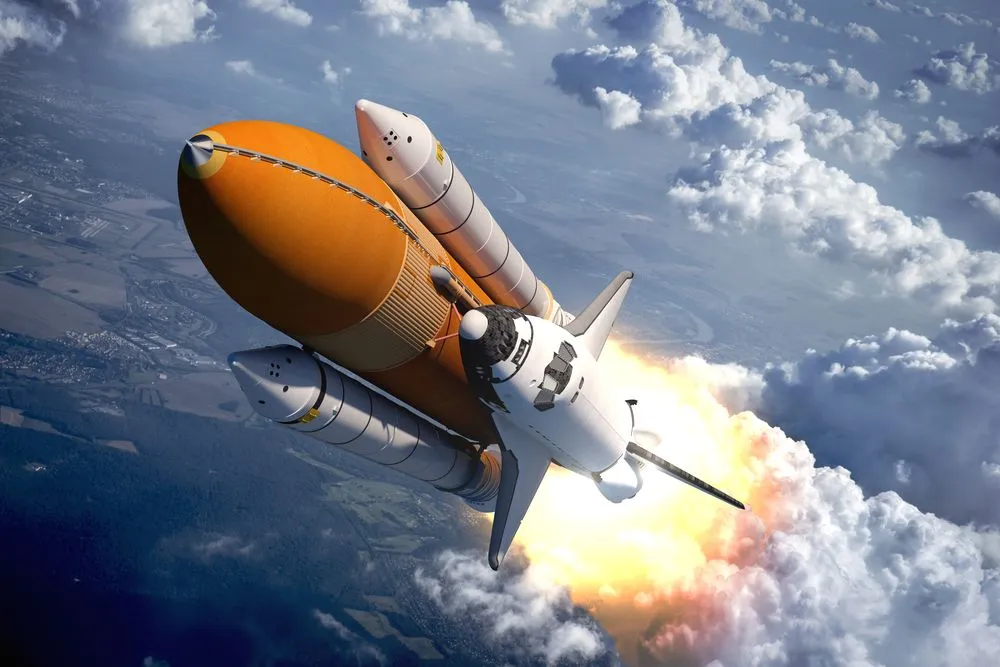
Hypersonic propulsion systems, namely ramjet and scramjet engines, have shown great promise in this regard. They can propel spacecraft on their own power, thereby eliminating rocket propulsion. They also rely on oxygen from the atmosphere, further eliminating the need to carry rocket boosters. This has potential to reduce the bulky infrastructure required to make and safely put spacecraft into space.
3. Advancements In Material Engineering
The criticality of a moving body’s interaction with its immediate atmosphere increases with its speed. At hypersonic speeds, the air ahead of the vehicle is compressed and heated so violently (to thousands of degrees) that oxygen and nitrogen molecules break apart into individual atoms, in what is known as molecular dissociation. This generates tremendous thermo-mechanical loads, capable of shredding even the strongest steels. Hypersonic flight also impacts each pilot’s biology, due to tremendous and sustained G forces, which can be fatal if not accounted for properly.
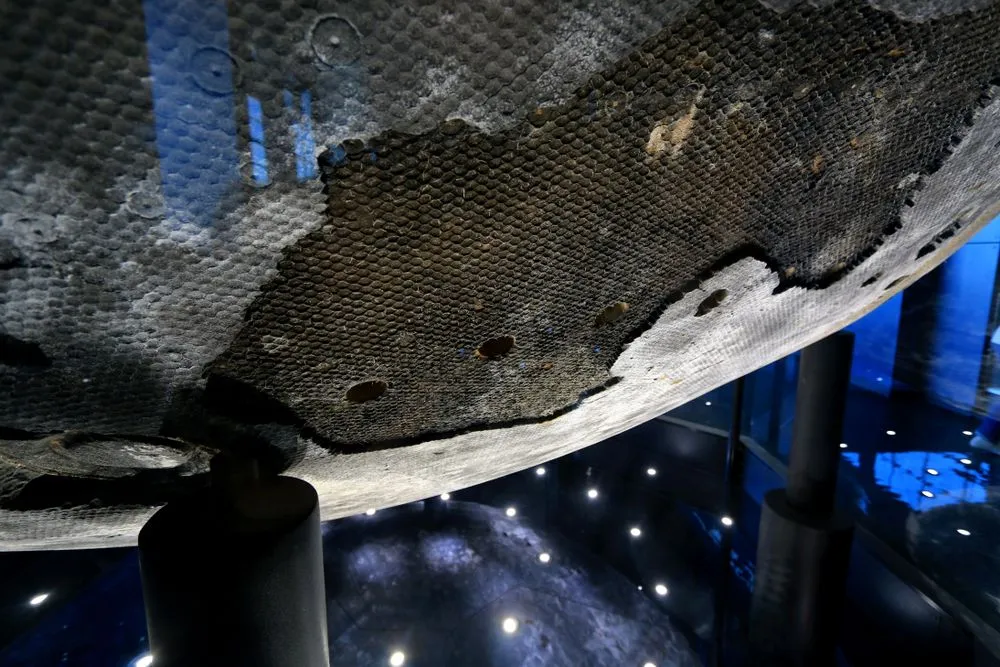
The solution is the development of composites and protection systems that can withstand these forces without affecting the aircraft’s speed. Thus, the pursuit of hypersonic flight pushes for advancements at the intersection of biology, material sciences and technology.
4. Faster And More Reliable Commercial Air Travel
In order for hypersonic flights to be a long-term solution to a bigger problem than just a one-off experiment, strong advancements have been made in engine technology and safety. At a commercial level, supersonic flight has already been attempted by the legendary Concorde aircraft. Although unviable at the time, air travel at speeds comparable to or greater than the speed of sound is now poised to return.
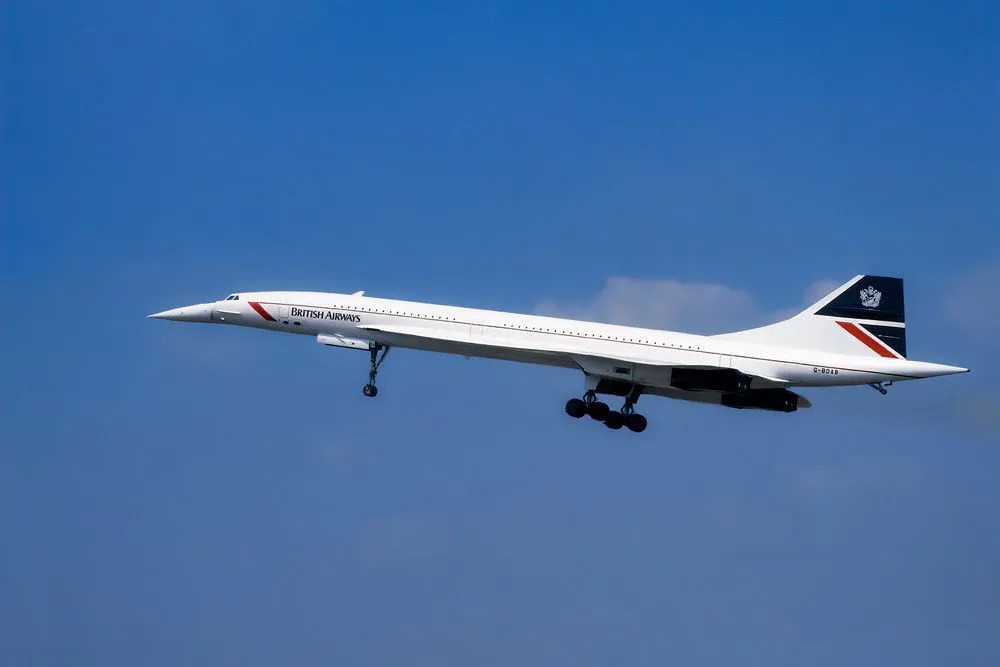
Though proponents of modern supersonic flight tout the option as being cleaner and greener than commercial aviation, there is no clear answer to achieving it. Whether that technology can be retro-fitted to existing aircraft infrastructure is also unclear at this juncture. However, reduced travel time without compromising on safety is the most obvious benefit of supersonic and hypersonic flights.
A Final Word
Sure, there is a lot of talk about hypersonic flights being a big deal, but what’s in it for you?
Did you know that the scratch-proof lenses you use came from NASA? As did invisible braces, memory foam and the cordless headset technology that paved the way for the wireless earbuds in your ears right now! All this is to say, science and technology have a trickle-down effect. They are often found to fulfill more purposes than what they were originally designed for, and are thus commercialized so we can all enjoy their benefits.
Thus, the pursuit of ambition that seeks to foreshadow even the mighty forces of nature, while it might appear wasteful at face value, has so much more to offer in the long run.
References (click to expand)
- Mach and Speed of Sound Calculator - www.grc.nasa.gov
- Hypersonic Cruise Aircraft - NASA. The National Aeronautics and Space Administration
- X-15 Research Results - NASA. The National Aeronautics and Space Administration
- X-43A Hyper-X - NASA. The National Aeronautics and Space Administration
- X-51A Makes Longest Scramjet Flight - NASA. The National Aeronautics and Space Administration
- X-15 Hypersonic Research Program - NASA. The National Aeronautics and Space Administration
- North American X-15 - National Air and Space Museum, Smithsonian Institution