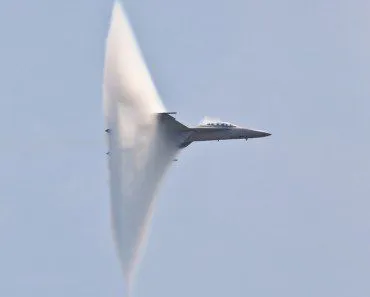
Commercial planes still cruise at roughly Mach 0.85 (about 900 km/h or 560 mph) because fuel burn rises sharply as you approach the speed of sound. Drag climbs steeply in this transonic zone, so flying faster would cost far more fuel for only a small time saving. Modern high-bypass engines are also tuned to run most efficiently at these speeds.
As time passes, technology improves. Things tend to become faster, smarter, smaller, lighter, and – in most cases – cheaper! Automobiles have become blazingly fast in the last few decades, as have ships and trains.
However, one of the most common means of transportation, i.e., commercial airplanes, has not seen any improvement in speed. A modern jet airliner cruises at roughly Mach 0.85, around 900 km/h (560 mph), which is essentially the same as (and in some cases a touch slower than) the jets of the 1960s. In fact, commercial planes have generally become slightly slower!
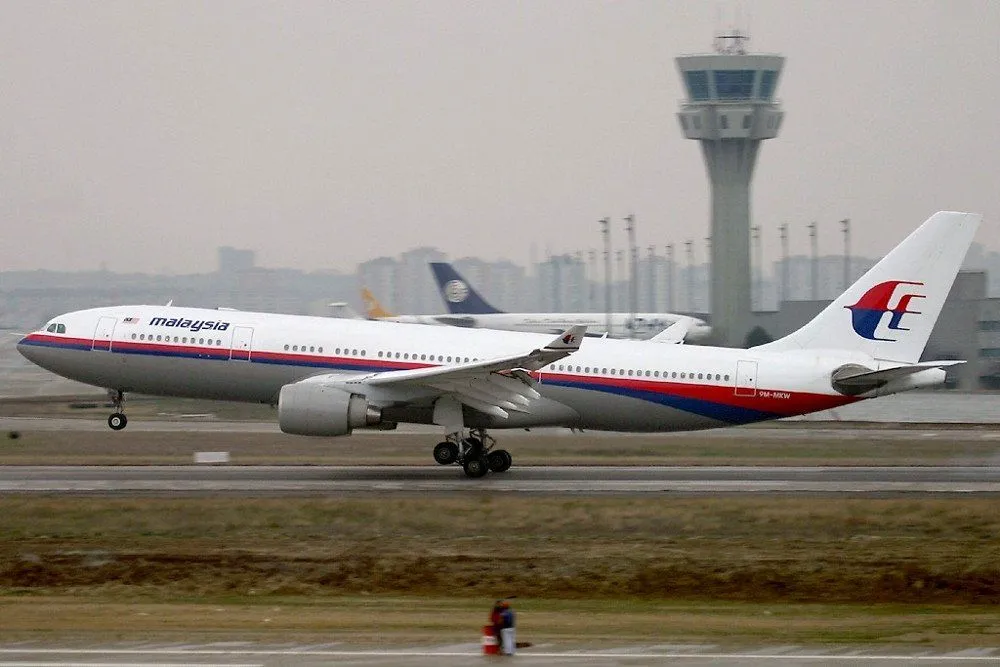
As most, if not all, technological tools have improved significantly in the last couple of decades, it’s not unreasonable to ‘expect’ commercial planes to similarly become faster, is it?
So, why hasn’t commercial air travel sped up at all since the 1960s?
Fuel Efficiency And Cost
Fuel efficiency is the main reason why commercial airplanes have not become faster in the last few decades, among other factors. For instance, a flight from New York to Denver takes 19 more minutes today than in 1983, and flying from Washington, D.C., to Miami takes 45 more minutes than in 1973 (Source). The fuel cost is one of the primary reasons behind this minor sluggishness in speed.
Even if an aircraft’s cruise speed is increased by 10%, it would burn roughly 20% more energy. This is because aerodynamic drag rises with the square of the speed, and the effect gets dramatically worse near the speed of sound. As a plane approaches Mach 1, shock waves begin forming over the wings (a regime called transonic flight) and drag spikes steeply. Higher speeds therefore mean much higher fuel consumption, which, in turn, means higher operating costs.

Moreover, modern air passengers have less incentive to pay more money to travel faster. It’s worth noting that airplane manufacturers can technically produce faster commercial planes, but there isn’t much demand for them outside of military applications. As a result, commercial airplanes continue to fly at basically the same speeds they did 40-50 years ago.
Turbofan Or ‘High-bypass’ Jet Engines
Older jet engines on commercial airplanes had intakes that were less than half as wide and moved less air at higher speeds. However, modern ‘high-bypass’ jet engines with their large-diameter front fans offer various advantages over the older designs.
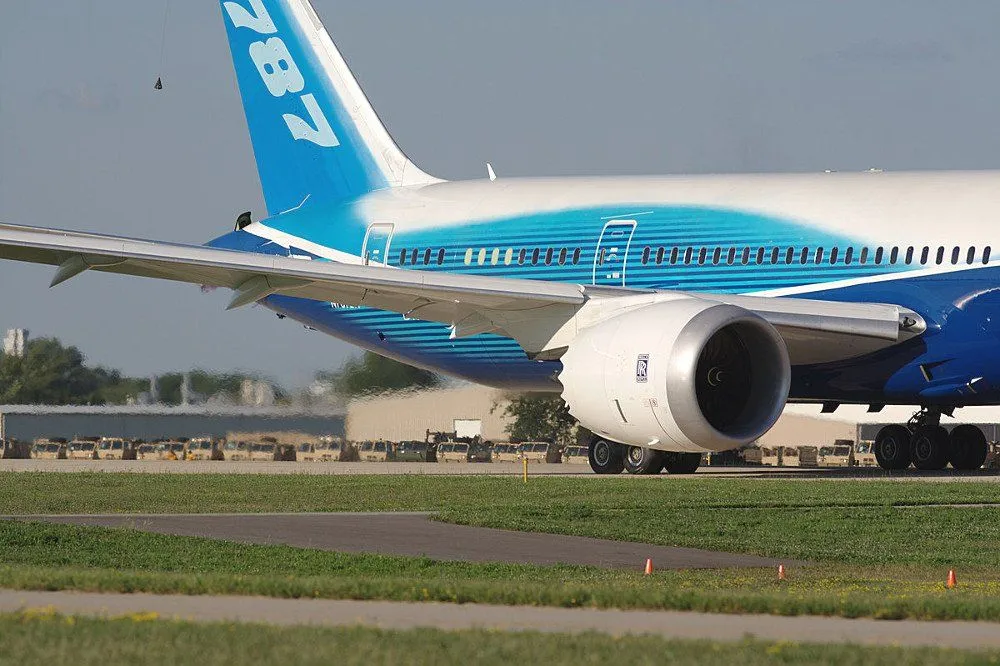
These high-bypass engines are air-breathing engines capable of achieving the same thrust with more air passing through at lower speeds. This is done by routing most of the air (as much as 93% in some variants) around the engine’s turbine instead of passing through it.
According to Mark Drela, an Aeronautics and Astronautics professor, the efficiency of these high-bypass engines peaks at lower speeds, which is why airplane manufacturers favor somewhat slower airplanes. “A slower airplane can also have less wing sweep, which makes it smaller, lighter, and hence less expensive,” says Drela.
So, How Fast Can A Commercial Plane Actually Fly?
Let's put real numbers on it. Almost every modern jet airliner cruises in a narrow band between roughly Mach 0.78 and Mach 0.86, which at a typical cruising altitude works out to somewhere around 850 to 920 km/h (530 to 570 mph). The current title-holder is the Boeing 747-8, which Boeing lists with a cruise speed of about Mach 0.855 for the passenger version, making it the fastest airliner in regular service today. Its rivals are barely behind: the Boeing 777 cruises near Mach 0.84 and the Airbus A380 around Mach 0.85. The whole fleet, in other words, is bunched together just under the sound barrier (Mach 1).

So why do flight-tracking apps sometimes show a plane screaming along at over 800 mph? That's a trick of the wind. In February 2019, a Virgin Atlantic Boeing 787 Dreamliner hit a ground speed of 801 mph over Pennsylvania, comfortably above the 760 mph (about 1,225 km/h) speed of sound. Yet the jet had not gone supersonic at all. It was simply riding a furious jet stream tailwind of more than 200 mph. The number that matters for an aircraft is its airspeed, the speed relative to the air around it, and that stayed at the Dreamliner's normal cruise of roughly 561 mph. When the air itself is racing eastward, the plane's speed over the ground gets a free boost, but it never breaks the sound barrier because the air molecules near the wing are still flowing past at ordinary subsonic speed.
Going Faster Than Sound
The Concorde, a British-French turbojet-powered supersonic passenger commercial airplane that operated from 1969 to 2003, had a maximum speed of 1354 mph, which is just over twice the speed of sound!
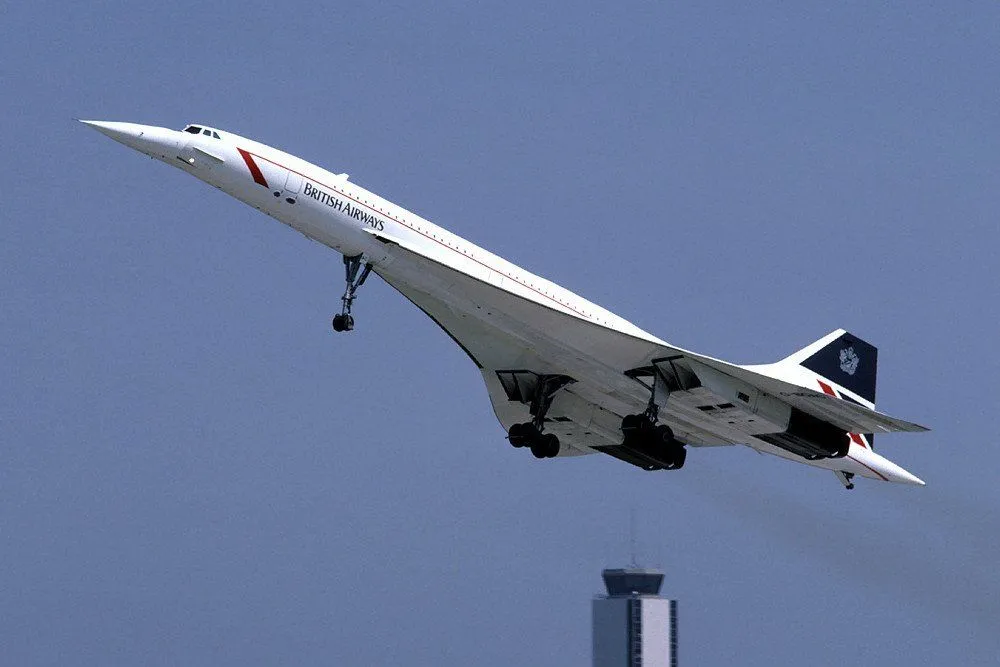
However, the Concorde was a fuel guzzler, burning roughly 5 gallons (about 19 liters) of fuel for every mile it flew. It also seated only around 100 passengers, so its sky-high ticket prices never attracted enough buyers, and the economics simply did not add up.
Another issue with the Concorde was that it produced a sonic boom when it traveled faster than the speed of sound. Due to this, many governments didn’t allow commercial aircraft that passed over their inhabited territory to produce a sonic boom. As planes become faster, they tend to become more noisy, especially when breaking the sound barrier.
That noise problem is exactly what today’s supersonic efforts are trying to solve. In January 2025, the demonstrator jet XB-1, built by the U.S. startup Boom Supersonic, became the first independently developed civil aircraft to break the sound barrier. Remarkably, microphones on the ground recorded no audible sonic boom, because the jet went supersonic at a high enough altitude that the boom bent back upward in the atmosphere before reaching the surface (an effect known as Mach cutoff).
NASA is chasing the same goal with its experimental X-59, an aircraft shaped to soften a sonic boom into a quiet “thump.” The X-59 made its first flight on October 28, 2025, and is being put through flight testing ahead of supersonic trials that aim to gather data on how communities react to the sound. If regulators eventually relax the decades-old ban on overland supersonic flight, faster commercial travel could one day return without the deafening boom that grounded the Concorde.
Will Air Travel Ever Get Faster Again?
For the first time in half a century, the honest answer is "quite possibly." The reason commercial jets stayed locked just below Mach 1 was never only fuel economy. It was also the law. On April 27, 1973, the U.S. Federal Aviation Administration banned civil aircraft from flying faster than sound over land, a rule (codified as 14 CFR 91.817) written purely around speed rather than the actual noise reaching the ground. Most of the world followed suit. With overland supersonic flight effectively outlawed, manufacturers had little reason to build a faster airliner.

That barrier is now coming down. On June 6, 2025, an executive order titled "Leading the World in Supersonic Flight" directed the FAA to repeal the overland supersonic ban within 180 days and to write a new noise-based certification standard, with a proposed rule due within 18 months. The logic mirrors what NASA has argued for years: if an aircraft can go supersonic without producing an audible boom on the ground, there is no reason to ban it on speed alone. As NASA's Quesst mission integration manager Peter Coen put it, "instead of a rule based solely on speed, we are proposing the rule be based on sound."
Several companies are betting that this opens a real market. The startup Boom Supersonic is developing the Overture, an airliner designed to carry roughly 60 to 80 passengers at around Mach 1.7 over water, with a slower "boomless" cruise mode planned for overland routes. Whether the economics work any better than they did for the Concorde is still an open question, since speed has always come at a steep cost in fuel. But for the first time since the 1970s, the rulebook, the engines, and the noise-reduction technology may finally line up, and your transatlantic flight could one day take half as long.
Last Updated By: Ashish Tiwari
References (click to expand)
- How The Jet Engine Works.
- PROGRESS IN AIRCRAFT-ENGINE DESIGN.
- Committee on Propulsion and Energy Systems to Reduce Commercial Aviation Carbon Emissions, Aeronautics and Space Engineering Board, Division on Engineering and Physical Sciences, & National Academies of Sciences, Engineering, and Medicine. (2016). Commercial Aircraft Propulsion and Energy Systems Research. []. National Academies Press.
- How does a jet engine work?.
- Why hasn’t commercial air travel gotten any faster since the 1960s? MIT School of Engineering.
- NASA’s X-59 Completes First Flight, Prepares for More Flight Testing. NASA.
- XB-1 supersonic aircraft smashes sound barrier without explosive boom. New Atlas.
- Boeing 747-8 (cruise speed Mach 0.855). Wikipedia.
- Record-breaking jet stream accelerates air travel; Virgin Atlantic Flight 8 hits 801 mph. CBS News.
- NASA's Quesst: Reassessing a 50-Year Supersonic Speed Limit. NASA.
- Leading the World in Supersonic Flight (Executive Order, June 6, 2025). The White House.
- Boom Overture. Wikipedia.