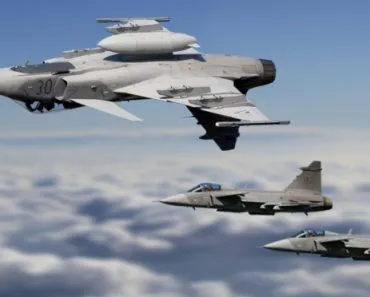
All supersonic aircraft have pointed nose cones to reduce drag. Subsonic aircraft, on the other hand, have rounded nose cones.
Amongst all forms of transportation, the grandeur of aircraft is very hard to match. Even the fanciest sports cars come only remotely close to being as impressive as the flying machine. Within themselves, aircraft can be segregated into the cute, friendly neighborhood vehicles, or the stern, mean-looking ones you’d rather not be around. Wings loaded with missiles and fuel tanks, pointy noses and even fire-spewing tails! On the other hand, the cuter ones are passenger craft with round noses and tail cones that converge to a point.
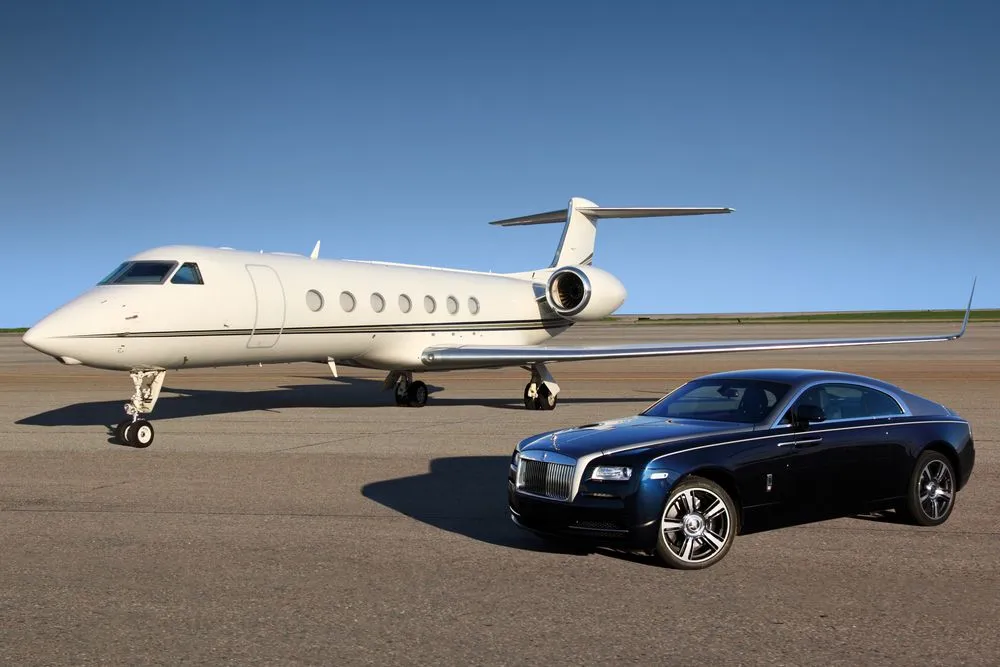
Why are the nose cones sharp on one plane, while rounded on the other? Let’s dig in for some clarity.
Why Do Some Aircraft Have Pointy Noses While Others Don’t?
Simply put, the reason for the design variation is speed. Round nose cones are desirable for aircraft intended to be flown slower than the speed of sound. This is why commercial airlines, private planes, and recreational aircraft have round nose cones. Interestingly, not all military aircraft are meant to be flown at high speeds. This is why transport, surveillance and airborne radar aircraft also have round noses.
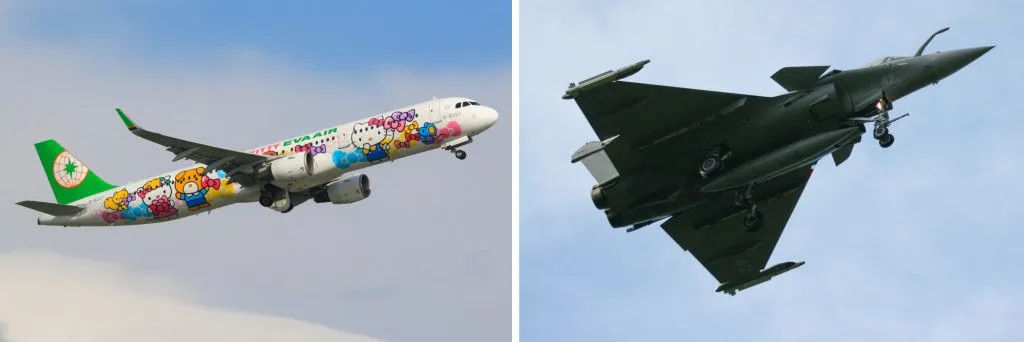
Such segregation is purely psychological. After all, aren’t the mean-looking aircraft invariably fighters? For fighter aircraft, speed is critical. With the sound barrier breached long ago, fighter aircraft that can travel at supersonic speeds are ubiquitous. Having a sharper, pointed nose cone greatly impacts the way air flows over them, letting them achieve such high speeds without much resistance. It is no surprise, then, that Concorde, the world’s first commercial airliner with supersonic capabilities had a pointy nose!
How Does Airflow Affect Nose Cone Geometry?
Airflow is the most crucial aspect of an airplane’s design. It helps to think of air as a viscous fluid medium through which planes fly. The particles of air resist the plane’s motion, a phenomenon known as drag. Drag has two components: the frictional component and the pressure component. The friction component is caused by the movement of air over the wing’s surface.
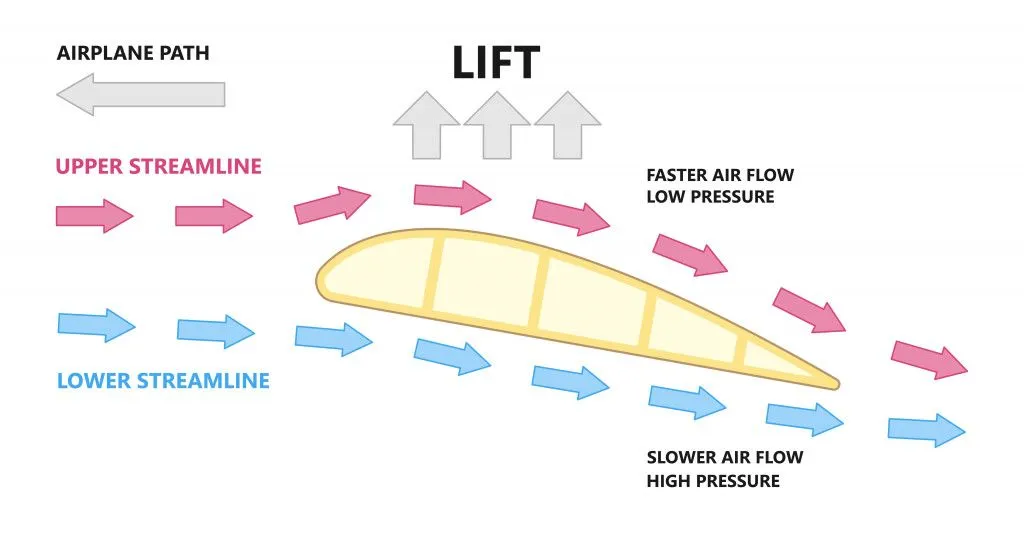
The pressure component, on the other hand, is caused by the shape of the aircraft and its body panels when they interact with air. The greater the drag, the greater the resistance to flight. This prevents aircraft from going at their intended speeds, while working the engines harder, thus consuming more fuel in the process. The nose cone is the first point of contact with air when it takes flight. It therefore ‘cuts’ through this medium of air, making way for the rest of the plane.
Rounded Nose Cones
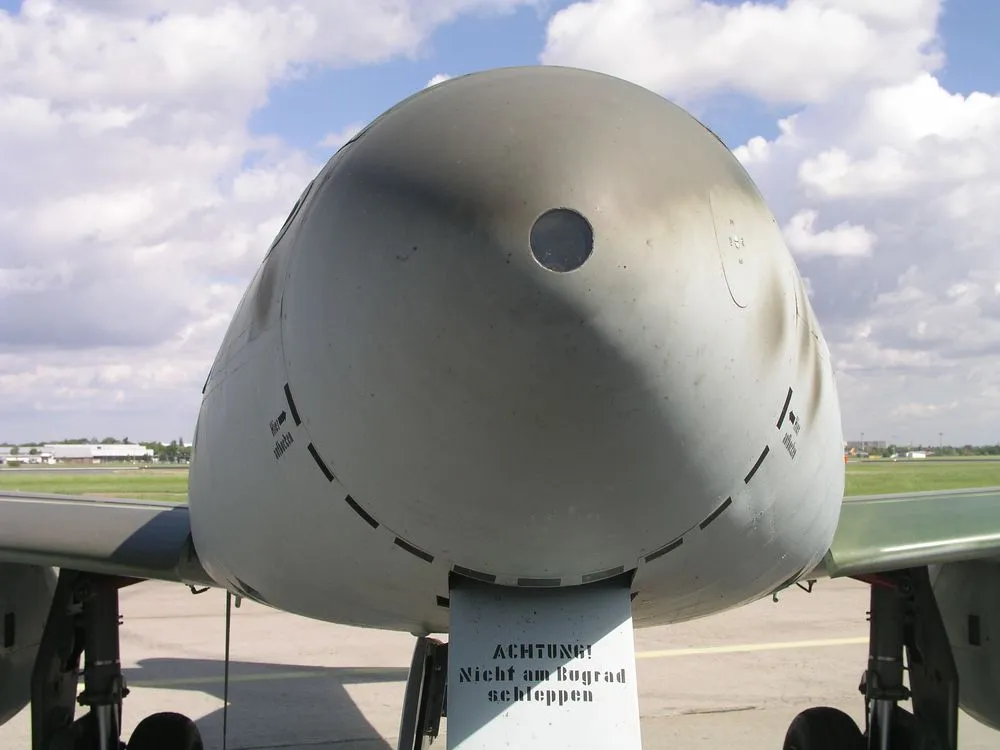
Air particles at a given point move out of the way of an object flying at subsonic speeds, before it actually reaches that point. At subsonic speeds (below about Mach 0.8), wave drag (pressure drag from shock waves) is essentially zero, so designers can prioritise other factors. A rounded nose cone allows air particles to slip smoothly over and around it, keeping frictional drag low and giving the aircraft a large internal volume for the radar antenna and avionics housed inside.
Pointed Nose Cones
Air particles exhibit very different behavior when in contact with objects traveling at transonic speeds or greater. At such speeds, air particles at any given point have little to no time to move out of the way before the object reaches them. The result is a shock wave, leading to very high pressure at the aircraft’s nose, and low pressure behind it.
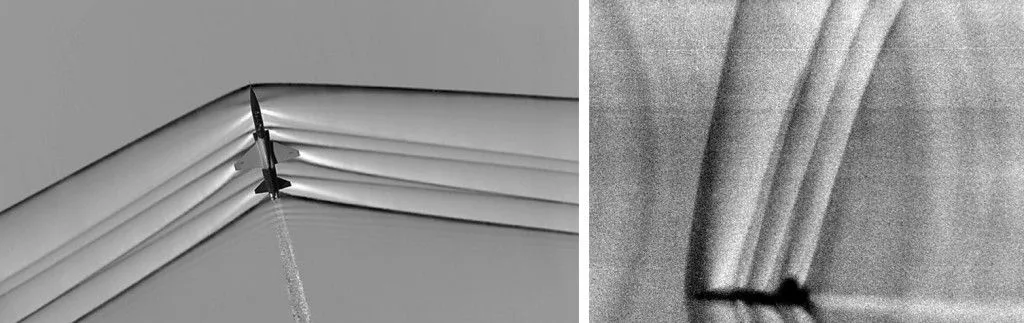
An object stuck between a high- and low-pressure zone tends to move into the low-pressure zone. Similarly, aircraft experiencing shock waves would be pushed into the low-pressure zone, or backwards, in their flight. Shock waves are generated at various points, such as the nose cone, tips of the wings and tail fins of an aircraft. Reduction in the surface area of these reduces the intensity of the shockwave, and consequently the drag. This allows them to travel at supersonic speeds, or even higher. This is why nose cones on fighter aircraft are pointed, in comparison to commercial airlines.
A Note On Friction Drag At Supersonic Speeds
At speeds greatly exceeding that of sound, it becomes necessary to make the nose cone rounder, rather than the ideal spear shape. This is known as bluffing, or blunting, of the nose cone. It can be either truncated slightly to a flat cross-section, or rounded off to a hemispherical tip.
This provides several benefits, the foremost being heat dissipation. Friction drag causes very high temperatures, which can actually melt the nose cone’s tip. Blunting it increases the surface area slightly, without increasing pressure drag, making it easy to lose heat. Other benefits include ease of manufacturing, safety in flight and while handling, and other advantages.
Are Rounded And Pointed Nose Cones The Only Profiles?
Loosely throwing around terms like “round” and “pointed” nose cones makes it easy to overlook the underlying engineering and design. In truth, the shape of various nose cones ascribed to different flying speeds are determined by mathematical equations. These mathematical equations yield a curve that generates a solid of revolution. The following visual succinctly explain a solid of revolution.
Thus, common nose cone shapes are solids of revolution generated by curves like parabolas, ogives, ellipses and even bi-cones. Interestingly, the most aerodynamic shape, a perfect cone, is actually not desirable for supersonic speeds.
Traditionally, nose cones have been designed around these geometric curves. However, modern designs rely on special mathematical equations devised for the reduction of drag.
Nose cone science and engineering is not restricted to aircraft. It plays an integral role in the design of projectiles like ammunition, missiles, vehicles like submarines and even space shuttles!
What’s Actually Inside An Airplane’s Nose Cone?
Here is something most passengers never notice: on a typical airliner, the nose cone is not a solid cap of metal at all. It is a radome, a name stitched together from “radar” and “dome”. Lift it open and you find the dish-shaped antenna of the aircraft’s weather radar tucked inside, scanning the sky ahead for rain, thunderstorms and the turbulence that often hides within them.

That radar sends out microwave pulses in the X-band, at roughly 9.3 to 9.4 GHz (about 9 to 10 GHz), and listens for the echoes bouncing back off raindrops and ice. For those signals to get out and back in, the nose cone has to be radar-transparent. A metal tip would simply reflect the beam, so radomes are molded from composites such as fiberglass, quartz or Kevlar honeycomb rather than aluminum. That is also why a radome is often a slightly different color from the rest of the fuselage and is never coated in thick paint; the FAA treats it as a critical component, because even extra paint layers or trapped moisture can blur the radar picture.
The nose is also a prime target for lightning, so thin metal lightning diverter strips usually run along the outside of the radome. They hand a strike a safe path into the aircraft’s metal skin instead of letting it burn through the composite shell. So the cone you see is really doing two jobs at once: it smooths the airflow and shields the radar that helps the crew steer around bad weather. (We cover the electrical side of that in our piece on what happens when an airplane is struck by lightning in flight.)
Which Nose Cone Shape Has The Least Drag?
If you go hunting for the single “best” nose cone shape, you will come away empty-handed, because there isn’t one. The profile that slips through the air with the least drag depends entirely on how fast the aircraft is meant to fly, which is exactly why this question catches so many people out.

At subsonic speeds (below about Mach 0.8) there are no shock waves, so wave drag is essentially zero and only friction and pressure drag are left to worry about. Here a blunt, rounded or elliptical nose actually comes out ahead. NASA’s Glenn Research Center spells out just how much shape matters: a flat plate has a drag coefficient of about 1.28, while a smoothly streamlined bullet shape falls to roughly 0.295 for the same frontal area. So if a textbook asks which profile produces the least drag at subsonic speed, the answer is the gently rounded one, not the sharp spike.
Once an aircraft breaks the sound barrier, the rankings flip. Now wave drag dominates and slender, pointed shapes pull ahead. The standout is the von Kármán profile, a special case of the Haack series (sometimes written as LD-Haack), a curve worked out mathematically to give the minimum wave drag for a given length and base diameter. Its close relative, the Sears-Haack body, minimizes wave drag for a given length and volume instead. This theory traces back to Theodore von Kármán and to the work of Wolfgang Haack and William Sears in the 1940s. The counter-intuitive part is that a perfect cone is not the optimum; the subtly curved ogive beats it. Only at the very highest speeds does the tip get blunted again, this time to survive the heat, as we saw earlier.
References (click to expand)
- Drag of Blunt Bodies and Streamlined Bodies. Princeton University
- M TOPTAŞ. Effects of Different Nose Cone Designs on Trajectory and .... dergipark.org.tr
- Ask Us - Rocket Nose Cones and Altitude - Aerospaceweb.org. aerospaceweb.org
- A Study on Airflow over a Plane - IJIRSET. ijirset.com
- NOSE CONE DESIGN AND ANALYSIS OF AN AVION. acadpubl.eu
- THE DESCRIPTIVE GEOMETRY OF NOSE CONES - UFPR. The Federal University of Paraná
- Rocket aerodynamics - Science Learning Hub. sciencelearn.org.nz
- Shock Waves - for How Things Fly. The Smithsonian Institution
- Shape Effects on Drag. NASA Glenn Research Center
- AC 20-182A: Airworthiness Approval for Aircraft Weather Radar Systems. Federal Aviation Administration
- Know Your Radome, An Important Structure. Aviation Week Network
- Nose cone design. Wikipedia