Table of Contents (click to expand)
The ketogenic diet pushes your body to burn fat for fuel by capping carbohydrates at just 20-50 grams a day. It can drive real weight loss, but it isn’t for everyone. People with pancreatitis, liver failure, certain fat-metabolism disorders, or who are pregnant should avoid it, and anyone on diabetes medication needs medical supervision before starting.
Imagine that you’ve been eating a lot in recent months, and have put on anywhere between 3-10 kilos, but then you want to lose it all, and FAST! You may choose to go online and look up “how to lose weight?” and there it is! The latest weight loss fad… the ketogenic diet!
In fact, there are even special menus crafted by restaurants so you can easily enjoy your keto-friendly meal without having to cheat on your diet. If everyone’s doing it, the diet must work, right?
Although it might be effective, is this type of diet really for everyone?
Before we dive in, let’s take a moment to understand what a keto diet plan is all about.
What Is The Ketogenic Diet?
Normal scenario – The way our body derives energy in a non-diet situation is very simple. You eat food that primarily consists of 3 macro food groups (carbohydrates, proteins, and fats). For our body to use the food that we eat, these food groups undergo the process of an enzymatic breakdown (digestion), which helps convert carbohydrates to glucose, proteins to amino acids, and fats to fatty acids. This glucose is then absorbed by the small intestine and released into our bloodstream, where it undergoes glycolysis to release the stored energy. The fatty acids are stored in your fat cells and then used when there is not enough glucose in the system.
Ketogenic diet scenario – A ketogenic diet requires you to limit your daily intake of carbohydrates to 20-50 grams (assuming that you’re normally consuming 2000 kcal per day).
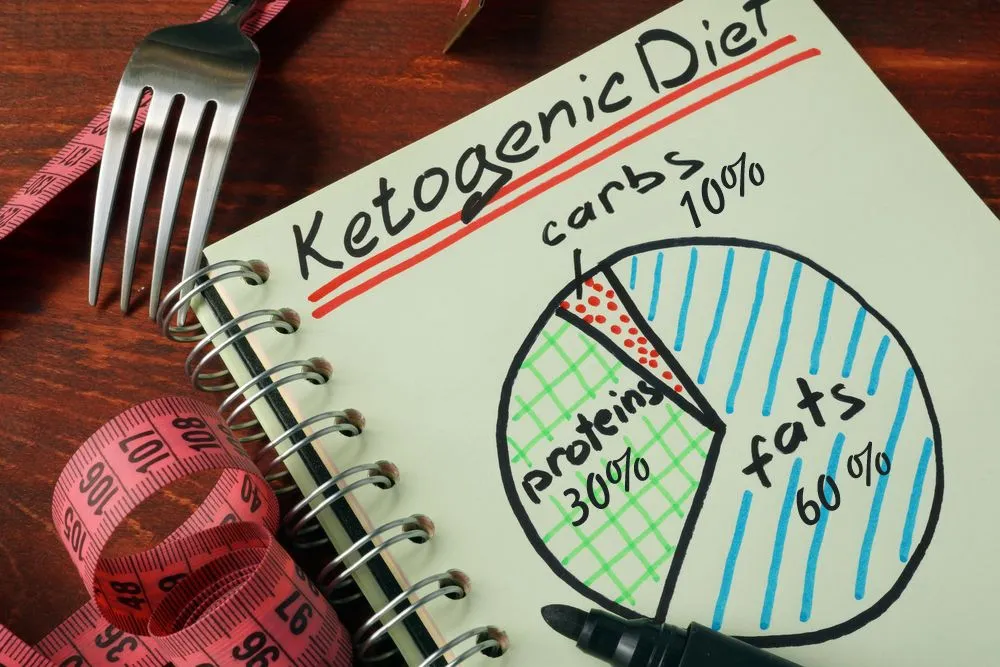
It’s basically a high-fat, medium protein and very low-carbohydrate diet.
Now, when you don’t provide the body with its daily quota of carbohydrates, the body scrambles and looks for all the glycogen deposits in the body to derive the energy it needs. As you continue to maintain your low carb intake and these glycogen deposits deplete, the body comes up with a Plan B for energy production via gluconeogenesis and ketogenesis.
Gluconeogenesis is the body’s inbuilt mechanism for producing glucose from various substances in the liver, but without a daily supplement of carbohydrates in your diet, this process fails to keep up with the body’s requirements, which means that it’s time for Plan C – ketogenesis.
Ketogenesis, or the production of ketone bodies (acetoacetate, β-hydroxybutyrate and acetone), occurs through the breakdown of fats. These ketone bodies replace glucose as a source of energy and the body enters a natural state of “nutritional ketosis”.
Since the driving fuel of your body on this diet are ketones, the name “ketogenic diet” makes total sense. For your body to enter ketosis and start burning fats for energy production, you typically need to keep carbohydrates very low for a few days (often around 2-4).
History, Origin And Types Of Ketogenic Diets

Even though the ketogenic diet has gained massive popularity over the last decade for weight loss purposes, it was first used by Russell Wilder at the Mayo Clinic in 1921 to treat seizure disorders in children. He was also the person who coined the term “ketogenic diet”. This diet continued to be used until the pharmaceutical world came out with anti-epileptic drugs to treat seizures. These days, a number of variants of this diet are used to achieve one’s desired results in terms of weight loss.
- Standard ketogenic diet – A low- carb (10%), moderate protein (20%), high-fat (70%) diet.
- High-protein ketogenic diet – 35% protein, 60% fat, 5% carbs.
- Cyclical ketogenic diet – Alternating between periods of ketogenic and high-carb days.
- Targeted ketogenic diet – Includes additional carbs during periods of intense workouts.
Is The Ketogenic Diet For Everyone?
We all know that a ketogenic diet can work wonders for weight loss (hence the hype!), but it’s definitely not a one-size-fits-all diet.
First things first, it’s a low-carb diet. Imagine not eating bread, rice, and potatoes forever, or limiting their consumption to a measly 10-50 grams per day. This is a very tough ask by any standard, and is not sustainable as a casual lifestyle change.
So, before embarking on the keto journey, think about your efforts in the long term, beyond 6 months!

Like any drug or new ingredient you introduce to your diet, there is a risk of side effects. When you subject your body to significant metabolic changes, such as ketosis, you might sometimes suffer from “keto flu”. The “keto flu” is basically all the symptoms of the flu, induced by the keto diet. Unlike a real flu, though, these symptoms usually appear during the early adaptation phase and tend to settle on their own within days to a few weeks.
Additionally, there is a marked reduction in the consumption of vegetables, fruits, grains, and fiber on this diet, whereas there is more concentration on fat intake. This is interesting, considering that we were likely all taught about “balanced meals” at school. As you can see, the keto diet is certainly more lopsided than balanced! Also, a lower intake of greens and veggies can lead to constipation issues in some people.
Your organs, namely the kidneys and heart, tend to bear the brunt of this strict diet regime.
Additionally, the keto diet ends up altering your thirst mechanism and makes you prone to dehydration. There is evidence that about 3-10% of people who follow the keto diet develop kidney stones. This statistic is not meant to ward you off the diet, but should instead remind you to maximize your fluid intake and watch out for any abdominal pain or signs of dehydration while on your keto journey.
While following this diet, if you remember to incorporate more vegetable-based proteins and fats, chances are good that you will lower your risk for heart issues, as opposed to you consuming red meat or animal-based fats and proteins. The ketogenic diet even helps lower blood sugar levels in diabetic people. However, it can often become a cause of concern if the safe state of nutritional ketosis tips over into ketoacidosis (ketone levels many times higher, enough to turn the blood dangerously acidic), or if the medication of a diabetic patient is not adjusted after they go on a keto diet, as this could cause the patient to experience hypoglycemia (low blood sugar).
This brings us to the heart of the matter: keto genuinely isn’t for everyone. For some people it isn’t just unsustainable, it can be unsafe. Based on clinical guidance, you should avoid the ketogenic diet, or only attempt it under close medical supervision, if any of the following apply to you:
- Pancreatitis (acute or chronic), since a very high-fat diet can worsen it.
- Liver failure, because the liver does the heavy lifting of processing all that fat into ketones.
- Inherited fat-metabolism disorders, such as carnitine deficiency or carnitine palmitoyltransferase deficiency, where the body can’t burn fat for fuel properly.
- Porphyria or pyruvate kinase deficiency, rare metabolic conditions that don’t mix with ketosis.
- Pregnancy, as the developing baby needs a steady supply of glucose.
- A history of eating disorders, given how restrictive the diet is.
- Type 1 diabetes (or anyone on insulin or certain blood-sugar medications like SGLT2 inhibitors), because of the real risk of dangerously low blood sugar or ketoacidosis without careful supervision.
If you have any of these conditions, the answer to “should I try keto?” is to talk to your doctor first, not your favorite influencer.
A Final Word
There can be no final verdict when it comes to the keto diet. Instead, following the mantra of moderation and understanding the needs of your body will keep you safe, while also helping you reap the benefits of this lifestyle shift.
Even though the ketogenic diet has proven to be hugely successful in the treatment of epileptic children, in weight loss for obese people, and in improving blood sugar levels in diabetics, caution must be exercised, especially if you have any other health issues. Lastly, while evidence from short-term studies support this diet, there isn’t enough long-term evidence to conclusively indicate any benefits or dangers.
So, if you wish to embark on such a diet, consulting a nutritionist or a doctor is the best way to figure out if this choice is right for you!
References (click to expand)
- (2002) How Cells Obtain Energy from Food - NCBI. The National Center for Biotechnology Information
- (2021) Ketogenic Diet - StatPearls - NCBI Bookshelf. National Center for Biotechnology Information
- Mohan, V., & Shilpa, J. (2018). Ketogenic diets: Boon or bane?. Indian Journal of Medical Research. Medknow.
- Choi, J. N., Song, J. E., Shin, J. I., Kim, H. D., Kim, M. J., & Lee, J. S. (2010). Renal Stone Associated with the Ketogenic Diet in a 5-Year Old Girl with Intractable Epilepsy. Yonsei Medical Journal. Yonsei University College of Medicine.
- Fung, T. T. (2010, September 7). Low-Carbohydrate Diets and All-Cause and Cause-Specific Mortality. Annals of Internal Medicine. American College of Physicians.