Table of Contents (click to expand)
The sun’s surface (the photosphere) sits near 5,800 K, yet its outer atmosphere, the corona, blazes at one to three million K. This “coronal heating problem” doesn’t break physics: energy is ferried upward by the sun’s magnetic field rather than conducted from the surface. The two leading mechanisms are wave heating (Alfven waves) and frequent, tiny nanoflares from magnetic reconnection.
Our home star is so excruciatingly hot that every second it radiates more energy than human civilization has used in its entire history. And it does this without ever pausing for a breather.
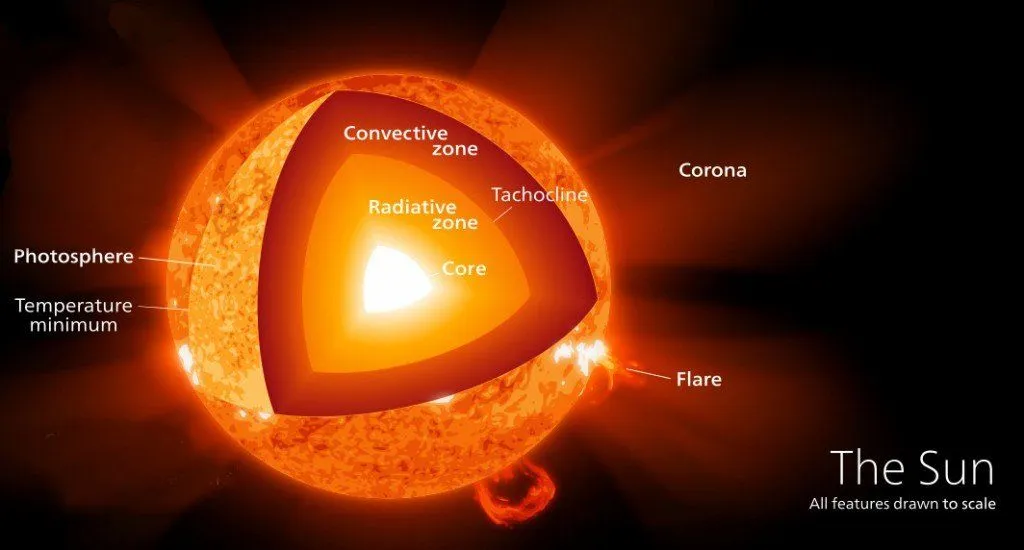
Temperatures at the core of our home star can reach an astounding 15 million Kelvin (about 27 million °F)! At the photosphere (the surface that is visible to us), the temperature is far lower, yet still boasts a mammoth value of roughly 5800 Kelvin (around 5500 °C, or 10,000 °F). Therefore, existence in its proximity, if plausible, would be tremendously distressing due to the unavailability or rather unlikelihood of Popsicles and cold sodas. Also, due to the absence of oxygen and severe cancerous incineration… but most importantly, ice cream.
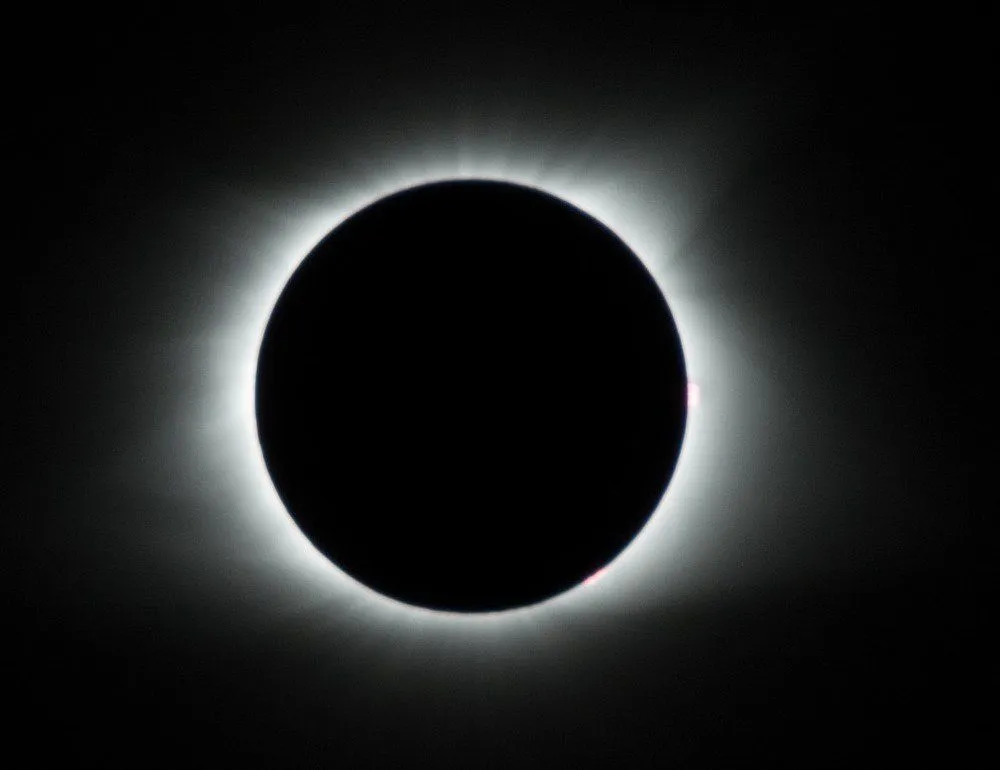
Logically, one would expect that the temperature decreases as we move away from the core, towards the surface, similar to the lessening of warmth as we move away from a writhing flame. Surprisingly, this is not the case. As you climb away from the photosphere, the temperature first dips slightly through the chromosphere (roughly 4,000 to 8,000 Kelvin), then rockets upward across a razor-thin transition region into the corona, the outermost layer of the sun’s atmosphere. The corona simmers at one to three million Kelvin, making it the hottest part of the sun’s atmosphere and a staggering 100 to 400 times hotter than the surface beneath it!
The phenomenon has baffled solar physicists since we first discovered this illogical disparity. To merely say that the phenomenon defies “logic” is an understatement, and somehow denies the sense of dismay it rightfully deserves. At first glance, this oddity looks like it should violate the 2nd Law of Thermodynamics, one of the most fundamental laws of the universe!
That law forbids heat from flowing on its own from the cooler surface to the even hotter atmosphere. To say the atmosphere is hotter than the surface sounds tantamount to the surrounding air being hotter than the bulb itself. Sunbelievable! (Sorry.) The catch, and the reason no law is actually broken, is that the corona is not warmed by heat conducting outward from the surface. Instead, energy is ferried up from the sun’s interior by non-thermal processes (mechanical and magnetic) and only then dumped as heat high in the atmosphere. The puzzle is figuring out exactly how.
The problem is formally known as the coronal heating problem, as the atmosphere is named the corona, Latin for a crown. So what accounts for this bewildering phenomenon? Scientists have managed to come up with a few potential answers. The two most notable of them seem to be the Wave heating theory and the eruption of Nano flares as the result of magnetic reconnections.
Wave Heating Theory
Initially, scientists postulated that the atmosphere was made up of a new kind of element exclusively found in the corona, known as Coronium. However, this is not the case.
The sun is a raging ball of gas, but the gas is not ordinary. The sun’s engine is powered by nuclear fusion, fusing hydrogen into helium at energies fierce enough to strip matter down to its elementary constituents. This molten soup is technically known as plasma. Waves in plasmas are notoriously difficult to understand and describe analytically.
Plasma tends to permit a number of waves, analogous to sound waves in air, through its mawkish form. The most prominent of them are magneto-acoustic waves and Alfven waves. The former, as the name sounds, is a sound wave that is influenced by a magnetic field, whereas the latter is a type of ultra-low frequency radio wave that is modified by the interaction with unconventional matter in the plasma. So, the Sun isn’t just exceedingly hot, but now it’s also incredibly loud? Great.
Both categories of waves can be released by the formation of thermal columns and consequent convection currents that ramble deep in the photosphere. Solar thermal columns are similar to thermal columns found on Earth, where heat on the ground rises towards the air in columns. A heated fluid transfers its heat across different colder regions by means of convection currents by moving in their vicinity.
In this way, the waves can carry energy through the atmosphere before transitioning into shock waves that dissipate the energy as heat.
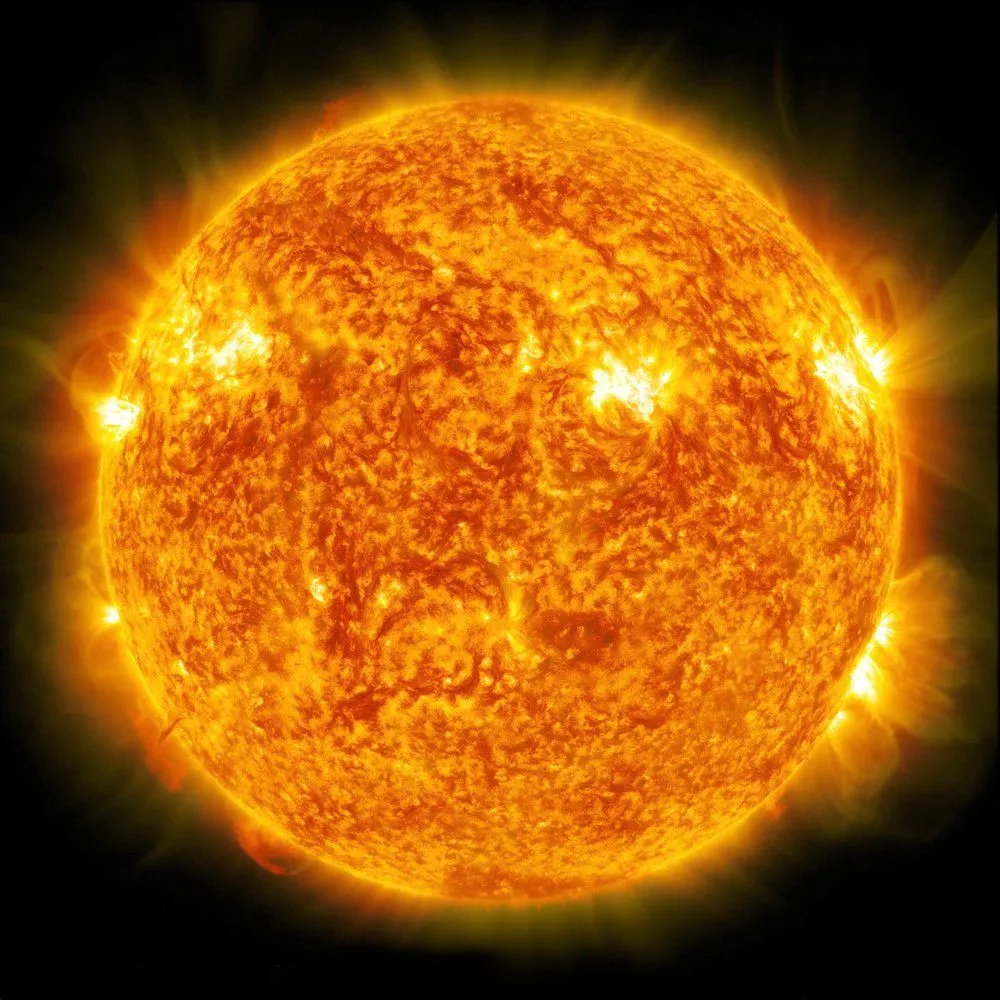
Despite their erratic behavior, researcher Thomas Bogdan and his colleagues have performed simulations and shown that Alfven waves can transmute into other wave modes at the base of the corona, clearing the way for large amounts of energy from the photosphere through to the atmosphere, where it dissipates as heat. However, any substantial or direct evidence to support this hypothesis is yet to be gathered.
The first observation of any such waves propagating into and through the corona was made by the Solar and Heliospheric Observatory space-borne solar observatory around 1997. It was then the first platform capable of observing the Sun in the extreme UV for prolonged periods with astute photometric equipment.
However, the results indicated that the waves only contributed 10% to the estimated temperature of the atmosphere.

Magnetic Reconnection And Nano Flares
The molten plasma consists of a large number of charged ions or individual electrons and protons. Because the plasma is in a perpetual state of haphazard motion, the charged particles are also subject to its wavering. Furthermore, in accordance with the laws of electromagnetism, they will generate varying magnetic fields.
However, unlike regular dipoles, such as my fridge magnet, fields generated in plasmas behave quite unconventionally. They travel with their own set of fields entrapped in the material. The changing fields affect the way charged particles move and vice-versa. Thus, the net effect is a complex, constantly adapting system that is highly sensitive to small variations.

The Sun has a very weak overall magnetic field (average dipole field). However, the solar surface has very strong and tremendously complicated magnetic fields. This complexity renders them susceptible to a very strange process known as magnetic reconnection.
Basically, magnetic reconnection occurs when a magnetic field rearranges itself to move to a lower energy state or when it attempts to get rid of its superior complexity and transition into an inferior, stable state. The amount of energy released as a consequence is formidable. The process is similar to the generation of a photon (light energy) when an electron descends to a lower energy level from a higher one.
Under conventional circumstances, magnetic field lines do not merge or intertwine. However, under some rare conditions, coupled with the gushing flow of ions pressing hard from virtually every direction, field lines can get close to each other and reconfigure their entire structures. As field lines of opposite polarity reconnect, magnetic energy is suddenly converted into thermal and kinetic energy.

This process has been theoretically shown to occur in thin layers of only a few miles thick, yet it can accelerate particles close to the speed of light and initiate gigantic solar flares, the most powerful explosions in the solar system – explosions the size of Earth.
The first evidence came through when the EUNIS (Extreme Ultraviolet Normal Incidence Spectrograph) flew on a 15-minute sounding-rocket flight in April 2013, equipped with an instrument called a spectrograph that can gather information about how much material is present at a given temperature. The spectrograph detected the presence of extremely hot temperatures, but strangely, they occurred in the absence of any colossal solar flares.
It seems that the powerful bursts of energy could be the result of a series of unobservable flares that are too small to be detected. These imperceptible flares are called Nano flares, and they are believed to be the major contributor to the corona’s excessive heat.
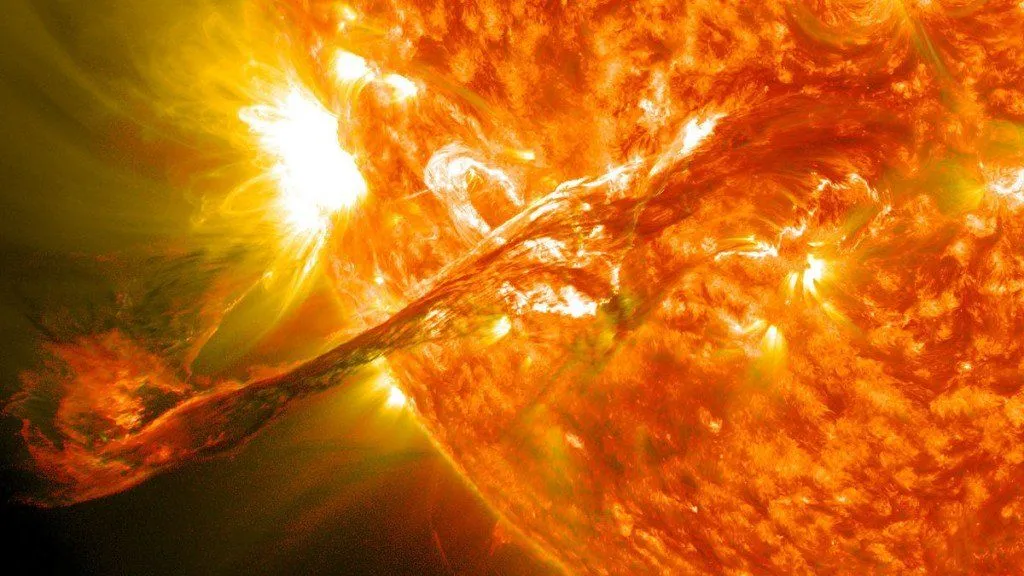
Nano flares can individually reach torrid temperatures of around 10 million Kelvin. They are termed Nano in the sense that they contribute one-billionth of the energy of an explosive solar flare. However, collectively, they can account for the increased temperature.
Because the underlying mechanism (the sun’s magnetic fields) is so complex, scientists can only make sense of them and model their behavior on computers and in simulations. The implications of reconnection have been observed in space, but the actual process has only been directly observed in the lab.
Much of what we know relies on theoretical studies and models, which is why the idea that nano flares are responsible for corona heating is still quite contentious. A richer understanding can be achieved by observing the magnetic reconnections up close. I mean, the worst that could happen is we’d be squeezing our eyes facing the blinding light.

In all seriousness, cracking this would take a probe that whizzes past the Sun fast enough to avoid being mercilessly fried, yet close enough to scoop up useful data. That probe now exists. NASA’s Parker Solar Probe launched in 2018 and, on December 24, 2024, flew just 6.1 million kilometers (3.8 million miles) above the surface at around 692,000 km/h (430,000 mph), the closest and fastest any spacecraft has ever come to a star. By flying straight through the corona, it is measuring the magnetic switchbacks, turbulence, and wave activity that the rival theories predict. Its data has already strengthened the case for Alfven waves as a major source of the heating, while a 2025 finding (a so-called helicity barrier that governs where wave energy turns into heat) suggests the truth is a blend of the mechanisms above rather than a single winner.
Or, you know, we could just ask Superman to do it.
References (click to expand)
- Strong Evidence for Coronal Heating Theory Presented at 2015 TESS Meeting. NASA.
- Solar corona. Wikipedia.
- Magnetism on the Sun - Stanford Solar Center. Stanford University
- Reconnection on the Sun - AAS Nova. aasnova.org
- Arregui, I. (2015, May 28). Wave heating of the solar atmosphere. Philosophical Transactions of the Royal Society A: Mathematical, Physical and Engineering Sciences. The Royal Society.
- NASA’s Parker Solar Probe and the Curious Case of the Hot Corona. NASA.
- Parker Solar Probe Begins Record-Setting Closest Approach to the Sun. NASA Science.