Table of Contents (click to expand)
Advertisers exploit nine cognitive levers summarized in the MINDSPACE framework (Dolan et al., 2010, UK Cabinet Office and Institute for Government): Messenger, Incentives, Norms, Defaults, Salience, Priming, Affect, Commitments and Ego. In practice that means celebrity endorsements, discounts and Buy-One-Get-One offers, social proof, defaults that exploit cognitive laziness, novel packaging, emotional storytelling, free samples, and small commitments that snowball into bigger ones.
Have you ever bought something severely overpriced, but convinced yourself that it was worth it because of the brand name or ordered something on a complete whim, even when you didn’t need it? ‘Free choice’ does not actually exist in our modern age, where media of all types – magazines, newspapers, television, radio, billboards and the Internet – inundate us with advertisements for myriad products. Businesses thrive because of advertisements, which is why advertising and marketing are things that every entrepreneur should focus on. In recent years, there has been a notable increase in research related to the effectiveness of advertisements.
A theory called ‘MINDSPACE‘ was developed by O’Donell et al. (2009) to influence behavior through public policy by observing the trends that successful advertisers use. This compact theory may help explain how advertisers can (and do!) manipulate consumer behavior.
M – Messenger
People on the silver screen, those who have professional authority, and anyone who is well known to the masses have a certain charismatic appeal to them. When these people endorse a product, we as consumers may be convinced about the quality of the product or may be inclined towards buying it, even if only to imitate the sponsor, since we positively identify with these public figures or celebrities.
I – Incentives
This holiday season, there will be a vast number of stores putting up beautiful displays to lure customers in. However, the words that seal the deal for many are ‘SALE!’ and ‘DISCOUNT!’. These words are to humans what flames are to moths! Even more surprising is the consumer tendency to prefer add-ons (Buy 1 Get 1 Free / Buy X and get Y free) even over discounted prices!
Such an unusual preference may be explained with the help of Prospect theory, which states that people think of choice in terms of gains and losses, but not based on the value of final output. An add-on seems like an additional gain, whereas a promotion only feels like a reduction in monetary loss that one will incur due to buying the product, even though the base value remains the same. Gain trumps loss, which is why “Buy 1 Get 1 Free” promotions are so successful!

N – Norms
People have a tendency to conform in some ways in order to be accepted by a desired class of individuals. Intelligent advertisers understand this need to belong and exploit it at every turn. Why do you think people prefer coffee (even though it tastes bitter and nothing like coffee) from an overpriced coffee shop chain instead of a local café that has undeniably better-tasting coffee? The answer is simple: it makes you look cool, so the social elite go to that shop! Advertisers sell you lifestyles that you dream about by making you believe that you need to buy their products!
D – Defaults
Research on how people think indicates that humans are cognitive misers; in other words, we are lazy thinkers. We usually want to take mental shortcuts whenever possible. Our choices reflect this aversion to active thinking and accepting the available or default choices. If a supermarket where you regularly shop only sells you twin cartons of 1 gallon, which far exceeds your requirement and costs you more, you still accept it as unavoidable and buy them. The thought of trying to find another shop that will exactly match your juice requirement is appraised as mentally and physically taxing.
S – Salience
Neuroscience research related to our brain cells’ responses to novel and old information has observed that for novel items/ experiences, our cells respond with greater amplitude than when the same information is presented repeatedly, thereby losing novelty. Any product that promises to have additional features, is presented in new packaging, or has a catchy tag line or jingle is likely to succeed in drawing more attention from buyers than other similar products.

P – Priming
Information in our surroundings is constantly influencing our behavior, even if we don’t realize it. Such unconscious influence is referred to as priming in psychologist jargon. Research conducted on subliminal (unconscious) priming has found, for example, that people can be nudged to drink more water if they are unconsciously primed while performing a task. However, priming will only work if you initially have the motivation to drink (or perform some other task)
In the United States there is no outright federal ban on subliminal advertising. The FCC’s 1974 Public Notice treats subliminal techniques on licensed broadcasters as “contrary to the public interest” and grounds for revoking a broadcast license, and the FTC can pursue specific cases as deceptive under Section 5, but those rules do not cleanly cover cable, streaming, or digital ads. It is also worth flagging that the broader behavioral-priming literature has not aged well. Famous results such as Bargh’s ‘elderly walking’ study failed to replicate (Doyen et al., 2012, PLOS ONE), and after the 2010s replication crisis the consensus is that subliminal cues rarely produce reliable real-world purchase behavior on their own. Where they do nudge behavior, the person already had to be motivated, just as the research above suggests.
A – Affect (Emotion)
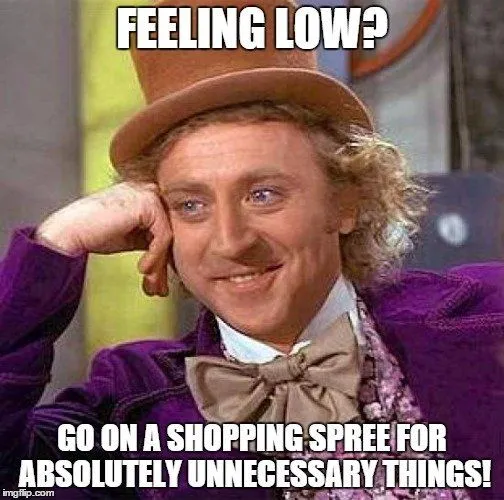
A famous mantra of marketing is: “If there is no demand for a product…create it”. Another way to lure customers is emotional persuasion. Advertisements that appeal to us emotionally are creating an intrinsic motivation that the researchers mentioned to solve the imaginary problem. Businesses that purport to donate proceeds earned when you buy their products to a social cause or ads that show altruistic people using the advertised product target are trying to manipulate the emotional side of customers.
C – Commitment
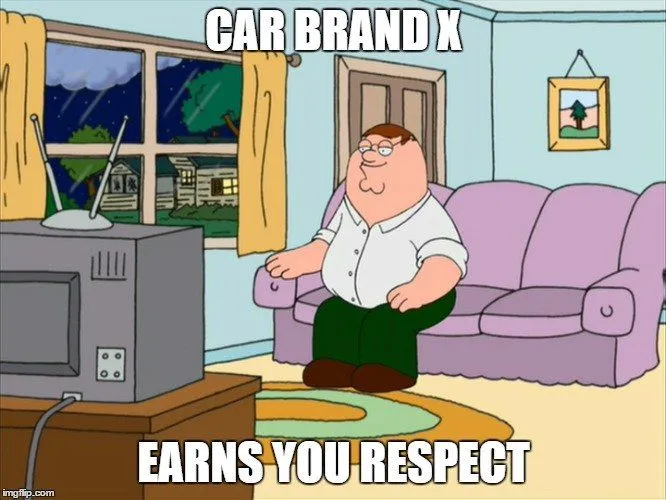
A public commitment incurs greater risks, not just because it costs more, but also because a business’ reputation is at stake when you break it. Another aspect of commitment involves reciprocity. Advertisers use this principle when they distribute samples of a product. When a consumer tests the sample, a non-verbal commitment has been made and an implicit obligation to buy the product is established. People want to be perceived as good members of society who participate in social constructs, so they reciprocate and buy the product! What do you think a test drive of a car is all about?
E – Ego
People believe themselves to be good, considerate and consistent individuals. They may make non-beneficial economic decisions to uphold these beliefs about themselves. Social psychologists Jonathan Freedman and Scott Fraser (Journal of Personality and Social Psychology, 1966) labeled this belief-preserving behavior the foot-in-the-door technique. People initially agree to requests that have smaller costs and then comply later to requests that involve greater economic costs, simply to preserve their consistent self-image.
Brains On Advertisements
Research on brain areas that become active during advertisement viewing states that the areas involved in attention, memory, and emotion are the most active during viewing. Since we use mental shortcuts to choose, anything that grabs our attention, stands out in our memory, or has an emotional appeal will be chosen. Repeated exposure to a product on the market makes it easily accessible in our memory; if something appeals to your emotional side, then it has even more added value, leading you to unnecessarily spend even more money!
Therefore, the next time you feel tempted to buy that ‘out-of-budget’ dress, consciously question yourself about your choice before adding it to your shopping cart!
References (click to expand)
- Dolan, P., Hallsworth, M., Halpern, D., King, D., & Vlaev, I. (2010). MINDSPACE: Influencing behaviour through public policy. Institute for Government and UK Cabinet Office.
- Dolan, P. et al. (2012). Influencing behaviour: The mindspace way. Journal of Economic Psychology, 33(1), 264–277.
- Kahneman, D., & Tversky, A. (1979). Prospect Theory: An Analysis of Decision under Risk. Econometrica, 47(2), 263–292.
- Freedman, J. L., & Fraser, S. C. (1966). Compliance without pressure: The foot-in-the-door technique. Journal of Personality and Social Psychology, 4(2), 195–202.
- Doyen, S., Klein, O., Pichon, C.-L., & Cleeremans, A. (2012). Behavioral priming: It’s all in the mind, but whose mind? PLOS ONE, 7(1), e29081.
- The Public and Broadcasting (subliminal techniques policy). Federal Communications Commission.
- Bringing Dark Patterns to Light. US Federal Trade Commission, 2022.