Table of Contents (click to expand)
Research in Developmental Psychology suggests babies have an early sense of morality. Even preverbal infants appear to tell helpful actions from harmful ones and prefer the “good” character, though replications of this finding have been mixed. So we are likely not born blank slates, but neither are infants full moral judges.
“Santa Claus is coming to town…
He’s making a list
He’s checking it twice
He’s gonna find out who’s naughty or nice
Santa Claus is coming to town”
Ending up on Santa’s “naughty list” was something we all dreaded as children, because it meant no Christmas presents! We spent a lot of effort as children to ‘be nice,’ as instructed by adults.
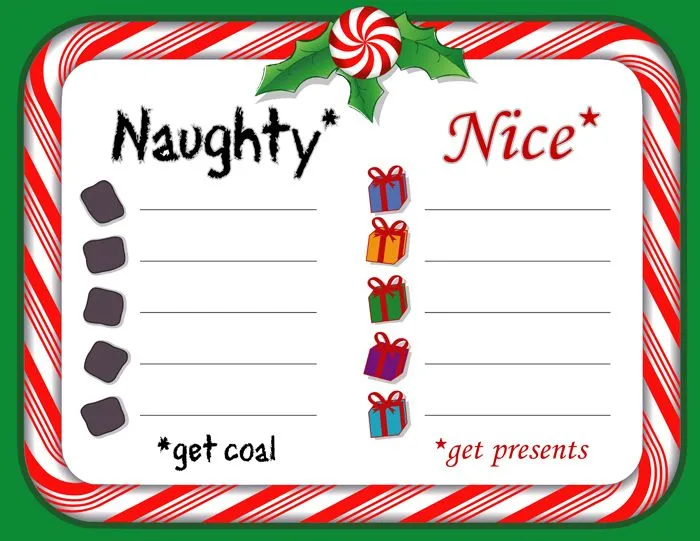
We are fed the idea of good versus bad from a very tender age. Society constantly rewards children for being ‘nice’.
A large chunk of parenting centers on teaching morality (right versus wrong) to a child, but does this mean that all of our morality is completely taught to us? Or are we born ‘nice’?
Empathy And Altruism In Babies
Being social animals, we empathize with our fellow beings and often help them, even when they are strangers or not biologically related to us. Society looks at altruistic behavior positively, and adults are often altruistic. This gives rise to the question of whether we learn to be altruistic as we grow up because it is positively judged by society.
Do babies like to help? Are we inherently empathetic towards others?
Psychologists showed that babies respond by crying when they hear tape recordings of other babies crying out of distress. However, they do not show a similar response when they hear recordings of themselves, older children, or even chimpanzees crying!
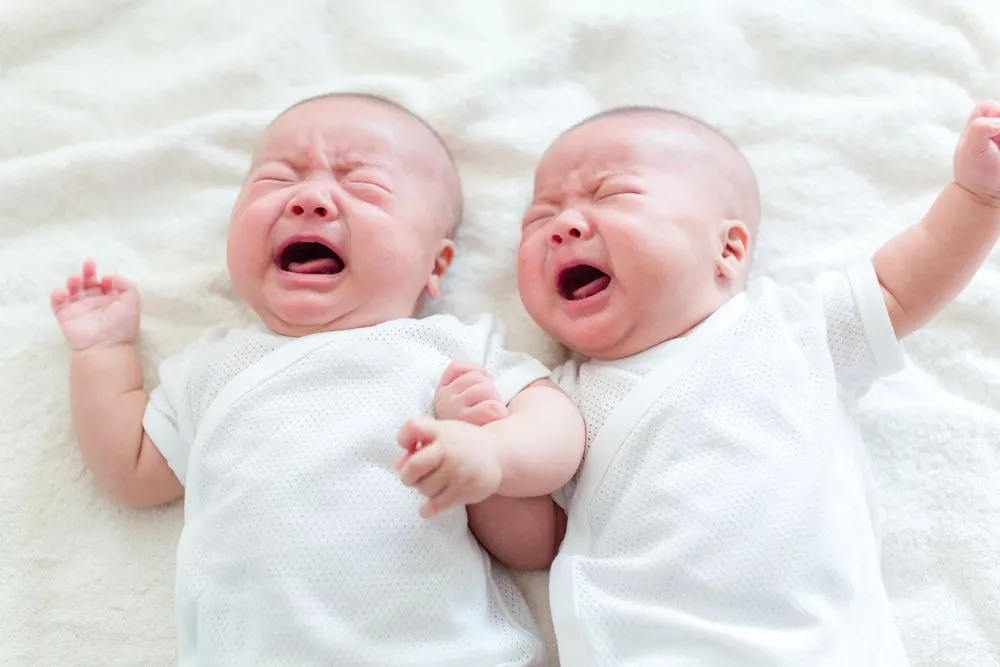
This type of “contagious crying” is an early sign of our empathy for our own species and peers of a similar age. So, we are, without a doubt, inherently empathetic creatures, but are we also innately altruistic?
To answer this, scientists studied infant behavior through an interesting experiment. In this setup, 18-month-old toddlers watched an adult struggle with various tasks, such as trying to pick up an object on the floor that was out of reach or trying to put books into a closed cabinet.
Scientists observed that infants sought to help the adult facing difficulty in a variety of situations. Surprisingly, they helped even before the adult looked at them or verbally asked for help. It is important to note that these babies were not rewarded for helping, nor did they know the adult before the experiment. This means that we are altruistic in nature as infants.
Morality In Babies
The simplest way to define morality is to call it the ability to distinguish between good and bad social actions. Altruistic behaviors are considered good actions.
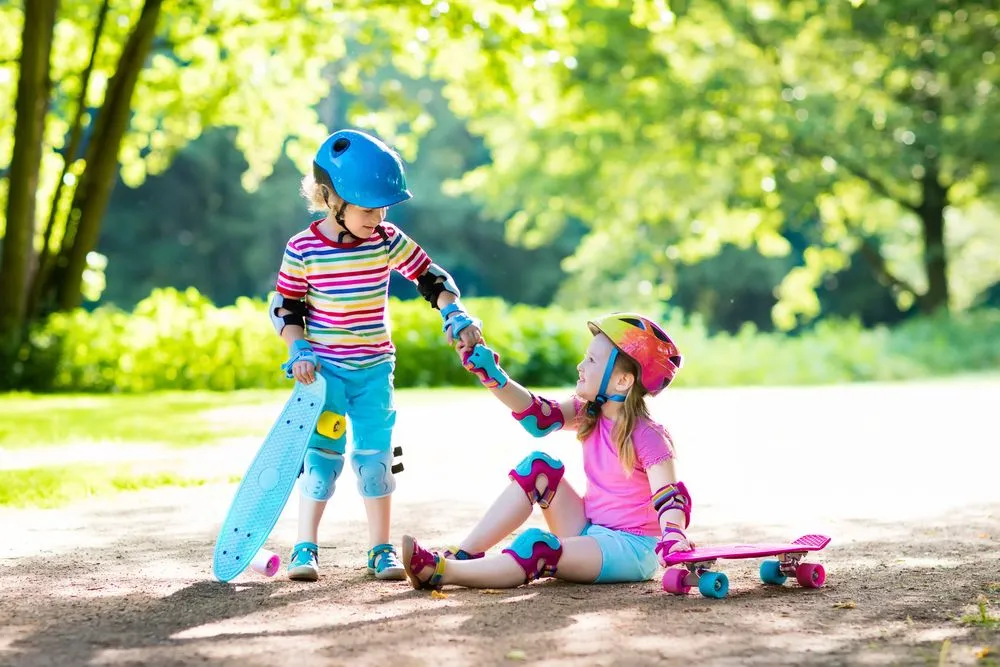
Since scientists discovered that babies are able to be altruistic to others, it made them ask whether babies can judge the actions of a third person as altruistic or not. In simple words, do babies have a sense of morality?
A study that looked at infants at 6 and 10 months of age showed that babies have some sense of morality. In a series of experiments, babies watched characters with googly eyes stuck on them either ‘help’ or ‘hinder’ other characters.
A circle was shown to be trying to climb a hill. A triangle helped/pushed the circle up the hill, whereas a square hindered it by pushing it down. After watching this play, when given a choice, the babies preferred and reached out towards the character that “helped” the circle climb the hill. They consistently preferred a ‘helper’ over both a ‘hinderer’ or a ‘neutral’ character and preferred a ‘neutral’ character over a ‘hinderer’.
This finding suggested that babies have a rudimentary sense of morality and prefer individuals who demonstrate good social actions. But is this behavior present even at earlier ages? When scientists looked at even younger infants of 3 months of age, they reported the same pattern, a negativity bias toward the character that had hindered. By this account, we lean towards ‘good’ social actions and prosocial actors just a few months after birth.
Further studies also suggested that, by around 8 months, infants prefer those who “punish” bad actors and “reward” good actors, hinting that their early social judgments shape how they treat others.
It is worth being careful here, though. The helper/hinderer result is one of the most debated findings in infant psychology. Some labs have reproduced it, while others have not. In the largest test yet, a coordinated multi-lab project called ManyBabies4 ran the hill paradigm with more than 1,000 infants across 37 labs and did not find a reliable preference for the helper over the hinderer. So the honest summary is not that babies are tiny moral judges. Several studies point to an early sensitivity to who helps and who hinders, but the strength and even the existence of that effect are still being argued over.
However, this does not mean that babies possess morality of the same level as adults. For example, one cannot expect a baby to solve the infamous “trolley problem” (where one has to choose between letting a runaway trolley kill five people or pulling a lever to divert it so that it kills just one). This level of ethical and moral judgment is not present in infants.
The scientific evidence presented here only means that the basic foundation for a well-developed sense of morality already exists in infancy.
Conclusion
We often believe that morality is taught entirely through parenting and supervision, but research in Developmental Psychology suggests that the building blocks of morality may already be present early in life. Even infants who haven’t started talking seem to notice the difference between helpful and unhelpful actions, and tend to lean towards the ‘good’ characters, though just how strong and reliable that early preference is remains an active debate. Put it this way: we may well start out leaning towards Santa’s ‘nice’ list!
But why is this ability essential to us?
A sense of morality is imperative for survival as a social being. The ability to distinguish “good” people from “bad” is crucial, as it helps us identify co-operating individuals from those who ‘take a free ride’ when participating in group behaviors, such as food sharing and group hunting. This might have contributed towards the evolution of a sense of morality in humans, since we are social creatures.
Based on scientific evidence, we can say that a more nuanced and well-developed sense of morality exists in adults, but we do understand morality at a very young age, indicating that at some level, it is innate to us. We are not inherently savages… on a fundamental level, human beings are ‘nice’!
References (click to expand)
- (1982) Distress crying in neonates: Species and peer specificity.. The American Psychological Association
- Warneken, F., & Tomasello, M. (2006, March 3). Altruistic Helping in Human Infants and Young Chimpanzees. Science. American Association for the Advancement of Science (AAAS).
- Hamlin, J. K., Wynn, K., & Bloom, P. (2007, November). Social evaluation by preverbal infants. Nature. Springer Science and Business Media LLC.
- Kiley Hamlin, J., Wynn, K., & Bloom, P. (2010, March 10). Three-month-olds show a negativity bias in their social evaluations. Developmental Science. Wiley.
- Hamlin, J. K., Wynn, K., Bloom, P., & Mahajan, N. (2011). How infants and toddlers react to antisocial others. Proceedings of the National Academy of Sciences (PNAS).
- Lucca, K., et al. (2025). Infants' Social Evaluation of Helpers and Hinderers: A Large-Scale, Multi-Lab, Coordinated Replication Study. Developmental Science. PubMed, NCBI.
- Bloom, P. (2014). The moral baby. APA PsycNet. The American Psychological Association.