Table of Contents (click to expand)
Babies start learning before birth. By the last weeks of pregnancy, a fetus can hear and remember its mother’s voice, absorb the rhythm of her native language, and grow familiar with flavors that pass into the amniotic fluid. Newborns even recognize a story or song they heard in the womb.
Most of us are accustomed to the idea that we begin to learn once we are born, when we interact with the world around us. Going to a nursery or some other kind of early education institution is the next major step, which ‘teaches’ toddlers in a specific way to kick-start their learning process. Learning continues when kids start to learn how to address their parents and interact with others. But is that really the progression? Does learning really start after we’re born, or does it start much earlier than that?
In The Womb
You may be surprised to know, quite understandably, that a child actually starts to learn long before he/she enters the world. A child begins to learn while still in the womb of their mother. Scientists have been trying to figure out what it is that children learn while still in the dark confines of their mother’s womb, and during this intensive study, they have found some fascinating results.
A Novel Way Of Testing Behavior
Since infants are not good at… well, pretty much anything, it is a challenge in itself to conduct studies that involve newborns. However, scientists did figure out a way to test a baby’s behavior under certain conditions.
What’s the one thing that newborns are really good at? Sucking. In a classic 1980 experiment by psychologists Anthony DeCasper and William Fifer, babies less than three days old were given a special rubber nipple wired to a recording. When a baby sucked in one pattern, the headphones over its ears played a stranger’s voice; when it sucked in another, they played the voice of its own mother.
It was found that the newborns quickly learned to suck in whatever way brought their mother’s voice back, showing a clear preference for it within hours of being born. Babies also tend to slow their sucking when something grabs their attention and speed it up when they lose interest, which gives researchers a simple yes/no dial into a newborn’s mind. Using that same trick, a separate study found that babies recognized the theme song of a TV soap their mothers had watched daily during pregnancy.
The most striking demonstration came in 1986, when DeCasper and Melanie Spence asked expectant mothers to read Dr. Seuss’s The Cat in the Hat aloud twice a day during the last six weeks of pregnancy. After birth, those babies sucked harder to hear that familiar story than to hear an unfamiliar one, and the preference held even when a different woman read it. In other words, what they remembered was the rhythm and melody of the words they had heard in the womb, not just their mother’s voice.
Hear Me Out!
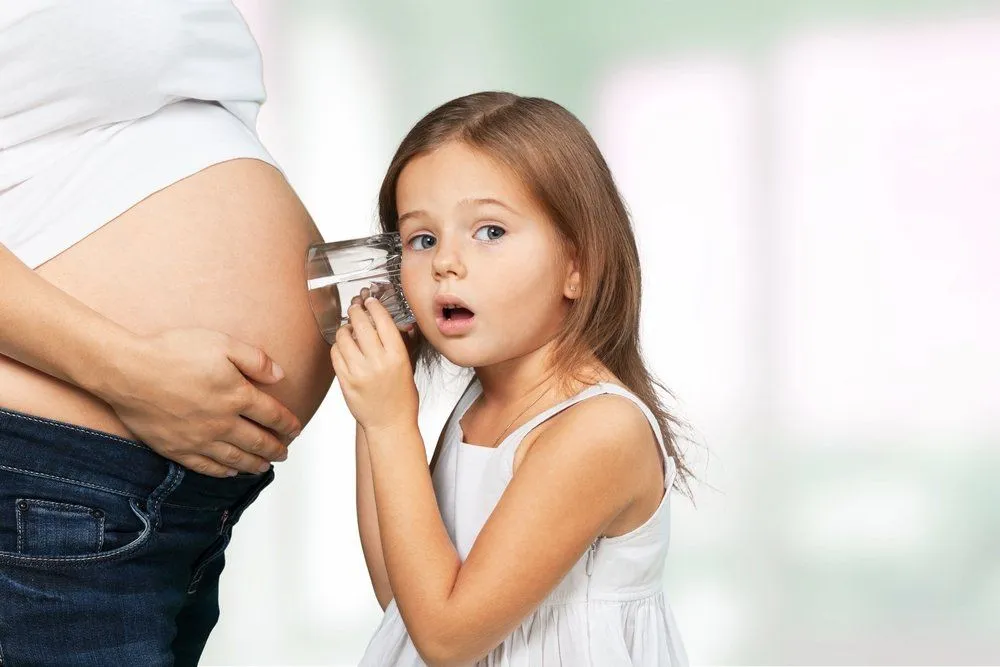
Hearing is the first sense a baby uses to learn, and the mother’s voice is its very first lesson. A fetus starts responding to sound around the midpoint of pregnancy, roughly weeks 18 to 20 (the fifth month), and its hearing grows steadily more reliable through the third trimester. By the final weeks, the brain is wired enough to recognize and remember what it hears. But why is the mother’s voice so much easier to lock onto than, say, the father’s?
It comes down to how the sound arrives. The voice of a father, or anyone else outside, has to travel through the mother’s abdominal wall and then through the amniotic fluid surrounding the baby, which strips out the higher frequencies and leaves the outside world sounding muffled and far away. The mother’s own voice, by contrast, reaches the fetus twice over: once through the air like everyone else’s, and again as vibrations carried directly through her bones and tissues. This bone-conducted route makes her voice louder and clearer than any other, so it becomes the sound the baby knows best by the time it is born.
Babies pick up more than just who is speaking, though. They also tune into how their native language sounds. In one study, French newborns tended to cry with a rising melody while German newborns cried with a falling one, mirroring the natural rhythm of each language. Just days old, they were already echoing the speech patterns they had been steeping in for months.
Taste And Smell
By the time a fetus has spent seven months in the womb, it is already busy tasting and smelling. Whatever the mother eats leaves a faint signature in her amniotic fluid, and since the fetus swallows that fluid all day long, it samples those flavors too. Researchers have confirmed this directly: when expectant mothers ate garlic, sensory panels could smell it in their amniotic fluid. In one well-known experiment, babies whose mothers drank carrot juice during pregnancy were noticeably more accepting of carrot-flavored cereal after birth. That is why a baby often shows an early liking for the very foods its mother ate while pregnant.
That was just the light side of the story. A fetus also has to endure any undesirable living conditions that the mother experiences. For example, the fetus is impacted by the air that the mother inhales, the chemicals to which she is exposed, and even the mood the mother is in during most of her pregnancy.
For these reasons and many others, it is important to ensure that the environment around a mother is upbeat and free from any stress, so that the little one coming into the world is a healthy and happy child!
References (click to expand)
- Of human bonding: newborns prefer their mothers' voices. Science (DeCasper & Fifer, 1980). PubMed.
- While in womb, babies begin learning language from their mothers. University of Washington.
- Prenatal and Postnatal Flavor Learning by Human Infants. Pediatrics (Mennella et al., 2001). PMC, NCBI.
- Newborns' cry melody is shaped by their native language. Current Biology (Mampe et al., 2009). PubMed.
- Babies Listen and Learn While in the Womb. WebMD.