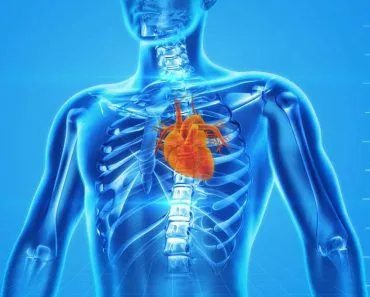
No, your heart does not stop when you sneeze. It can feel like a skipped beat because the surge of pressure in your chest, plus a brief nudge to the vagus nerve, momentarily changes your heart’s rhythm. But the heart never stops beating, and the electrical signal that drives it carries on uninterrupted.
No, your heart does not stop when you sneeze. It can feel like a skipped beat because the surge of pressure in your chest, plus a brief nudge to the vagus nerve, momentarily changes your heart’s rhythm. But the heart never stops beating, and the electrical signal that drives it carries on uninterrupted.
Anatomy Of The Heartbeat
You might recall the following picture of the human heart from your high school biology classes:
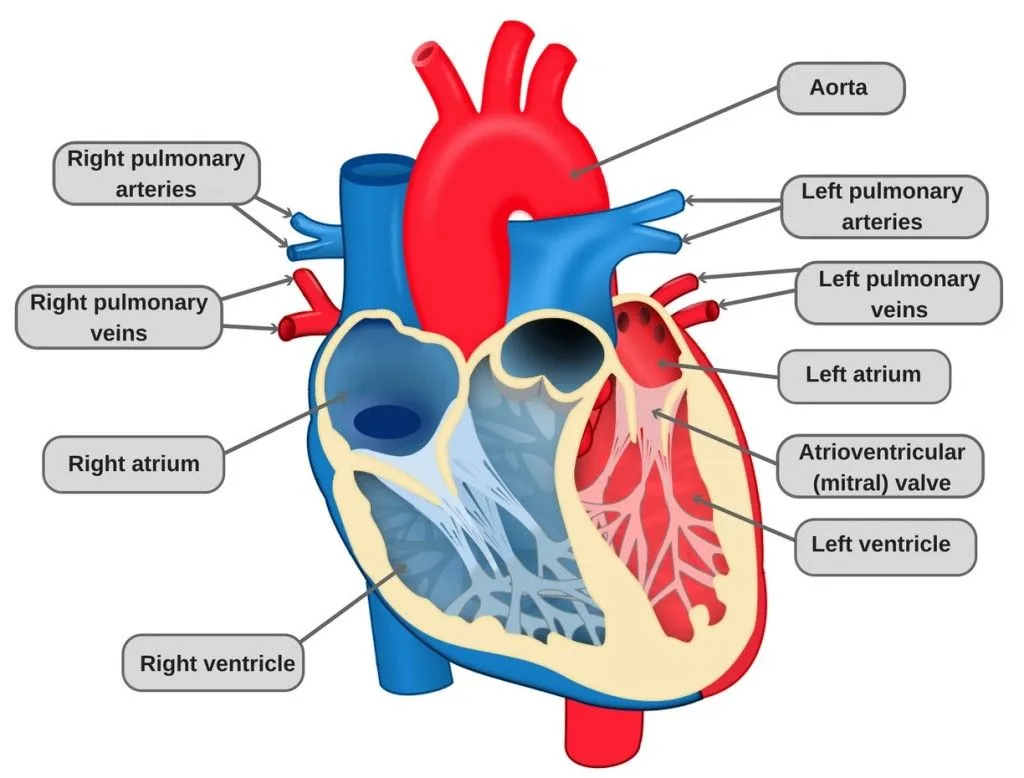
As you can see in the image above, the heart is divided into four chambers: left atrium, right atrium, left ventricle and right ventricle. There’s a valve that connects each atrium to its corresponding ventricle. There are also two more valves, the pulmonic valve and the aortic valve, which complete the entire set. Together, all these valves act like gates that keep blood moving in one direction with every beat. Add up all those beats and the heart pumps roughly 7,500 liters (about 2,000 gallons) of blood each day.
Now, let’s talk about how the heart actually beats. A heartbeat is the result of a small electric current produced by the cardiac conduction system, which, in simple words, can be considered the electrical system that runs the heart.
A heartbeat is stimulated by an electric impulse that travels down a certain pathway through the heart. The impulse starts in the sinoatrial node or SA node (also known as the heart’s natural pacemaker), which is a small bunch of specialized cells found in the right atrium. This impulse spreads through the walls of the atria and makes them contract, which consequently pushes blood into the ventricles.
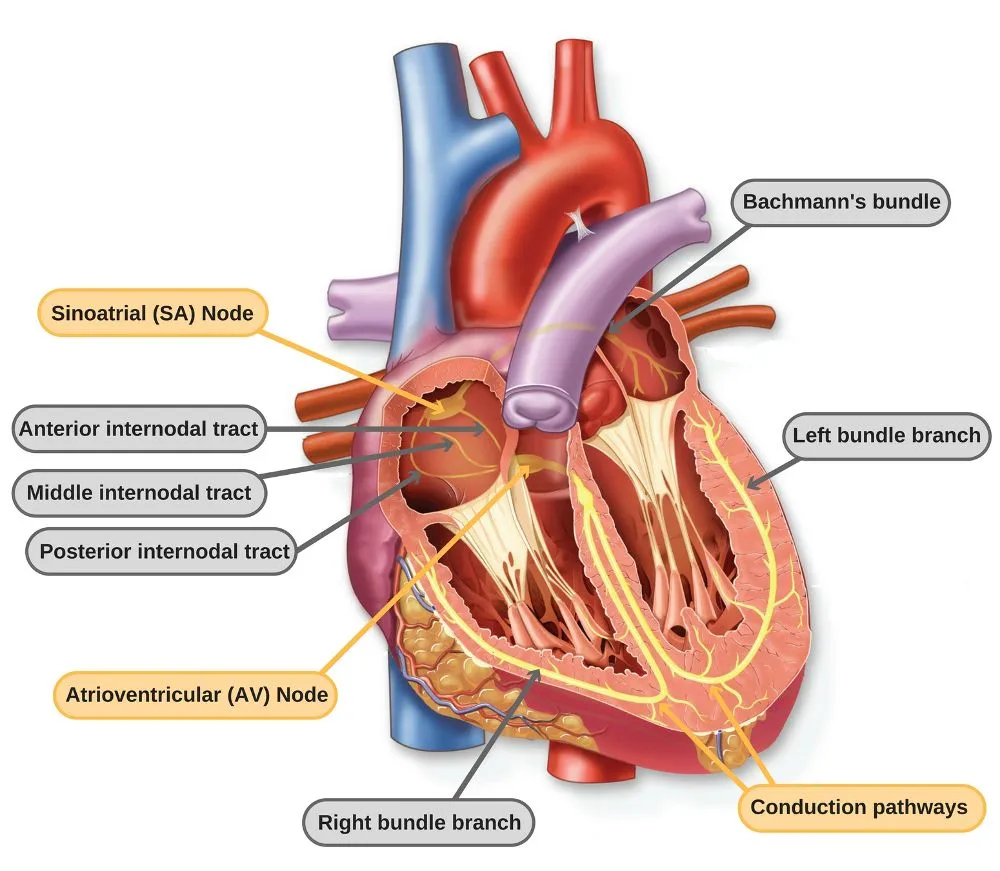
Before the electrical impulse reaches the ventricles, it passes through the atrioventricular node (or AV node). This is actually a cluster of cells between the atria and ventricles that acts like a gate and slows down the incoming electrical signal before it gains entry to the ventricles.
At this juncture, the network of Purkinje fibers steps into the scene. The impulse reaches the muscular walls of the ventricles through this pathway of fibers and causes the ventricles to contract. Consequently, blood flows out of the heart to various organs of the body.
This is where the entire process culminates, but all of that only makes up a single heartbeat.
How Does Sneezing Work?
The purpose of sneezing, or sternutation if you will, is to get rid of mucus that contains irritants (usually foreign particles that enter through the nose) from the nasal cavity.

A sneeze starts its journey when a tickling sensation in the nerve endings alerts the brain that it must expel some irritating, foreign particle from the nasal cavity. In response, you inhale deeply, tighten your chest muscles and close your eyes to let breath and mucus (containing the irritant) come rushing out of your mouth and nose at staggering speeds of up to 160 km/h (100 mph)! Basically, a sneeze is a way to get rid of unwanted stuff from inside your nasal cavity.

How Is Sneezing Related To Heartbeats?
Although it’s true that your heartbeat is affected by a sneeze, it doesn’t actually stop the heart. You see, when you sneeze, the pressure in your chest undergoes drastic variations very quickly, which temporarily changes the flow of your blood.
More specifically, the deep breath you take just before a sneeze, followed by the sudden, forceful exhale, causes a spike in the intrathoracic pressure (the pressure inside your chest cavity), thereby decreasing the flow of blood back to the heart. The heart responds to this momentary change by quickly adjusting its regular beat rhythm.
There’s a second player here too: the vagus nerve. This nerve helps regulate your heart rate, and the burst of chest pressure during a sneeze can briefly stimulate it. That little nudge can slow your heartbeat for a fraction of a second, which is exactly why a sneeze can feel like a skipped beat or a tiny pause. Once the sneeze is over and the pressure releases, blood rushes back to the heart and your rhythm springs right back to normal.
Therefore, while the timing of your heartbeats may shift momentarily during a sneeze, the electrical activity inside the heart continues unaffected. In a nutshell, this means that the heart DOES NOT stop functioning when you sneeze. There’s no skipped beat in the dangerous sense, and certainly nothing to worry about.
Why Does A Sneeze Feel Like A Skipped Beat?
Here’s the part that actually fools your senses. Your heart rate is never perfectly steady to begin with. It naturally speeds up a little when you breathe in and slows down again when you breathe out. Cardiologists call this everyday wobble respiratory sinus arrhythmia, and it’s completely normal, especially in young, fit people and when you’re relaxed.

The driver is once again the vagus nerve. On the inhale, the vagal “braking” on the heart eases off, so the beats come a touch faster. On the exhale, vagal tone returns and the beats slow down. A sneeze is essentially this same cycle cranked up to eleven: a big, sharp inhale followed by an explosive exhale. That exaggerated swing in pressure and vagal tone briefly stretches the gap between two beats, and that longer-than-usual gap is exactly what your body reads as a “skip” or a “pause.”
So when people ask whether your heart skips a beat when you sneeze, the honest answer is that the heart doesn’t drop a beat at all. It simply spaces two beats slightly farther apart for a fraction of a second, then snaps back to its normal pace. Nothing is missing; the rhythm just stretches and relaxes, the same way it quietly does every time you take a deep breath.
Can Sneezing Ever Be Dangerous For Your Heart?
For almost everyone, the answer is a firm no. As Cleveland Clinic cardiologist Dr. Kenneth Mayuga puts it, a true “heart stopping” in medical terms means a pause of at least three seconds, and a sneeze simply doesn’t produce anything close to that. A sneeze may slow your heartbeat for a tiny moment, but it doesn’t cause clinically meaningful pauses.

There is one rare exception worth knowing about. Doctors recognize a category called situational syncope, where a specific action makes someone briefly faint. The forceful exhale of a hard sneeze (or cough) can spike the pressure inside your chest, which momentarily cuts the amount of blood returning to the heart, lowers cardiac output, and reduces blood flow to the brain. The result is a quick blackout known as cough or sneeze syncope. It’s genuinely uncommon: in one study of 236 situational-syncope patients, cough and sneeze together accounted for just 7.2% of cases, far behind triggers like urination. It also tends to show up in people who already have heart or lung conditions, not in healthy sneezers.
A sneeze does not cause a heart attack in a healthy person. But if you ever actually faint, black out, or feel seriously dizzy when you sneeze or cough, that’s your cue to see a doctor and get your heart checked. (For the record, the pressure spikes involved are nowhere near enough to do harm on their own; if you’re curious, we’ve looked at how high blood pressure can actually go.) For everyone else, sneezing is simply your body doing its housekeeping.
Do You Stop Breathing When You Sneeze?
This is the other half-myth that rides along with the heart question, and the answer is more interesting than a simple yes or no. You don’t stop breathing in any worrying way, but there genuinely is a split second where air isn’t moving, and that pause is part of the design.

A sneeze is a tightly choreographed reflex run by a “sneeze center” in the brainstem. First comes a deep inhale. Then your vocal cords snap shut, sealing off the airway while your chest and abdominal muscles squeeze hard against the trapped air. That’s why pressure builds so dramatically. The instant those cords fly open again, the pent-up air blasts out through your nose and mouth, dragging mucus and irritants along with it. For that brief moment of build-up, you really aren’t breathing, in the same way you hold your breath before lifting something heavy.
But it’s measured in fractions of a second, and the moment the sneeze finishes, normal breathing resumes on its own. There’s no danger of “forgetting” to breathe. The reflex that closed your airway is the same one that immediately reopens it, which is also part of why you reflexively shut your eyes and why it’s so hard to keep your eyes open when you sneeze.
References (click to expand)
- The simple sneeze isn’t so simple – UF Health Podcasts - podcasts.ufhealth.org
- Why Does Your Heart Beat? | The Franklin Institute - www.fi.edu
- In the cloud: How coughs and sneezes float farther than you .... news.mit.edu
- Does your heart really stop every time you sneeze? - UCSB Science Line. The University of California, Santa Barbara
- Does Your Heart Stop for an Instant When You Sneeze? - UAMS Health
- Does Your Heart Really Stop When You Sneeze? - Cleveland Clinic
- Redefining respiratory sinus arrhythmia as respiratory heart rate variability - Nature Reviews Cardiology (PubMed)
- The triggers of situational syncope and their distribution - PMC, NCBI
- Sneezing reflex is mediated by a peptidergic pathway from nose to brainstem - PMC, NCBI