Fingerprints are remarkably sturdy. They form in the womb around the 17th week of pregnancy and then stay essentially the same (same loops, whorls and arches) for the rest of your life, just scaling up as you grow. They can’t really be “changed” without extreme measures (and the skin usually regrows the original pattern anyway), though things like old age, heavy manual work, burns, certain skin diseases, and even some cancer treatments can temporarily blur or flatten the ridges.
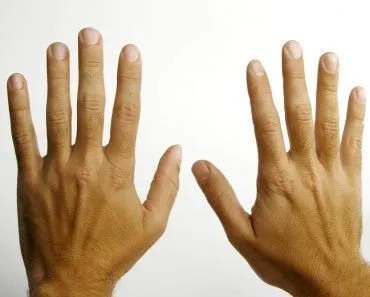
Fingerprints are like a natural identity card that every human possesses. Did you know that even identical twins do not have the same fingerprints? The loops, whorls, and arches on the top of our fingers are unique enough to be considered proof of identity. Fingerprints have been accepted as courtroom evidence for over a century. The first British conviction based on fingerprint evidence came in 1902 (R v Castleton), and the first US one in 1911 (People v. Jennings), thanks to their uniqueness and permanence. In the last century, countless crimes have been solved solely by matching the criminal’s fingerprints to those found at a crime scene.
Most of your favorite crime shows end with the accused being arrested by matching his fingerprints with those already on the database. The use of fingerprints in crime fiction has kept pace with their use in real-life detective work. Sir Arthur Conan Doyle wrote a short story about his celebrated sleuth Sherlock Holmes that features fingerprints very prominently.
One of his works, “The Norwood Builder,” involves discovering a bloody fingerprint that helps Holmes expose the real criminal and free his client. In short, fingerprints have proven to be an extremely reliable source of information over the years.
The question is, do we inherit them for the complete duration of our existence, or do they change as we age?
Can You Change Your Fingerprints?
The short answer is… No, fingerprints do not change over time, but there is a catch: they do not change as we grow old, but they can be affected by certain external conditions.
A person’s fingerprints usually form in the 17th week of pregnancy. These prints are set in stone before we are even born. As a person grows, the prints get bigger while retaining the same pattern. Essentially, the prints just scale up gradually.
What Affects The Fingerprints?
Remember, fingerprints are permanent, but they can be affected by the following circumstances:
Old Age
Although fingerprints do not change with age, it can be more difficult to capture them in older people. This is because the skin loses elasticity with age, and the patterns become less prominent, especially due to the thickening of ridges and furrows.
Specific Jobs
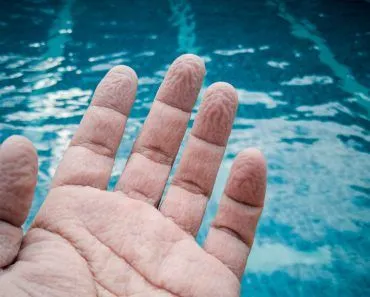
Construction workers, especially bricklayers and people who often wash dishes by hand, lose some details in their fingerprints. Once they stop these activities, the ridges will grow back. People who work with chemicals such as calcium oxide can also lose some of the details in their fingerprints. However, once such activities are stopped, the worn-out patterns tend to grow back over time. In other words, even in such cases, the change in the appearance of fingerprints is only temporary.
Diseases
Certain skin diseases destroy the dermis and epidermis of the skin. Consequently, it becomes challenging for fingerprint recognition systems to recognize the prints of these individuals.
Adermatoglyphia
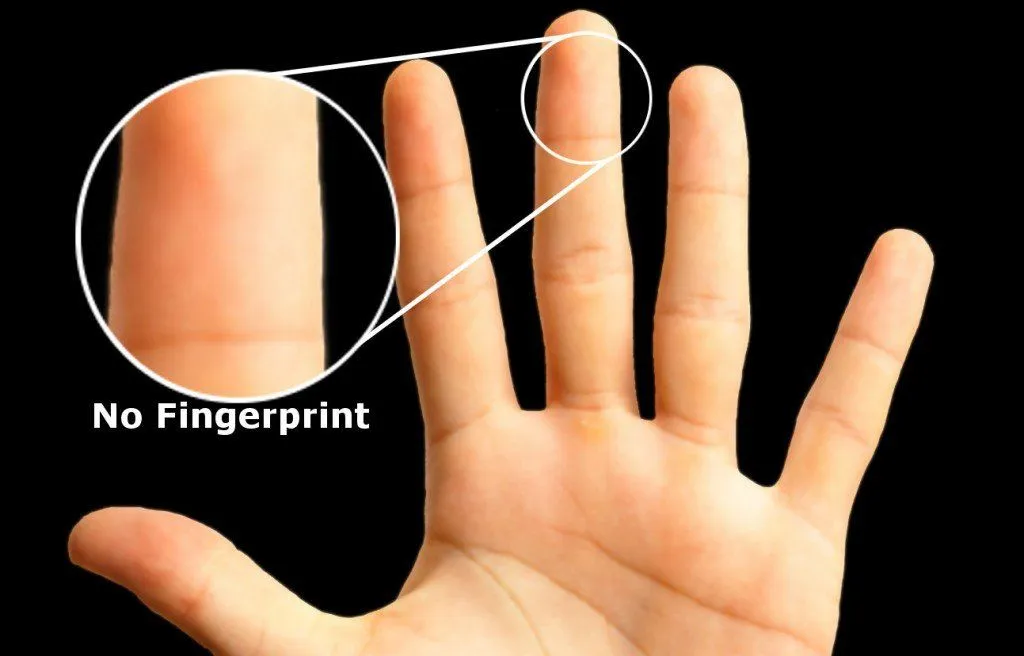
Adermatoglyphia is a sporadic genetic disorder that causes a person to have no fingerprints. People with this disorder have completely smooth fingertips, palms, toes, and soles.
Cancer
In rare cases, cancer treatment can also cause you to lose your fingerprints. In 2008, a Singaporean man was detained at an airport for a routine fingerprint scan. However, it turned out that he had none. He was on chemotherapy to keep cancer in his head and neck in check. As it turns out, a drug called capecitabine had given him a moderate case of something known as hand-foot syndrome, which can cause swelling, pain, and peeling on the palms and soles of the feet, and apparently the loss of fingerprints.
Cuts And Burns
Cuts and burns that go deeper than the epidermis can also leave scars that permanently alter the fingerprints.
Historically, there have been numerous cases where criminals have tried to alter their fingerprints to get away with their crimes.

Can You Burn Your Fingerprints Off?
In one such popular case, John Dillinger, a gangster in the 1930s, tried to destroy his fingerprints by burning his fingertips with fire and acid. However, the technique backfired, as the change was only temporary, and the skin regrew after a while, with his fingerprints still intact.
The amazing thing is that damaged skin can reproduce cells to form the fingerprints exactly as they were before they were damaged unless the cut penetrates the dermis.
It’s worth adding a 21st-century caveat: forensic fingerprint matching has come under sharper scientific scrutiny in recent years (notably the 2009 US National Academy of Sciences report and the 2016 PCAST review), with reviews flagging that expert examiners do make errors and that "individuality" of prints is more probabilistic than once assumed. Modern systems now increasingly pair human experts with machine-learning matchers to reduce that error rate.
How Do Fingerprints Form, And Why Don't Identical Twins Share Them?
Fingerprints are not stamped on at birth; they are sculpted in the womb. Small cushions called volar pads swell up on the fingertips early in pregnancy and then gradually flatten, and as the skin is stretched over them, the ridge pattern is laid down along the boundary between the outer skin and the deeper skin. According to the US National Library of Medicine, the ridges begin developing in the third month of pregnancy and are fully formed by the sixth month. Once the pattern is set, it never restarts; it simply enlarges as your hand grows, which is precisely why your fingerprints do not change as you age.

So if the broad pattern is built before birth, why don't identical twins, who carry the same DNA, end up with the same prints? Because genes only sketch the outline. Your DNA influences the basic size, shape, and spacing of the ridges, which is why family members often fall into the same broad pattern type (more arches, more loops, or more whorls). The fine detail, though, the exact spot where each ridge ends or forks, is shaped by the random conditions each fetus meets in the womb: its position in the uterus, blood flow, the precise timing of skin growth, and even the length of the umbilical cord. No two fetuses experience identical conditions, so the small print always differs. A 2023 study in the journal Cell traced this fine patterning to a tug-of-war between a few signaling molecules (the WNT, EDAR, and BMP pathways) that spread across the fingertip in waves, the same kind of self-organizing chemistry that paints stripes and spots on animals.
The upshot is that no two people, identical twins included, have ever been found to share a fingerprint, and even your own ten fingers each carry a different pattern.
Do Fingerprints Grow Back The Same After A Cut Or Burn?
This is the part that trips most people up, and it comes down to where the pattern actually lives. The ridges you press onto a glass are only the surface of the story. The real blueprint sits one layer down, at the boundary where the outer skin (the epidermis) meets the deeper skin (the dermis). That wavy junction is studded with tiny pegs called dermal papillae, folded into the exact shape of your loops, whorls, and arches.

Your epidermis is constantly wearing away and being rebuilt from beneath. The cells that do the rebuilding, the mitotically active stem cells of the basal layer, sit directly on top of those dermal papillae and copy their shape as they push new skin upward. So as long as the deeper template survives, every fresh batch of skin emerges with the same ridge pattern. That is why a scrape, a paper cut, a shallow blister, or a peeling first-degree burn vanishes within days or weeks, and the print returns exactly as it was.
The pattern is lost for good only when an injury reaches deep enough to wipe out the dermal papillae themselves. As the dermatology reference DermNet notes, damage to fingerprints is usually reversible because it is "relatively superficial," but "permanent scarring can occur with deep lesions." A full-thickness burn or a wound that slices well into the dermis cannot be rebuilt to spec, so the body patches the gap with featureless collagen scar tissue, and a smooth scar carries no ridges. This is the catch the gangster John Dillinger learned the hard way (see above): his fire and acid only reached the surface skin, so his prints simply grew back. Ironically, a permanent scar becomes its own identifying mark, so it does not help anyone disappear.
The natural identity given to us in the form of fingerprints is actually quite solid. You may lose your driver’s license, unique identification card, passport, or other forms of identification, but fingerprints are forever!
References (click to expand)
- Fingerprints change over time, but not enough to foil forensics. sciencemag.org
- Can You Lose Your Fingerprints? - Scientific American. Scientific American
- J Feng. Fingerprint Alteration - MSU CSE. Michigan State University
- (2005) Fingerprint formation - Arizona Math. The University of Arizona
- Are fingerprints determined by genetics? MedlinePlus Genetics. US National Library of Medicine
- Fingerprints. DermNet
- Anatomy, Skin (Integument), Epidermis. StatPearls. NCBI Bookshelf
- Glover et al. The developmental basis of fingerprint pattern formation and variation. Cell (2023)