Table of Contents (click to expand)
Zebras are black with white stripes, not the other way around. Underneath their fur, their skin is entirely black, and the embryology backs it up: a zebra fetus starts off black and the white stripes only appear later, in the last third of gestation, when certain skin cells stop producing the pigment melanin in selected bands.
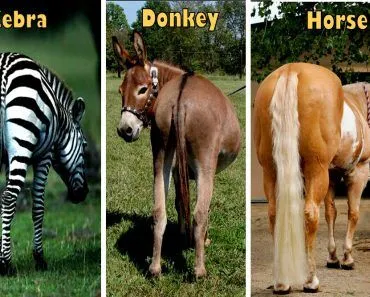
There is no denying that zebras are one of the most exotic and breathtaking horse species, but there are also plenty of questions about these beautiful animals.
1) Are zebras white with black stripes or black with white stripes?
2) What is the purpose of having such a peculiar pattern on their bodies?
Look no further because researchers have finally landed on some answers!
In the Medieval era, people believed that zebras had white bodies with black stripes. The proof of this hypothesis lay in the fact that they had white underbellies. This makes logical sense; white is a lighter color; it would be the base to a darker black.
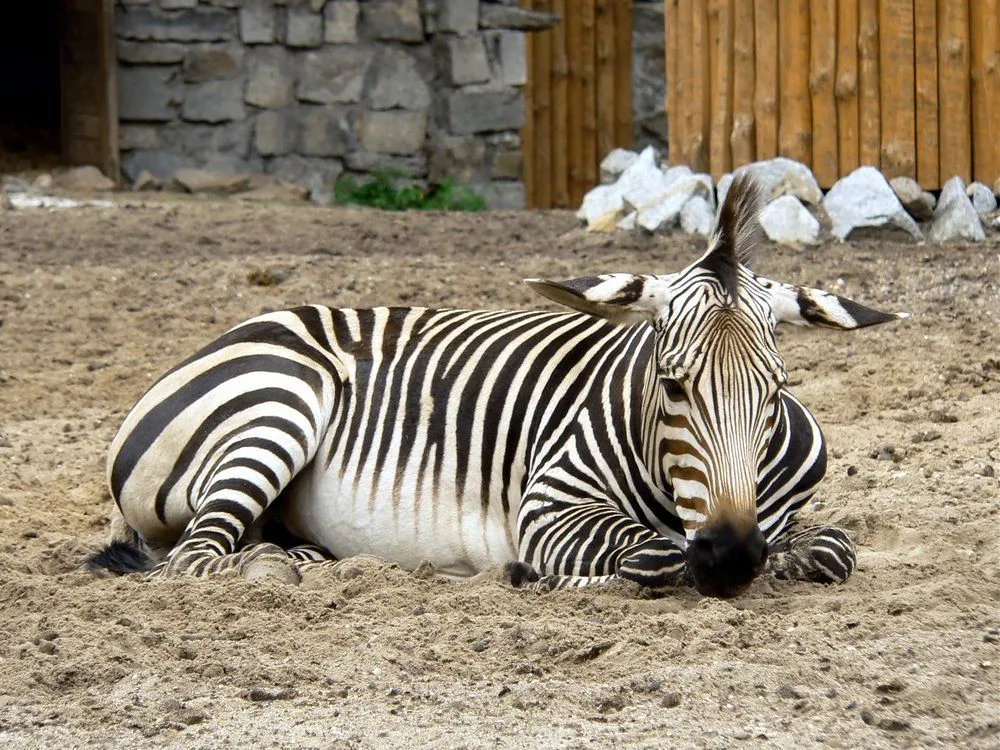
However, recent studies prove the opposite: zebras are actually black with white stripes!
Zebra’s Stripes Are Formed Due To Selective Pigmentation
The stripes are mainly caused by selective pigmentation.
Zebra embryos start completely black. Cells called melanocytes produce the black pigment melanin, which colors the hair and skin of a zebra. After being produced, the melanin will make its way to the skin cells and the hair shaft.
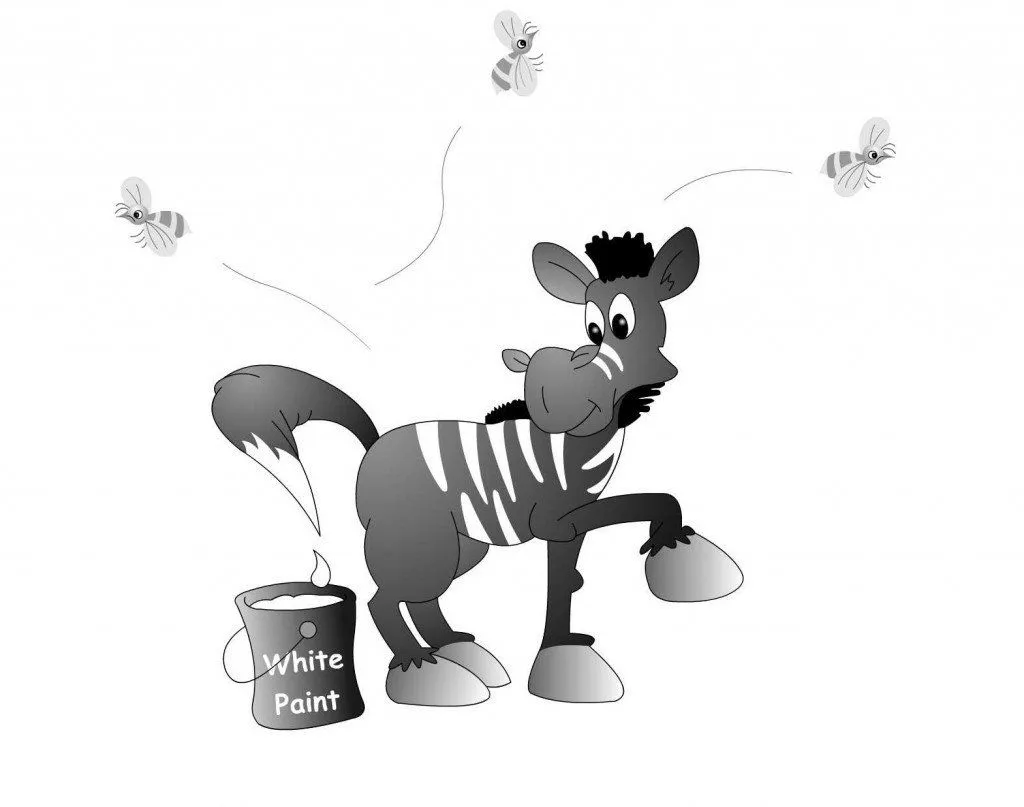
This pigmentation is controlled by the activation or inhibition of certain genes involved in the production and transport of melanin.
In the last stage of embryo development in the zebra, melanocytes in certain areas have their melanin-producing genes turned off, resulting in the white stripes we see in a zebra.
This pattern of pigmentation is called selective pigmentation.
However, the zebra’s skin does not turn white in these regions due to the separate paths that lead to skin color and hair color. Thus, the skin of the zebra remains black, while the fur may be white or black.
Differences in their stripe pattern can recognize different zebra species.
Depending on when these genes are switched on, the stripe patterns form accordingly. Studies have shown that the earlier the melanocyte matures, the thicker the stripes of the zebra. This is an example of heterochrony. Simply put, it is the difference in the timing and duration of certain genes being turned on or off between different organisms.
The Genes That Control Creating White Stripes On Zebras
While we know this much, the molecular pathways and which genes are involved remain a mystery. In 2016, a study published in the journal Nature suggested that the Alx3 gene is involved in forming stripes. Since zebras are difficult to keep in the laboratory, the researchers instead examined the stripe pattern of the African striped mouse.
Alx3 is a transcription factor. A transcription factor is a molecule, usually a protein, that can turn certain genes on or off. It is like a switch master. The cell maintains strict control over how and when the transcription factor can turn its target gene on or off. When the transcription factor finishes its job, the cell calls it off duty until needed again.
Alx3 was found before pigmented stripes. It also suppresses a gene called Mitf, which controls how melanocytes mature, leading to light stripes.
Although these were found in rodents, evolutionarily speaking, it could help scientists determine the purpose of stripes, whether they are on zebras or other creatures!
What Is The Purpose Of A Zebra’s Stripes?
This question doesn’t have a single, straightforward answer; there are several hypotheses:
1) Camouflage
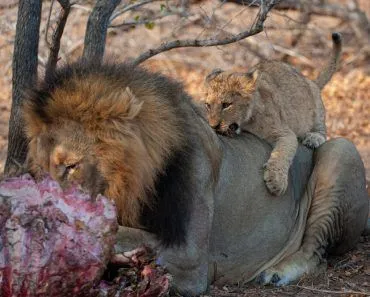
The stripes of a zebra actually serve as camouflage to deter its main predators: lions and hyenas. As the animals herd together, experts believe that the mass of stripes can confuse predators by acting as an optical illusion and effectively merging their figures. Therefore, a herd of zebras can create the optical illusion of a huge mass, thus deterring any predators from taking on the herd alone.
2) Regulate Body Temperature
Zebras spend a lot of time grazing on open plains, which means that they have to endure the intense African heat for long periods of time. Zebras with the most prominent torso stripes generally live in the northern equatorial region of their range. In contrast, those with less prominent torso stripes are more common in their range’s southern, cooler regions. This geographical distribution supports the stripes’ proposed utility as a heat-regulating tool.
Both of the above ideas have been popular theories in the past, but they do not have much evidence to support them.
3) Flies And Other Pests
Tsetse flies are a major problem for animals in tropical Africa. These parasitic flies cause the disease trypanosomiasis in both animals and humans. One hypothesis supported by some evidence is that zebra stripes confuse the flies. A study published in 2014 in Nature Communications found that flies thought to be a common pest for zebras are less likely to sit on black and white striped surfaces.
In 2019, Japanese researchers painted cows black and white and found that fly bites were reduced by 50%. They have proposed this method as a possible prevention technique for spreading disease by these tsetse flies.
And there you have it… a zebra is a black horse with white stripes because they do not want flies to suck their blood!
What Color Is A Zebra’s Skin Underneath The Fur?
Shave a zebra and you would not find a single stripe. Underneath that famous coat, the skin is uniformly black from nose to tail. The pattern you see lives entirely in the hair, not in the skin below it. As geneticist Greg Barsh told National Geographic, in situations where stripes show up in the hair, they are not apparent in the skin.

The reason comes down to two separate pigment systems. The color of the skin and the color of the hair are built along different developmental pathways. So when melanin production is switched off in a band of hair follicles, those follicles grow white hair, but the skin sheet beneath them keeps its pigment and stays black. The 2016 striped-mouse study traced this switch to the Alx3 gene, which represses the master pigment-cell regulator Mitf in the future light stripes. In short, a white stripe is not the animal losing its color; it is a local pause in the hair, sitting on skin that is black all the way across.
Are Zebras Born With Stripes, And What Color Are They?
Yes, zebras are striped from the moment they are born; a foal does not grow into its pattern later in life. What changes is the color of those stripes. Newborn foals come out with brown and white stripes rather than the crisp black and white of an adult.

As keepers at the Wildlife Conservation Society’s Bronx Zoo describe it, zebras are born with mostly brown stripes, and as the foals grow, the brown gives way to the traditional black and white. The dark bands simply pack in more melanin over the early months until they reach the deep black we recognize. Foals are highly precocial too, standing and walking soon after birth, which keeps them moving with the herd while the adult pattern is still darkening in.
Is Every Zebra’s Stripe Pattern Unique?
No two zebras carry exactly the same pattern. The arrangement, width and spacing of the stripes vary from one animal to the next, which makes a zebra’s flank work rather like a fingerprint. Each individual has its own unique configuration of stripes.

Conservationists put that individuality to work. In 2011, a joint project between Princeton University and the University of Illinois at Chicago built StripeSpotter, a free, open-source program that turns a single photograph of an animal’s flank into a digital "stripecode," much like a barcode. Field researchers upload a new photo, the software matches its stripecode against a database, and an individual zebra can be recognized and tracked without ever tagging or sedating it. So while every zebra follows the black-with-white-stripes rule, each one wears it a little differently.
References (click to expand)
- How do Zebras get their strips? - UCSB Science Line. The University of California, Santa Barbara
- Zebra Stripes Not for Camouflage, New Study Finds | UC Davis. The University of California, Davis
- The function of zebra stripes - wfcb.ucdavis.edu:80
- Kojima, T., Oishi, K., Matsubara, Y., Uchiyama, Y., Fukushima, Y., Aoki, N., … Kino, K. (2019, October 3). Cows painted with zebra-like striping can avoid biting fly attack. (J. J. Loor, Ed.), Plos One. Public Library of Science (PLoS).
- The Surprising Reasons Why Animal Skins Are So Colorful. National Geographic.
- Mallarino, R., et al. (2016). Developmental mechanisms of stripe patterns in rodents. Nature. NCBI PMC.
- Caro, T., et al. (2014). The function of zebra stripes. Nature Communications. PubMed (NIH).
- Zebras: Born Black, White…and Brown? Wildlife Conservation Society (Bronx Zoo).
- The High-Tech, Humane Ways Biologists Identify Individual Animals. Smithsonian Magazine.