Hair outlasts almost every other soft tissue after death because it is made of keratin, a tough protein cross-linked by disulfide bridges that very few microbes can digest. It also does not keep growing; corpse hair only appears longer because the surrounding skin shrinks as the body dries out. Over time, however, hair colour does shift: eumelanin (the black/brown pigment) oxidises and fades faster than pheomelanin (the red pigment), so old hair often turns reddish or rust-coloured before eventually decomposing.
Zombies, mummies, vampires… these undead ghouls have created several myths in pop culture about what happens to life after it dies. However, what really happens to our mortal bodies after our hearts stop beating?
You know the general process: after the decaying process is largely over, our bodies begin to shrivel up. What remains are the dry and tough parts – bones, nails and perhaps most interestingly… hair!
Before we jump into what happens to hair after death, let us look at the biology of hair.
What Is Hair Made Of And How Does It Grow?
In life, hair growth is directly connected to the blood vessels at the base of each hair follicle. These blood vessels feed the hair roots to keep them growing and break through the skin. By the time the hair reaches the epidermis (the outer surface of the skin), the cells within that hair are no longer alive. That’s why it doesn’t hurt to cut your hair… it’s basically already dead!
The main component of the hair is keratin, a protein that does not contain water and is also completely insoluble. The reason for this insolubility is the amino acids – the building blocks of protein – that make up the hair and the hair structure of the hair, which is linear and tightly coiled. This makes hair one of the strongest biological substances in nature.
Does Dead Hair Grow?
One idea that has captivated our collective imagination is that your hair will continue to grow after you die! However, this is untrue.

This myth exists because it really looks like the hair on a corpse grows by itself. However, this phenomenon can be attributed, quite simply, to good ole relativity. Considering that the adult human body is around 60% water, it is no surprise that corpses shrink considerably as they lose moisture. Compared to its now shrunken appearance, the corpse’s hair seems to have grown longer.
Does Hair Decompose And How Long Does It Take?
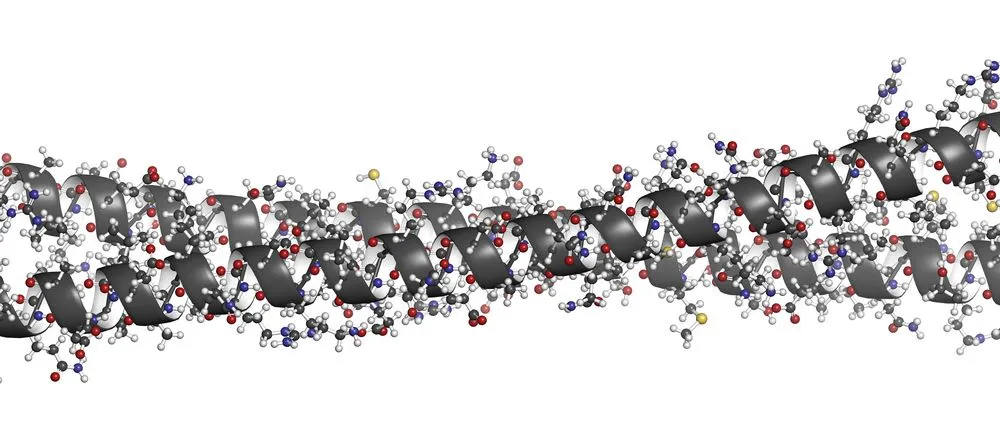
Hair outlasts most other soft tissues due to the insoluble and stable structure of keratin. Its chemical composition makes it difficult for proteolytic enzymes – enzymes that break down proteins – to break down hair. In particular, hair keratin is especially rich in cysteine (around 17% by weight in alpha-keratin), whose sulfur atoms form strong disulfide bridges between adjacent protein chains. Those cross-links, along with the tightly coiled helical structure, are what make keratin so resilient and so resistant to breakdown. Very few microbes such as the fungus Alternaria spp or animals such as the carpet beetle can digest hair.
Collagen, which makes up bones and connective tissue, is another protein that resists decay. It has a similar composition and structure to keratin. They both have amino acid compositions that lend to their strength (although they have several differences in their amino acid composition). Both are linear and tightly coiled proteins with multiple polypeptide subunits.
This is why hair is one of the few organic relics of death.
But nothing lasts forever, and hair and bones eventually disintegrate. What’s different is how quickly the decomposition process takes place.
The burial environment influences the rate of decomposition to a considerable extent. Soil, moisture, chemicals and the animals found in the environment can either increase the decomposition rate or preserve the corpse. Dry and arid conditions like those found in deserts are excellent preserves of hair, as microbes do not thrive in such conditions. However, in most normal soils, both hair and bone will eventually degrade after a few years.
Both collagen and keratin have similar chemical secrets to resisting decay. This has spawned a line of research where labs are trying to synthesize these fibers to create stronger yet eventually biodegradable alternatives to plastics.
Does Hair Stay On A Skeleton?
Picture the skeleton in a museum case or a crime drama. It is usually scrubbed down to bare bone, but in the real world the dead often hold onto their hair long after everything soft has vanished. Because keratin shrugs off the enzymes and microbes that dissolve skin and muscle, hair is one of the very last parts of the body to give in, as we saw when we looked at how slowly hair decomposes. As a body skeletonizes, the scalp can rot away while clumps of hair stay matted to the skull or settle into the soil of the grave.

That stubbornness turns hair into a favorite clue for investigators. Forensic scientists group hair with fibers, soil and pollen as classic trace evidence, precisely because strands shed at the slightest touch, pass from person to person, and linger on a body or at a scene long after death.
It also lets the dead speak across thousands of years. Hair is routinely recovered from ancient burials when the rest of the remains have crumbled, and some of the most striking examples are the Chinchorro mummies of present-day Chile and Peru. Their people were practicing artificial mummification around 7,000 years ago, well before the ancient Egyptians, and many of the bodies were uncovered with their dark hair still in place. So does hair last forever? No part of us truly does, but among the soft tissues, hair comes about as close as nature allows.
What Color Does The Rest Of The Body Turn After Death?
Hair is not the only part of us that changes color once the heart stops. Readers often land here asking the bigger question: what color does the whole body turn after death? The skin runs through a fairly predictable sequence.
The first shift is pallor mortis. Within minutes of death, blood drains out of the tiny vessels near the surface and the skin turns pale and ashen. This early paleness is the subject of our piece on pallor mortis.
Next comes livor mortis, also called lividity. Gravity pulls the now-stationary blood down to whichever parts of the body lie lowest, staining them a dull reddish-purple over the first few hours and becoming fixed in place by roughly six to eight hours after death. Skin pressed against the floor or squeezed by tight clothing stays pale, leaving ghostly contact marks. The exact shade can even hint at a cause of death: a cherry-red lividity is a classic sign of carbon monoxide poisoning, while a pink tinge can point to cyanide.
Then the bacteria take over. As putrefaction sets in, often within a day or two in warm conditions, a greenish stain appears over the lower-right abdomen and spreads outward, branching into the marbled green-blue lines of decomposing veins. From there the body drifts through green, yellow and brown. That greenish-yellow stage, deepened if the person was jaundiced in life, is why corpses are so often described as turning yellow.
Does Hair Change Color After Death?
Hair gets its color from two different types of pigment: eumelanin and pheomelanin. Eumelanin is the pigment that gives our hair its darkness, while pheomelanin gives our hair its redness. Your hair color is especially distinctive because it has its own unique combination of eumelanin and pheomelanin.
Eumelanin has two subtypes: black and brown. If you have more black eumelanin in your hair, it will naturally be darker. Consequently, if there is a total lack of black eumelanin and a low level of brown eumelanin, then there is a high chance you will be born with blond hair. As you age, the eumelanin levels of both kinds drop, causing your hair to gray.
Pheomelanin, on the other hand, is responsible for adding red and orange. It is rare to have a high concentration of pheomelanin, which is why there are so few natural redheads in the world.
It does, however, exist in some quantities in everyone’s hair. It is also more stable than eumelanin. Eumelanin breaks down easily through the process of oxidation, but pheomelanin does not. Pheomelanin tends to hang around in the hair even under extreme conditions. Therefore, under wet oxidizing climates, the eumelanin in the hair is lost over extended periods of time, leaving behind the red pigment, pheomelanin.

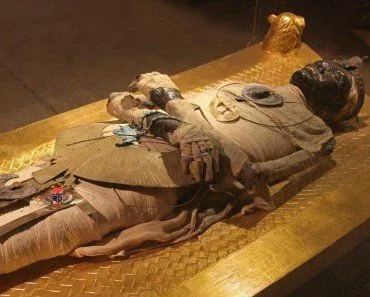
In short, the answer is yes! There is a chance that your hair will turn red after your death! If you need a point of reference, you should look at the ancient Egyptians. Egyptian mummies seem to sport a healthy shade of rust-colored locks, despite the centuries of decay. It does take longer for the oxidation process to occur in controlled dry conditions, like in an Egyptian tomb. Nevertheless, nature doesn’t discriminate. Red hair, the fashion of the undead, eventually gets to us all.
It is interesting to note how transient we consider our hair to be, cutting it confidently, knowing that it will simply grow back. However, the last set of hair follicles you develop will probably outlast whatever civilization you call home! Not so transient after all. Who knew the hair on our head could be so dynamic, even after death.
References (click to expand)
- Tridico, S. R., Koch, S., Michaud, A., Thomson, G., Kirkbride, K. P., & Bunce, M. (2014, December 7). Interpreting biological degradative processes acting on mammalian hair in the living and the dead: which ones are taphonomic?. Proceedings of the Royal Society B: Biological Sciences. The Royal Society.
- Thody, A. J., Higgins, E. M., Wakamatsu, K., Ito, S., Burchill, S. A., & Marks, J. M. (1991, August). Pheomelanin as well as Eumelanin Is Present in Human Epidermis. Journal of Investigative Dermatology. Elsevier BV.
- THE AMINO ACID COMPOSITION OF KERATINS - www.jbc.org
- Wilson, A. S. (2017, February 10). Taphonomic Alterations to Hair and Nail. Taphonomy of Human Remains: Forensic Analysis of the Dead and the Depositional Environment. John Wiley & Sons, Ltd.