Table of Contents (click to expand)
The Bat-Signal as drawn in the movies and comics would not actually work, but a real-life version is possible. You need a high-power searchlight, a condensing lens (a convex lens) that collimates the beam into parallel rays, and a metal bat cut-out placed just past the lens's focal point so it casts a sharp inverted shadow. Shine that beam at a low, thick cloud layer and the cloud lights up around a bat-shaped silhouette. The Bat-Signal is, in physics terms, just a giant shadow puppet on the sky.
Imagine walking in the dark alleys of Gotham in the dead of the night. The Bat signal glows among the clouds like some being from a Lovecraftian nightmare.
The soft glow of a light bulb suggests some movement behind you. You turn around as your heart beats faster. You don’t see anyone, but you know someone is there. You look in the darkness, straining your eyes to make sense of all the shapes in the shadows. Suddenly, someone springs from the darkness. You close your eyes, preparing yourself for the assault. Moments pass, but nothing happens. You finally open your eyes and see nothing but a set of intense white eyes in a sea of black.
Just as quickly, he disappears. You look up at the sky, the Bat signal still hanging over the city. You look at it and smile, because so long as that Bat signal glows among the clouds, nothing bad will happen.
How The Fictional Bat-Signal Works
To understand the science behind this iconic warning sign, we need to understand what exactly happens when the Bat-Signal is projected.
The first step is to get a powerful searchlight to shine onto the buildings or in the sky. The reason we see the bat “logo” at all is that the searchlight beam hits the building wall or the cloud layer and is scattered back to our eyes. The solid bat symbol blocks part of the beam, so the area corresponding to its shape stays dark while the rest of the wall or cloud lights up. The Bat-Signal is, in physics terms, a giant shadow puppet.
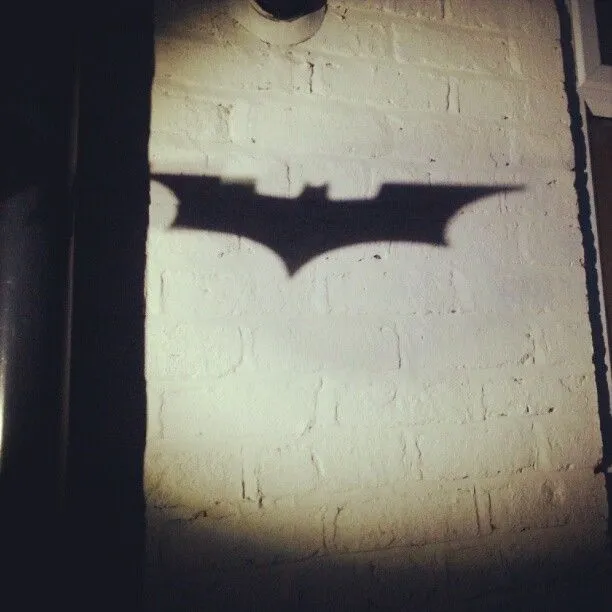
Now, it’s quite easy to imagine this setup for projection. We have all seen the movies and the comics, but does it work like that in real life? Do we need to make any modifications? Is it even possible to project it against the clouds in the night sky?
Let’s find out!
How Can The Bat Signal Be Projected In Real Life?
First of all, there are plenty of problems with how the Bat signal is projected in the movies and comics; unfortunately, it wouldn’t work in real life without some major modifications.
The first problem is the way light works. To produce an image, we need a light that is being thrown in a single direction. Now, you might think that a searchlight does that, but that’s not really true. Even a searchlight has a certain spread, which would make it impossible to produce a proper signal.
The second problem is with the placement of the bat symbol. In movies and comic books, the symbol is placed right on top of the searchlight. Again, this wouldn’t work, as the symbol is too close to the source of light to obstruct it and form a silhouette.
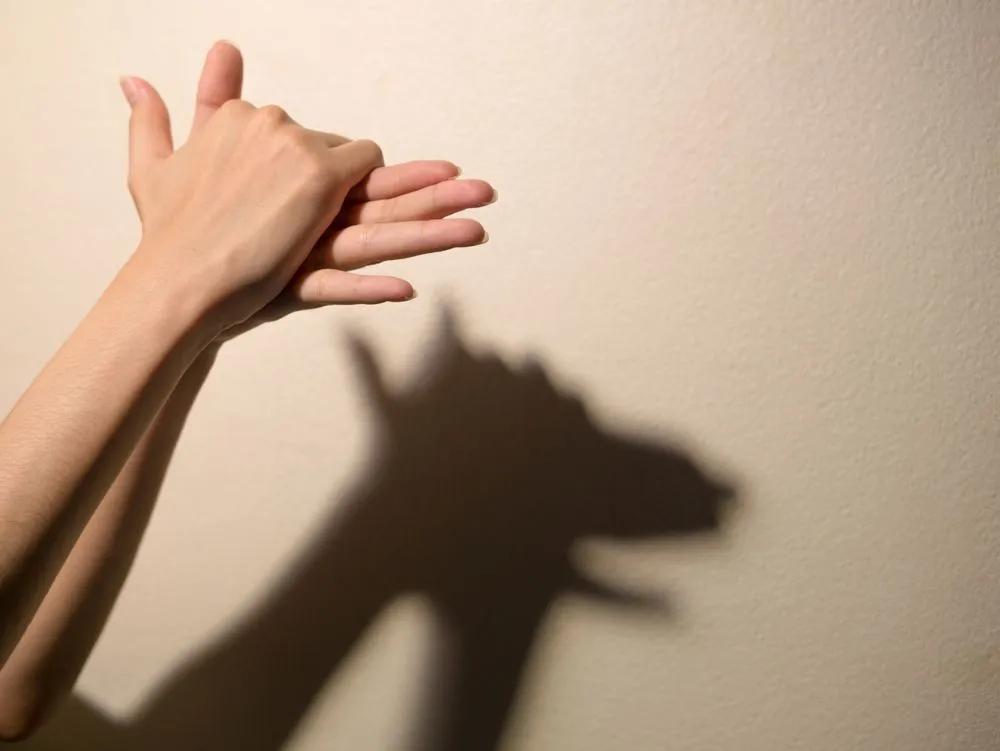
Imagine making shadows with your hands in front of a flashlight. It doesn’t work if you put your hands right in front of the flashlight; you must keep them at a certain distance to produce a sharp shadow.
So how would you fix these things to make a bat signal? It would actually be pretty easy. The first problem can be fixed with a convex lens. A convex lens is curved outward, so when light traveling in all the different directions hits one side of the lens, it gets bent, and all the light rays come out parallel from the other side of the lens. Thus, we would have a unidirectional light source.
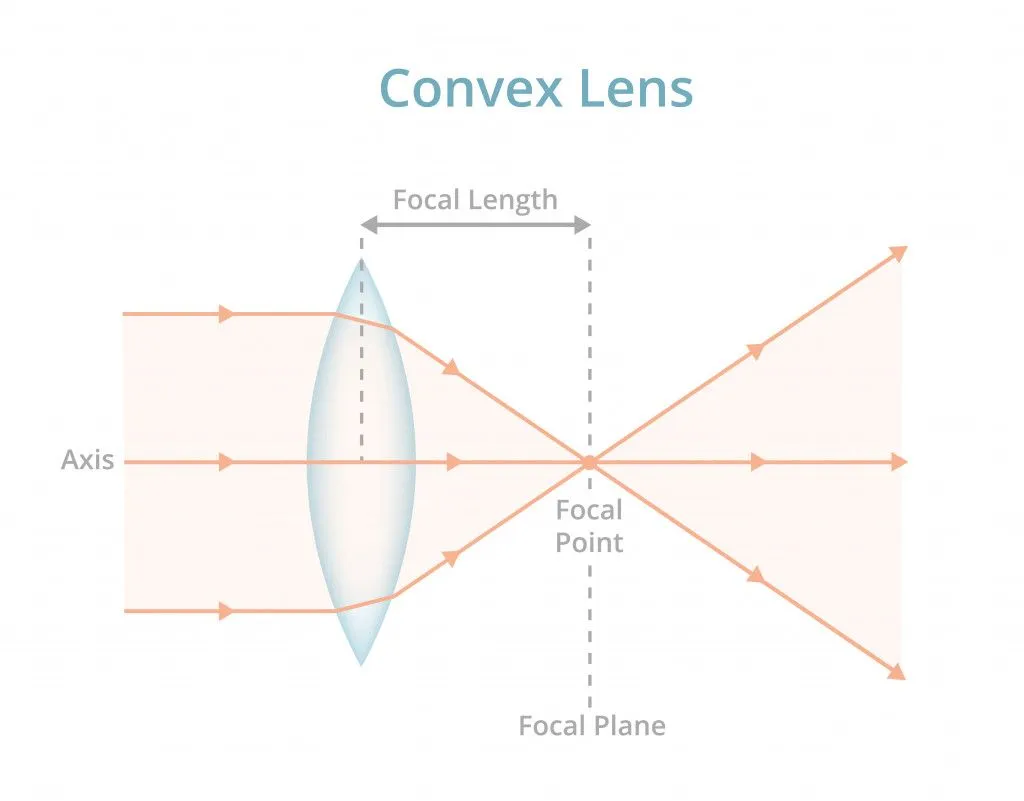
At that point, all you have to do is place the bat-shaped cut-out just past the focal point of the convex lens (between the lamp and the lens), so that the lens projects a real, magnified image of the cut-out at a distance. The focal length is the distance from the lens to the point at which parallel rays converge, and it depends on the curvature of the lens. The image will be inverted, so the bat symbol has to go in upside down for it to come out the right way up on the cloud.
And with that, we have successfully sorted the problems with the Bat signal shown in movies and comics. With these fixes, the signal can be projected in real life on buildings or in the sky, provided the night is extremely foggy and cloudy.
Conclusion
There are definitely some problems with the Bat signal as it has been shown in the fictitious world, but with a few tweaks using a convex lens and fixing the placement of the bat symbol, the signal could actually be projected in real life!
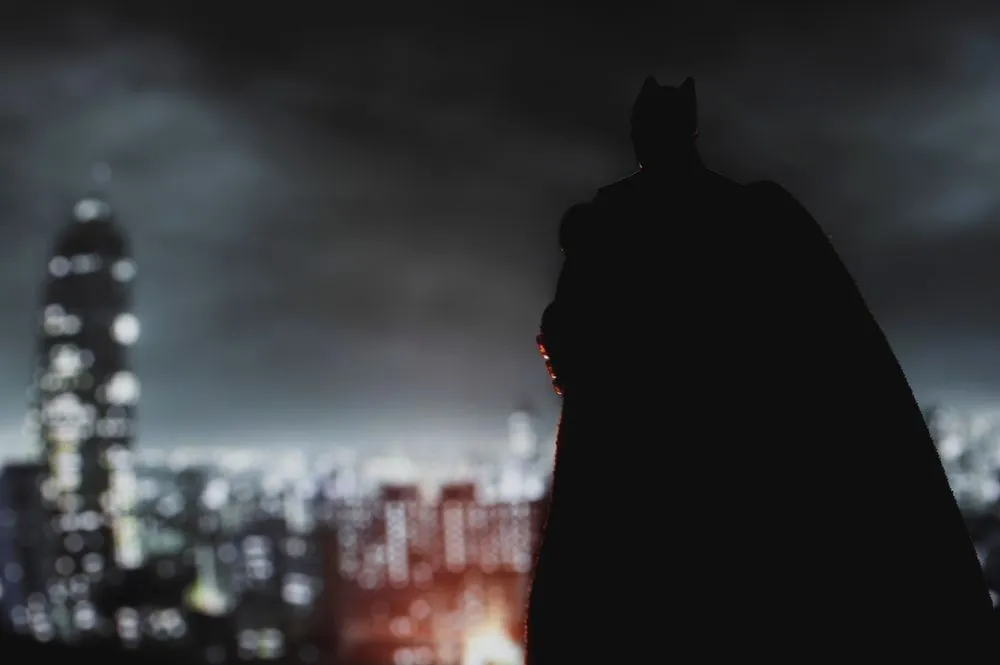
In fact, real Bat-Signals have been lit up in the sky on several occasions: Los Angeles projected one over City Hall in June 2017 as a tribute to actor Adam West (TV’s Batman) after his death, and similar tributes were lit up in cities including London, Melbourne and Toronto. All they lacked, of course, was a real Batman to answer the call.