Ecchymosis is the medical term for a bruise — the patch of dark, discoloured skin that appears when blood vessels rupture and blood escapes into the surrounding tissue. In The Batman, Bruce points out ecchymosis around the mayor’s wound to deduce that he was alive when his thumb was cut off, because bruising only forms while the heart is still pumping blood.
Spoiler alert!
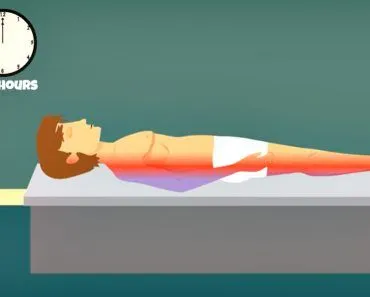
At the beginning of the new Batman movie, the police find the Riddler’s first victim, the mayor, murdered with tape all over his face. Unfortunately for the mayor, smashing his head open wasn’t enough. The Riddler had to take his thumb… for the sake of a pun. The police were trying to figure out whether the thumb was cut from the mayor’s body when he was alive or dead.
Batman quietly deduces that the mayor was alive when the thumb was cut off and mysteriously says, “Ecchymosis, around the wound”. But what does he mean by that and how did he figure it out?
What Is Ecchymosis?
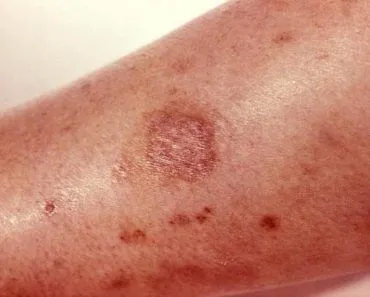
Ecchymosis is a medical term describing skin discoloration that happens when blood escapes from damaged blood vessels into the surrounding tissue (a process clinicians call extravasation). Blood seeps out from an injured or burst vessel into the skin and underlying tissue, which produces the characteristic colour change. In common parlance, we call this a bruise.
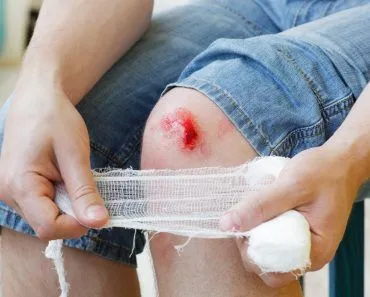
Suppose you get roughly tackled while playing football and the opposition defender spikes you in the calf. The impact damages the blood vessels beneath your calf, causing them to burst and spill blood out into the surrounding tissues. This blood gets trapped and darkens in color, forming those dark blackish-purple patches.
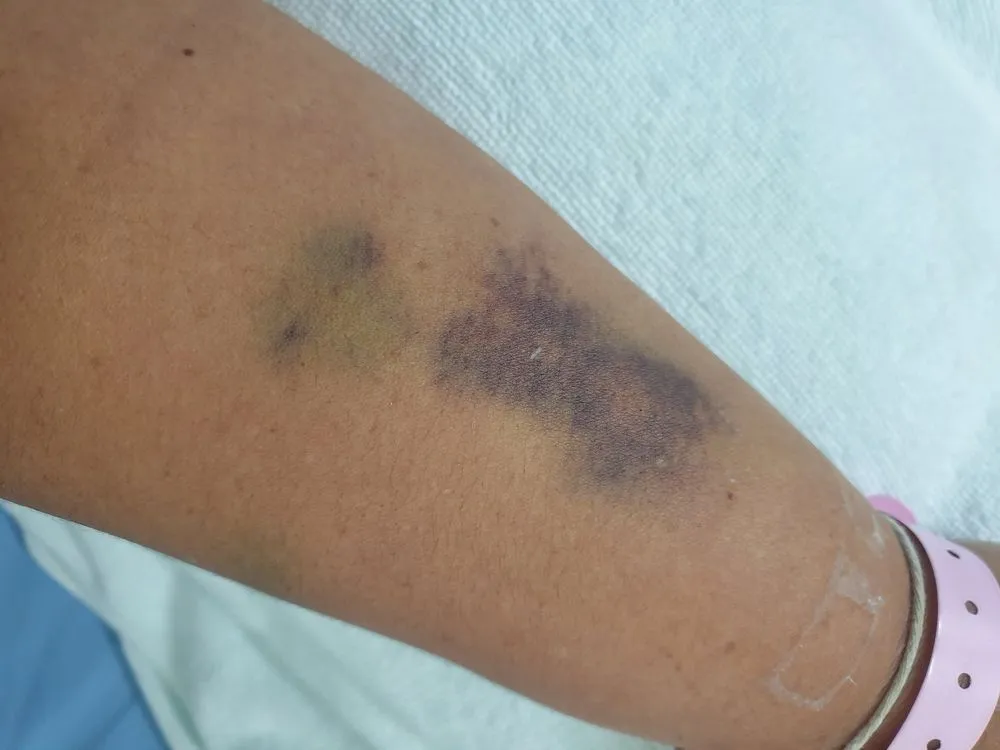
Batman understood ecchymosis, which is how he was able to deduce that the mayor was alive when his thumb was cut from his hand.
How Did Batman Deduce It?
The not so noble officers of Gotham P.D. wondered how Batman could state so confidently that Mayor Mitchell had been alive when his thumb was cut off.
It’s the skin discoloration seen on the part of the thumb still attached to his hand that gives it away. The blood vessels were damaged when Riddler cut the mayor’s thumb. Blood flowed into the surrounding tissues in his hand and the surrounding skin darkened. That’s what he meant when he said “ecchymosis”. Batman saw the darkened skin around the wound.
It’s not very hard to spot. Ecchymosis occurs more frequently than you think. Another common example will be known to car crash victims – seatbelt marks.
If you’re wearing a seatbelt and get into a car accident and jerk forward, the seatbelt prevents you from flying out of the car. However, that quick stop to your torso is also injurious if you’re driving at a high speed, as the seatbelt presses against your upper body and restrains you tight to your seat. This pressure damages the blood vessels beneath your skin, which is why a red seatbelt mark forms across the torso.
If the mayor was dead, blood would not be flowing through his body, so it wouldn’t be able to leak into the surrounding tissues. Ecchymosis wouldn’t take place if the thumb had been cut after he died.
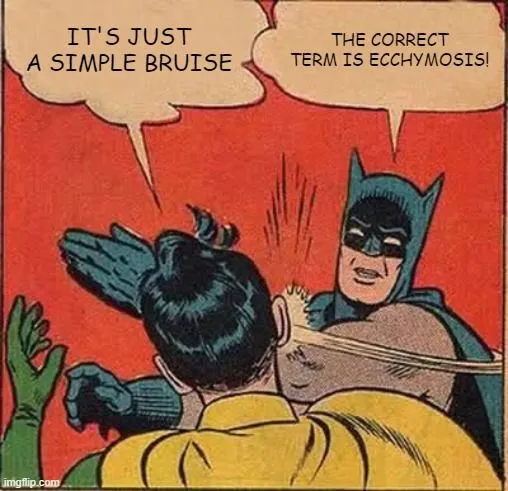
The clue was essentially skin discoloration.
Why Does The Skin Darken?
What’s responsible for giving blood its red color? The answer is red blood cells… but why are they red? Hemoglobin!
Red blood cells get their oxygen-carrying function from the protein called hemoglobin. It’s made of four protein subunits with iron-containing hemes. The iron (Fe+2) in heme and oxygen come together, oxygen binds to iron and oxidizes it. That’s when it develops a strong bright red color. Deoxygenated blood has a less prominent and darker red shade, which is what we see when blood is taken from our veins.
When blood vessels break and spill out their contents, our body breaks the blood down so it can be reabsorbed. When red blood cells leave blood vessels, they burst open, releasing the hemoglobin. Hemoglobin is prone to oxidation and the heme group becomes oxidized (Fe+2 to Fe+3). The hemoglobin is also broken down to form bilirubin and hemosiderin by an enzyme called heme oxygenase.
These biochemical reactions are responsible for the tissue darkening around wounds. That’s why bruises change color with time. As the heme breaks down, the tissue color darkens. Bilirubin, a product of hemoglobin catabolism, is responsible for the yellow color that old bruises have. All of this is part of the body’s natural healing process.
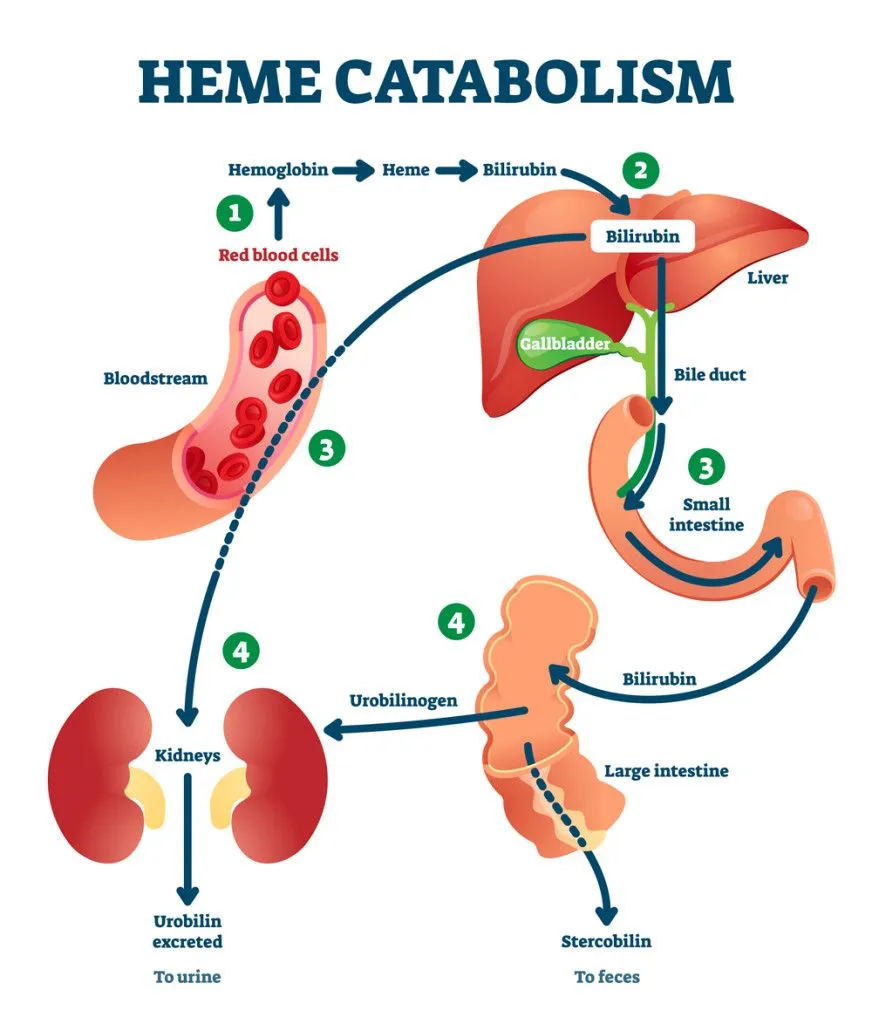
For this biochemical reaction to occur, blood would have to be flowing into the neighboring tissues surrounding the mayor’s hand. For this to happen, he had to be alive, as dead people don’t have a strong blood flow. Clearly, you can’t be a powerful vigilant superhero without knowing human biology!
Is Ecchymosis Just A Bruise?
In everyday speech, ecchymosis and “bruise” mean the same thing. The Cleveland Clinic plainly calls ecchymosis “the medical term for bruises”. So why do doctors bother with the fancy Greek word at all? Because in a clinical setting, “bruise” is a little too vague. Skin that darkens when blood leaks out of broken vessels shows up in different sizes, and each size has its own name.
Clinicians sort these flat, blood-filled marks mostly by how big they are. Petechiae are the tiniest, pinpoint dots that measure less than about 2 millimeters across. Purpura occupy the middle ground, roughly 2 millimeters up to 1 centimeter. Ecchymosis is the largest of the three, a patch bigger than 1 centimeter. Different textbooks nudge these cut-offs by a millimeter or two, but the running order never changes: petechiae are the smallest, purpura sit in the middle, and ecchymosis is the big one.

A hematoma is a slightly different animal. Where an ecchymosis is flat and you can only see it, a hematoma is a raised, tender lump you can actually feel, because the escaped blood has pooled together in one spot instead of spreading thinly through the tissue. Picture the “goose egg” that swells up after a hard knock to the head. So all of these marks share the same root cause (blood escaping from damaged vessels), but they differ in size and depth.
When Batman said “ecchymosis, around the wound”, he was being precise. The discoloration spreading through the tissue around the mayor’s severed thumb was broad and flat, an ecchymosis rather than a pinpoint petechia or a raised lump.
Where Does The Word “Ecchymosis” Come From?
The word sounds intimidating, but its backstory is oddly poetic. According to Merriam-Webster, “ecchymosis” entered English around 1541 by way of New Latin, drawn from the Greek ekchymōsis. That Greek word joins ek-, meaning “out”, with chymos, meaning “juice”. Put together, ecchymosis literally describes a “pouring out of juice”, which is a wonderfully apt image for blood seeping from a broken vessel and spreading through the tissue.
A couple of quick notes for anyone reading it off a medical report. It is pronounced ek-ih-MOH-sis, with the stress on the third syllable. When there is more than one bruise, the plural is ecchymoses (ek-ih-MOH-seez), following the same Greek pattern as “diagnosis” and “diagnoses”. And the adjective is ecchymotic, so a doctor might describe a patient’s arm as looking “ecchymotic”.
So the next time you catch a shin on the coffee table and watch a purple patch bloom, you can tell yourself you have a textbook case of ecchymosis: a small pouring-out of juice that will fade on its own within a couple of weeks.
Conclusion
Ecchymosis is a common phenomenon. On average, bruises fade in about two weeks. However, there are ways you can speed up that healing process. You can apply ice to slow down the blood flow, which reduces the blood leaking into the tissues, or you can apply healing creams.
Batman may not have portrayed skills worthy of being crowned the best detective in the world in the movie. After all, he couldn’t figure out Riddler’s plan, but we can cut him some slack, since he’s a young and inexperienced hero in this latest film. At least he was smart enough to spot the ecchymosis!
References (click to expand)
- Jeney, V., Eaton, J. W., Balla, G., & Balla, J. (2013). Natural History of the Bruise: Formation, Elimination, and Biological Effects of Oxidized Hemoglobin. Oxidative Medicine and Cellular Longevity. Hindawi Limited.
- Langlois, N. E. I., Olds, K., Ross, C., & Byard, R. W. (2015, March 15). Heme oxygenase-1 and heme oxygenase-2 expression in bruises. Forensic Science, Medicine, and Pathology. Springer Science and Business Media LLC.
- (2015) A Review of Clinical Signs Related to Ecchymosis - PubMed. The United States National Library of Medicine
- Bruises (for Teens) - Nemours KidsHealth. kidshealth.org
- Hemoglobin — the iron-containing oxygen-transport protein that gives blood its red color (Wikipedia)
- Bruises (Ecchymosis): Symptoms, Causes, Treatment & Prevention. Cleveland Clinic
- Petechiae - StatPearls - NCBI Bookshelf. National Library of Medicine
- Ecchymosis Definition & Meaning (etymology and first known use). Merriam-Webster