Permanent tattoos are created by penetrating almost half a millimeter deep into the skin. This means that these tattoos are actually “inside” the skin, so they cannot be hidden by adding a flesh-coloured tattoo. This technique can also cause discoloration in this particular skin region. Moreover, tattoos are usually darker than the skin, so a flesh-coloured tattoo cannot hide an old, dark-colored tattoo.
Some see tattoos as a visual expression of their personality and way of thinking or as a sign of religious and spiritual devotion and bravery. As a result, the trend to get tattoos has increased significantly in the last decade or so.
Unfortunately, sometimes you get a tattoo that you come to despise. The question is: can you do something about it?
Yes. You can get a laser treatment to remove it, but could you try something else? Why not tattoo over the old, bad tattoo with a new one whose color matches the skin tone?

Before we discuss this in more detail, let us first take a quick look at how tattoos are made in the first place.
How Are Tattoos Made?
Tattoos can either be temporary or permanent.
Temporary Tattoos
Temporary tattoos are made using various methods, including painting, drawing, or stickers. The tattoos are designed to disappear within a few days or weeks since they only color the epidermis.
Permanent Tattoos
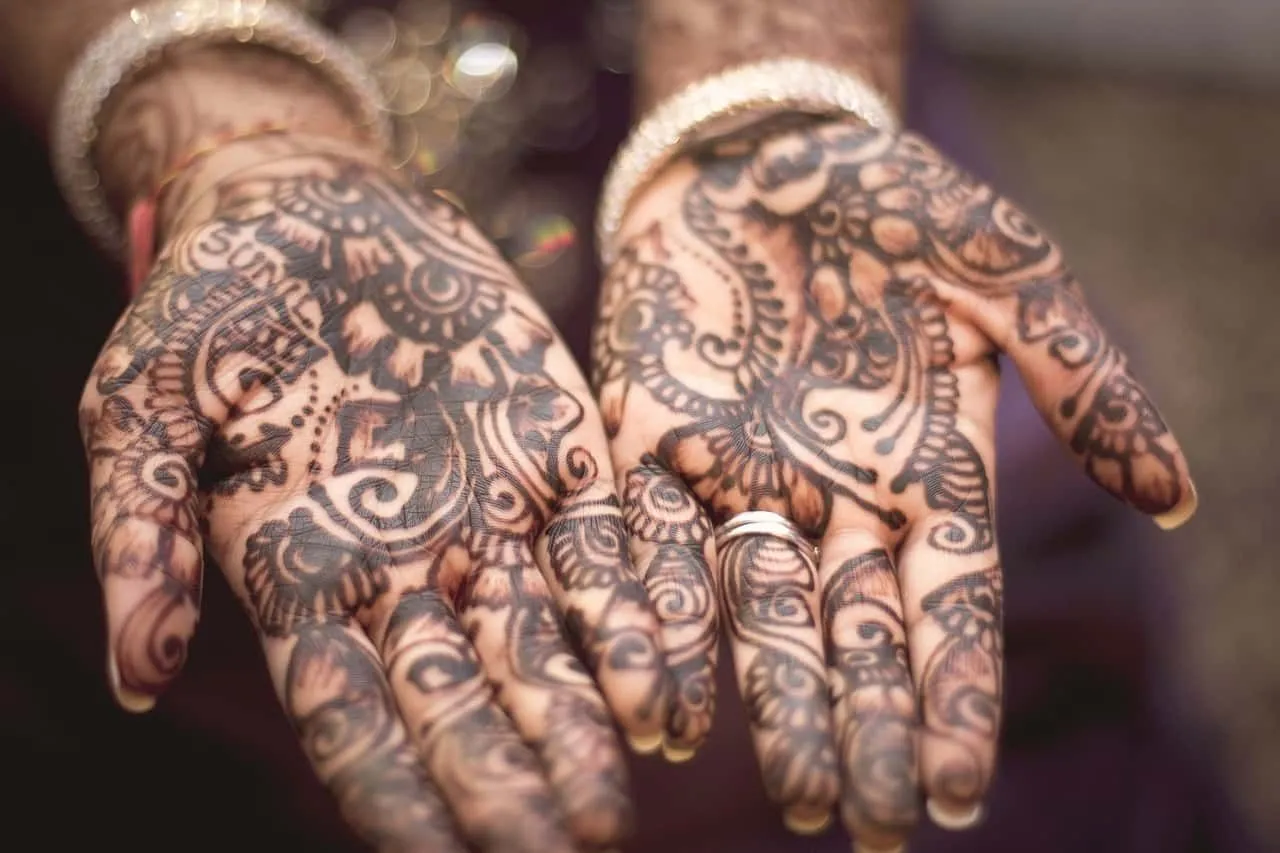
As their name signifies, permanent tattoos are permanent; they remain in the subject’s skin for more or less their entire life. They’re permanent as they’re deposited deep in the skin.
Human skin has three layers: the epidermis, dermis, and hypodermis. The epidermis is the outermost layer, which is waterproof and contains the cells and pigments that give you your skin color.
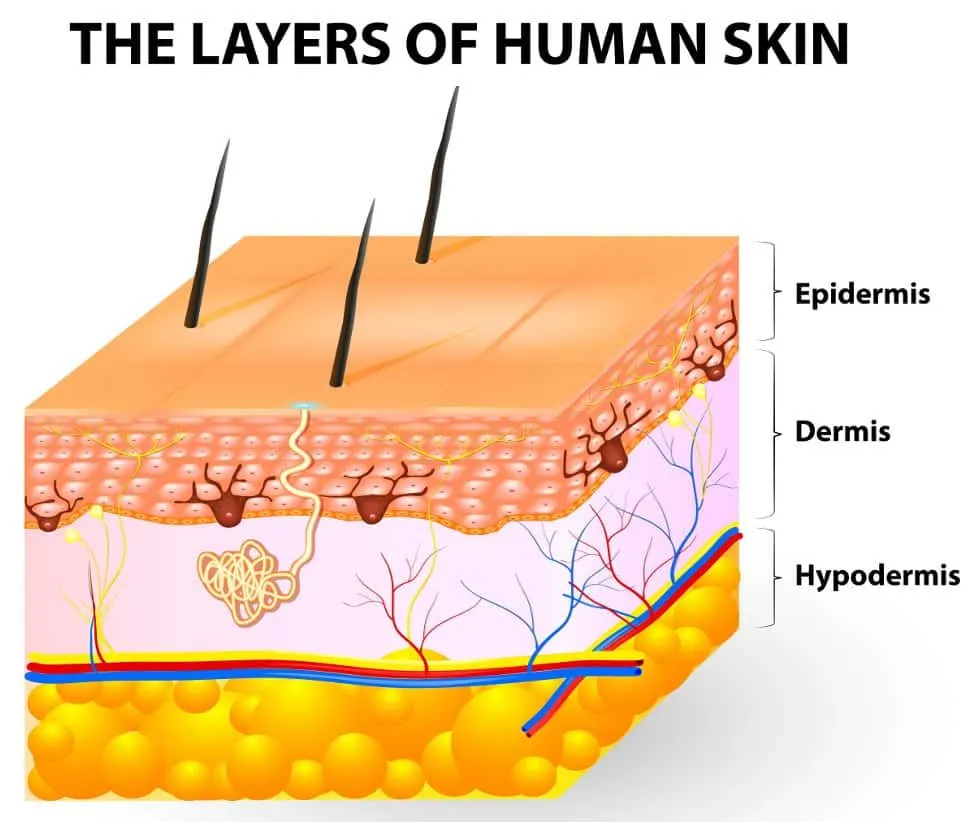
The second layer, beneath the epidermis, is the dermis. This layer has blood vessels, hair follicles, connective tissue, and sturdy fibers of collagen and elastin that make your skin stretchy and elastic. Finally, the innermost layer, called the hypodermis, is composed mainly of fatty tissue.
To make a permanent tattoo, ink is deposited in the dermis. Tattoo artists use an electrically powered needle(s) whose tip contains the ink (a pigment dissolved in a carrier: an organic solvent, like alcohol or sterilized water) to push the ink into the skin.
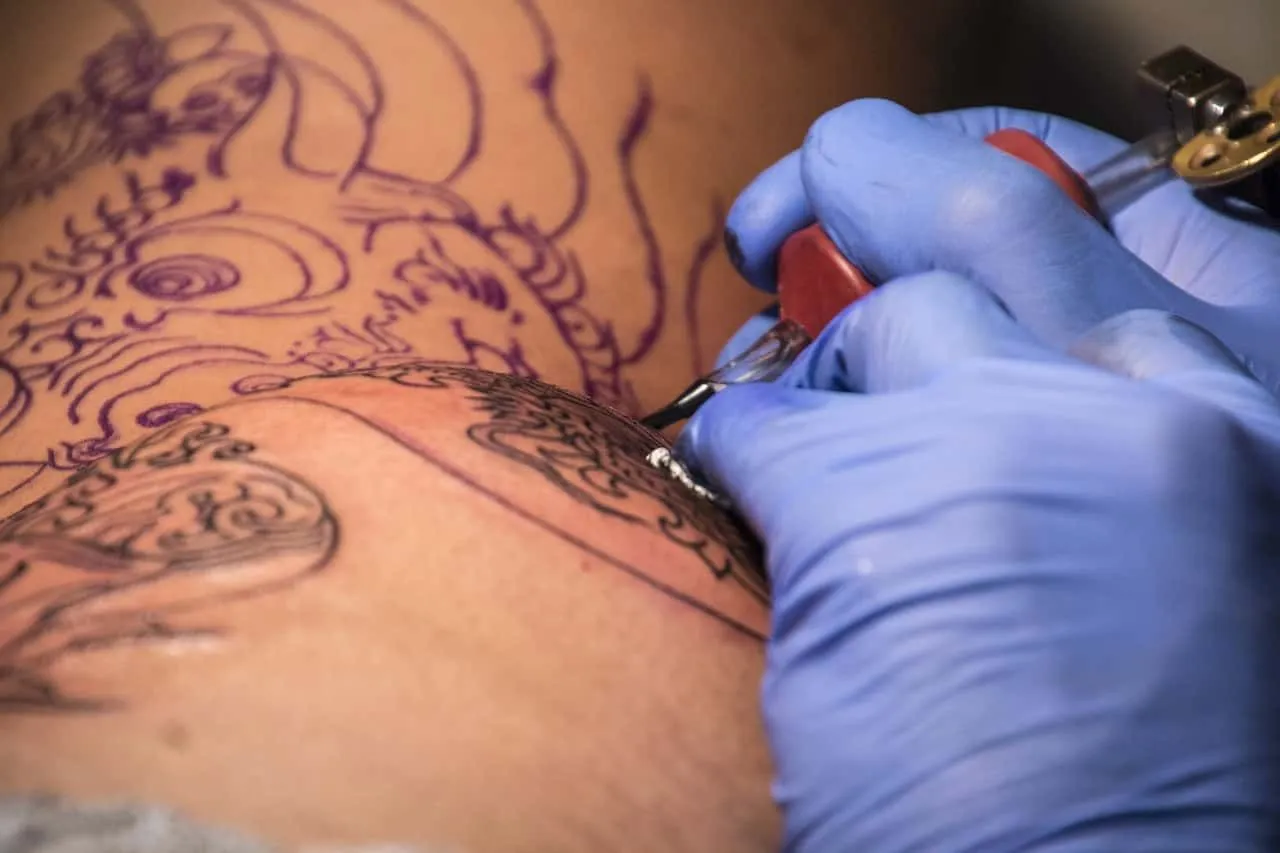
This is no regular needle; it jabs the skin rapidly and injects the ink nearly half a millimeter below the skin’s surface. Needless to say, getting a tattoo is a fairly painful process.
Can A Bad Old Tattoo Be Covered With A Flesh-colored Tattoo?
Let’s say a guy named Dirk has a black ink tattoo of a roaring lion on his chest. However, when Dirk got older, he noticed that the skin on his chest was not as tight as it used to be. Decades later, the roaring lion looks more like an ailing fox.
Since he doesn’t want the image of a sad fox on his chest, what could he do about it?
Crude logic dictates that Dirk could get a tattoo with a color that matches exactly with his skin tone ‘on top’ of the old lion tattoo so that the latter could be completely hidden. In other words, a new skin-colored tattoo to cover the old tattoo.

There are a few problems with this approach.
First, a tattoo is unlike an oil painting, where you can just put another layer over the first to cover it completely. Instead, think of tattoos as watercolors on paper. If you use a dark color, say black, the paper absorbs it. However, if you use another color with a lighter tone over it, it will not make much difference to the black color that is already present on the paper.
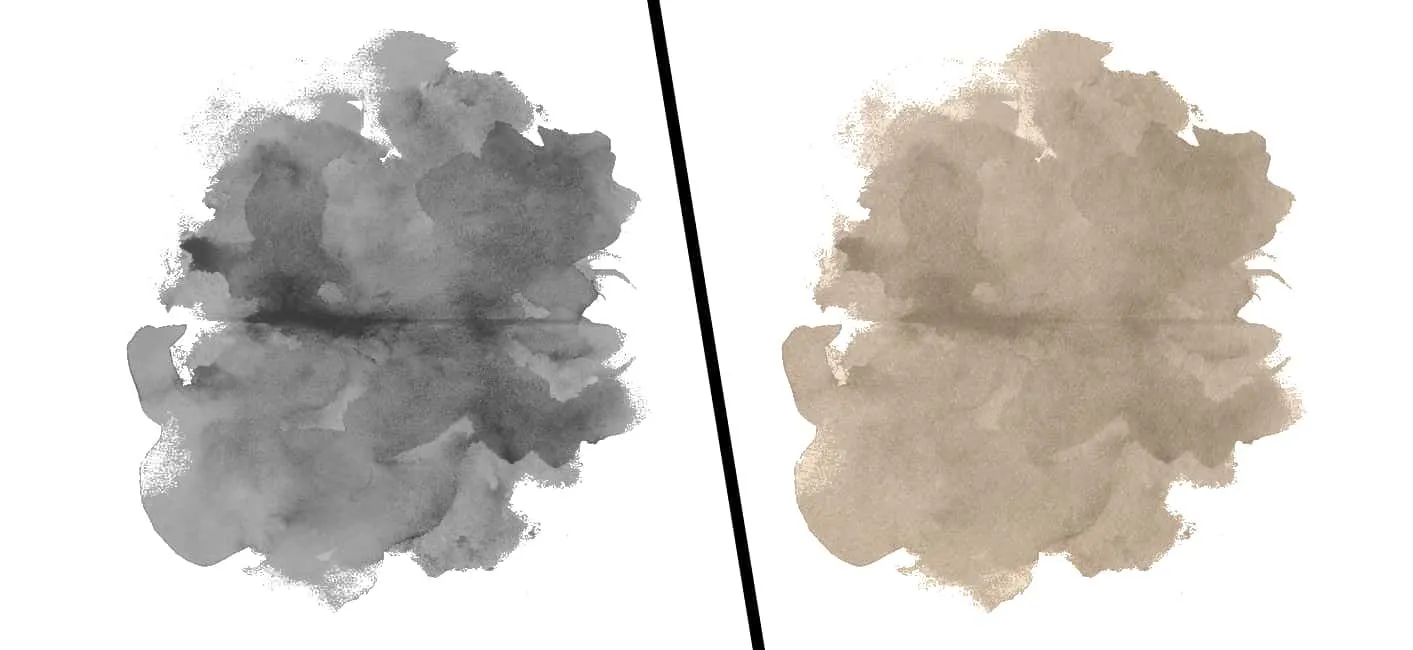
Tattoos are usually darker than the skin tone, at least so that they remain visible on the skin. So, if you get a lighter, skin-colored tattoo over a dark tattoo, the latter will still be visible, and it doesn’t look that good either!
Tattoo ink is suspended in the dermis, residing inside your immune cells (that can’t break it up) and a little in your connective tissue. When you add another color, that ink will exist alongside the darker pigment and not on top of it, so skin-colored pigment will do little to cover your tattoo.
Skin-colored ink, however, does have its uses. People often use it to cover up scars and other discoloration marks on the body.
Skin Tone Does Not Stay The Same Throughout Life.
Even if you got a new tattoo whose color matched exactly with that of your skin, it’s bound to look less appealing if and when your skin tone changes. You see, your skin changes its tone following even moderate sun exposure (in other words, it gets tanned).
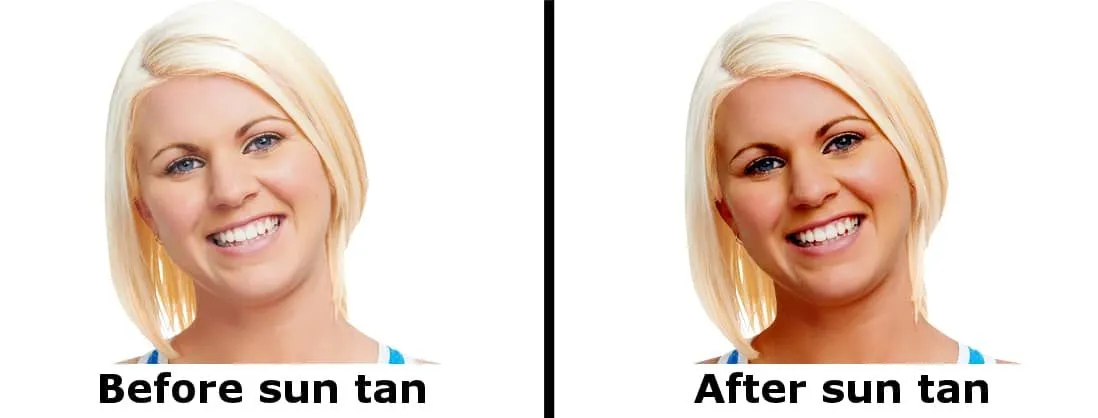
This means that changes in your general skin color can lead to the formation of a small discolored spot, another unpleasant side effect if you get a skin-colored tattoo to cover up an old one.
Is There A Way To Get Rid Of Permanent Tattoos?
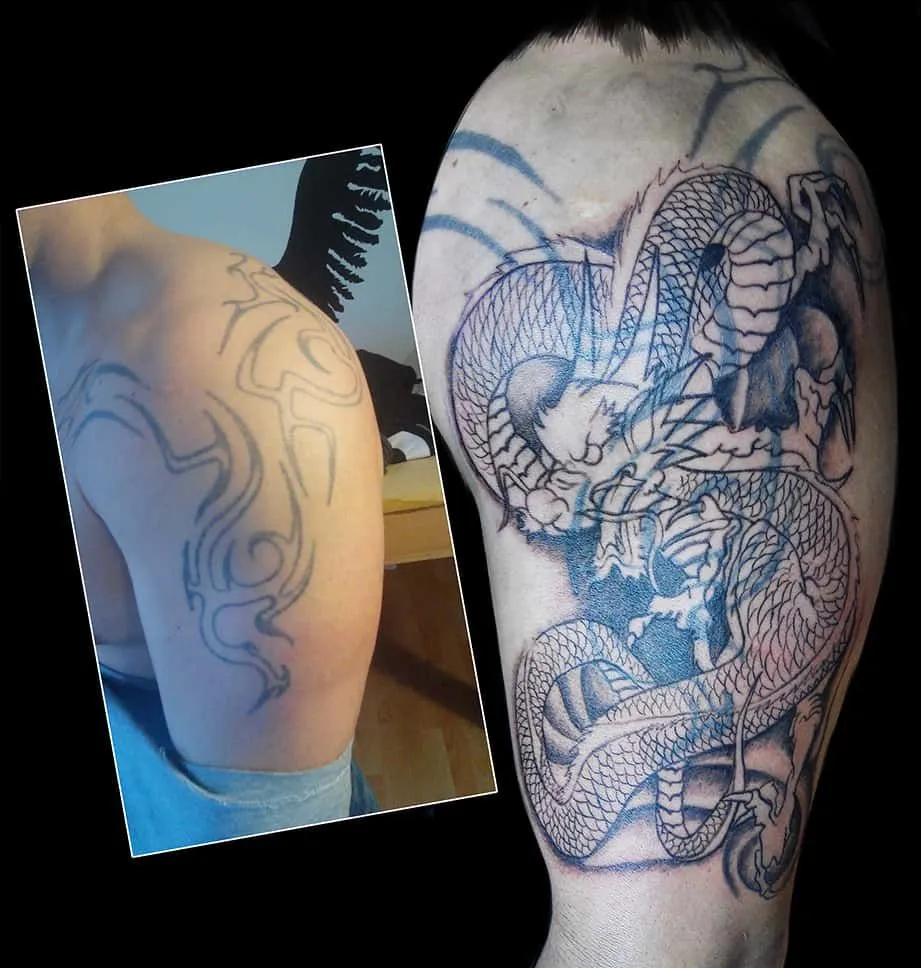
Yes, laser treatment can erase permanent tattoos. Still, if you are trying to cover up a tattoo by getting a new tattoo, you need a specially qualified tattooist who can cover the old tattoo with a dark spot and then use colors to disguise the old tattoo.
Here’s an example:
What Is A Blackout Tattoo Cover-up?
If a pale, skin-colored tattoo cannot erase a dark one, the sensible move is to flip the logic and cover the old ink with something even darker. That is the idea behind a blackout tattoo. The artist floods the whole area with solid black ink, and because black is dense enough to bury almost anything beneath it, the old design simply vanishes under the new layer. One studio compares it to using a black marker to hide a mistake on a sheet of paper.

A plain black block can look a little like a censor bar, so artists usually shape the black into a deliberate pattern or leave patches of bare skin (called negative space) so that the result reads as art rather than a cover-up. Once the black has fully healed, some color or even white ink can be layered on top for detail, although it shows up more muted than the same ink on fresh skin, so bold, graphic linework tends to survive best over the years. Because so much pigment is being packed into the skin, a blackout cover-up is usually built up over two or three sessions.
What Makes A Good Cover-up Tattoo?
You do not always need to black out an entire limb. A skilled cover-up artist can hide an old tattoo inside a new design, but the rules are strict. The replacement generally has to be larger, darker and more detailed than the original. Artists often make the new piece at least 30 to 50 percent bigger and lean on dark, cool colors and heavy shading, because cooler, darker tones cover stubborn old ink far more reliably than warm, light ones. Busy, richly shaded designs hide the ghost of the old lines better than simple, sparse ones do.

Skin tone matters too. On deeper skin, a good artist checks where your complexion sits on the Fitzpatrick scale, dermatology's standard classification of skin tones, and mixes the new colors to match your natural melanin level and undertone. The aim is for the finished tattoo to blend with the surrounding skin rather than sit on top of it like a sticker.
Can Skin-colored Ink Cover Scars, Stretch Marks And Vitiligo?
This is where flesh-toned ink genuinely earns its keep. The practice even has a name: paramedical or camouflage tattooing, also known as medical micropigmentation. Rather than drawing a picture, the artist custom-mixes a pigment to match your exact skin color and blends it into a pale, flat, fully healed scar, a stretch mark, or a patch of skin that has lost its color. The pigment is layered to imitate the way a real skin tone is built up from several underlying colors.
It works best on light, flat scars that have fully healed and lost any redness. It can also help with vitiligo, the autoimmune condition in which the skin loses its melanin in patches. The best candidates are people whose patches have stayed the same size for at least a year. In one study of 15 people with stable lip vitiligo, tattooing produced cosmetically acceptable results in every patient over a two to three year follow-up, with no allergic reactions and no spreading of the vitiligo. The important caveat is that this is camouflage, not a cure. The pigment slowly fades and needs a touch-up every few years, and because skin-toned ink still cannot lighten dark pigment, it fills in missing color rather than hiding color that is already there. That is exactly why it can rescue a pale scar yet still fail to hide a dark old tattoo.
References (click to expand)
- Kent, K. M., & Graber, E. M. (2012, January). Laser Tattoo Removal: A Review. Dermatologic Surgery. Ovid Technologies (Wolters Kluwer Health).
- Tattoos and piercings. American Academy of Dermatology
- The Tattooing Process.
- Blackout Tattoo Cover Up. Certified Tattoo Studios
- Style focus: White ink on blackout tattoos. Stories & Ink
- Dark Tattoo Cover-Up. Removery
- Tattoo Cover Up For Dark Skin. Illusions By Ink Studio
- How paramedical tattoos can be used to treat vitiligo. Healio
- Singh, A. K., & Karki, D. (2010). Micropigmentation: tattooing for the treatment of lip vitiligo. Journal of Plastic, Reconstructive & Aesthetic Surgery.