“Queer coding” was used to depict queerness as immoral and socially unacceptable, using stereotypes to equate queerness with evil.
What do Ursula from The Little Mermaid, Frank-n-Furter from the Rocky Horror Picture Show, Scar from The Lion King, and Him from The Powerpuff Girls have in common?
They all exhibit traits that would potentially and subtly paint them as queer. Queer-coded villainy is a very observable phenomenon that afflicts Hollywood, and perhaps the industry of cinema as a whole.
What Does ‘Queer Coding’ Mean?
Queer coding as a phenomenon is not new (Jane Austen and Virginia Woolf both did it in their own ways), but the modern connotations are arguably worse than the original ones. The concept relates to characters in art (i.e., books, painting or cinema) who exhibit certain mannerisms and behaviors that point towards them being queer, meaning that they fall somewhere along the LBGTQIA+ spectrum.
In more recent patterns of queer coding, it has meant conforming to stereotypes and portraying queer characters as villains or morally ambiguous, at best.
Now, you may ask how queer coding is any different from the gay best friend trope (the depiction of a protagonist’s best friend as gay; this character is usually only given screen time as a plot device to help the protagonist by showing up for them and giving them much-needed advice), and that is a legitimate question, dear reader!
The difference is that unlike the gay best friend, the queer-coded character is not outrightly queer; it is hinted that they may be queer, and their queerness is seen as an additional quality (besides general evilness) that makes them the bad guy (or bad gay, if you will).
So, while Hades from Hercules may have flamboyant, sassy remarks and Governor Ratcliffe from Pocahontas wore larger-than-life outfits and braided his hair, they weren’t outright acknowledged as queer.
The trust reposed in the character is indirectly based on their potential sexuality (though many times queer-coding has been used to reach out to queer audiences too). This stems from the moral boundaries set in filmmaking by the Hays Code in the 1940s and beyond.
The Hays Code
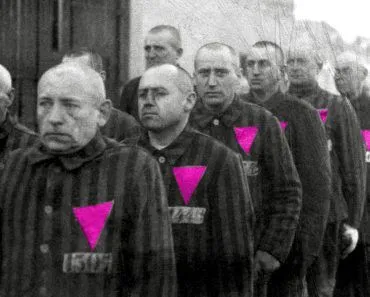
The Hays Code was a set of morally inclined rules that regulated censorship in America, introduced in the 1930s. Among other things, it banned the portrayal of sexual ‘perversion’ and deviation from heterosexuality in movies.
This effectively shoved queer characters to the back of the theatrical closet, from which they occasionally spoke a few lines based on cliched understanding.
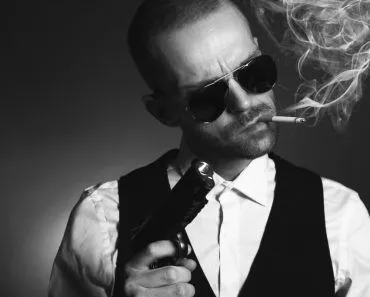
The Hays Code left little space for queer people in a largely homophobic and transphobic (and xenophobic) industry. Queer characters were assigned to the shadowy alleys of noir films and the evil lairs of adventure and romance, and even there, professing queerness explicitly was prohibited. It was equated with immorality, and therefore antagonistic to the protagonists’ more confirmative arc.
How Does ‘Queer Coding’ Manifest?
‘Queer coding’ often manifests as a stereotypical set of physical and mental inclinations that portrays the characters in question as a deviation from the protagonist as one who ‘stands out’, further highlighting the protagonist’s features that make them the paragon of ‘masculinity,’ ‘femininity’ or any other traditionally ‘desirable’ trait.
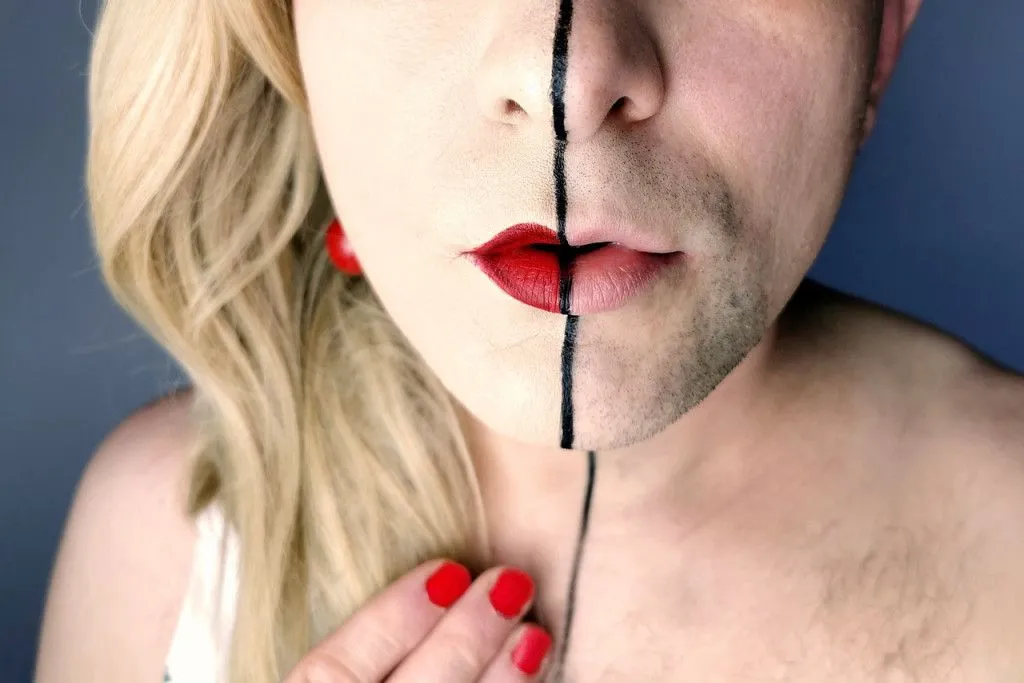
Queer-coded men are often effeminate, flamboyant, dramatic and weak (in comparison to muscular, strong protagonists), whereas queer-coded women are often ugly, (in comparison to the beautiful protagonist) possessive of other women, or just covetous and eschew relationships (perhaps because women are supposed to be empathetic). Transgender villains and crossdressers are defined by their tendency to be deranged (for example in Dressed to Kill).
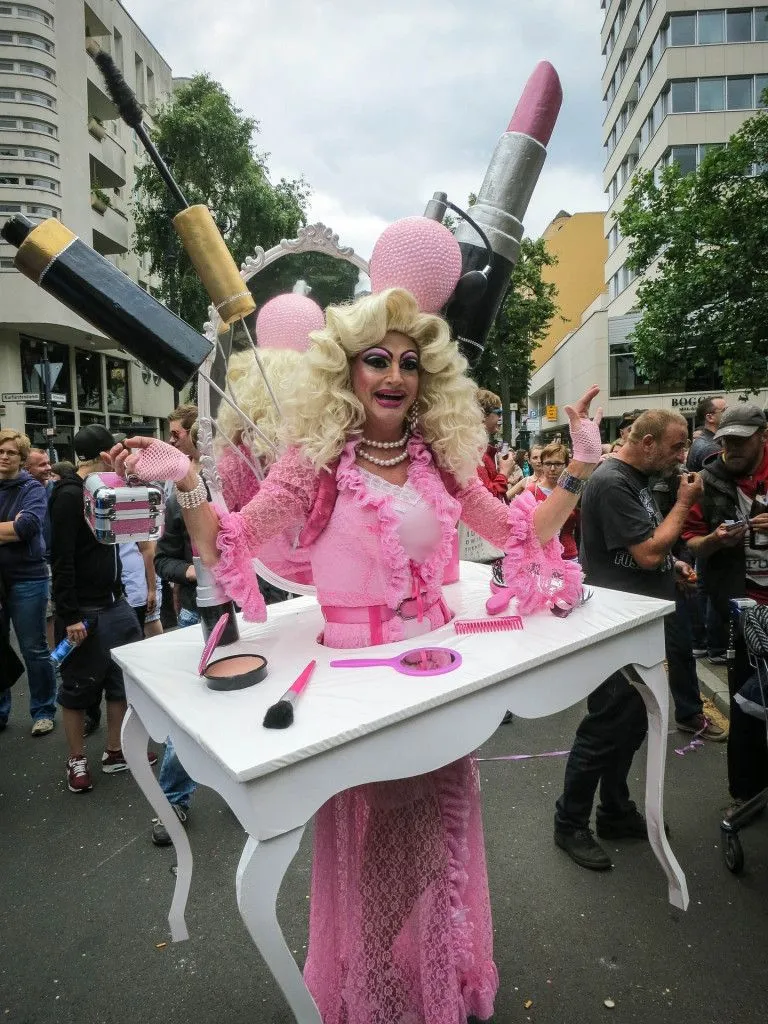
Disney, perhaps more than any other production house, is notorious for queer coding their villains. There is Scar with his sly, subtle hints, Hades with his histrionics, and Ursula with her large personality (she was based on Divine, a literal drag legend).
The problem in such manifestations is that they strengthen the belief that queerness is a perversion of the normal behavior expected of people and that it necessarily merits punishment or a course correction (even the Hays Code allowed for the rightening of that which was sinful). If the makers sought lighter tones in the character, it necessarily came from mocking their suggested queerness. Either way, the reinforcement of prejudiced behavior expected from queer people in all ranges of audiences was cemented.
Which Disney Villains Are Queer-Coded?
If queer coding has a spiritual home, it is the Disney villain. The pattern predates the studio, of course. J.M. Barrie's Captain Hook was already a fussy, finely dressed dandy in the original Peter Pan stories, forever fixing his curls and his lace, and Disney's 1953 film simply inherited that theatrical vanity. But Disney turned the effeminate rogue into a house style.

Consider the roll call. Scar in The Lion King is languid and sardonic where Mufasa and Simba are broad-chested and earnest. Jafar in Aladdin is all arched eyebrows, kohl-lined eyes and silky menace. Both were supervised by the openly gay animator Andreas Deja, who has firmly pushed back on the readings, saying he "never thought of Scar being a gay character." That tension is a useful reminder that coding lives in how audiences read a character, not necessarily in what the artist set out to do.
Ursula in The Little Mermaid is the most openly acknowledged case: her look was largely modeled on the drag performer Divine, a muse of the filmmaker John Waters, right down to the heavy eye makeup and the swaggering, larger-than-life presence. Governor Ratcliffe in Pocahontas wears bows in his hair, travels with a pampered pug, and prefers to delegate the hard labor to sweatier men, a courtly vanity set against John Smith's rugged frontier masculinity. Hades in Hercules rounds out the type with his fast, campy, wisecracking patter. In each case the message is quietly the same: the character who deviates from the muscular, heterosexual norm is the one you are meant to distrust.
Queer-Coded Villains Beyond Disney
Disney did not invent the trope, and it was hardly alone in using it. Once the Hays Code pushed queerness into the shadows, live-action cinema learned to signal it through the same shorthand of menace it reserved for its other go-to villains: the fastidious, effeminate schemer of film noir, and the killer whose difference was written on his body.
The most infamous modern example is Jame Gumb, better known as Buffalo Bill, the murderer in The Silence of the Lambs (1991) who sews, keeps a lapdog named Precious, and kills women to stitch himself a feminine "skin." GLAAD called him "a walking, talking gay stereotype," and activists from Queer Nation and ACT-UP protested outside the 1992 Academy Awards. The filmmakers insisted that Gumb was never meant to be gay or transgender, and director Jonathan Demme later described the confusion as a "directorial failing" on his part, an admission that the coding did its damage regardless of intent.
Not every flamboyant villain reads as a slur, though. Dr. Frank-N-Furter, the self-described "sweet transvestite" of The Rocky Horror Picture Show (1975), is seductive, manipulative and murderous, ticking every box of the dangerous queer. Yet arriving just six years after the Stonewall uprising, he was embraced rather than feared: midnight audiences turned his unapologetic strangeness into a ritual of belonging. It is the clearest sign that a trope built to shame an audience can, in the right hands, be flipped into a celebration.
Conclusion
The more we realize the extent of queer coding, the harder it becomes to enjoy the classics we grew up watching. This is perhaps why the modern remakes are trying not to fall in the same traps. Unfortunately, this experiment has mostly been a failure.
While movies like Maleficent have tried to allow for the queer metaphor (the isolated, different Other who is trying to make space for themselves in a mostly hostile environment that villainizes them), it has still failed to give Hollywood the queer representation it deserves. Maleficent has remained little more than a queer metaphor, while the plot progresses only from her heteronormative relationship.
This is the better outcome. Most remakes have simply sought to do away with the queerness of the character and reinterpreted them as heterosexual, without bringing in other queer characters (i.e., the live action The Lion King). This is not to say that there are no productions that feature queer characters and relationships. There is still, however, a long way to go before those who have built blockbusters based on queer-coding symbolically undo the damage done by the cruel stereotypes they fueled.
References (click to expand)
- Vol. 29, No. 1, 2015 of Marvels & Tales on JSTOR. JSTOR
- Dialogues@RU - Rutgers University. Rutgers University
- A Brown. Hook, Ursula, and Elsa: Disney and Queer-coding from the .... Scholastica
- Dhaenens, F., Van Bauwel, S., & Biltereyst, D. (2008, June 13). Slashing the Fiction of Queer Theory. Journal of Communication Inquiry. SAGE Publications.
- Ursula (The Little Mermaid). Wikipedia
- Andreas Deja. Wikipedia
- Deconstructing Disney: Queer Coding and Masculinity in Pocahontas. Longreads
- How the Furious Gay Backlash to The Silence of the Lambs Changed Jonathan Demme. Slate
- Sweet Transvestite, Sour History: The Queer Paradox of Rocky Horror. Queer Edge