Russians were villainized by the realities of the Cold War, providing a readily acceptable ‘bad guy’ to audiences for decades.
To be fair, many times the villains may also be Nazis, but for the sake of brevity, let’s stick to the archetypal Russians (along with a wide variety of Eastern Europeans).
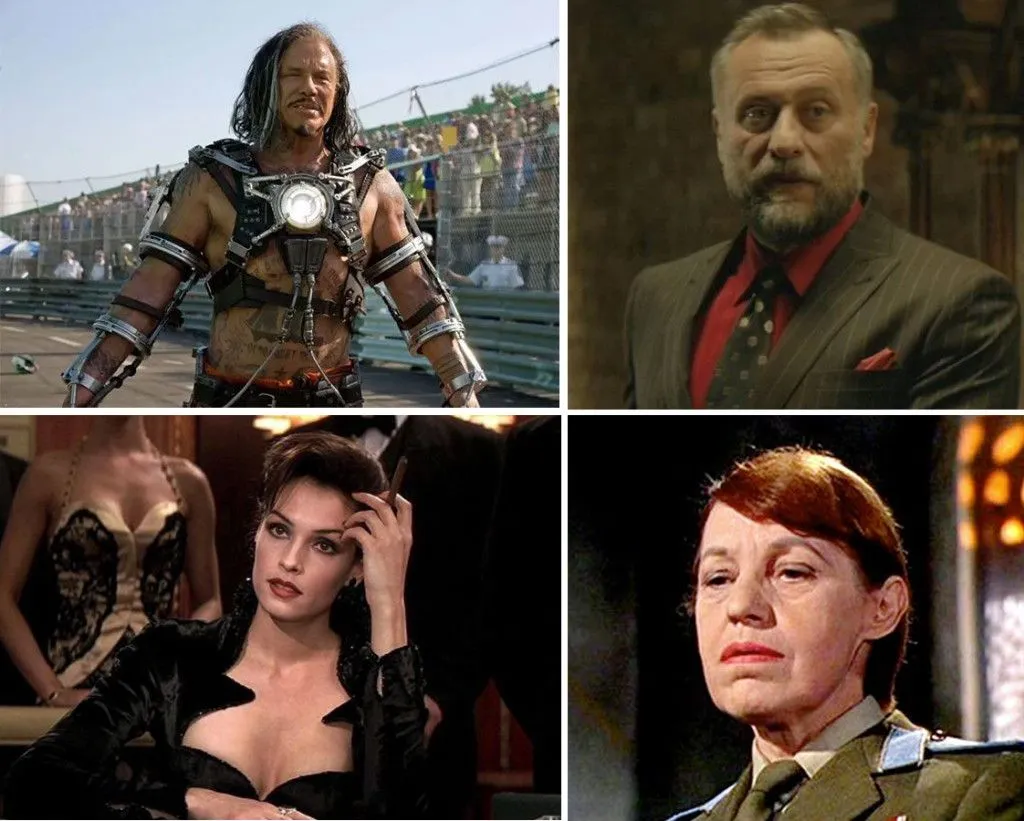
Russia has given Hollywood some of its greatest villains. Ivan Drago from Rocky IV and Ivan Vanko from Iron Man 2, Viggo Tarasov from the first John Wick, Yuri Komarov from A Good Day to Die Hard, Lt. Col. Sergei Podovsky from Rambo: First Blood Part II, and a plethora of Bond villains like Xenia Onatopp and Rosa Klebb. Even the Muppets have a Russian antagonist, but what’s with the Russian bad guy image?
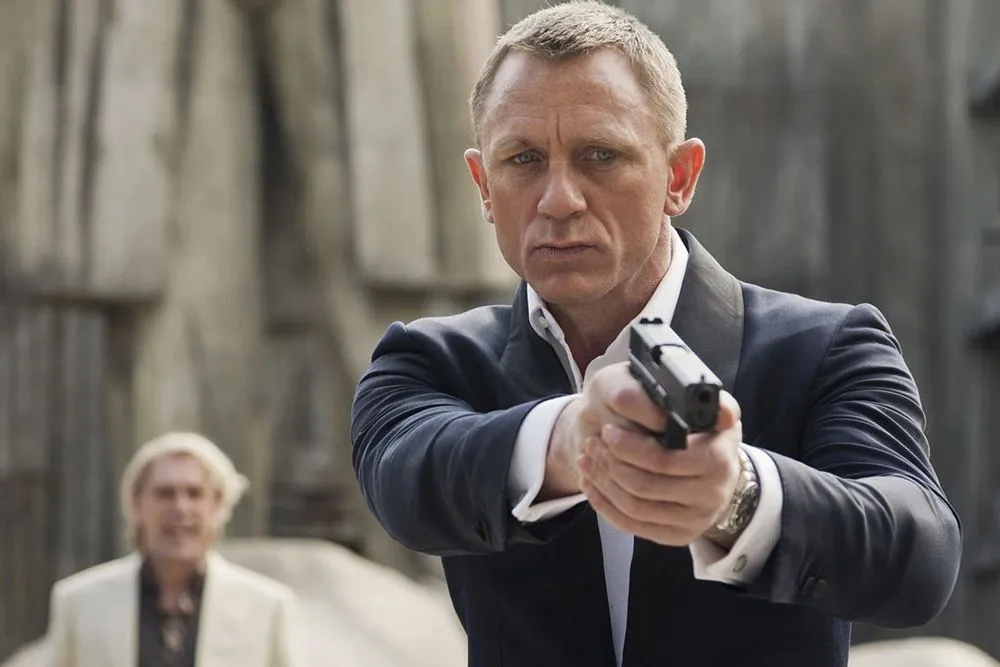
The Cold War Effect
Hollywood has always tried to capitalize on public opinion in terms of cultural, social and political leanings, which is why Communists have often been depicted as the center of America’s troubles. However, it was the Cold War that morphed Russia as a geopolitical contender into a veritable threat that actively worked to undermine the cause of America. The “Evil Russian” stereotype that sprung from the Cold War began to manifest as the Evil Russian trope in Hollywood.
Art, especially cinema, inevitably reflects the beliefs and stereotypes of its makers, which is how Hollywood got its Soviet Boogeyman (Baba Yaga, to borrow from John Wick). The more that sort of Cold War rhetoric spread, the more Russian villains popped up in movies.
Many of these villains existed and still exist in the space of geopolitical conflicts (during wars, in scientific races, and cultural dogma), so the aim is to prevent Soviet spies from securing critical information or to escape from Soviet captivity, as the American hero, more often than not, is a soldier.
Even after the Cold War ended and the USSR dissolved in 1991, the stereotype survived, as it had fully entrenched itself in the writing of movies and pop culture demographics. In fact, the collapse of the USSR led to the rise of Russian oligarchs and monopolies on both the large scale of corrupt organizations, as well as the petty criminal gangster kind, which fueled a new kind of Russian villain class.
More Recent Depictions
Some people might want to redeem modern Hollywood depictions by bringing up Natasha Romanoff, a Russian Avenger and super assassin, but they should revisit her life story. Her past as a Russian agent is full of traumatic abuse and manipulative exploitation of her skills. Her present occupation, as an Avenger in America, is dedicated to protecting humanity against its many threats.
That being said, even if Russian villains are waning in frequency, a new category will undoubtedly replace them. Recently, this category has been extremists of the radical Islamic State variety. This leads us back to the question of why these people are now being shown as villains more often than others?
Labelling
Labelling is not something limited to sinister Russians; the gay best friend and the person-of-color servant are both stereotypes that have been introduced to Hollywood because of labelling. Labelling is a dynamic process that defines a category of people by setting standards for others. Basically, if we run on the assumption that Americans are the good guys, then Russians, whom America sees as a threat, will be labelled as bad guys. It also helps that the audience will readily accept this suggestion based on geopolitical rivalries in other spheres.
It’s also obvious that demonizing and villainizing Russians is considered less problematic and more digestible by audiences, as opposed to African-Americans or Chinese villains. These latter examples would incur allegations of racism, whereas the former do not. Movies are also able to cater to a wider variety of audiences, rather than alienating them, if the villains are Russians.
This was convenient, given the geopolitical realities of the Cold War, and perhaps easy in its aftermath as well (what with Hollywood being spoon fed stereotypical tropes). The labelling of Russians as “evil” allows filmmakers to get away with villainizing an entire country’s citizens with as little backlash as possible. More recently, however, this has incurred the displeasure and indignation of Russian audiences.

Which Actors Keep Getting Cast as Russian Villains?
Here is the strange part: the on-screen Russian is hardly ever an actual Russian. The most iconic Soviet heavy of them all, Ivan Drago in Rocky IV (1985), was played by the Swedish actor Dolph Lundgren. Viggo Tarasov, the Russian crime boss in the first John Wick (2014), was the Swede Michael Nyqvist. The lethal Xenia Onatopp in GoldenEye (1995) was the Dutch actress Famke Janssen, and Rosa Klebb in From Russia with Love (1963) was the Austrian-born Lotte Lenya. Yuri Komarov in A Good Day to Die Hard (2013) was the German actor Sebastian Koch, the Russian hijacker in Air Force One (1997) was the Englishman Gary Oldman, and the assassin Kirill in The Bourne Supremacy (2004) was New Zealand's Karl Urban.

One actor has practically built a career on it. The Swede Peter Stormare has played a Russian in Armageddon (1998), Bad Boys II (2003) and John Wick: Chapter 2 (2017), among others. He has said that American audiences rarely tell one Eastern European accent from another, so he was cast as a Russian so often that some viewers assumed he genuinely was one. That is the trope in a nutshell: on-screen "Russian-ness" is a costume of sharp cheekbones, growled consonants and a heavy coat, worn interchangeably by Swedes, Dutch, Germans, Austrians and Britons, rather than anything to do with where an actor is actually from.
Do Russian and Soviet Films Cast Americans as the Villains?
They do, though rarely with Hollywood's appetite for a flesh-and-blood super-villain. During the late Stalin years the Soviet film industry turned out openly anti-American pictures. Encounter at the Elbe (1949), directed by Grigori Aleksandrov and scored by Dmitri Shostakovich, set US and Soviet soldiers side by side in occupied Germany: the Americans are shown drunk and undisciplined, their command uninterested in genuine cooperation, while an American general-businessman organizes the systematic plundering of the occupied territory and the Soviet sector busies itself rebuilding. Silver Dust (1953) went further still, with an American scientist developing a radioactive weapon alongside Nazi researchers.

Even so, Soviet cinema never produced a steady run of violent revenge fantasies to match Rocky IV or Red Dawn. When Americans did appear as antagonists, they tended to be drawn as pawns of business interests and the military-industrial machine, or simply as misled and misinformed, rather than as committed, snarling ideologues. Two things made that choice natural. The Soviet screen already had its definitive villain in Nazi Germany, an enemy the country had actually defeated and could beat again year after year as a point of national pride. And casting Americans as fanatical true believers would have undercut the official message that communism was a self-evident good which any reasonable person would willingly embrace.
Conclusion
There have been some attempts by Hollywood to rise above this trope and portray Russians in a light that is unfamiliar to most of Tinseltown. K-19: The Widowmaker and Red Heat are some of the rare gems that lean away from archetypal depictions.
There’s also a greater representational change in terms of shifting from ideology or ethnicity to specific attributes. We are beginning to see more evil corporations that exploit the environment or the poor in films, all while making profits and evading accountability. Perhaps all is not lost for Hollywood, provided it can grow out of its old, lazy and reductive habits!
That said, the trope has roared back since Russia’s 2022 invasion of Ukraine. American polling on Russia plunged to historic lows, and screenwriters once again reached for the readymade Russian heavy in shows like The Diplomat, Citadel, and the latest wave of spy thrillers. The post-Cold War lull, in other words, looks to have been an interlude rather than a permanent shift.
References (click to expand)
- (2005) Cossack Cowboys, Mad - Russians: The Emigre Actor - JSTOR. JSTOR
- Lawless, K. (2014, March 18). Constructing the ‘other’: construction of Russian identity in the discourse of James Bond films. Journal of Multicultural Discourses. Informa UK Limited.
- (2019) The New Cold War in Ame" by Declan Cronin - CrossWorks. College of the Holy Cross
- Meeting on the Elbe (1949). A Visual Guide to the Cold War. University of North Carolina at Chapel Hill.
- The Villain Gap: Why Soviet Movies Rarely Had American Bad Guys. The A.V. Club.
- Russians Are Hollywood's Go-To Film Villains. That's Unlikely to Change. The Washington Post (2022).
- Peter Stormare. Wikipedia.