16:9 (1.78:1) was chosen as the standard television aspect ratio because it is the geometric mean of the two dominant film aspect ratios in use at the time, 4:3 (1.33:1) and 2.35:1 CinemaScope/Panavision. SMPTE engineer Kerns H. Powers worked it out mathematically in 1984: at 16:9, the wasted screen area (letterboxing for widescreen film, pillarboxing for square TV content) is roughly equal in both directions. SMPTE and ITU formally adopted it as the HDTV standard by the early 1990s.
Cinema is an integral part of our modern world, but we often take for granted the incredible attention that is paid to every little detail in the making of a movie. Details such as color grading, the framing of each shot, and the aspect ratio the film is shot in all contribute to how the audience perceives a film.

The aspect ratio is particularly important for filmmakers, as it defines a large portion of how they frame their movies. In fact, developments in aspect ratio have defined a large part of our daily media consumption experience.
Have you ever wondered why our TVs are rectangular in shape, rather than the squared box design that used to be the norm?
What Is Aspect Ratio?
Every video, and subsequently every movie, is composed of many frames or images compiled together. The number of frames that appear on the screen in a second is represented by frames per second (FPS), and the FPS of a movie is known as its frame rate.
Aspect Ratio refers to the ratio of the height and width of the frames in a movie or, simply put, the movie’s dimensions. To view the entire frame of a movie on a screen, the screen’s dimensions must be able to accommodate the aspect ratio in which the movie is shot.
To understand this better, think about how you view a movie in a theatre, and then think of viewing the same movie on your television, smartphone, tablet, etc. Furthermore, you will see the exact same frames of a movie, regardless of where you watch it. This is why aspect ratio is so important.
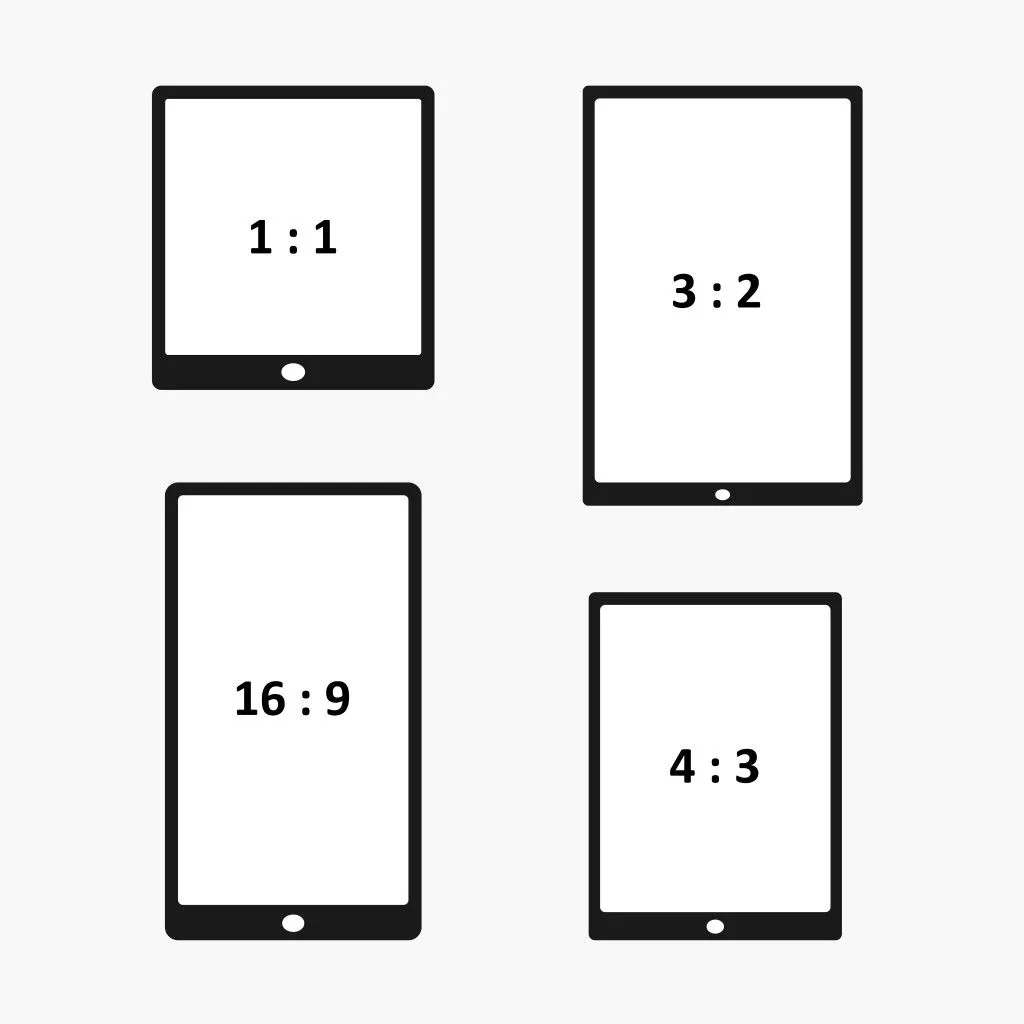
Whatever the dimensions of the screen a movie is being projected on, so long as its aspect ratio is preserved, the viewing experience isn’t impacted. In fact, the reason most smartphones and televisions are shaped the way they are is to accommodate the 16:9 aspect ratio that is so prevalent in media.
You might be wondering why the specific number of 16:9 is such a big deal that it has significantly influenced our multimedia technology. To understand why, let’s take a look at the aspect ratios we’ve experimented with in the past.
Evolution Of Aspect Ratio
In 1891, Thomas Edison filed a patent for “a device that would do for the eye what the phonograph did for the ear”. However, before they actually built this device, they needed to decide what the size of its “captures” would be.
Kodak, at the time, was already distributing 70mm roll film for their box cameras. William Dickson, an engineer working for Edison’s company, took this roll film and cut it in half. This birthed the 35mm film that remains the industry standard to this day.
Roundhay Garden Scene, shot by Louis Le Prince in 1888 and the oldest surviving film, ran for about 2.11 seconds at 12 frames per second. Its rough 1:1 aspect ratio would fit snugly inside one of those square Cathode Ray Tube (CRT) televisions that dominated the late twentieth century.
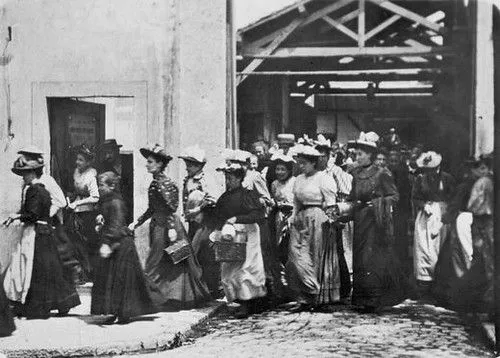
One of the first publicly screened films, on the other hand, was Workers Leaving the Lumière Factory, a roughly one-minute documentary by the Lumière brothers from 1895. This groundbreaking film was shot and released in the 1.33:1 aspect ratio, which you might know as the 4:3 aspect ratio.
The 4:3 aspect ratio soon became the industry standard, as it was based on the native dimensions captured by a 35mm video camera. However, the Academy of Motion Picture Arts and Sciences (the folks responsible for the Oscars) set a new industry standard, known as the ‘Academy ratio’, which was 1.375:1.
Then came the next big thing, which was Panavision or CinemaScope, which remains the most commonly used format in cinemas today. This format used an aspect ratio of 2.35:1. “Avengers: Endgame” and “1917” are examples of recent movies shot in this format. Another extremely popular movie format, especially in the U.S., is 1.85:1.
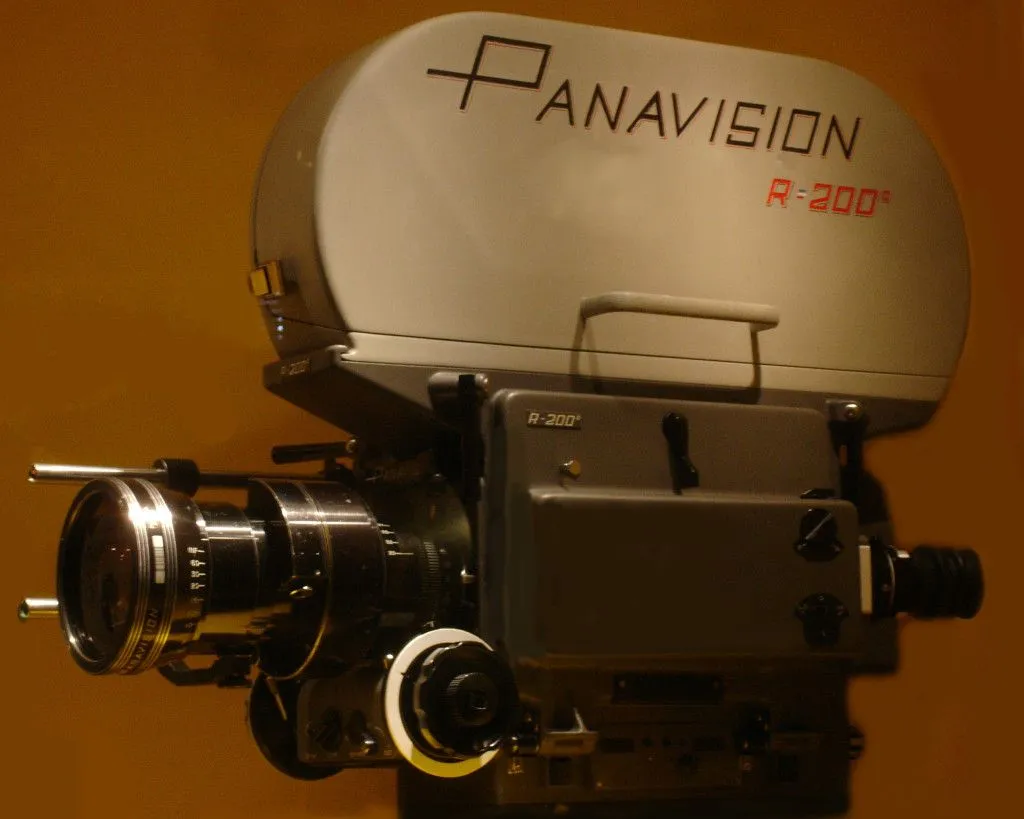
More and more formats and their subsequent ratios kept being discovered as filmmakers strived to create something unique. This, however, led to one major problem: How could all of these formats possibly fit on a single square television screen?
The Perfect Solution – 16:9
The primary reason 16:9 is such a useful aspect ratio for multimedia devices is mathematical: it is approximately the geometric mean of the two most common production ratios, 4:3 (1.33:1) and 2.35:1. SMPTE engineer Kerns H. Powers worked this out in 1984 by cutting rectangles of equal area in every common aspect ratio and aligning their centres; the smallest rectangle that contained them all, and the largest one contained by all of them, both came out to roughly 1.77:1 - which is 16:9. That property means letterboxing for widescreen film and pillarboxing for old 4:3 content waste roughly equal amounts of screen area, so it is the most balanced compromise display.
No single screen can possibly display all kinds of films without any distortion, but 16:9 comes the closest. 16:9 screens achieve this feat through 2 methods:
- Pillarboxing: Pillarboxing is observed when you see black bars to the left and right of an image. If you’ve used Netflix, you may have noticed that it offers different viewing options, such as “Fit-to-screen” and “Original”. If a movie was fit-to-screen, while ignoring its aspect ratio, you wouldn’t be able to see the whole frame of the movie. Therefore, 16:9 ratios allow you to view the whole frame by placing black bars to the left and right of the image from a typical 4:3 frame.
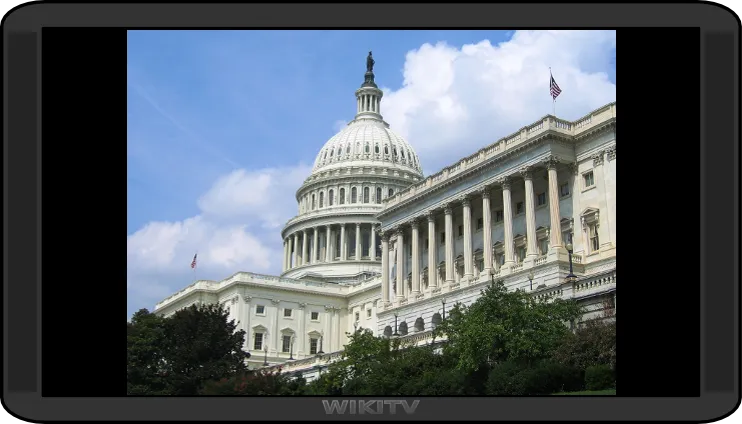
- Letterboxing: This is observed in the cases of formats such as 2.35:1 and other widescreen formats. In these cases, 16:9 displays include black bars at the top and bottom of the screen to show the full frame of the movie.
Due to its convenience, 16:9 is now the industry standard aspect ratio. All H.D. content, be it movies, video games, T.V. shows, etc., is distributed to the public in a 16:9 aspect ratio. In fact, even older media is being remastered into the 16:9 format to suit the modern viewing experience.
Why Are TVs Rectangular Instead Of Square?
So why did we land on a wide rectangle in the first place, rather than the boxy sets your grandparents owned? A big part of the answer is built into your own eyes. Because our eyes sit side by side, the human visual field is much wider than it is tall. Looking straight ahead, we take in a forward-facing horizontal arc of a little over 210 degrees, but the vertical range covers only around 150 degrees. We are simply wired to scan the world from left to right, not up and down.

A wide screen plays to that strength. The more of your natural field of view an image fills, the more immersive it tends to feel, which is why wide displays come across as more engaging than narrow ones. There is a practical reason too: the image a camera captures is itself a rectangle rather than a circle, and most films are shot wider than they are tall, in formats such as 1.85:1 and 2.35:1. A rectangular screen shows that footage with the least wasted space, while a square one would leave large empty bands above and below. Once broadcasters and filmmakers committed to widescreen, the near-square 4:3 set had nowhere to go but sideways.
When Did Widescreen Become The TV Standard?
The square television held on for a surprisingly long time, and the switch to widescreen really arrived alongside high-definition television. In the United States, the ATSC digital broadcasting standard was adopted by the Federal Communications Commission in 1996, and it specified a 16:9 picture at resolutions of up to 1920 x 1080. From 1999 onwards, 16:9 steadily became the most common shape for both televisions and computer monitors.
The changeover then played out over the following decade as slim flat-panel sets replaced bulky cathode-ray-tube televisions in living rooms. The analog era finally closed when full-power stations in the United States switched off their analog signals on 12 June 2009. Other countries moved on their own timelines: Germany was the first to complete the transition, finishing in 2003, while the United Kingdom wrapped up its regional switchover in 2012. By then, a brand-new 4:3 television had become hard to find.
What Are The Common 16:9 Resolutions?
When people look up the “dimensions” or “size” of 16:9, they usually want the actual pixel counts, and there is a tidy family of them. Every one of these standard resolutions divides down to exactly 16:9:
- 1280 x 720 (HD, also called 720p)
- 1920 x 1080 (Full HD or 1080p, by far the most common)
- 2560 x 1440 (QHD or 1440p)
- 3840 x 2160 (4K UHD or 2160p)
- 7680 x 4320 (8K UHD or 4320p)

You can confirm any of them with simple arithmetic: divide the width by the height and you always land on roughly 1.78, the decimal form of 16:9. It also explains why bumping up the resolution never changes a screen’s shape, since you are just packing more pixels into the same rectangle, which is part of why more pixels do not automatically mean a better image. And if you have ever filmed a vertical clip on your phone, you have used this ratio flipped on its side: 9:16, the portrait format behind most short-form video, is simply 16:9 stood upright, as in 1080 x 1920.
Aspect ratio is a concept that the average moviegoer doesn’t pay much attention to, so we fail to realize just how much of an impact it has on every form of media we consume today. As Paul Duro talked about in “The Rhetoric of the Frame”, just because the frame of a movie seems invisible doesn’t mean it actually is invisible. After all, everything we see around us is a frame if we have the eye for it.
References (click to expand)
- Original Kodak Camera, Serial No. 540. Tory: Kenneth E. Behring Center
- Origins of Motion Pictures | History of Edison .... Library of Congress
- 4:3 Aspect Ratio - Everything You Need to Know. nfi.edu
- HISTORY OF WIDESCREEN ASPECT RATIOS. Santa Barbara City College
- Framing television: the dramatic implications of aspect ratio .... Academia.edu
- 16:9 aspect ratio. Wikipedia
- Field of view. Wikipedia
- ATSC standards. Wikipedia
- Digital television transition. Wikipedia