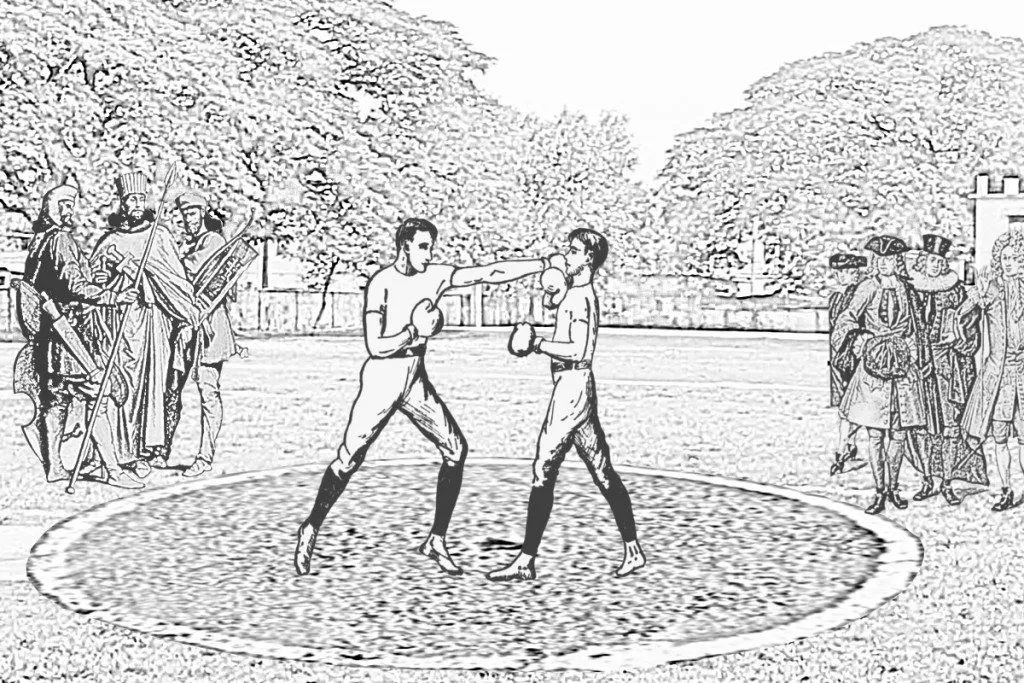
The name boxing ‘ring’ is a relic of ancient times when a physical fight between two opponents took place within a roughly drawn circle on the ground. Also, viewers gathered around the two fighters in a roughly circular manner, forming a ‘ring’ of spectators. Although boxing matches are now conducted in square-shaped areas, such spaces are still called ‘rings’.
Regardless of whether you like the sport of boxing or not, you might have observed that the boundaries within which the fighters box is called a ‘ring’, despite being square-shaped. Have you ever wondered why?
Why Are Boxing Rings Called ‘Rings’, Despite Being Square-shaped?
Short answer: The name boxing ‘ring’ is a relic of ancient times when a physical fight between two opponents took place within a roughly drawn circle on the ground. Also, viewers gathered around the two fighters in a roughly circular manner, forming a ‘ring’ of spectators. Although boxing matches are now conducted in square-shaped areas, such spaces are still called ‘rings’.
The Early Days Of Boxing
People have been hitting each other with their fists as a form of sport for a few thousand years – at least. In those times, as you might imagine, there were no boxing gloves, no referees, no timed breaks and no corners where you could stagger off for a sit-down after taking a heavy beating from your opponent. In fact, I’m quite sure that the idea of ‘breaks between fights’ didn’t exist at all.
Boxing Rings
One reason why boxing rings are called ‘rings’ pertains to the fact that in olden times, opponents engaged in fights within a roughly drawn circle on the ground (Source). This ring acted as the ‘boundary’ of the fight and the fighters were supposed to contain the fight within the ring itself.
Since boxing was more of a means to settle mutual disagreements and less of a sport in those older times, the fact that there were no proper rules or laws that had to be followed during a bout isn’t all that surprising.
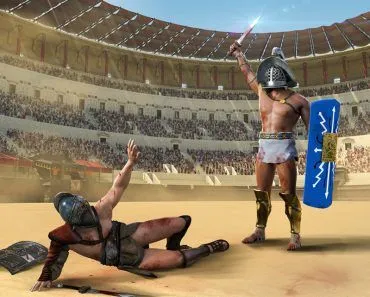
Whenever two people got into a fight (to settle a score or for any other reason), the viewers surrounded the two fighters. As it so happens, whenever a bunch of people stand up to see/witness an event, they invariably end up forming a circle around the event of interest (i.e., stuff that goes on in the middle).
The same thing happened in the case of boxing matches too. People tended to flock around the participants in a circle, forming a ring of sorts. Such a ring of people didn’t just unofficially define the boundaries of a fight, but on some occasions, it made sure that the fighter didn’t withdraw/run away from the fight before it was finished.
Hence, the enclosed area within which fighters fought started being referred to as ‘the ring’.
Boxing As A Sport
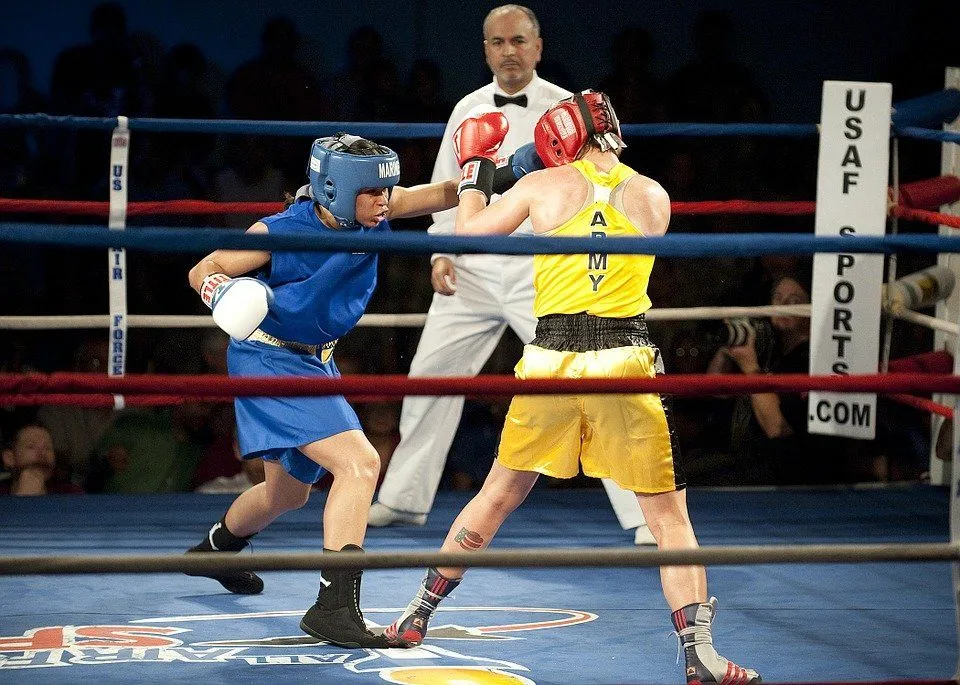
As you can imagine, pitting two people against each other in a ring and making them fight without any rules is not only brutally dangerous, but also highly unethical. All of this drove Jack Broughton, an English bare-knuckle boxer, to formulate a set of rules to be followed during such physical contests. These rules became universally accepted standards for boxing matches and were adhered to for almost a century.
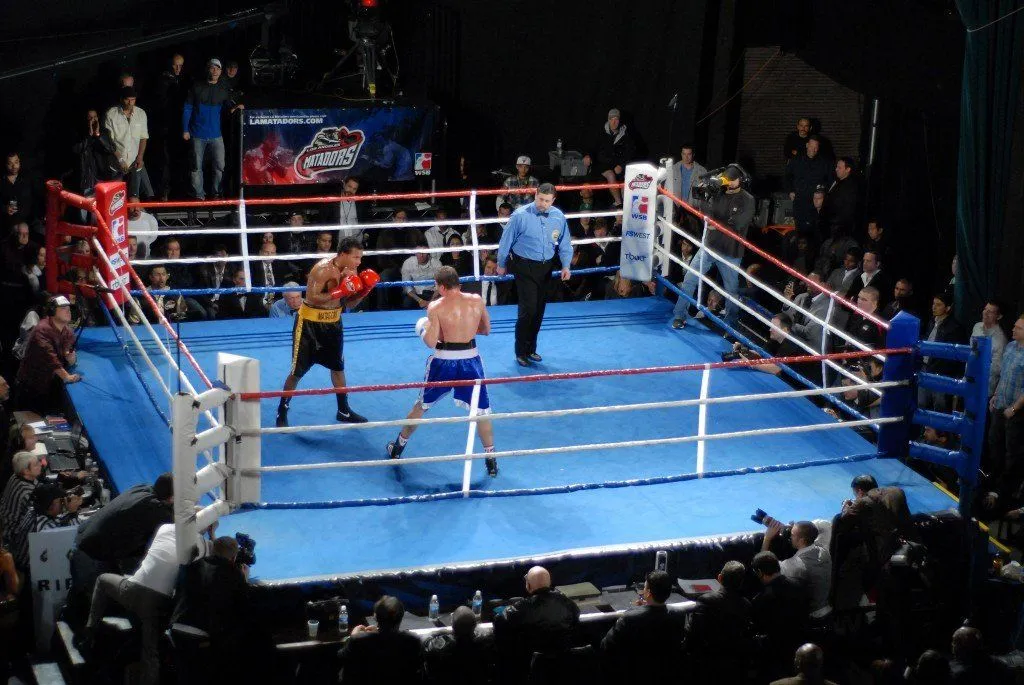
Almost a hundred years after that set of standardized rules emerged for the sport of boxing, the Pugilistic Society introduced the first square ring in the year 1838, which was basically a 7.3-meter (24 feet) square. This is another reason why the ring where two boxers fight is also referred to as the ‘squared circle’.
The idea behind this boundary ring was to keep the audience at a safe distance (since viewers/fans often tended to disrupt the fight in ways big or small), in addition to containing the fight within a specified area.
Modern Boxing Rings
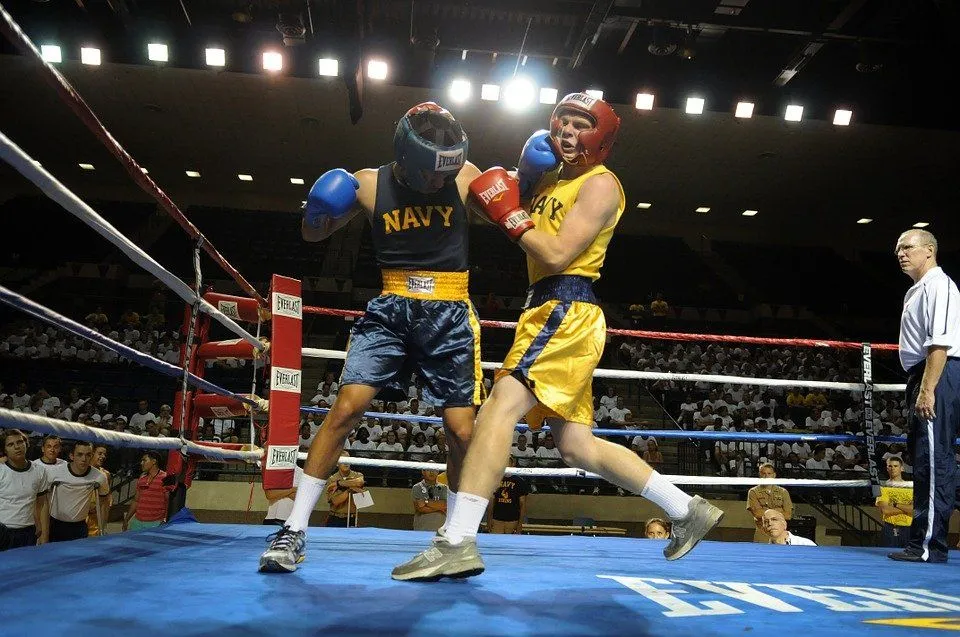
All modern boxing rings remain square-shaped, yet they are all still called ‘rings’ because the word ‘ring’ was so deeply ingrained in boxing lingo that it didn’t change, despite the fact that those rings were no longer circular.
There are a few technical benefits to square-shaped boxing rings. First of all, a square-shaped ring provides firm support and flexibility to the entire system. A circular ring, on the other hand, wouldn’t be as strong and effective. From a mechanical standpoint, a square ring easily trumps a circular one. Also, a square is one of the easiest shapes to construct. That’s why you find square shapes in so many places, whether it’s a boxing ring, a pizza box or a CD packet. The contents might be a “circle”, but the package is easier to make as a square!
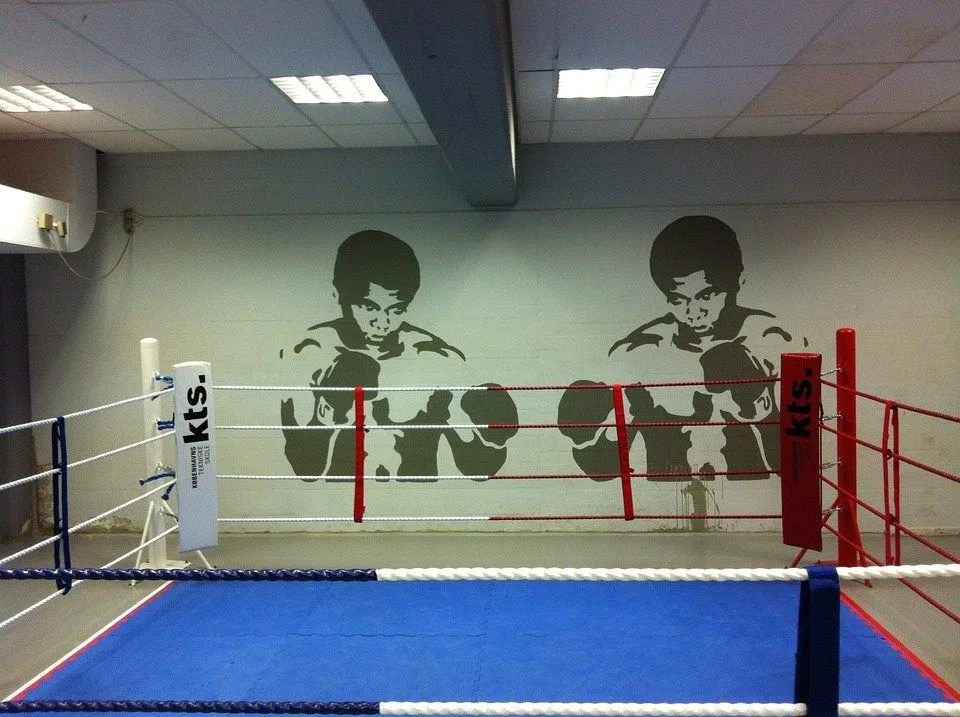
As there are a number of boxing organizations operating all over the world, the measurements of the square ring do vary. However, a standard ring is anywhere between 16 to 20 feet (4.9 – 6.1 meters) on a side between the ropes, with another 2 feet (0.61 m) outside. The platform of the ring is also raised around 3 – 4 feet (0.91 – 1.22 meters) off the ground.
What Are The Corners Of A Boxing Ring Called?
If a boxing ring is technically a square, then it has four corners, and those corners turn out to carry the oldest piece of ring vocabulary still in use. When the London Prize Ring Rules were laid down in 1838, the rope-bound 24-foot square was told to have a ‘scratch’ scratched into the turf at its centre, and at two opposite corners it set aside ‘spaces…for the reception of the seconds and bottle-holders, to be entitled the corners’. So even in the bare-knuckle era, ‘the corner’ already meant the place where a fighter’s team waited between rounds, exactly as it does today.

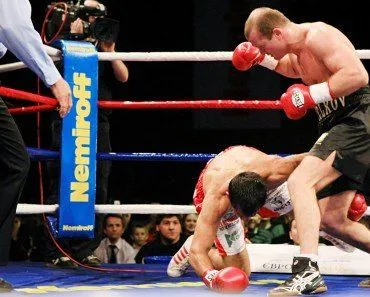
In the modern ring, the two corners where the fighters and their cornermen are based are colour-coded: a red corner and a blue corner, sitting diagonally opposite each other. By convention the red corner goes to the higher-ranked, more experienced or home boxer and the blue corner to the challenger, although that is a tradition rather than an iron rule. The remaining two corners are the neutral corners, usually padded white. They belong to neither fighter, and they matter most after a knockdown: under modern boxing rules, when one boxer is floored, the other must immediately move to a neutral corner and stay there while the referee administers the count, so the standing fighter cannot loom over a downed opponent.
That central ‘scratch’ line may also be why a couple of everyday phrases exist. One leading explanation traces ‘up to scratch’ and ‘toe the line’ to the scratched mark in the old prize ring, where a fighter who could not return to it in time was beaten, though etymologists treat this as a likely rather than a certain origin (Source).
How Big Is A Standard Boxing Ring?
Because dozens of boxing organizations set their own specifications, there is no single legal size, but professional rings cluster within a fairly narrow band. The fighting area measured between the ropes is generally a square 16 to 20 feet (about 4.9 to 6.1 m) on a side, with major professional bouts often using the full 20-foot square; across all sanctioning bodies the span runs from roughly 16 to 24 feet (4.9 to 7.3 m), with another 2 feet (0.61 m) of apron outside the ropes for safety. The 24-foot upper limit is no accident; it is the same figure the Pugilistic Society wrote into that first square ring back in 1838.

The platform itself is raised roughly 3 to 4 feet (0.91 to 1.22 m) off the floor and topped with about an inch (25 mm) of padding under stretched canvas, which is what gives a knocked-down boxer some cushioning. Around the edge run four ropes, fixed at heights of about 18, 30, 42 and 54 inches (0.46, 0.76, 1.07 and 1.37 m) above the mat and strung between posts that stand around 5 feet (1.5 m) high. So while ‘how big is a boxing ring’ has no single answer, a useful rule of thumb is a 16-to-20-foot fighting square, lifted a metre or so off the ground and fenced by four ropes (Source).