Table of Contents (click to expand)
People sweat at very different rates because of a stack of factors: how many sweat glands they have, how much fluid each gland puts out, their sex (men's glands tend to produce more sweat per gland), their body fat (which insulates and traps heat), their fitness and heat-acclimation, the ambient temperature and humidity, and how anxious or stressed they are. A smaller group — roughly 1 in 20 adults — also has hyperhidrosis, a usually hereditary condition that triggers heavy sweating with no obvious trigger at all.
While working out in the gym, you’ve probably observed that although both you and your friend started jogging on the treadmill at the same time, your friend is completely soaked in sweat, whereas you’ve just started to warm up (a ‘vice versa’ scenario is also quite likely).
Why does that happen? Why do some people sweat so much more than others? Well, before we get to that, let’s first try to understand why we sweat in the first place.
Why Do We Sweat At All?
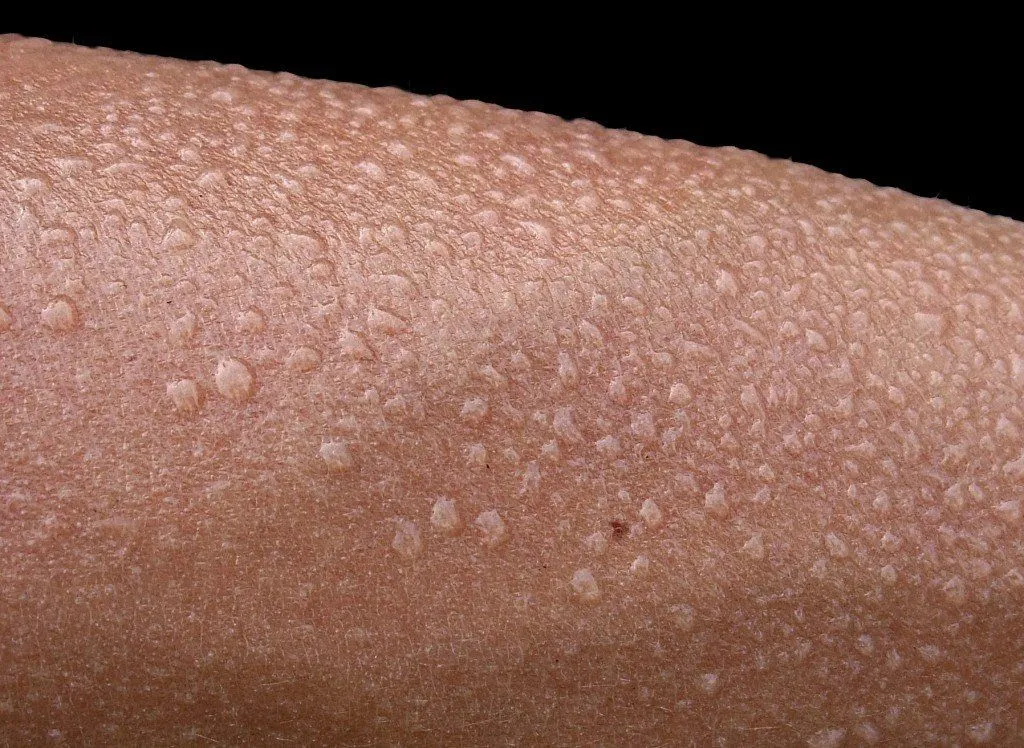
Sweating is a very important physiological process of the human body, as it helps to regulate body temperature. When the ambient temperature is high, the moisture present on the body evaporates, which cools us off a bit. We tend to sweat frequently, such as while exercising or in stressful situations, namely when we feel threatened or anxious.
Sweat Glands
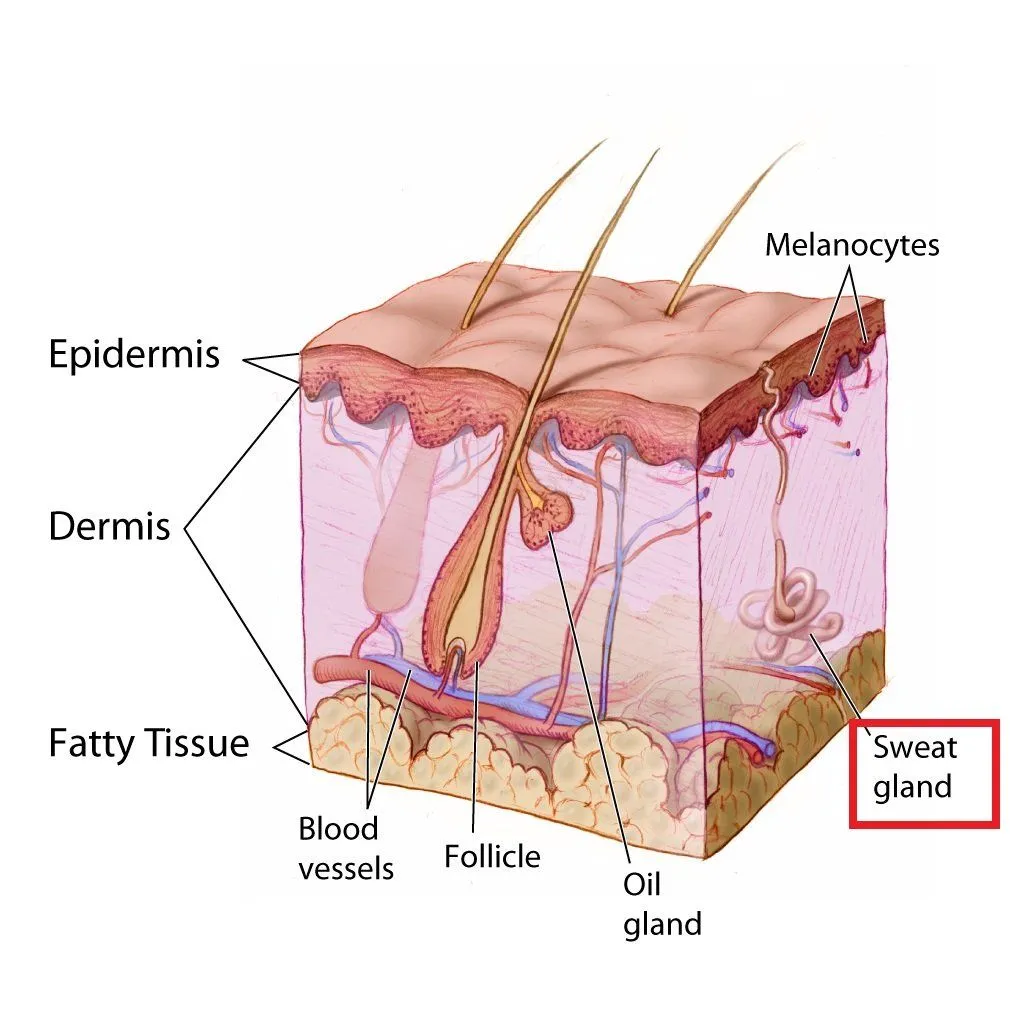
Sweating is brought about by tiny sweat glands present on the skin all over the body. Humans typically have somewhere between 2 and 4 million eccrine sweat glands, mostly established in infancy. Although women on average have at least as many glands as men, men still tend to sweat more — not because their glands are switched on more often, but because each gland puts out more sweat. A 2010 study by Ichinose-Kuwahara and colleagues showed this output difference grows wider as exercise intensity increases.
Factors That Affect Sweating
Human sweat is about 99% water. The remaining 1% is mostly salt (sodium and chloride), along with small amounts of potassium, calcium and magnesium, plus trace urea, ammonia and lactate — essentially no fat. In moderate conditions, a person loses roughly 1 liter of sweat a day; in heat or hard exercise, that can rise to more than 1 liter per hour. There is a lot of variation, though, depending on a number of factors.
Sex
As mentioned earlier, men typically sweat more than women, even though women have at least as many sweat glands. The difference is in how much fluid each gland produces. So if you are a man, comparing how much you sweat to how much the women in the room sweat is, biologically speaking, a bit of a rigged contest.

Number Of Sweat Glands
The number of sweat glands varies from one individual to another. The effect this has is pretty obvious: more sweat glands equates to more sweat (within the same gender). If you have more sweat glands than your friend (who is of the same gender as you), then you’re naturally going to sweat more.
Intensity Of Physical Activity
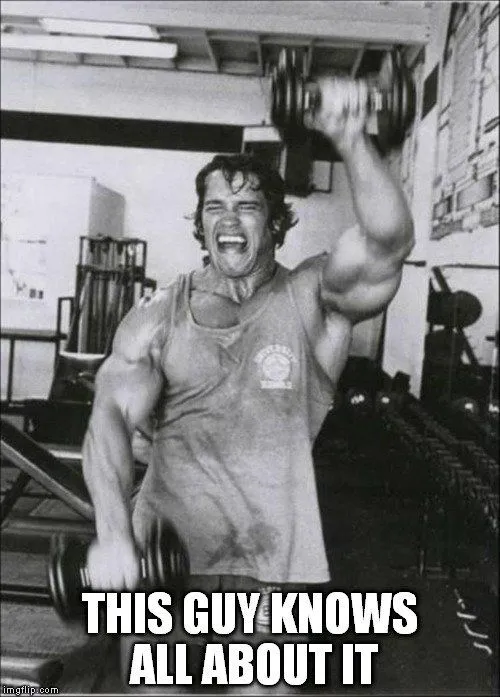
You’ve likely observed that the more you exert yourself during a workout session, the more you sweat. The more intensely you engage in any physical activity, the sweatier you are going to get.
Ambient Temperature
This is actually the most obvious of them all – the amount of ambient heat directly and most obviously impacts the amount of sweating for anyone. If you’re in a hotter setting than your pal, then you will end up more drenched in sweat than them.
Emotions
While taking an examination, where you know the answers to all the questions, sweat-wise, you would be perfectly normal. However, one of your friends, who did not study as thoroughly, may be drenched in sweat. Why does that happen?

The more anxious, scared or worried you are, the more sweaty you shall be!
Body Fat And Fitness
People with more body fat tend to sweat more readily than leaner people. Adipose tissue conducts heat poorly, so it traps metabolic heat inside the body; the body answers by ramping up sweating to dump that heat through the skin. Fitness pulls in the opposite direction: well-trained people sweat earlier and more efficiently (their bodies have learned to start cooling sooner), but their resting baseline is usually lower.
Hyperhidrosis: A Disease
If all of the above conditions don’t apply to you — the room is cool, you feel calm, you are not working out, you are just sitting in your comfy chair listening to music — and yet you’re still drenched, then it’s quite likely that you have hyperhidrosis, a condition of excessive perspiration that affects roughly 4-5% of adults (about 15 million people in the United States alone).
The common form, primary focal hyperhidrosis, is mostly hereditary: around two-thirds of patients have a family member with it, and it usually shows up symmetrically on the palms, soles, underarms or face. It is not specifically caused by being overweight or sedentary. Secondary hyperhidrosis is the rarer form, in which the heavy sweating is a knock-on effect of something else — an overactive thyroid, diabetes, menopause, an infection, or certain medications — and it tends to come on later in life and affect the whole body. Both forms are treatable: antiperspirants with aluminium chloride, prescription wipes, iontophoresis, botulinum toxin (Botox) injections, oral anticholinergics, and (for severe cases) surgery on the sweat-controlling nerves can all bring it under control. Cutting back on alcohol, smoking and caffeine helps, and obviously…
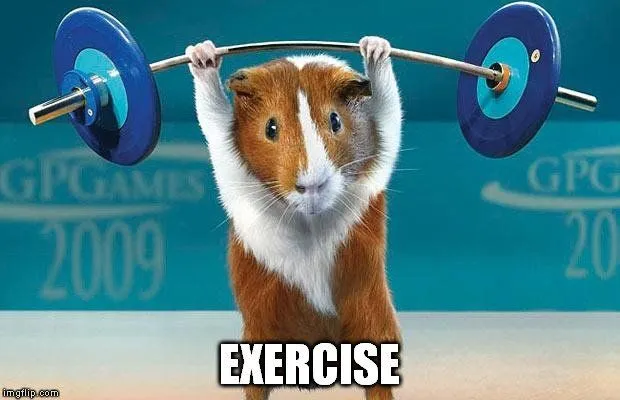
Physical exercise, as stated by virtually everyone with a brain in their head or a doctorate to their name, is helpful in many ways. One benefit of exercise is that it makes you feel less awkward in social settings… at least from a ‘sweaty’ standpoint!
References (click to expand)
- What Makes Some People Sweat More Than Others? - WSJ. The Wall Street Journal
- The Sweat Set: What Causes Some People To ... - Medical Daily. medicaldaily.com
- Why do we sweat more in high humidity?. The MIT School of Engineering
- Sweating: MedlinePlus Medical Encyclopedia. MedlinePlus
- Ichinose-Kuwahara, T., et al. (2010). Sex differences in the effects of physical training on sweat gland responses during a graded exercise. Experimental Physiology.
- Hyperhidrosis: Symptoms, Causes & Treatment. Cleveland Clinic.